
AC & HVAC Maintenance: The Simple Routine That Keeps Cooling Efficient
Neglect is the quiet killer of cooling — the maintenance that keeps an AC efficient, healthy and long-lived: what you can safely do yourself (filters above all), what a technician must do, how often to service, and the warning signs that mean call for help.
An air conditioner rewards care and quietly punishes neglect. A dirty filter, a clogged coil or a low refrigerant charge don't stop the AC — they just make it work harder, cool worse, cost more, and wear out sooner, invisibly. Good news: maintenance is simple and splits neatly into what you can safely do yourself (a little, but high-impact) and what a technician must do. This guide is the routine that keeps cooling efficient, healthy and long-lived.
It builds on the HVAC Energy Efficiency Guide, part of the HVAC Knowledge Hub.
The safety line & scope. The one hands-on homeowner task is cleaning the filters (and keeping units clear). Coil cleaning, refrigerant, electrical and internal work is a qualified HVAC technician's job — never open the sealed system or handle refrigerant yourself.
What you can safely do yourself
Small effort, big impact — the homeowner's maintenance:
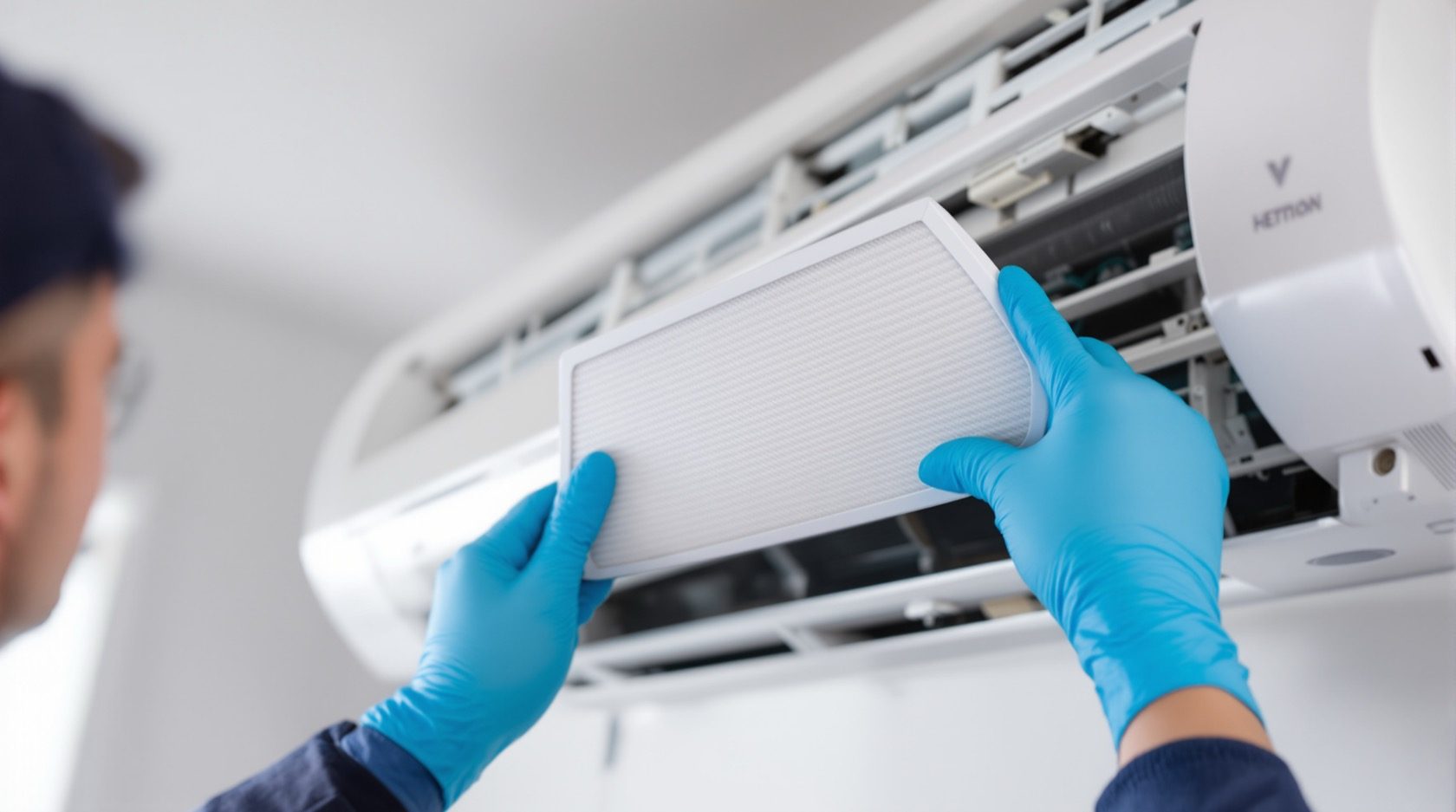
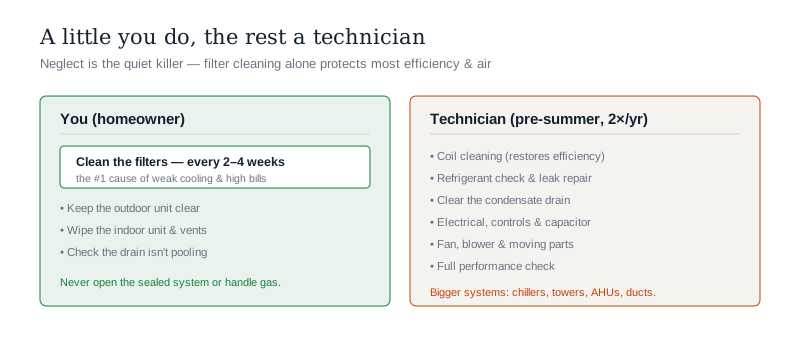
- Clean the filters — the single most important thing. Every few weeks in the cooling season, remove and wash the indoor unit's washable filters (or replace disposable ones). A clogged filter is the number-one cause of weak cooling, high bills and poor air — and it's a five-minute job.
- Keep the outdoor unit clear — free of dust, leaves and obstruction, with airflow around it.
- Keep the indoor unit clean — wipe the surfaces and vents.
- Check the drain — that condensate is draining and not pooling or leaking.
- Use it sensibly — reasonable set-points, and switch off when not needed.
That's it for DIY — everything else is the technician's, but filter cleaning alone protects most of your efficiency and air quality.
What a technician must do
The professional service — usually before summer and, ideally, twice a year:
- Coil cleaning — the indoor and outdoor coils gather dirt that insulates them and kills efficiency; proper cleaning restores it.
- Refrigerant check — verifying the charge (low gas, often from a slow leak, weakens cooling); a technician finds and fixes leaks and tops up correctly. Never a DIY task.
- Drainage — clearing the condensate drain to prevent leaks and mould.
- Electrical and controls — checking connections, capacitor, thermostat and safe operation.
- Moving parts — fan, blower and bearings.
- A full performance check — that it's cooling and drawing power as it should.
For bigger systems (VRF, central), maintenance extends to chillers, cooling towers, AHUs and ducts — a facilities/AMC matter.
How often to service
A sensible schedule for an Indian home:
- Filters — clean every 2–4 weeks during heavy cooling months (homeowner).
- Professional service — before summer at minimum; twice a year (pre-summer and post-monsoon) is better, especially in dusty or coastal areas.
- After the monsoon — check for damp, drainage and any moisture issues.
- An AMC (annual maintenance contract) can bundle scheduled servicing — worth it for multiple units or larger systems.
Regular servicing keeps efficiency high, air clean, and the unit alive far longer than a neglected one.
Warning signs — call a technician
Don't ignore these:
- Weak or no cooling despite a clean filter — often low refrigerant or a dirty coil.
- Water leaking from the indoor unit — a drainage problem.
- Ice on the coil/pipes — low airflow or refrigerant.
- Strange noises — grinding, rattling, hissing.
- Bad smells — mould or electrical.
- Rising bills with no change in use — declining efficiency.
- Frequent tripping — an electrical issue to check.
See the troubleshooting guide for what these mean before you call.
The one-line answer
An AC quietly punishes neglect — a dirty filter, clogged coil or low refrigerant just makes it work harder, cool worse and cost more, invisibly — so maintenance matters, and it splits cleanly: you clean the filters (every 2–4 weeks in the cooling season — the single highest-impact task, the number-one cause of weak cooling and high bills) and keep the units clear and draining; a technician does everything else (coil cleaning, refrigerant check and leak repair, drainage, electrical and moving parts) on a schedule of at least a pre-summer service, ideally twice a year. Never open the sealed system or handle refrigerant yourself. Watch for the warning signs — weak cooling, water leaks, ice, noises, smells, rising bills — and call a technician; regular care keeps cooling efficient, healthy and long-lived, while neglect wastes energy and shortens its life.
Where to go next
- Cut running cost too: HVAC Energy Efficiency Guide.
- When it won't cool: AC Not Cooling & Common Problems Guide.
- Leaks and noises: AC Water Leaks, Noises & Faults Guide.
- The ducts: Duct Cleaning Guide.
References
- IS 1391 (Parts 1 & 2 : 2023) Room Air Conditioners; IS 8148 : 2018 Ducted & Package Air-Conditioners, Bureau of Indian Standards.
- ISHRAE — HVAC operation & maintenance guidance; Bureau of Energy Efficiency (BEE) — maintaining efficiency: https://beeindia.gov.in/
- Refrigerant handling must comply with the Kigali Amendment / safe-recovery practice (technician only).
Only filter cleaning and keeping units clear are homeowner tasks; coil, refrigerant, electrical and internal work must be done by a qualified HVAC technician. Verify any standard's status via the BIS catalogue before relying on it.
Export this guide
Related Guides — Deep-dive reading
Water Pump Maintenance & Troubleshooting in India: Fix a Pump That Won't Start, Runs Dry or Loses Prime
A homeowner's guide to keeping a domestic water pump alive and diagnosing it when it fails — a routine maintenance schedule (leaks, bearing noise, capacitor, foot valve, priming, dry-run protection, impeller) and a symptom-to-cause-to-fix table for the five faults every Indian pump eventually throws: won't start, runs but no water, low flow, won't stop, and trips or overheats.
PlumbingMonthly Home Lift Maintenance Checklist (India): The Owner's Routine
A complete, printable monthly routine you can run yourself in ten minutes — clean, check, listen, and know exactly when to stop and call the technician.
Home Lifts & AccessibilityBathroom Exhaust Fan Cleaning India: How to Clean, Service & Know When to Replace It
A dust-clogged exhaust fan stops clearing steam, so the mould comes back no matter how hard you scrub. Here is how to safely switch off at the MCB, remove and wash the grille, dust the blades and motor, check the backdraft damper and duct, run a tissue-suction test, and tell when the motor is finished.
BathroomsRelated Tools — Try Free
Monsoon-Readiness Checklist
Pre-rain home audit across 9 categories — terrace, drains, waterproofing, electrical, HVAC, pest, vehicles, documents.
Seasonal AuditLift Annual Maintenance Cost Calculator
AMC cost for a home lift — comprehensive vs non-comprehensive, with a 5-year projection.
Lift CalculatorPool Maintenance Cost Calculator
Monthly and yearly running cost of a home pool — chemicals, electricity, water and service, DIY vs AMC.
Pool Calculator