

Thermal Comfort: Why 'Cold' Isn't the Same as 'Comfortable'
What actually makes a space feel right — the six factors of thermal comfort (temperature, humidity, air movement, radiant heat, clothing and activity), why comfort is a range not a number, how adaptive comfort works in India, and why chasing 18°C is the wrong goal.
Two rooms can be at exactly the same temperature and feel completely different — one fresh and pleasant, the other stuffy and oppressive. That's because temperature is only one of six things that decide whether a space feels comfortable. Understanding thermal comfort explains why a fan makes a hot room bearable, why humidity ruins an air-conditioned room, and why setting the AC to 18°C is chasing the wrong target. This guide unpacks what comfort actually is.
It builds on HVAC Fundamentals, part of the HVAC Knowledge Hub. This is genuinely useful homeowner knowledge — it will change how you set your cooling.
Scope. This explains the science of comfort so you can set and plan cooling well. Designing engineered comfort systems is qualified MEP/HVAC work.
The six factors of thermal comfort
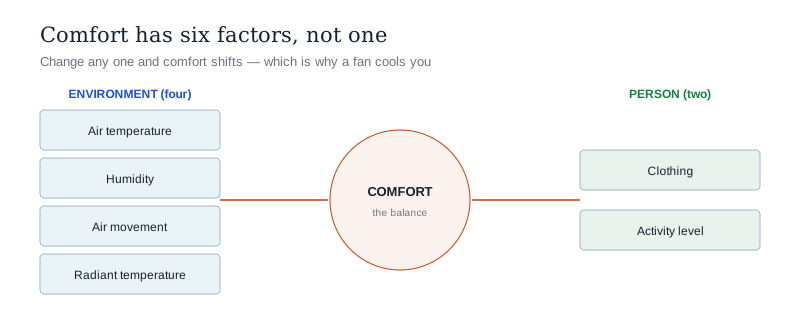
Comfort is the balance between the heat your body produces and the heat it loses. Six factors govern it — four in the environment, two in you:
Environmental:
- Air temperature — the obvious one, but only one of six.
- Humidity — high humidity stops sweat evaporating, so you can't shed heat; a warm humid room feels far worse than a warm dry one.
- Air movement — a breeze speeds evaporation and carries heat away, making you feel cooler at the same temperature (the fan effect).
- Radiant temperature — the temperature of surrounding surfaces. A hot west wall or roof radiates to you even if the air is cool; a cool surface draws heat away.
Personal:
- Clothing — insulation you can add or remove.
- Activity level — a sleeping body makes far less heat than an exercising one.
Change any one and comfort shifts — which is why comfort is a system, not a thermostat setting.
Comfort is a range, not a number
There is no single "comfortable temperature." Standards like ASHRAE Standard 55 define a comfort zone — a range of temperature and humidity within which most people are comfortable — rather than one magic value. Typical air-conditioned comfort sits around 24–26°C with 40–60% relative humidity and gentle air movement. Push humidity up and the whole zone shifts; add a breeze and you can be comfortable warmer.
The engineering way to express this is PMV/PPD — Predicted Mean Vote (how warm/cool an average person feels) and Predicted Percentage Dissatisfied (you can never please everyone; ~5% dissatisfied is considered good).
Adaptive comfort — why India is different
People who live without constant air conditioning adapt — their comfortable range is wider and tracks the outdoor climate. This is adaptive thermal comfort: in a naturally ventilated Indian building, occupants are comfortable at higher temperatures than a sealed, air-conditioned office would allow, especially with a fan. Research-based adaptive models for India (developed to reflect Indian conditions rather than imported Western setpoints) capture this — and it's the basis for passive cooling and mixed-mode design.
The practical upshot: a breezy 29°C can be perfectly comfortable, while a still, humid 24°C is not. Comfort is not about reaching the lowest number.
Why 18°C is the wrong goal
Setting the AC to 18°C is a common mistake rooted in misunderstanding comfort:
- It doesn't cool faster — the AC runs the same; it just overshoots a comfortable temperature and keeps going.
- It wastes energy — every degree lower adds roughly 3–6% to the bill (see running cost).
- It ignores the other five factors — if the room is humid, 18°C still won't feel right; fix the humidity and add air movement instead.
- BEE recommends 24°C as a comfortable, efficient default — then use a fan and manage humidity for the rest.
Comfort comes from balancing all six factors, not from the coldest possible air.
The one-line answer
Thermal comfort is the balance between the heat your body makes and the heat it loses, governed by six factors — four in the environment (air temperature, humidity, air movement, radiant temperature of surrounding surfaces) and two in you (clothing, activity) — which is why two rooms at the same temperature can feel utterly different. It's a range, not a number: standards like ASHRAE 55 define a comfort zone (roughly 24–26°C, 40–60% RH, gentle air movement), and adaptive comfort means people acclimatised to India's climate are comfortable warmer — a breezy 29°C can beat a still, humid 24°C. So chasing 18°C is the wrong goal: it doesn't cool faster, wastes energy, and ignores the other five factors. Real comfort comes from managing humidity and air movement and setting a sensible 24°C, not from the coldest possible air.
Where to go next
- The physics beneath it: HVAC Fundamentals Guide.
- Why humidity matters so much: Humidity Control Guide · Psychrometrics Guide.
- Comfort without a compressor: Passive Cooling Guide.
- Set it right: Smart Thermostat Guide.
References
- ASHRAE Standard 55 — Thermal Environmental Conditions for Human Occupancy (comfort zone, PMV/PPD, adaptive model).
- Bureau of Energy Efficiency (BEE) — 24°C default setpoint recommendation: https://beeindia.gov.in/
- ISHRAE and India-specific adaptive thermal comfort research (adaptive models developed for Indian conditions); National Building Code of India, SP 7 (verify current edition).
This guide explains comfort science to inform how you set and plan cooling. Engineered comfort-system design is qualified MEP/HVAC work.
Export this guide
Related Guides — Deep-dive reading
The Architectural Psychology of Comfortable Spaces
Why some rooms feel right and others never do — the science of space and the human mind
Design EducationHVAC Fundamentals: The Physics Behind Comfort
The ideas underneath every system — the four things HVAC actually controls (temperature, humidity, air movement and air quality), how heat moves, the difference between sensible and latent heat, and why a cooling load is more than just 'how hot it is', for the Indian climate.
HVAC & CoolingDesigning a Naturally Energy-Efficient Indian Home
Comfort first, gadgets last — passive design, orientation, insulation, ventilation and the climate wisdom that cuts Indian energy bills
SustainabilityRelated Tools — Try Free
Brise-Soleil Visualizer
Interactive horizontal-louvre cut-off angle calculator — sun altitude, louvre depth, and spacing inputs with a live shadow preview. Computes θ = arctan(spacing/depth) for façade shading, ECBC envelope compliance, hospital daylight design, and tropical sun-control detailing.
Sun Shading ToolCross-Ventilation Analyzer
Estimate airflow and air changes per hour (ACH) from room size, window areas, layout, and local wind — with NBC 2016 Part 8 compliance check.
Ventilation CalculatorCurtain Thermal Calculator
Estimate the solar heat-gain a curtain or blind cuts by orientation, glass and treatment — and the cooling saving.
Thermal Tool