
Humidity Control at Home: Beating Damp, Mould & Monsoon Stickiness
The comfort factor everyone feels but few manage — why relative humidity matters as much as temperature, the healthy range to aim for, how ACs, dehumidifiers and humidifiers control moisture, and how to beat India's coastal and monsoon damp before it becomes mould.
You can set the temperature to a perfect 24 °C and still feel sticky, clammy and uncomfortable — because comfort isn't just temperature, it's humidity too. In much of India — the coasts, the monsoon everywhere — high humidity is the real enemy: it makes heat feel worse, breeds mould and dust mites, damages furnishings, and harms health. Yet most people never actively manage it. This guide explains humidity control: why relative humidity matters, the range to aim for, and how ACs, dehumidifiers and humidifiers keep moisture in check.
It builds on the IAQ and Ventilation guides, part of the HVAC Knowledge Hub.
The safety line & scope. Dehumidifiers and humidifiers are plug-in consumer devices — homeowner-level. Built-in dehumidification, and any HVAC work, is a qualified professional's job. Fixing the source of damp (leaks, waterproofing) may need a builder.
Why humidity matters as much as temperature
Comfort is temperature and humidity together:
- High humidity makes heat feel worse — sweat can't evaporate, so a humid 30 °C feels far stickier than a dry 30 °C. It's why the coast feels oppressive.
- Too high (damp) — breeds mould, mildew and dust mites, causes musty smells, warps wood and damages electronics, books and clothes, and worsens allergies and asthma.
- Too low (very dry) — dries skin, eyes and airways, and can happen in heavily air-conditioned or heated spaces.
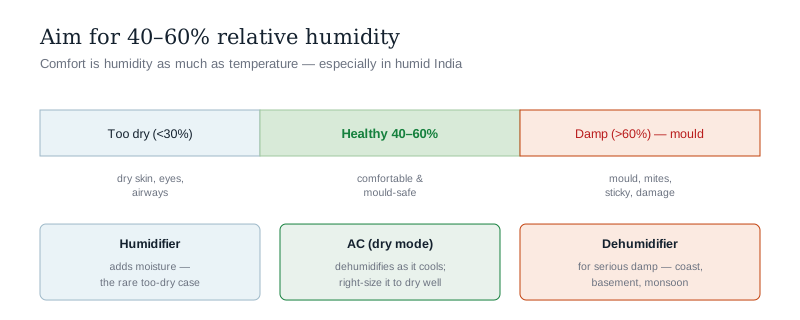
- The right range — comfort and health sit in a middle band of relative humidity (broadly around 40–60% RH); above ~60% invites mould, and very low is uncomfortable too.
Managing humidity is as important to comfort and health as managing temperature — and in humid India, often more so.
Measuring it: relative humidity
- Relative Humidity (RH) — how much moisture the air holds relative to the most it could at that temperature, as a percentage. The number that matters.
- A hygrometer / IAQ monitor — most IAQ monitors show RH; cheap standalone hygrometers do too. You can't manage what you don't measure.
- Aim for the ~40–60% band — comfortable, healthy, and mould-safe. Watch it climb in the monsoon and on the coast.
The tools that control humidity
Air conditioners (dehumidify as they cool)
- An AC removes moisture as it cools — water condenses on the cold coil and drains away (the condensate). So running the AC also lowers humidity.
- "Dry mode" on many ACs prioritises dehumidification over cooling — useful on humid-but-not-hot monsoon days.
- But — an oversized AC cools fast and switches off before it dehumidifies, leaving the room cold and clammy; a right-sized unit dries better.
Dehumidifiers (for serious damp)
- A dehumidifier actively pulls moisture from the air and collects it — the tool for genuinely damp environments where the AC isn't enough or isn't running.
- Ideal for coastal homes, ground floors, basements, store rooms and the monsoon — protecting furnishings, books, wardrobes and preventing mould.
- Sized to the room and the moisture load.
Humidifiers (for the rare too-dry case)
- A humidifier adds moisture — needed in very dry conditions (heavily air-conditioned or heated spaces, dry winters in the north) where low RH causes discomfort. Less common in humid India, but relevant in specific climates/seasons.
Beating damp and mould — the Indian priorities
- Ventilate wet rooms — kitchen and bathroom exhaust removes moisture at the source (the biggest lever).
- Run the AC / dry mode on humid days; consider a dehumidifier for persistently damp spaces.
- Fix the source — leaks, seepage and poor waterproofing create damp no appliance can beat; address the building cause.
- Air out wardrobes and store rooms, use moisture absorbers in enclosed damp spots.
- Before and during the monsoon — the peak humidity season; watch RH, run dehumidification, and keep wet areas ventilated to stop mould taking hold.
- Manage condensation — on cold surfaces and AC drains; ensure condensate drains properly.
The one-line answer
Comfort and health are about humidity as much as temperature — a humid 30 °C feels far worse than a dry one, and high indoor moisture breeds mould, dust mites and musty damage while very dry air irritates skin and airways, so aim for the healthy ~40–60% relative humidity band and measure it with a hygrometer or IAQ monitor. Control it with the right tools: an AC dehumidifies as it cools (use "dry mode" on humid days, and right-size it so it actually dries), a dehumidifier handles genuinely damp coastal, ground-floor, basement and monsoon conditions, and a humidifier is for the rare too-dry space. Above all in India, ventilate wet rooms (kitchen/bathroom exhaust), fix the source of any damp (leaks, waterproofing), and manage the monsoon proactively — beating moisture before it becomes mould.
Where to go next
- The air-quality picture: Indoor Air Quality Guide.
- Ventilate the moisture out: Home & Building Ventilation Guide · Mechanical Ventilation Guide.
- Why right-sizing dehumidifies better: Air Conditioning Basics Guide.
References
- ASHRAE Standard 55 (thermal comfort, including humidity); ISHRAE indoor environmental quality guidance.
- National Building Code of India, SP 7 (Part 8 — Building Services; verify current edition), Bureau of Indian Standards.
- Central Pollution Control Board (CPCB) / World Health Organization — indoor environment guidance (mould & damp): https://cpcb.nic.in/
Comfort humidity ranges are guidance from standards bodies; verify current values. Persistent damp may need building repairs (waterproofing/leaks) by a professional.
Export this guide
Related Guides — Deep-dive reading
Smart Air Purifiers for Indian Homes: Beating PM2.5
Across Delhi-NCR winters and year-round urban haze, indoor air is often worse than the street. This guide explains what actually makes a purifier smart, how CADR and room sizing work, what HEPA and activated carbon really remove, honest running costs on filters and power, and which brands earn their price in Indian conditions.
Smart HomeFlooring for Humid Conditions in India: Best Floors for Ground Floors, Basements and Chronically Damp Rooms
Why moisture, rising damp and condensation wreck the wrong floor — and how to pick moisture-stable flooring, lay a 200-micron damp-proof membrane, run the moisture test before laying, and keep humid Indian rooms dry.
Flooring & SurfacesMoisture-Resistant Building Materials in India: The Right Material for Every Wet Zone (2026)
Moisture is the biggest enemy of Indian buildings - monsoon, rising damp, condensation, leaks and coastal humidity. This guide separates waterproofing (a system) from choosing inherently moisture-tolerant materials, then names the right material for bathrooms, exteriors, roofs, basements and finishes - with a zone-by-zone selector table. A specify-and-select guide.
Building MaterialsRelated Tools — Try Free
Monsoon-Readiness Checklist
Pre-rain home audit across 9 categories — terrace, drains, waterproofing, electrical, HVAC, pest, vehicles, documents.
Seasonal AuditBathroom Waterproofing Calculator
Work out waterproofing material (kg/L) and cost for a bathroom by area, wall band, system type and coats — cementitious, acrylic, PU or SBR.
Bathroom CalculatorBathroom Exhaust Fan Calculator
Size a bathroom exhaust fan from room volume and air changes per hour — output in CFM and CMH with a recommended fan rating and diameter.
Bathroom Calculator