
HVAC for Hot-Dry Climates: Where the Air Cooler Is King
In Rajasthan, interior Gujarat and the arid interiors, the dry air is a gift — evaporative cooling works brilliantly, big day-night swings reward thermal mass and night ventilation, and dust is the enemy. How to cool a hot-dry Indian home smartly and cheaply.
In India's hot-dry zone — Rajasthan, interior Gujarat, parts of the Deccan and the arid north-west — the summer is fierce, but the air is dry, and that changes everything. Dry air is a resource: it lets water evaporate freely, which is the basis of cheap, effective cooling that simply doesn't work on the humid coasts. Add big day-to-night temperature swings and traditional architecture that already understood all this, and the hot-dry home has some of the smartest, lowest-energy cooling options in the country. This guide explains how to cool a hot-dry home well.
It builds on the Climate Zone HVAC Guide, part of the HVAC Knowledge Hub. This is practical homeowner guidance for a dry-climate home.
Scope & note. Strategies here suit genuinely dry climates; if your summers turn humid (a monsoon), the evaporative advice reverses during those months — see warm-humid and check your local humidity.
Why dry air is a gift
The defining feature of the hot-dry zone shapes every cooling choice:
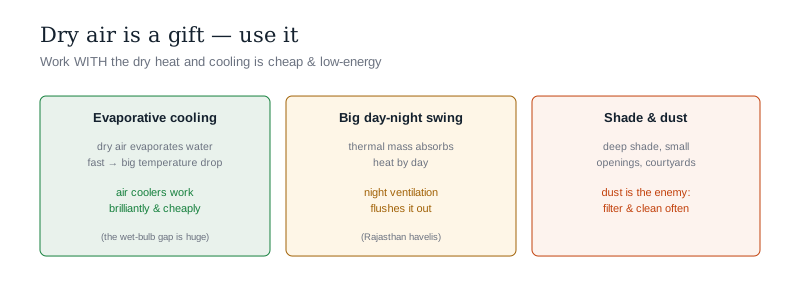
- Dry air evaporates water fast — and evaporation absorbs heat, so passing hot dry air over water cools it substantially (an evaporative cooler / air cooler can drop the temperature many degrees), cheaply and with a fraction of an AC's energy.
- The bigger the gap between dry-bulb and wet-bulb, the more cooling — and hot-dry air has a huge gap (see psychrometrics). Use our evaporative cooler calculator to see the effect.
- Big day-night swings — hot-dry deserts cool sharply at night, which you can store and exploit (below).
Where the humid coast fights the air, the dry interior can work with it.
The hot-dry cooling toolkit
- Evaporative (air) coolers — the workhorse: effective, cheap to buy and run, and they add welcome moisture to parched air. The default cooling for much of the zone (see cooler vs AC).
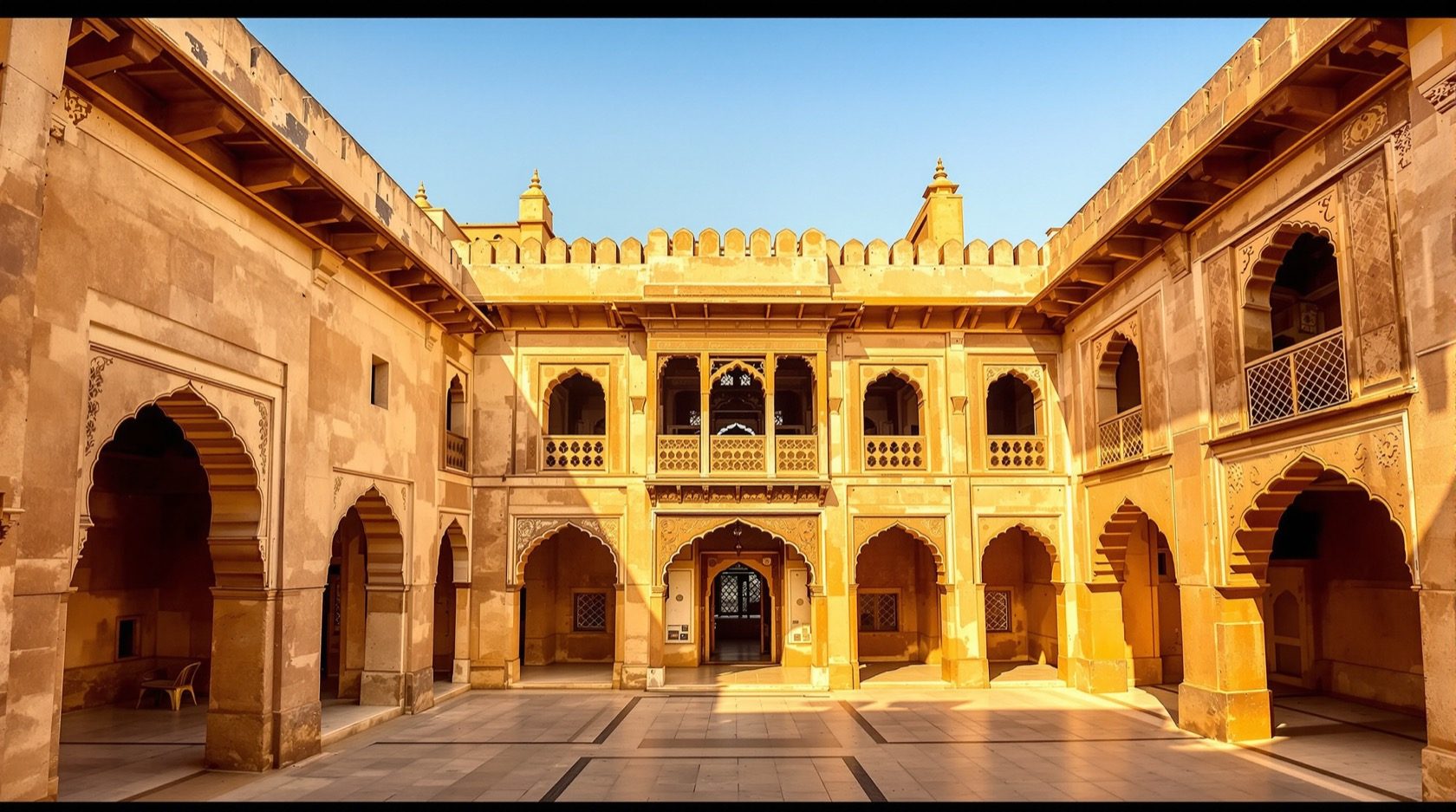
- Thermal mass — thick walls (traditional stone/mud, or modern insulated mass) absorb heat slowly through the day and release it at night, flattening the indoor swing — the principle behind Rajasthan's massive-walled havelis.
- Night ventilation — open up at night to flush the day's heat and pre-cool the thermal mass with cool night air; close up by day to keep it out. The big day-night swing makes this powerful (see passive cooling).
- Shading & small openings — deep shade, small/shaded windows, courtyards and jaalis keep the intense sun out (traditional hot-dry architecture is a masterclass in this).
- AC as a top-up — for the peak weeks or a bedroom, a right-sized AC, not as the whole strategy.
Dust — the hot-dry enemy
The one thing dry heat brings that you must design against:
- Dust and sand clog filters, coat coils and foul air coolers' pads fast — so filtration and frequent cleaning matter more here (see maintenance).
- Air-cooler pads need regular cleaning/replacement in dusty areas, and the water needs managing (scale in hard water).
- Seal against dust when running AC, and filter fresh air well for indoor air quality.
The one-line answer
In India's hot-dry zone (Rajasthan, interior Gujarat, the arid interiors), the summer is fierce but the air is dry — and that dry air is a resource: it lets water evaporate freely, so evaporative (air) coolers work brilliantly, dropping the temperature many degrees cheaply and at a fraction of an AC's energy (the bigger the dry-bulb-to-wet-bulb gap, the more cooling — and hot-dry air has a huge gap). The zone's big day-night temperature swing rewards two more free strategies: thermal mass (thick walls that absorb heat by day and release it at night, as in Rajasthan's havelis) and night ventilation (flush the day's heat and pre-cool the mass with cool night air, then close up by day), plus deep shading and small openings to keep the intense sun out. AC is a top-up for peak weeks, not the whole answer. The one thing to design against is dust — it clogs filters, coils and cooler pads, so filtration and frequent cleaning matter more here. Work with the dry climate and a hot-dry home has some of the cheapest, lowest-energy cooling in India.
Where to go next
- The zone map: Climate Zone HVAC Guide.
- The key tool: Air Cooler vs Air Conditioner · Evaporative Cooler Calculator.
- The free strategies: Passive Cooling Guide.
- The opposite zone: Warm-Humid Climate HVAC.
References
- National Building Code of India, SP 7 : 2026 (hot-dry climate design); Bureau of Energy Efficiency (BEE) — Eco Niwas Samhita hot-dry envelope limits: https://beeindia.gov.in/
- ISHRAE — climate-responsive & evaporative cooling design guidance; India Meteorological Department (IMD) climatic data.
- Traditional & vernacular hot-dry architecture references (thermal mass, courtyards, night ventilation).
Practical guidance for genuinely dry climates; if your summers turn humid, evaporative advice reverses those months. System design is qualified MEP/HVAC work tuned to local conditions.
Export this guide
Related Guides — Deep-dive reading
Designing a Naturally Energy-Efficient Indian Home
Comfort first, gadgets last — passive design, orientation, insulation, ventilation and the climate wisdom that cuts Indian energy bills
SustainabilityHow to Design for the Indian Climate
Hot-Dry, Warm-Humid, Composite, Moderate, and Cold — A Climate-Responsive Design Guide
SustainabilityPassive Cooling Strategies for Indian Homes
How to keep a home cool without (much) air-conditioning — the climate-smart design that cuts bills and heat
Design EducationRelated Tools — Try Free
Cross-Ventilation Analyzer
Estimate airflow and air changes per hour (ACH) from room size, window areas, layout, and local wind — with NBC 2016 Part 8 compliance check.
Ventilation CalculatorBrise-Soleil Visualizer
Interactive horizontal-louvre cut-off angle calculator — sun altitude, louvre depth, and spacing inputs with a live shadow preview. Computes θ = arctan(spacing/depth) for façade shading, ECBC envelope compliance, hospital daylight design, and tropical sun-control detailing.
Sun Shading ToolEvaporative Cooler Calculator
Whether an air cooler will actually cool your room — the wet-bulb temperature, the cooling it can achieve and a clear verdict, from your temperature and humidity.
HVAC