
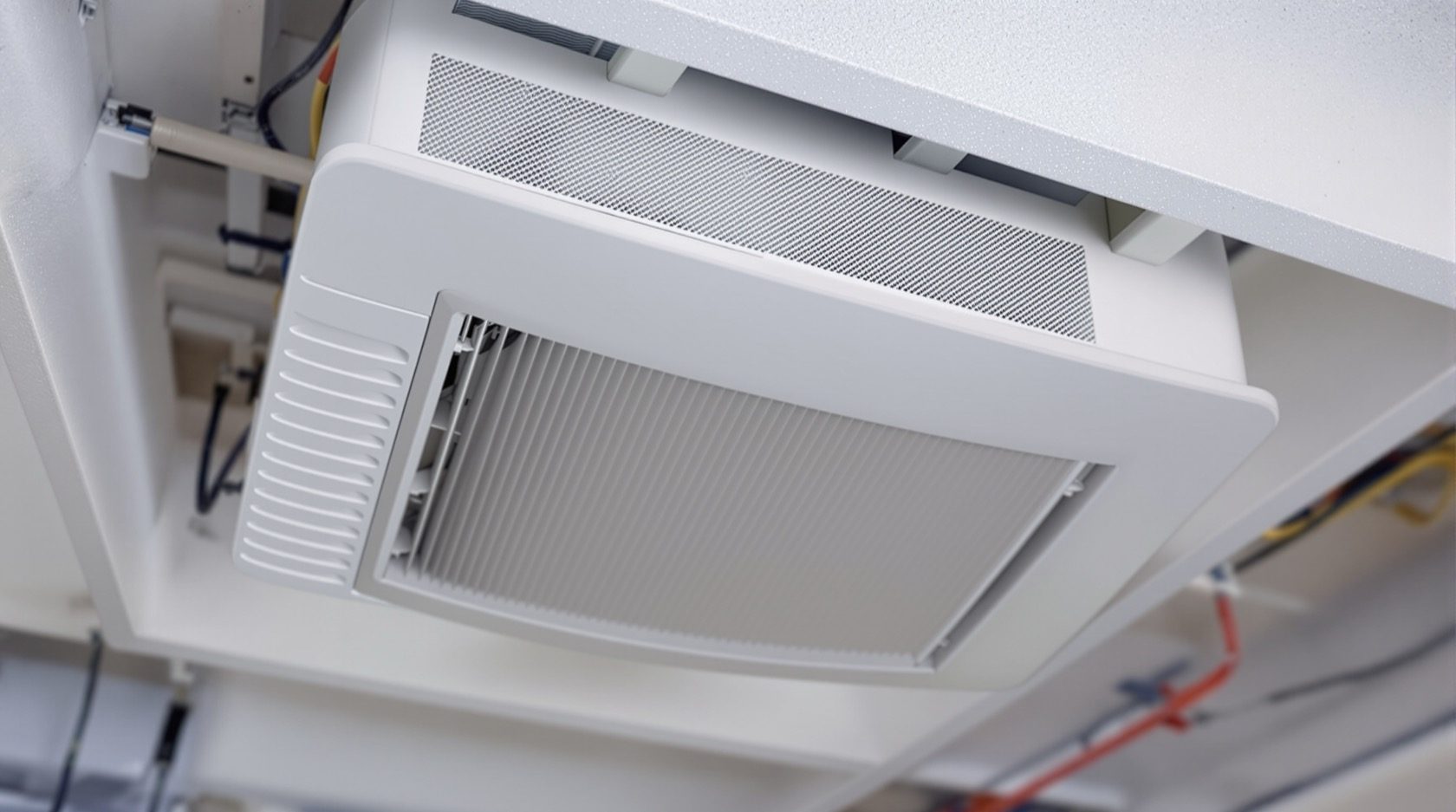
HRV & ERV: Fresh Air Without Throwing Away Your Cooling
The clever way to ventilate a sealed, air-conditioned home — how heat- and energy-recovery ventilators bring in filtered fresh air while recovering the coolness (and, for ERV, the dryness) of the air they exhaust, the HRV-vs-ERV difference, and why ERV suits most of India.
Here's the problem with ventilating an air-conditioned home: every time you bring in fresh outdoor air, you bring in heat and humidity too — and your AC has to cool and dry it all over again, wasting energy. So sealed homes often skip fresh air entirely and go stale. Heat- and energy-recovery ventilators (HRV and ERV) solve this elegantly: they bring in fresh air while recovering the coolness of the stale air they throw out — giving you fresh air without throwing away your cooling. This guide explains HRV and ERV, the difference, and why ERV suits most of India.
It builds on the Ventilation and IAQ guides, part of the HVAC Knowledge Hub.
The safety line & scope. HRV/ERV are engineered ventilation systems — design, ducting, installation and balancing are qualified HVAC work, coordinated with the building/HVAC plan. This guide helps you understand and specify.
The problem they solve
In a sealed, air-conditioned space:
- You need fresh air — to clear CO₂ and pollutants — but opening windows lets in heat, humidity and city pollution and wastes the AC's work.
- So many sealed homes go without, trapping stale air (the modern-home paradox from the ventilation guide).
- HRV/ERV break the trade-off — they ventilate and keep most of the energy you'd otherwise lose.
How recovery ventilation works
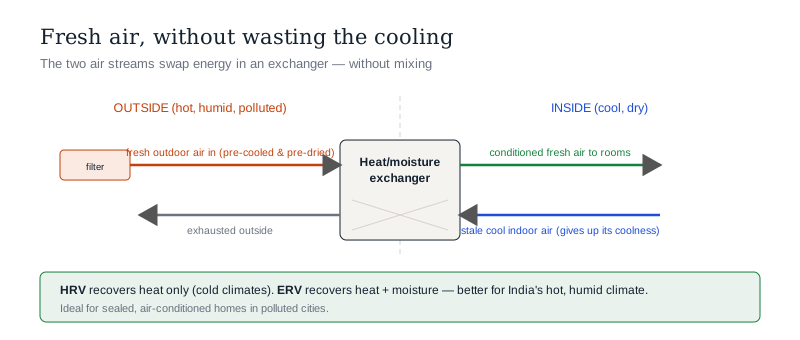
Both work by a heat exchanger that lets two air streams swap energy without mixing:
- Stale indoor air is exhausted out — but on its way, it passes through the exchanger.
- Fresh outdoor air is drawn in — through the other side of the same exchanger, where it's pre-conditioned by the outgoing air.
- In cooling (India's case) — the cool, dry indoor air being thrown out pre-cools the hot incoming fresh air, so the AC has far less work to do.
- The fresh air is filtered on the way in — important against city PM2.5.
- The result: continuous filtered fresh air, with most of the cooling energy recovered — typically recovering a large share of the heat that would otherwise be lost.
HRV vs ERV — the key difference
The one distinction that decides which you want:
- HRV (Heat Recovery Ventilator) — recovers heat (temperature) only. Best for cold, dry climates where you want to keep warmth but not moisture.
- ERV (Energy Recovery Ventilator) — recovers heat and moisture (humidity). It transfers some humidity between the streams, so in cooling it keeps the incoming fresh air drier, and in dry heating it retains some moisture.
- For most of India — hot and often humid — an ERV is usually the better choice, because managing incoming humidity (not just temperature) matters, and it reduces the dehumidification load on the AC.
- In short: HRV = heat only (cold climates); ERV = heat + moisture (India's hot/humid climate).
Where HRV/ERV make sense
- Sealed, air-conditioned homes and apartments — where windows stay shut, so fresh air needs a system.
- Polluted cities — the filtered fresh air keeps PM2.5 out while ventilating.
- Tight, efficient, green buildings — an ERV is often essential to a well-sealed efficient home and part of green-building IAQ.
- Offices, schools, hospitals — high-occupancy spaces needing lots of fresh air efficiently (see building HVAC).
- Less needed where — natural cross-ventilation works well and the outdoor air is clean (much of the year in many places); an ERV shines where the home is sealed or the air is polluted.
Planning an ERV
Because it's ducted and engineered:
- Plan at construction/renovation — the unit and its ducts need space and routing (like new-home HVAC).
- Sizing — to the fresh-air rate the space needs (occupancy-driven), by a professional.
- Duct layout — fresh-air supply and stale-air exhaust routes and grilles.
- Filtration — good filters on the incoming air (PM2.5), maintained.
- Power and controls — and integration with the AC/BAS.
- Maintenance — filters and the core need periodic cleaning to keep working.
The one-line answer
HRV and ERV solve the sealed-home dilemma — needing fresh air but not wanting to bring in heat, humidity and pollution that waste the AC's work — by passing the outgoing stale air and incoming fresh air through a heat exchanger that swaps energy without mixing, so the cool, dry air you exhaust pre-cools (and, for ERV, pre-dries) the fresh air coming in, which is also filtered against PM2.5. The difference: an HRV recovers heat only (for cold, dry climates), while an ERV recovers heat and moisture — which makes the ERV the right choice for most of India's hot, humid climate, cutting both the cooling and dehumidification load. They're the answer for sealed, air-conditioned homes in polluted cities and high-occupancy buildings, less needed where clean-air cross-ventilation works. As engineered ducted systems, they're designed, sized and installed by a qualified HVAC professional, ideally planned in at construction.
Where to go next
- The basics of fresh air: Home & Building Ventilation Guide.
- What clean air means: Indoor Air Quality Guide.
- Plan it into a build: HVAC Planning Guide for New Homes.
- Filtering (the other tool): Air Purifier Guide.
References
- ASHRAE Standard 62.1 (ventilation for acceptable IAQ) and energy-recovery guidance; ISHRAE ventilation & IAQ guidance.
- Bureau of Energy Efficiency (BEE) — Eco Niwas Samhita / ECBC (ventilation & energy recovery): https://beeindia.gov.in/
- National Building Code of India, SP 7 (Part 8 — Building Services, mechanical ventilation; verify current edition), BIS.
HRV/ERV systems are engineered and installed by qualified HVAC professionals; recovery performance depends on the unit and conditions. Verify any standard's current status via the BIS catalogue before relying on it.
Export this guide
Related Guides — Deep-dive reading
Home & Building Ventilation: Why Fresh Air Matters and How to Get It
The most under-rated half of HVAC — how ventilation brings in fresh air and removes stale air, moisture and pollutants, the difference between natural and mechanical ventilation, what 'air changes per hour' and fresh-air rates mean, and why sealed, air-conditioned homes especially need it.
HVAC & CoolingUnderstanding Cross Ventilation
The single most important everyday way to keep an Indian home fresh, cool and healthy — explained plainly: air in one opening, out another, and the layout that makes or breaks it.
Healthy HomesDesigning a Naturally Energy-Efficient Indian Home
Comfort first, gadgets last — passive design, orientation, insulation, ventilation and the climate wisdom that cuts Indian energy bills
SustainabilityRelated Tools — Try Free
Cross-Ventilation Analyzer
Estimate airflow and air changes per hour (ACH) from room size, window areas, layout, and local wind — with NBC 2016 Part 8 compliance check.
Ventilation CalculatorWindow Grill Design Selector
Pick a window grille style and material by priority — security, looks, budget, view — and estimate cost.
Window ToolApartment Video Door System Planner
Enter flats, entrances, floors and guard desk for a first-pass building intercom plan — door stations, indoor monitors, guard station, the right architecture and an indicative cost band.
Building Planner