
Indoor Air Quality (IAQ): What's in Your Air and How to Improve It
The air inside can be worse than outside — the pollutants that matter (PM2.5, CO₂, VOCs, humidity), where they come from, why IAQ affects health, sleep and productivity, how to measure it, and the proven ways to improve it in an Indian home or building.
We think of pollution as an outdoor problem, but people spend most of their time indoors — and indoor air is often more polluted than the air outside, concentrating cooking smoke, dust, chemicals from furnishings, and the outdoor pollution that seeps in. Indoor Air Quality (IAQ) is increasingly recognised as central to health, sleep, focus and long-term wellbeing — and in a polluted country like India, it deserves real attention. This guide explains what's in your indoor air, why it matters, how to measure it, and how to improve it.
It builds on the Ventilation Guide, part of the HVAC Knowledge Hub.
The safety line & scope. This guide helps you understand and improve IAQ. Air purifiers and monitors are homeowner-level; engineered ventilation and filtration systems are designed by qualified HVAC professionals. Gas-appliance and combustion safety is a professional matter.
The pollutants that matter
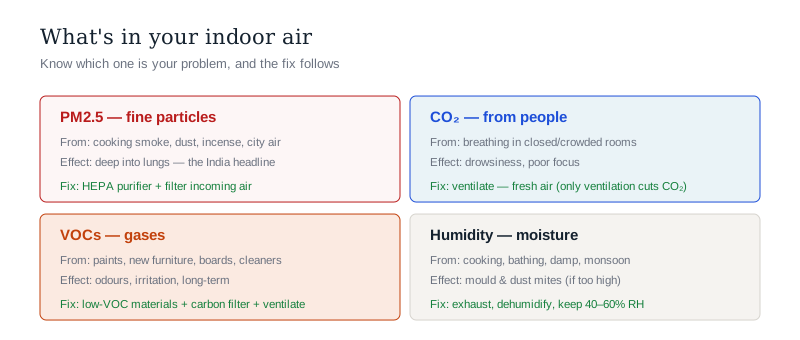
A handful of things drive indoor air quality:
- PM2.5 (fine particulate matter) — tiny particles from cooking smoke, dust, incense, and outdoor pollution that get deep into the lungs. The headline pollutant in Indian cities; the one air purifiers and HEPA target.
- CO₂ (carbon dioxide) — from people breathing; builds up in closed, crowded or AC'd rooms, causing drowsiness and poor concentration. A direct signal of inadequate ventilation.
- VOCs (volatile organic compounds) — chemicals off-gassed by paints, adhesives, new furniture, carpets and cleaners. Cause odours, irritation and long-term health concerns.
- Humidity — too high breeds mould and dust mites; too low dries skin and airways. A comfort and health factor (see humidity control).
- Other — combustion gases (from gas stoves/heaters — a ventilation and safety matter), radon in some regions, allergens and biological contaminants.
Knowing which of these is your problem tells you how to fix it.
Where indoor pollution comes from
- Cooking — the biggest indoor PM2.5 source in many homes (especially without a good kitchen exhaust).
- Outdoor air getting in — city PM2.5 seeps through gaps and open windows.
- Furnishings and finishes — VOCs from new paint, furniture, boards and carpets.
- People and activities — CO₂, moisture, dust, and cleaning chemicals.
- Damp and mould — from poor moisture control.
- Combustion — gas stoves, and any fuel-burning appliance, need ventilation.
Why IAQ matters — health and performance
The evidence is clear and growing:
- Respiratory and cardiovascular health — PM2.5 is linked to serious long-term harm; poor IAQ aggravates asthma and allergies.
- Sleep — CO₂-heavy, stuffy bedrooms worsen sleep quality.
- Concentration and productivity — high CO₂ and poor air measurably reduce cognitive performance (a major reason schools and offices now design for IAQ).
- Comfort and wellbeing — clean, fresh, right-humidity air simply feels better and supports health.
- Vulnerable groups — children, the elderly and those with conditions are most affected.
IAQ isn't a luxury — it's a health foundation, especially where outdoor air is poor.
Measuring your IAQ
You can't manage what you don't measure:
- An IAQ monitor — affordable monitors show PM2.5, CO₂, VOCs, temperature and humidity in real time, revealing your actual air (often surprising).
- CO₂ as a ventilation gauge — rising CO₂ means you need more fresh air; it's the simplest, most useful single number.
- PM2.5 vs outdoor — compare indoor to the city AQI to see how much gets in and whether your filtration works.
- Spot the patterns — see PM2.5 spike while cooking, CO₂ climb in a closed bedroom overnight — and act on what you learn (like an energy monitor for air).
How to improve indoor air quality
The proven levers, roughly in order:
1. Ventilate — fresh air dilutes CO₂ and pollutants; the foundation (natural when the outdoor air is clean, mechanical/ERV when it isn't). See the ventilation guide.
2. Control pollution at source — a good kitchen exhaust, low-VOC paints and materials, no indoor smoking, manage damp.
3. Filter — HEPA air purifiers for PM2.5 (vital in polluted cities), and good filters on HVAC/fresh-air systems.
4. Control humidity — keep it in the healthy range to prevent mould (humidity control).
5. Bring in plants and keep clean — modest helpers alongside the real measures above.
The order matters: ventilate and cut sources first, then filter — a purifier in an unventilated, high-source room is fighting a losing battle.
The one-line answer
Indoor air is often more polluted than outside, concentrating PM2.5 (cooking smoke, dust, city pollution — the headline pollutant in India), CO₂ (from people, a direct sign of poor ventilation), VOCs (paints, furniture, cleaners) and humidity (mould) — and poor IAQ measurably harms respiratory health, sleep, concentration and wellbeing, hitting children and the elderly hardest. Measure it with an affordable IAQ monitor (CO₂ is the simplest ventilation gauge; compare indoor PM2.5 to the city AQI), then improve it in order: ventilate (fresh air, ERV where sealed/polluted), cut pollution at source (good kitchen exhaust, low-VOC materials, manage damp), filter (HEPA purifiers for PM2.5), and control humidity. Ventilate and cut sources before you filter — clean indoor air is a health foundation, not a luxury.
Where to go next
- The foundation: Home & Building Ventilation Guide.
- Filtering PM2.5: Air Purifier Guide.
- Efficient fresh air: HRV & ERV Guide.
- Prevent mould: Humidity Control Guide.
References
- Central Pollution Control Board (CPCB) — indoor air quality guidance; National Clean Air Programme (NCAP): https://cpcb.nic.in/
- ISHRAE — Indoor Environmental Quality / IAQ standard; ASHRAE Standard 62.1 (ventilation & IAQ).
- World Health Organization — air quality (PM2.5) guidelines; National Building Code of India, SP 7 (verify current edition), BIS.
IAQ guidance and pollutant thresholds are set by public-health and standards bodies and evolve; verify current values. Engineered ventilation/filtration is professional work.
Export this guide
Related Guides — Deep-dive reading
Indoor Air Quality Explained
What is really in the air you breathe at home — from Delhi winter smog to monsoon mould — and the clear order in which to fix it.
Healthy HomesSmart Air Purifiers for Indian Homes: Beating PM2.5
Across Delhi-NCR winters and year-round urban haze, indoor air is often worse than the street. This guide explains what actually makes a purifier smart, how CADR and room sizing work, what HEPA and activated carbon really remove, honest running costs on filters and power, and which brands earn their price in Indian conditions.
Smart HomeHow Ventilation Changes Home Quality
The invisible factor behind health, comfort, smell and freshness in your home
Design EducationRelated Tools — Try Free
Child & Elder Home-Safety Audit
Room-by-room safety audit for households with children or seniors — 10 categories, 70+ checkpoints tagged by audience.
Safety AuditCross-Ventilation Analyzer
Estimate airflow and air changes per hour (ACH) from room size, window areas, layout, and local wind — with NBC 2016 Part 8 compliance check.
Ventilation CalculatorFull-Room BOQ — Living, Bedroom, Kitchen, Bath
Room-wise BOQ across living, bedrooms, kitchen, utility, and bathrooms with line-item pricing.
Full-Room BOQ