
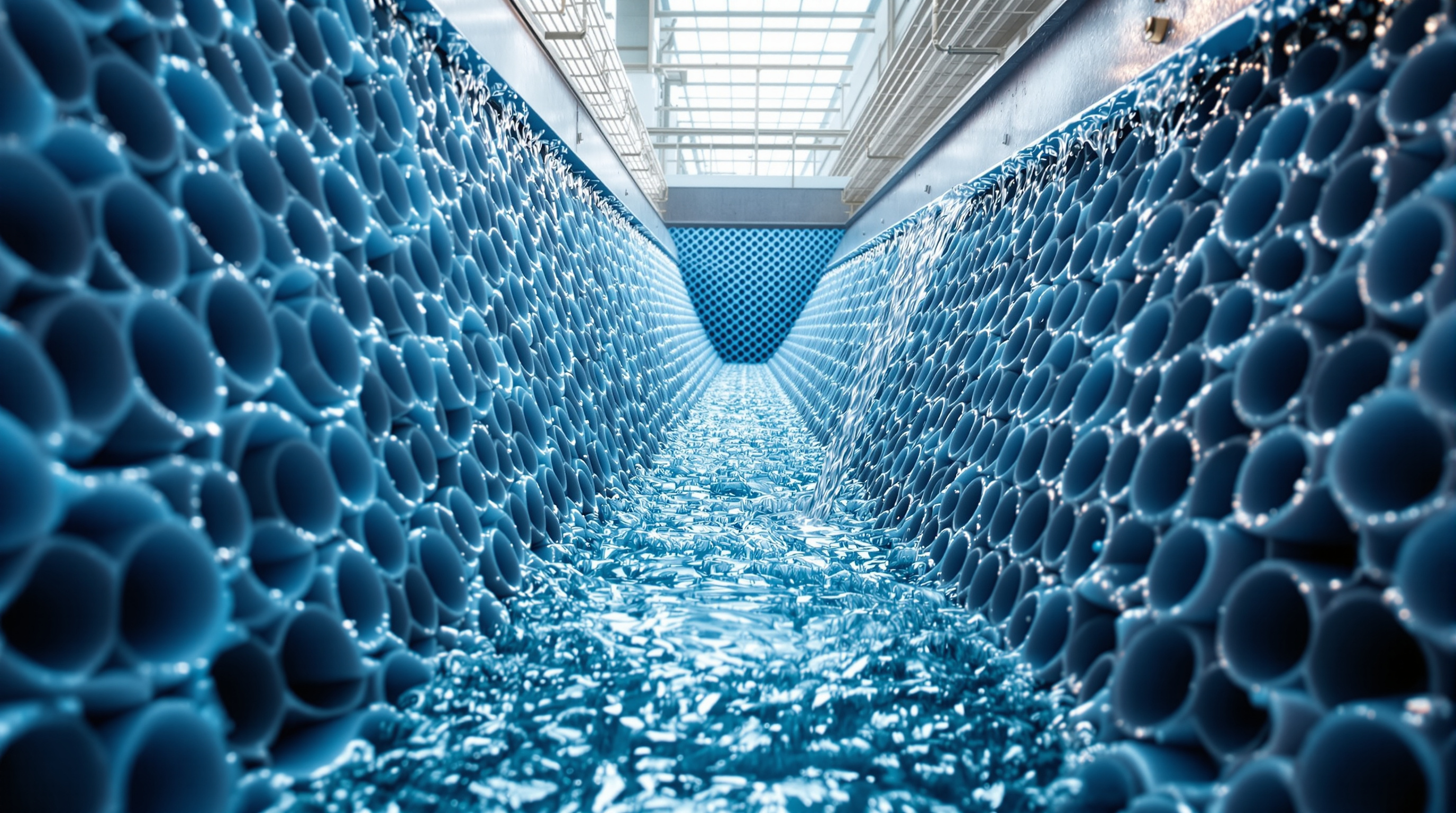
Tube Settler in an STP: Compact High-Rate Settling Explained
How inclined tube and plate media multiply a clarifier's settling area in a fraction of the footprint — what a tube settler is, where it sits in the treatment flow, how the inclined-surface principle works, and how to keep it clean.
Somewhere in almost every modern STP, tucked into the top of a settling tank, is a block of what looks like blue or grey honeycomb — thousands of narrow, slanted channels stacked together like a giant lattice. That block is a tube settler, and it is one of the quietest, cleverest tricks in wastewater engineering. It lets a small tank do the settling work of a tank many times its size, which is exactly what you want when your STP is squeezed into a basement or a corner of the plot.
This guide explains what a tube settler is, the neat piece of physics that makes it work, where it sits in the treatment flow, and how to keep it doing its job for years.
A tube settler does not make particles settle faster. It gives every particle a much shorter distance to fall and far more surface to land on — so the same tank clears many times more water in the same time.
What a tube settler actually is
After the biological stage of an STP, the water carries a load of suspended solids — mostly clumps of the microbes (the biological floc) that just finished eating the pollution. Getting those solids to sink and separate out is the job of the clarifier, the quiet settling tank that follows aeration.
A plain clarifier relies on one thing: gravity, acting over the open water surface of the tank. The bigger the surface, the more water it can clarify per hour. That is fine when you have space — but land is expensive, and basements are cramped. This is where the tube settler earns its place.
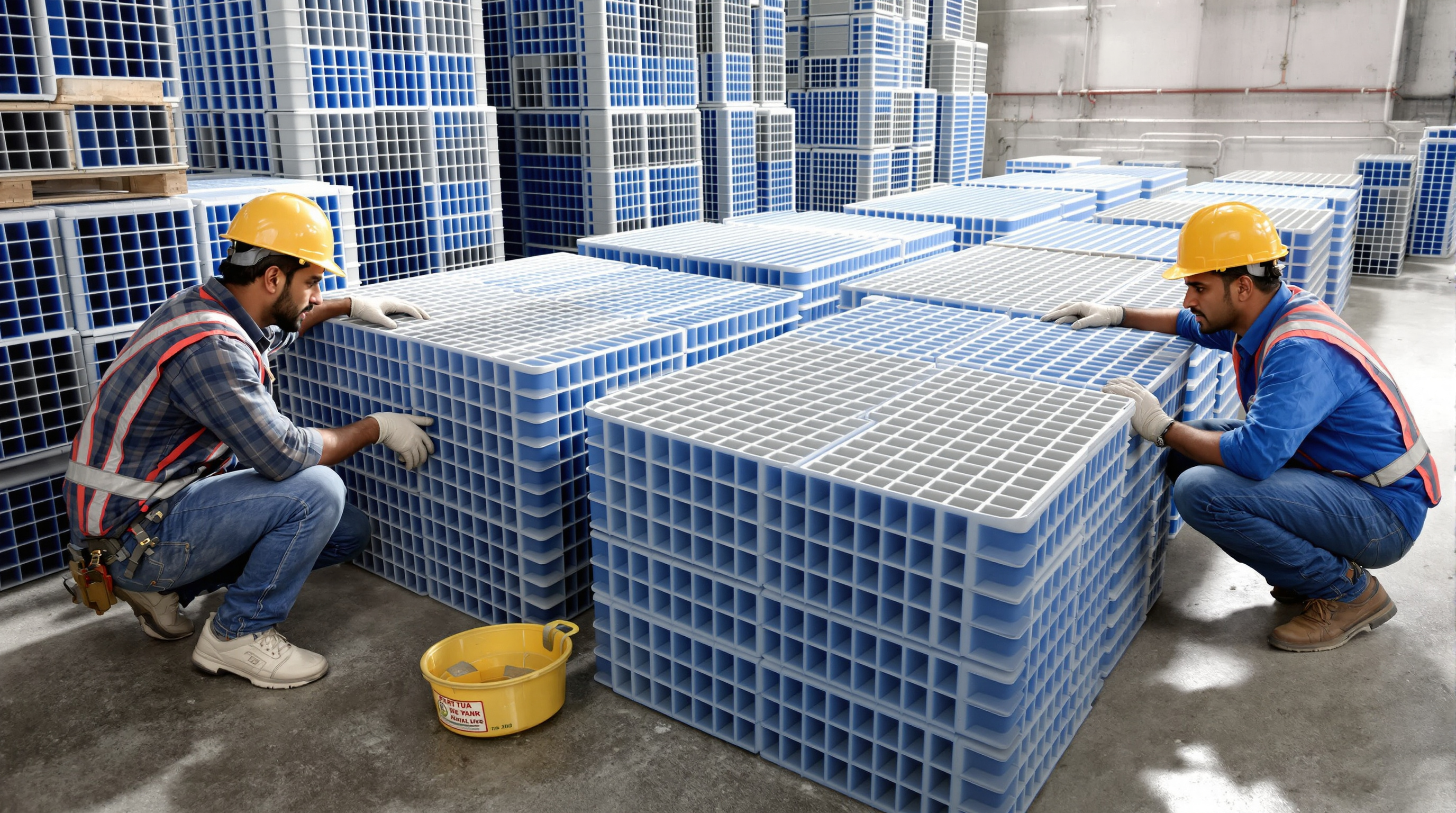
A tube settler is a pack of closely spaced channels — usually square or hexagonal PVC tubes — set at a steep incline (typically around 60 degrees from horizontal) and dropped into the upper portion of the settling tank. Water flows up through the tubes; solids settle onto the tube walls, slide back down, and clean water exits over the weir at the top. Because the tubes present a huge amount of inclined surface folded into a small volume, a modest tank suddenly behaves like a very large one.
The same idea sold as flat inclined sheets instead of tubes is called an inclined plate settler or lamella clarifier — same physics, slightly different geometry.
The inclined-surface principle: why it works
Here is the intuition. Imagine a single deep settling tank. A fine particle entering near the top has to fall the entire depth of the tank before it reaches the floor and is captured. If the water moves through the tank faster than the particle can fall that whole distance, the particle escapes over the weir and your treated water stays cloudy.
Now slide a stack of inclined tubes into that same tank. Two things change:
- The falling distance collapses. Inside a narrow tube, a particle only has to drop a centimetre or two to reach a tube wall — not the full depth of the tank. Short trip, quick capture.
- The settling area explodes. What matters for settling is not the tank's floor area but its total projected settling surface. Every inclined tube adds its own surface. Stack hundreds of them and the effective settling area of the tank multiplies — often by a factor of several times over.
Once a particle lands on a tube wall, it does not stay there. Because the tube is steeply inclined, the accumulating sludge slides back down the wall under its own weight, drops out of the bottom of the tube pack, and collects in the hopper at the base of the tank. Clean water keeps rising through the tubes and out the top. The result is high-rate settling: far more clarified water per square metre of tank than an open clarifier could ever manage.
Engineers capture this with a number called surface loading rate (or overflow rate) — litres per hour per square metre of settling area. A tube settler slashes the effective loading rate because it adds so much area, which is why it can clarify flows that would overwhelm the bare tank.
| Feature | Plain clarifier | With a tube settler |
|---|---|---|
| Settling area | The open water surface only | Multiplied by every inclined tube — several times more |
| Distance a particle must fall | Full tank depth | A centimetre or two to the nearest tube wall |
| Footprint for a given flow | Large | Compact — often a fraction of the size |
| Handling of flow surges | Poorer; solids carry over | Better; more area absorbs the peak |
| Output water clarity | Good | Consistently clearer, lower TSS |
Where the tube settler sits in an STP
A tube settler is not a stage on its own — it is an upgrade dropped into a settling tank. You will find it in two common spots:
- In the secondary clarifier, right after the biological stage — whether that is a classic activated sludge process, an MBBR, or an extended aeration plant. This is the most common location, separating the biological floc from the clean water.
- In a primary or tertiary settling tank, or ahead of the filters, wherever suspended solids need to be pulled out before the water moves on to pressure sand and carbon filters and disinfection.
In the overall relay of treatment, the tube settler lives inside the settling step: the water arrives from aeration carrying floc, passes up through the tube deck, and leaves clear over the weir to be polished and disinfected. To see how that step fits the full journey, walk through the STP process flow or the plain-language how an STP works guide.
Sizing basics (directional)
You do not size a tube settler by guesswork, but a few rules of thumb explain what a designer is balancing:
- Angle. Around 55–60 degrees is standard. Steep enough that captured sludge slides off on its own; not so steep that you lose settling surface.
- Tube size and length. Common channels are roughly 50 mm across and around 1 metre long along the slope. Narrower channels and longer tubes give more surface but clog more easily.
- Effective settling area. The design target is a low surface loading rate over the projected area of the tube pack — this is the number that decides how compact the tank can be for a given KLD flow.
- Material. Almost always PVC or FRP — light, corrosion-proof, and easy to lift out in modular blocks for cleaning.
Because the tube settler's benefit scales with the flow it handles, the starting point is always your building's design flow. If you are still working that out, the STP Capacity Calculator and the sewage generation calculator turn occupancy into the litres-per-day figure a designer needs.
Problems and O&M: keeping tubes clean
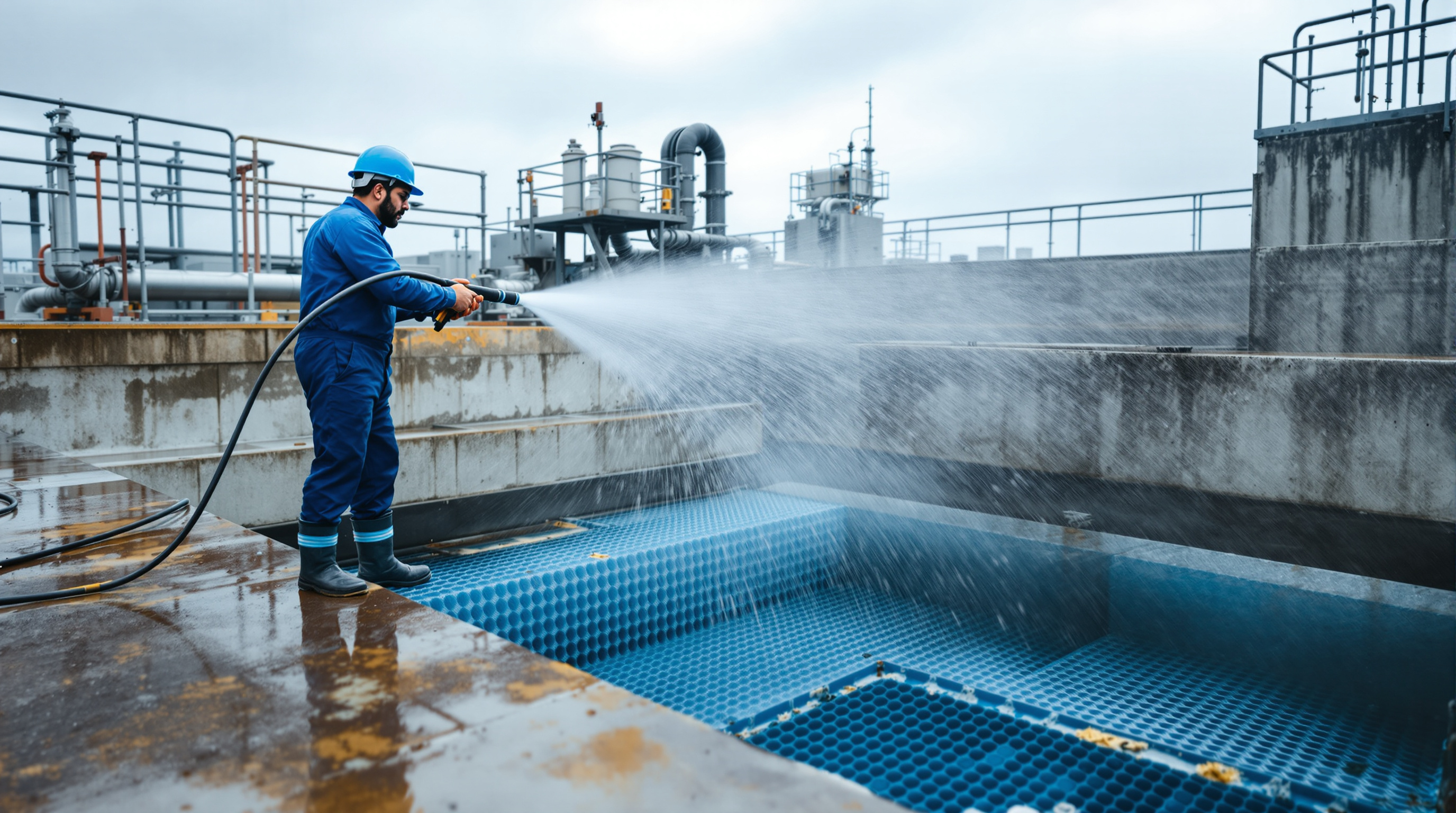
A tube settler has no moving parts, but it is not maintenance-free. Its enemy is fouling — solids and biological growth building up inside the channels until flow is choked and clarity drops.
Watch for these signs and habits:
- Cloudy output / rising TSS. The first symptom of clogged or channelled tubes is treated water that is no longer clear. It usually means sludge is bridging the tubes or the underlying sludge blanket has risen too high.
- Sludge carry-over. If the sludge hopper below the tubes is not de-sludged regularly, the blanket climbs into the tube pack and floc washes over the weir. Regular sludge wasting to the sludge holding tank is the fix.
- Biological slime and algae. In tanks exposed to light, algae grows on and in the tubes. Covering the tank and periodic cleaning keeps it in check.
- Physical fouling. Rags, hair and grit that slip past the bar screen can lodge in the tubes — a reminder that good preliminary treatment protects everything downstream.
The routine is simple: lift out the modular tube blocks (they are designed to come out in sections), hose them down with a pressure jet — often back-flushed against the normal flow direction — clear any trapped debris, and drop them back in. Depending on the load, this is a monthly to quarterly task. Keep the tank's sludge blanket low with disciplined de-sludging and the tubes will foul far more slowly.
The bottom line
A tube settler is a stack of steeply inclined tubes that multiplies a settling tank's effective area many times over by shrinking the distance every particle has to fall. It turns a compact clarifier into a high-rate one — clearer water, smaller footprint, better behaviour under flow surges — with no moving parts and modest upkeep. In space-starved Indian STPs, it is often the difference between a plant that fits and one that does not.
To see how the settling step connects to everything around it, continue with the clarifier guide, the full STP process flow, or browse the complete Sewage Treatment Plants guide library.
Export this guide
Related Guides — Deep-dive reading
Clarifier (Settling Tank) in an STP: How It Works
The quiet tank where biological floc settles out and clear water rises — how a clarifier gives you clean effluent, why sludge return (RAS) and wasting (WAS) matter, and the simple design numbers that decide whether it works.
Sewage Treatment PlantsHow Does an STP Work? A Step-by-Step Explanation
Follow a single drop of sewage from the building drain to reusable water — through screening, settling, the living microbial heart of the plant, and final polishing — with every stage explained in plain language and no engineering background assumed.
Sewage Treatment PlantsThe Sewage Treatment Process Flow, Explained: Every Stage From Inlet to Reuse
Follow a drop of sewage through a typical STP — inlet, screening, aeration, clarifier, filtration, disinfection and reuse — as one connected flow, with a block diagram and a unit-by-unit table, in plain language.
Sewage Treatment PlantsRelated Tools — Try Free
Rainwater Tank Sizer
How big should your rainwater tank be? Computes annual harvest, recommended tank capacity in litres, water-bill savings, and payback — for 10 Indian cities.
RWH CalculatorSewage Generation Calculator
Estimate the daily sewage a building generates and its peak flow in KLD from occupancy, LPCD, sewage return factor and peak factor.
STP CalculatorSTP Capacity Calculator
Size a sewage treatment plant in KLD from your building's occupancy — water demand, sewage generated and recommended STP capacity.
STP Calculator