
Aeration Design Principles for STPs: Oxygen Demand, Diffusers & Blower Sizing
How engineers actually size the aeration system at the heart of a sewage treatment plant — from oxygen demand and alpha/beta factors to SOTE, fine versus coarse bubble diffusers, blower selection and the energy bill that follows for decades.
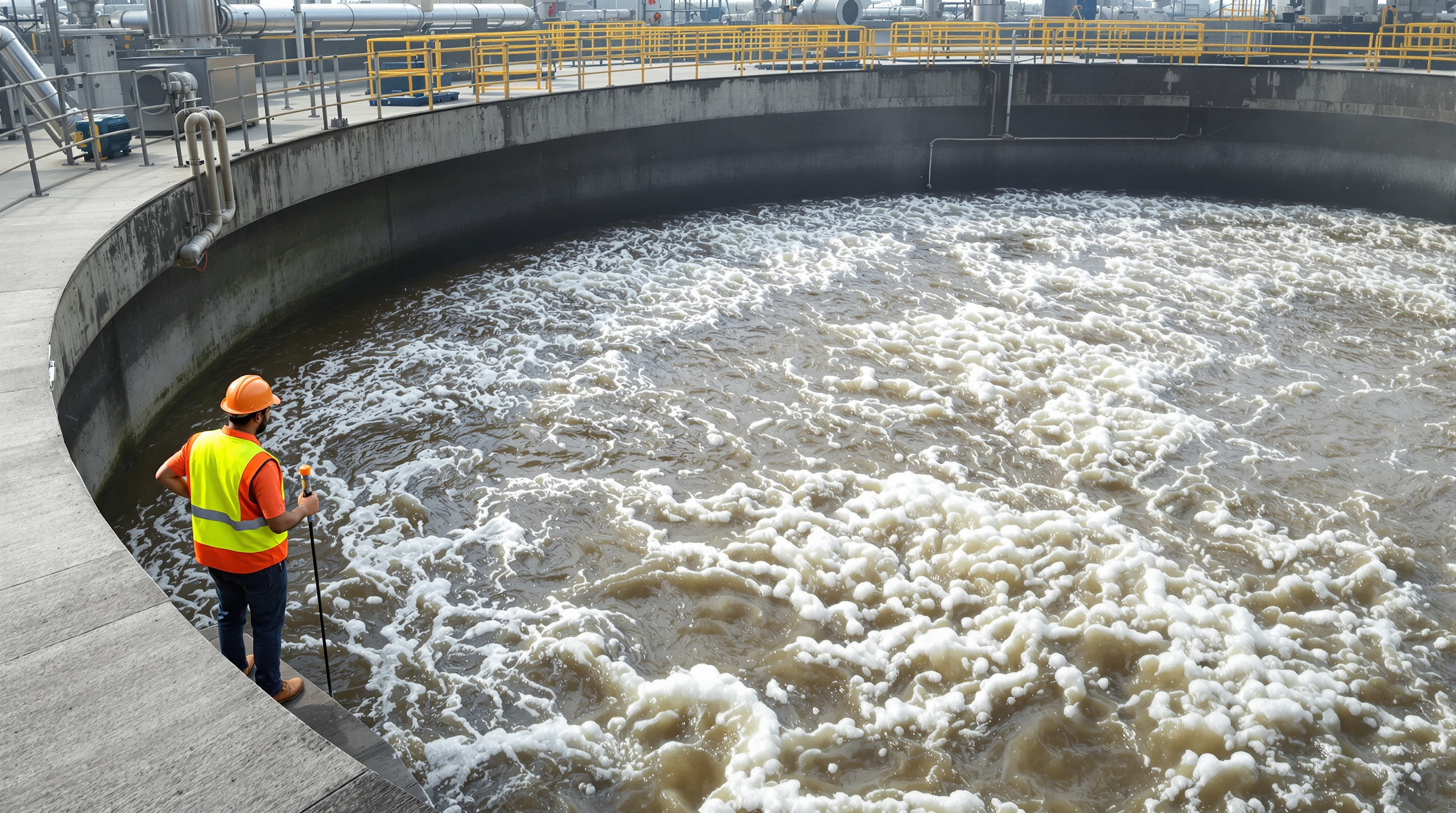
In almost every sewage treatment plant, one system quietly decides whether the plant works and what it costs to run: aeration. It is the set of blowers and diffusers that pushes air into the biological tank, feeding oxygen to the microbes that actually destroy the pollution. Get it right and the plant meets its discharge norms on a comfortable power budget. Get it wrong and you are either starving the bugs — and failing your outlet BOD — or drowning the tank in surplus air and paying for it every single day for the next twenty years.
Aeration typically accounts for 50–65% of an STP's total electricity bill, which is why it deserves far more design attention than it usually gets. This guide walks through how aeration is actually designed: how much oxygen the process needs, why the numbers on a datasheet are not the numbers in your tank, how diffusers and blowers are chosen, and where the energy savings hide.
Aeration is not "adding air." It is delivering a precise mass of oxygen — kilograms per hour — into a hostile, warm, dirty liquid where oxygen dissolves reluctantly. The whole discipline is about closing the gap between the oxygen the process demands and the oxygen a blower can actually transfer.
Start with oxygen demand, not air
The first design principle is that you size aeration around oxygen demand, measured as a mass per unit time, never around a vague airflow. In an activated sludge process the microbes consume oxygen for two jobs:
- Carbonaceous demand — oxidising the incoming organic load (the BOD).
- Nitrogenous demand — oxidising ammonia to nitrate (nitrification), where the process is designed to remove nitrogen.
A working estimate of the Actual Oxygen Requirement (AOR) combines both:
- Roughly 1.0–1.5 kg O₂ per kg BOD removed for the carbon load, plus
- Roughly 4.3 kg O₂ per kg of ammonia-nitrogen oxidised where nitrification is required, minus
- A credit for oxygen recovered if the plant denitrifies.
So the first thing a designer needs is a reliable organic load in kg/day of BOD — not just a flow in KLD. That load falls straight out of the incoming flow and strength, which is why aeration design always begins upstream. Pin down the flow with the Sewage Generation Calculator and the load with the Organic Loading Calculator; if you are unsure what BOD, COD and TSS actually mean here, the wastewater characteristics guide sets the vocabulary.
The gap between datasheet and reality: alpha, beta and SOTE
Here is where aeration design earns its reputation. A diffuser is rated by its SOTE — Standard Oxygen Transfer Efficiency — the percentage of oxygen in the supplied air that dissolves into the water under standard conditions: clean tap water, 20 °C, zero dissolved oxygen, at sea level. Your aeration tank is none of those things. So the datasheet SOR (Standard Oxygen Requirement) has to be corrected back up to the real AOR using a stack of factors:
| Factor | What it corrects for | Typical value |
|---|---|---|
| α (alpha) | Reduced transfer in dirty wastewater vs clean water | 0.4–0.8 (fine bubble); higher for coarse bubble |
| β (beta) | Lower oxygen saturation from dissolved salts | 0.90–0.98 |
| F (fouling) | Diffuser membrane fouling over its service life | 0.8–0.9 |
| Temperature | Lower saturation and demand shifts at warm Indian temps | correction to ~28–32 °C |
| DO deficit | You run the tank at ~2 mg/L DO, not zero | reduces driving force |
| Altitude / pressure | Air density at site elevation | site-specific |
The practical consequence is brutal: because α for a fine-bubble system in real sewage can be as low as 0.5, and fouling and DO deficit erode transfer further, the oxygen you actually get into the water can be less than half the clean-water SOTE on the brochure. A designer who sizes blowers on the raw SOTE will build a plant that cannot breathe on a hot afternoon. Always convert AOR to a field SOTE-adjusted air requirement, then size for it.
Fine bubble vs coarse bubble diffusers
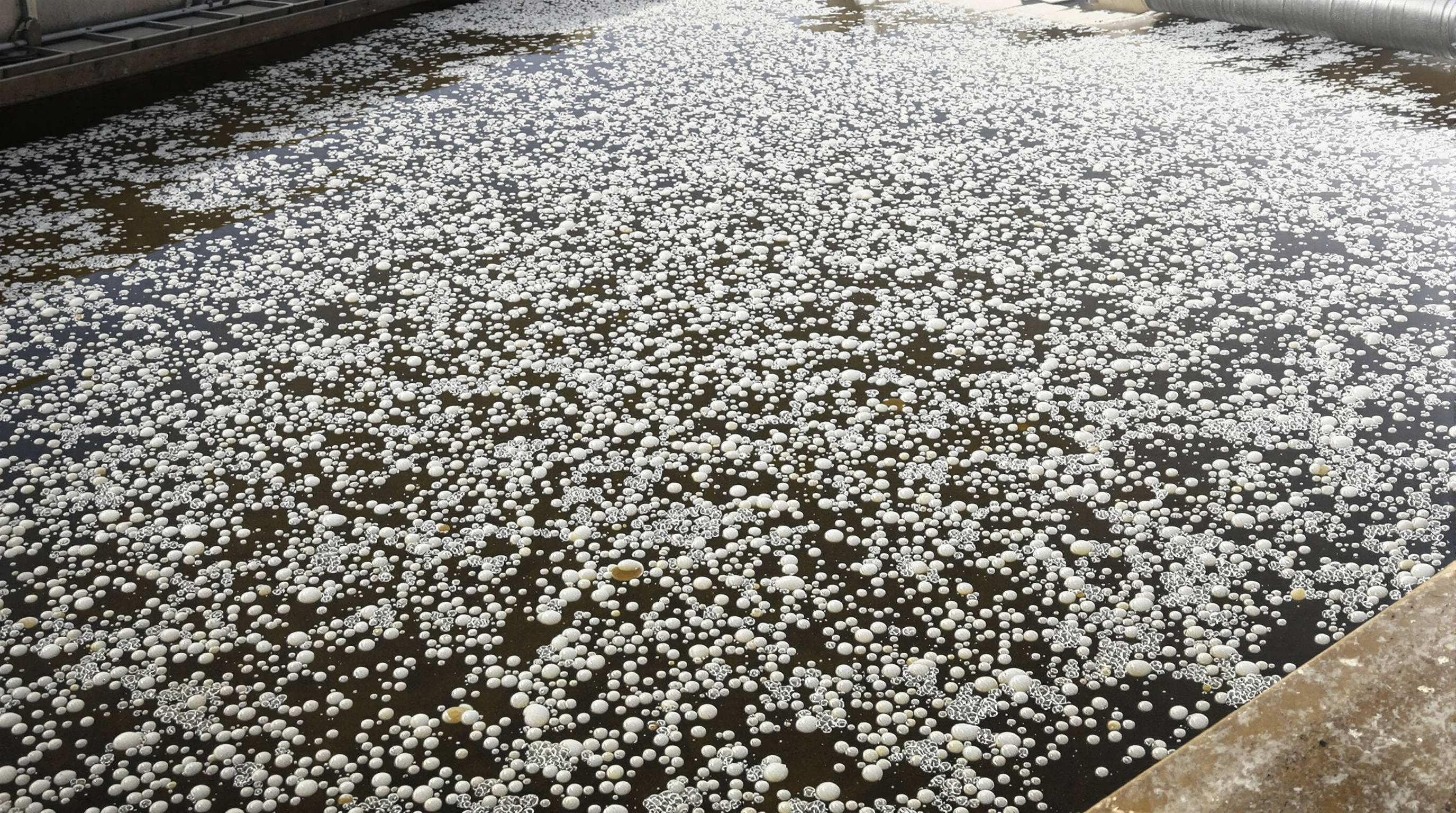
The single biggest efficiency lever is the diffuser type.
- Fine bubble diffusers — membrane discs or tubes with thousands of tiny pores producing 1–3 mm bubbles. Small bubbles mean vast surface area and a long rise time, so oxygen transfer is high: SOTE around 5–7% per metre of submergence, often 25–40% overall in a deep tank. They are the default for energy-efficient municipal and building STPs. The trade-off: the fine membranes foul, need clean air and periodic cleaning, and cannot tolerate grease-heavy or grit-laden influent without good pre-treatment.
- Coarse bubble diffusers — larger orifices producing big bubbles that rise fast. Transfer efficiency is much lower (roughly a third of fine bubble) so they burn more energy per kg of oxygen — but they are robust, hard to clog, and provide strong mixing. They earn their place in equalization tanks, sludge holding, channels, and dirty industrial streams.
For most domestic aeration tanks, fine bubble is the right call, and the deeper the tank (within reason, 4–6 m of diffuser submergence) the more oxygen each bubble transfers on its way up. Mechanical surface aerators are a third option — simpler, but generally less efficient and harder to control than a diffused-air system with a modern blower.
Sizing the blower
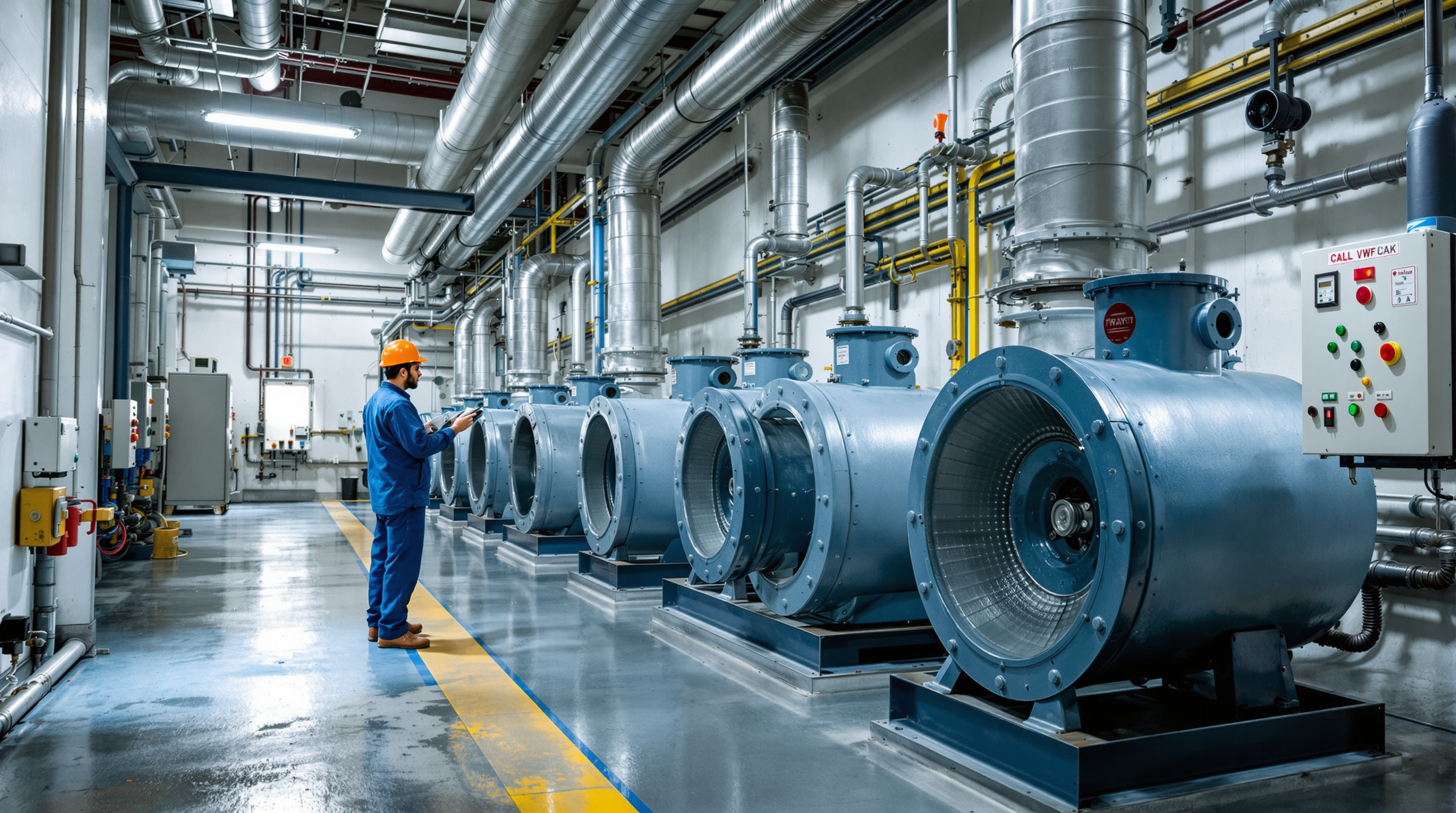
Once you know the field air requirement in Nm³/hr, you size the blower to deliver that volume against the total system pressure — the sum of static head (the water depth over the diffusers) plus the dynamic losses through pipework, valves and the diffuser membranes themselves. In a typical STP the discharge pressure lands around 0.4–0.7 bar (roughly 4–7 m water column).
Good blower design follows a few hard rules:
- Never size for a single point. Sewage load swings between night and morning peaks. Provide turndown — multiple smaller blowers, or VFD (variable frequency drive) control — so airflow tracks demand instead of blasting full air at 3 a.m.
- Always provide standby. The classic arrangement is N+1: enough duty blowers for peak load plus one identical standby. Aeration cannot stop, or the biomass dies within hours.
- Match the technology. Roots-type (positive displacement) blowers suit small-to-mid plants; turbo / magnetic-bearing blowers deliver markedly better efficiency at larger scale and are increasingly specified where the power saving justifies the capital.
- Control on DO, not the clock. A dissolved-oxygen probe in the tank driving the VFD to hold ~1.5–2.5 mg/L is the single most effective energy control in the whole plant.
Where the energy savings hide
Because aeration dominates the running cost, small design choices compound into large money over a plant's life. The levers that matter most, in order:
- DO-based automatic control. Holding DO at setpoint instead of running blowers flat-out routinely cuts aeration energy by 20–30%.
- Fine bubble over coarse wherever influent quality allows — often a 2–3× improvement in oxygen delivered per kWh.
- Right-sizing, not oversizing. An oversized blower running throttled is chronically inefficient. Size to real AOR with honest α and fouling factors.
- Adequate submergence to squeeze more transfer from each bubble.
- Clean air and diffuser maintenance — fouled membranes quietly raise back-pressure and waste power for years before anyone notices.
The prize is real: a well-designed and well-controlled aeration system can run at half the energy of a poorly designed one treating the same load.
Putting it together
Aeration design is a short chain, each link depending on the last. Establish the flow and organic load. Convert that load into an Actual Oxygen Requirement. Correct honestly for the α, β, fouling, temperature and DO factors that separate a datasheet from your tank. Choose the diffuser type and submergence that give the SOTE you need. Then size blowers — with turndown and standby — to deliver the air against real system pressure, and control them on dissolved oxygen. That sequence is what turns a tank of dirty water and a bank of blowers into a plant that quietly meets its norms without wrecking the electricity budget.
To go deeper into the biology those blowers are feeding, read how an STP works and the activated sludge process guide, or browse the full Sewage Treatment Plants library. And before you touch a blower datasheet, get the load right: the Organic Loading Calculator and the Hydraulic Retention Time Calculator give you the two numbers every aeration design starts from.
Export this guide
Related Guides — Deep-dive reading
Air Blowers & Diffusers in an STP: How Aeration Actually Works
The blowers that push air and the diffusers that turn it into bubbles are the lungs of your sewage treatment plant. Here is how they work, how they are sized, and why they decide most of your electricity bill.
Sewage Treatment PlantsAeration Tank: The Biological Heart of an STP
The tank where blowers push oxygen into billions of microbes that eat the sewage's organic load — how it works, what DO, MLSS, F/M and HRT mean, and why it quietly runs up the biggest electricity bill in the plant.
Sewage Treatment PlantsEnergy-Efficient STP Design: How to Build a Plant That Sips Power
Aeration eats 50-70% of an STP's electricity bill. This guide shows how right-sized blowers, fine-bubble diffusers, DO control with VFDs, gravity flow and the right technology cut running cost for the life of the plant.
Sewage Treatment PlantsRelated Tools — Try Free
Hydraulic Retention Time (HRT) Calculator
Compute a reactor or tank's hydraulic retention time from its volume and daily flow, and benchmark it against recommended ASP, MBBR and SBR ranges.
STP CalculatorSewage Generation Calculator
Estimate the daily sewage a building generates and its peak flow in KLD from occupancy, LPCD, sewage return factor and peak factor.
STP CalculatorWindow Cleaning Cost Calculator
Estimate professional window cleaning cost per visit and per year by access and frequency.
Window Calculator