
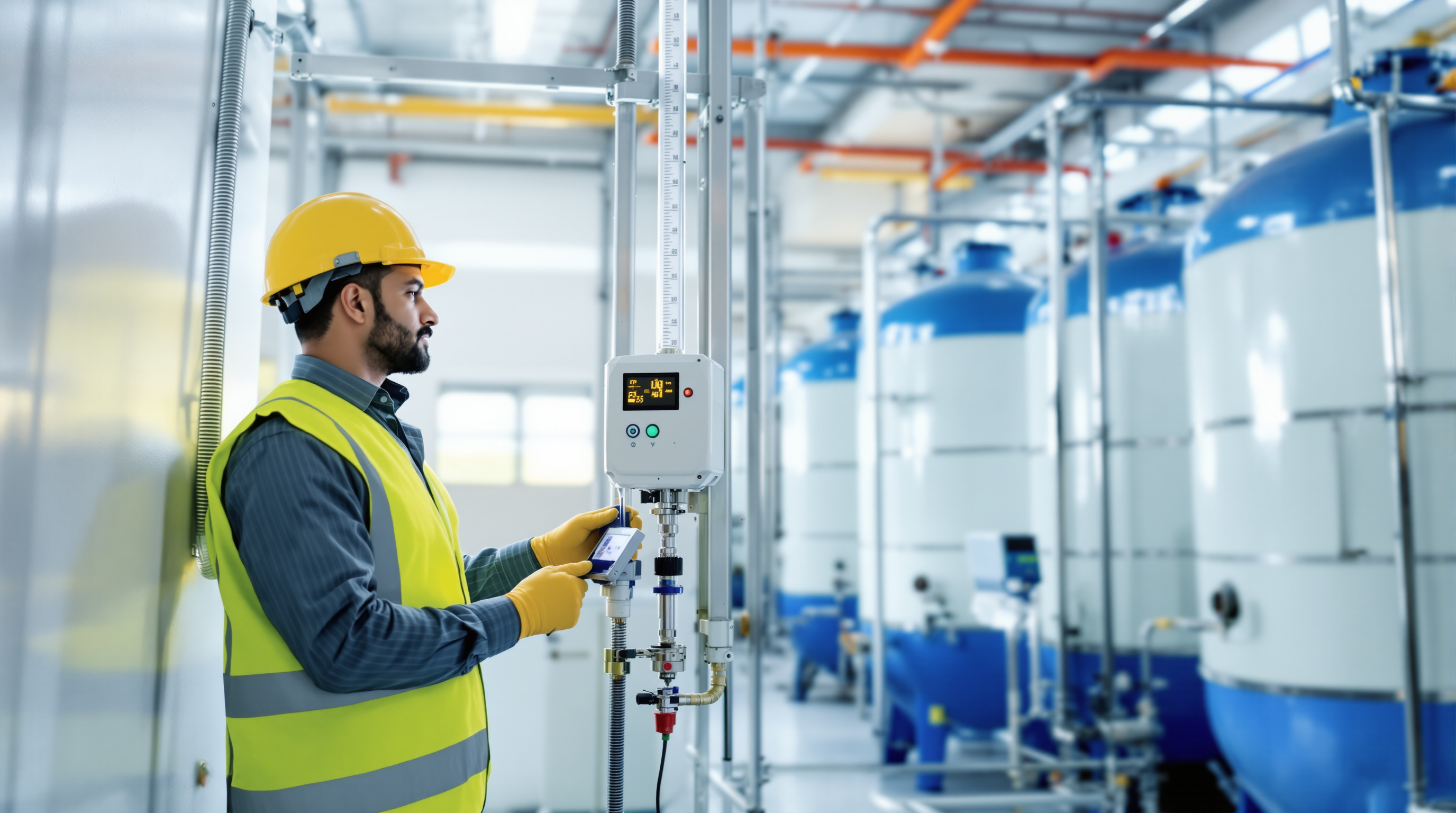
Chemical Dosing in STPs: Chlorine, Coagulants, Antiscalants and pH Correction
How to dose the four chemicals every building STP relies on — with the right pumps, the right dose, safe storage, and no guesswork — so your treated water stays compliant without wasting money or damaging the plant.
Most of the work an STP does is biological — microbes eating waste in an aeration tank. But a handful of jobs the bugs cannot do are handled by chemistry: killing the bacteria that survive treatment, dropping out stubborn fine solids, protecting membranes from scale, and keeping pH in the band the microbes need. That chemistry arrives through chemical dosing — small, metered doses of a few reagents pumped into the flow at exactly the right point and rate.
Dosing is where a lot of money quietly leaks and a lot of plants quietly fail their tests. Dose too little chlorine and your treated water fails on faecal coliform; dose too much and you waste chemical, corrode pipwork and irritate anyone reusing the water. This guide covers the four chemicals a typical Indian building STP d0ses, the pumps that deliver them, how to set and check the dose, and how to store the stuff without hurting anyone.
The golden rule of dosing: a dose you cannot measure is a dose you cannot trust. Every dosing system needs a way to verify the result — a chlorine residual, a jar test, a pH reading — or you are just pouring chemical in and hoping.
The four chemicals and what each one does
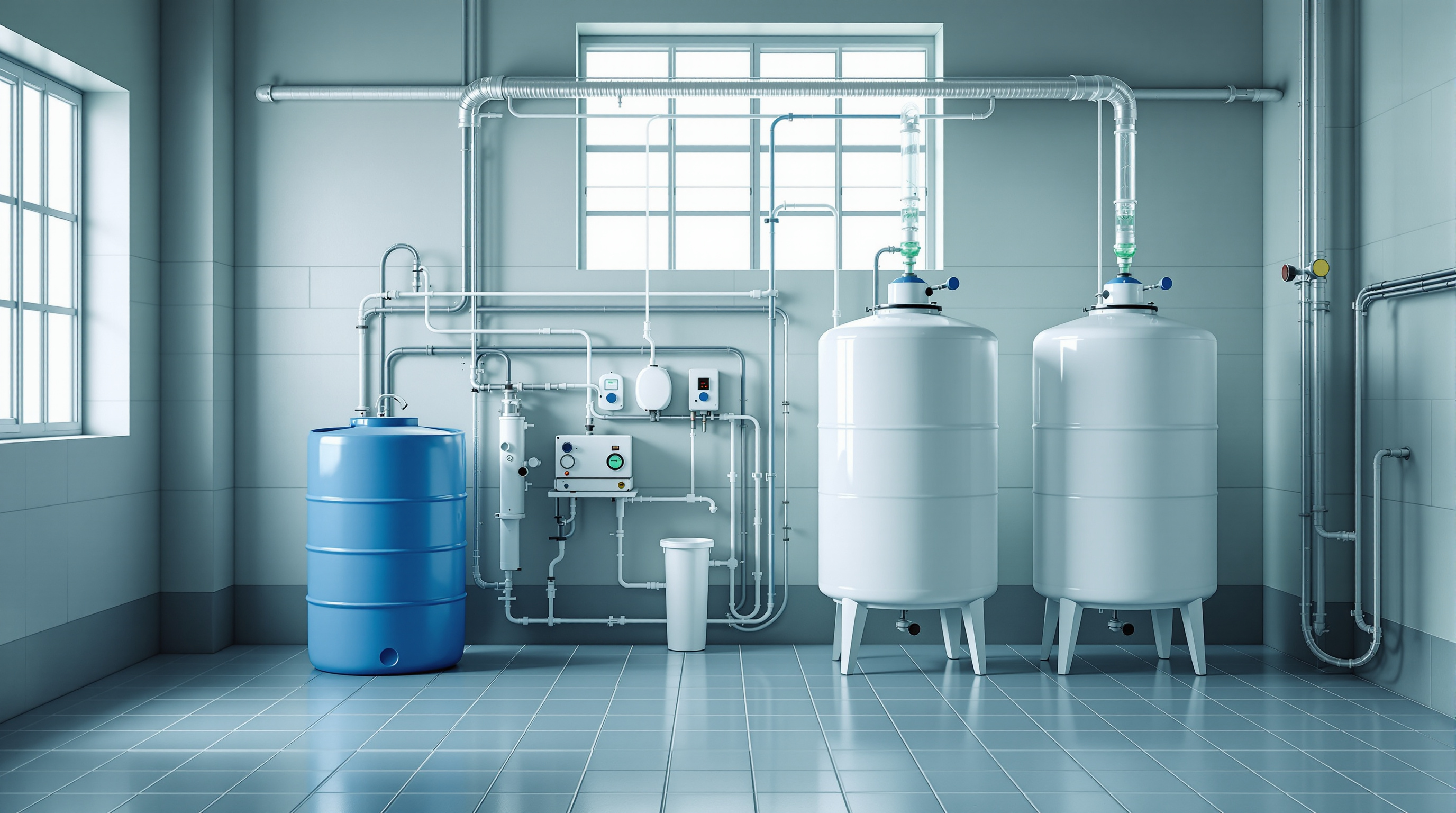
Not every plant uses all four, but between them these cover almost all routine STP dosing.
- Chlorine (disinfection). Usually sodium hypochlorite (liquid bleach, ~10–12% available chlorine) dosed into the treated water after filtration to kill remaining bacteria and viruses. This is the single most common dose in any STP. Some plants use calcium hypochlorite (bleaching powder) or on-site electro-chlorination instead.
- Coagulant (solids removal). Alum (aluminium sulphate) or a PAC/polyelectrolyte dosed ahead of the clarifier or filter to make fine, non-settling solids clump together so they drop out. Used when TSS or turbidity refuses to come down biologically, or to knock down phosphorus.
- Antiscalant (membrane protection). Dosed upstream of UF or RO membranes in plants that produce high-grade reuse water, to stop calcium and silica scale forming on the membrane surface. Small dose, big consequence if skipped.
- pH correction. Acid or alkali to nudge pH back into range. Incoming sewage or a nitrifying aeration tank can push pH out of the 6.5–8.5 band the culture and the discharge norms both need. Lime or caustic soda raises pH; a mild acid lowers it.
If you want to understand why pH and TSS matter so much to the biology and the discharge standard, the guide on wastewater characteristics — BOD, COD, TSS, pH is the companion read to this one.
Dosing pumps: how the chemical actually gets in
The workhorse is the electronic metering (dosing) pump — a small diaphragm pump that delivers a precise, repeatable volume per stroke. You set the dose two ways: stroke length (how much each stroke moves) and stroke frequency (how many strokes per minute). Together they set the millilitres-per-hour going into the flow.
A complete dosing skid is more than the pump:
- A chemical day tank or drum, ideally with a level indicator.
- A suction line with a foot valve and strainer so the pump never runs dry or draws grit.
- An injection point with a non-return injection valve, placed where there is enough turbulence to mix.
- A calibration column — a graduated tube you isolate to measure exactly how much the pump draws in 60 seconds. This is how you turn "the dial says 60%" into "the pump delivers 4.2 litres per hour."
- Ideally a pulsation damper and a pressure relief/back-pressure valve on longer lines.
The dose can be controlled three ways, in rising order of sophistication:
- Manual/fixed — you set a rate and leave it. Fine for a steady, well-understood flow, but blind to changes.
- Flow-proportional — the pump takes a pulse signal from the flow meter and doses more when flow rises. This keeps the dose per litre constant, which is what you actually want.
- Residual/analyser feedback — an online chlorine or pH analyser trims the pump to hit a target residual automatically. Best control, highest cost and maintenance.
For the chlorine step specifically, the plant hardware — contact tank, pumps and analyser — is covered in the chlorination system guide; this article is about the dose itself.
Setting the dose — and proving it
The two questions every operator must be able to answer are how much and did it work.
Chlorine. A typical STP dose is in the order of 3–5 mg/l of chlorine on the treated flow, aiming for a residual of 0.2–0.5 mg/l after 30 minutes of contact time. But the "right" number depends on your water — so set a starting dose, then measure the residual with a DPD test kit and adjust. Don't compute hypo volumes on the back of an envelope: the chlorine dose calculator converts your flow, target dose and hypochlorite strength straight into litres per hour and a pump setting.
Coagulant. Never guess alum — run a jar test. Take beakers of the actual water, dose an increasing series (say 10–60 mg/l), stir, settle, and pick the lowest dose that gives a clear supernatant and a good floc. That dose, scaled to flow, is your setting.
Antiscalant. Follow the membrane/antiscalant supplier's dose (commonly a few mg/l) tied to your feed-water hardness and recovery — this is one place to trust the manufacturer's figure, not improvise.
pH. Dose to a target pH, not a fixed chemical rate, and always with a live pH reading closing the loop.
To size the day-tank and monthly chemical budget for any of these, the chemical requirement / chlorine dose calculator turns a dose and a flow into a consumption figure you can actually purchase against.
Over-dosing and under-dosing: the real costs
This is the table to pin above the dosing skid.
| Chemical | Under-dosing shows up as | Over-dosing shows up as |
|---|---|---|
| Chlorine | Zero/low residual, high faecal coliform, failed test, biofilm and odour in the reuse line | Sharp chlorine smell, corroded fittings, high running cost, complaints from reuse users, harm to any plants irrigated |
| Coagulant (alum) | Cloudy filter outlet, high TSS/turbidity, short filter runs | Low pH (alum is acidic), heavy chemical sludge to dispose, wasted chemical, blinded filter |
| Antiscalant | Scale on membranes, falling flux, rising pressure, frequent CIP cleans | Wasted chemical; some antiscalants can foul the membrane if grossly overdosed |
| pH correction | pH drifts out of band, sluggish biology, non-compliant discharge | Over-shoot to the opposite extreme, chemical waste, stressed culture |
Two habits prevent almost all of it: flow-proportional control so the dose tracks the flow instead of a fixed guess, and a daily measured check (residual, turbidity, pH) logged in the plant register. A dose without a measurement is the most expensive mistake in the plant.
Safe storage and handling
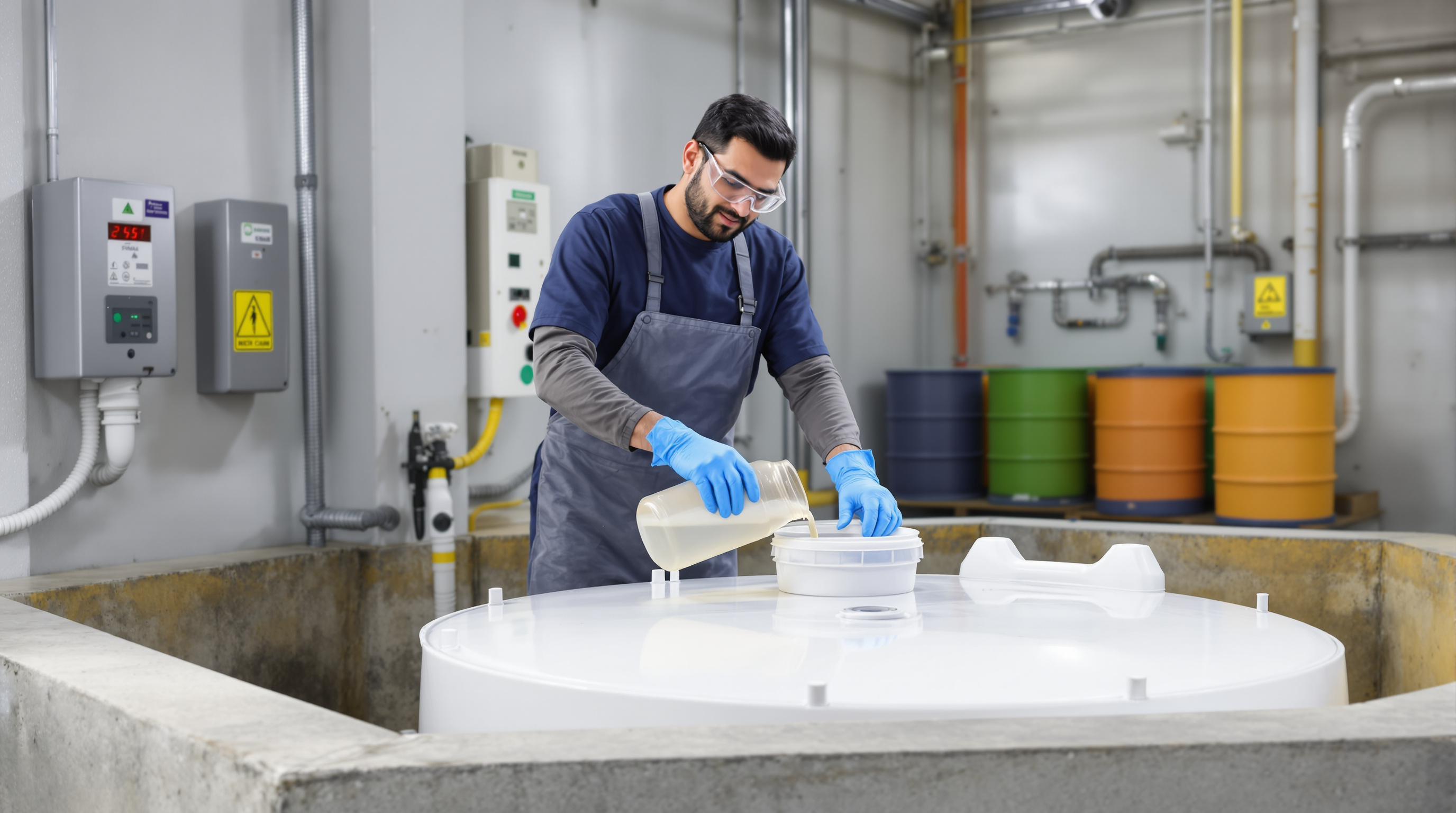
These are industrial chemicals. Sodium hypochlorite off-gasses chlorine, alum is acidic, caustic and acid burn skin — treat them accordingly.
- Segregate. Never store acids next to hypochlorite or caustic. Mixing hypochlorite with acid releases toxic chlorine gas. Keep clearly separated, labelled bunds.
- Bund every tank. Each storage tank sits in a secondary containment (bund) sized to hold its full volume if it splits.
- Ventilate the chemical room and keep it cool and out of direct sun — hypochlorite degrades and loses strength fast in heat, which quietly weakens your disinfection.
- PPE always — gloves, apron, splash goggles and a face shield when decanting. Keep an eyewash and clean-water source at the dosing station.
- Stock control — hypochlorite loses strength over weeks, so buy in sized batches and rotate first-in-first-out rather than hoarding a drum that will be half-strength by the time it is used.
- Compatible materials — dosing lines, seals and injection valves must be rated for the specific chemical; the wrong plastic perishes and leaks.
Fold dosing into your routine
Dosing is not a set-and-forget system. Build these into the existing rounds:
- Daily — check day-tank levels, confirm each pump is stroking, measure chlorine residual and pH, and log them. This slots straight into the daily STP checklist.
- Weekly — calibrate each dosing pump against the calibration column; clean strainers and injection valves; run a jar test if coagulant is in use.
- Monthly/quarterly — inspect diaphragms and valves, verify analyser calibration, reconcile chemical consumption against expected dose to catch a drifting pump or a leak.
For where dosing sits in the bigger operating picture, start from the Sewage Treatment Plants guide library or the STP troubleshooting guide when a dose-related fault appears. Get the four chemicals dosed to a measured target, keep the pumps calibrated, and store the stock safely — and chemical dosing stops being a source of failed tests and becomes the quiet, reliable finish to your treatment train.
Export this guide
Related Guides — Deep-dive reading
Chlorination System in an STP: Disinfection Explained
The final disinfection step that kills the pathogens biology and filtration leave behind — how chlorine dosing, contact time and residual work together to make treated sewage safe to reuse or discharge, explained for owners and operators alike.
Sewage Treatment PlantsSTP Chemical Cost Analysis: Chlorine, Coagulants, Antiscalants & pH Correction (India 2026)
What the chemicals in a sewage treatment plant actually cost each month in India — chlorine, coagulants, polyelectrolyte, antiscalant and pH correction — with realistic dose rates, rupee ranges by capacity, and the practical levers that keep the bill down.
Sewage Treatment PlantsSTP Troubleshooting: Common Problems & Fixes (Operator's Guide)
Odour, cloudy effluent, high BOD, sludge bulking, foaming, choked diffusers, pump trips and rising power bills — a practical symptom-to-cause-to-fix guide for facility managers running an Indian building STP.
Sewage Treatment PlantsRelated Tools — Try Free
Chlorine Dose Calculator
Compute chlorine demand for water and sewage disinfection from daily flow and dose, returning chlorine consumption in kg/day and kg/month.
STP CalculatorAcoustic Privacy (STC) Visualizer
Indian healthcare acoustic visualizer — compare wall assemblies and noise sources, see received SPL after STC attenuation, and check FGI 2018 / IS 1950 / NABH speech-privacy compliance with live dual-canvas waveform.
Acoustic ToolDaily STP O&M Checklist Tool
An interactive daily operator round for a sewage treatment plant — tick off biology, flows, equipment and output checks and see a live completion score, per-section progress and shift readiness.
Checklist