
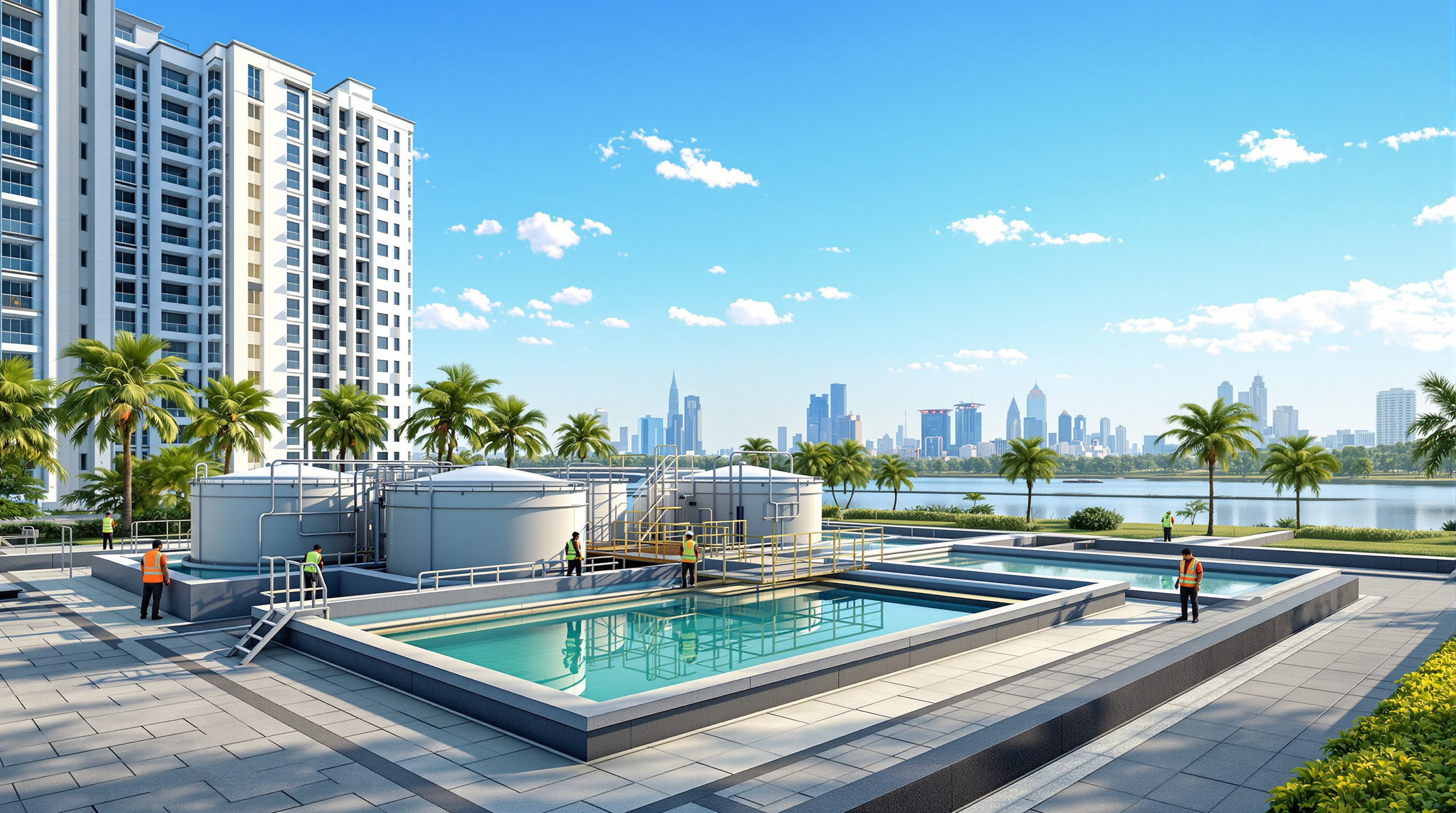
Telangana STP Requirements & TSPCB Norms: The Complete 2026 Compliance Guide
When a sewage treatment plant is mandatory in Telangana, how the TSPCB consent process works, what GHMC and HMDA building rules demand, and the discharge, reuse and monitoring norms every Hyderabad builder and RWA must meet.
Telangana is one of India's most urbanised and water-stressed states. Hyderabad — its capital and the country's fourth-largest urban economy — sits in a semi-arid plateau, drawing drinking water from distant reservoirs while its own lakes, from Hussain Sagar to the Musi river, have absorbed decades of untreated sewage. Against that backdrop, the state's regulators have made on-site sewage treatment a hard condition of building and operating almost any medium or large property. If you are a builder, a facility manager, or an apartment association (RWA) in Hyderabad, Warangal, Karimnagar or anywhere in the state, an STP is not a nice-to-have. It is a licence to open your doors and keep them open.
This guide sets out the Telangana STP requirements as they stand in 2026 — who mandates them, when they apply, how the Telangana State Pollution Control Board (TSPCB) consent process works, and what discharge, reuse and monitoring norms you must meet.
In Telangana, an STP sits at the intersection of three authorities: the TSPCB grants pollution consent, GHMC/HMDA approve the building and its occupancy, and the Water Board (HMWSSB) can fine you and cut your water supply if the treated water is mishandled. Compliance means satisfying all three.
Is an STP mandatory in Telangana — and when?
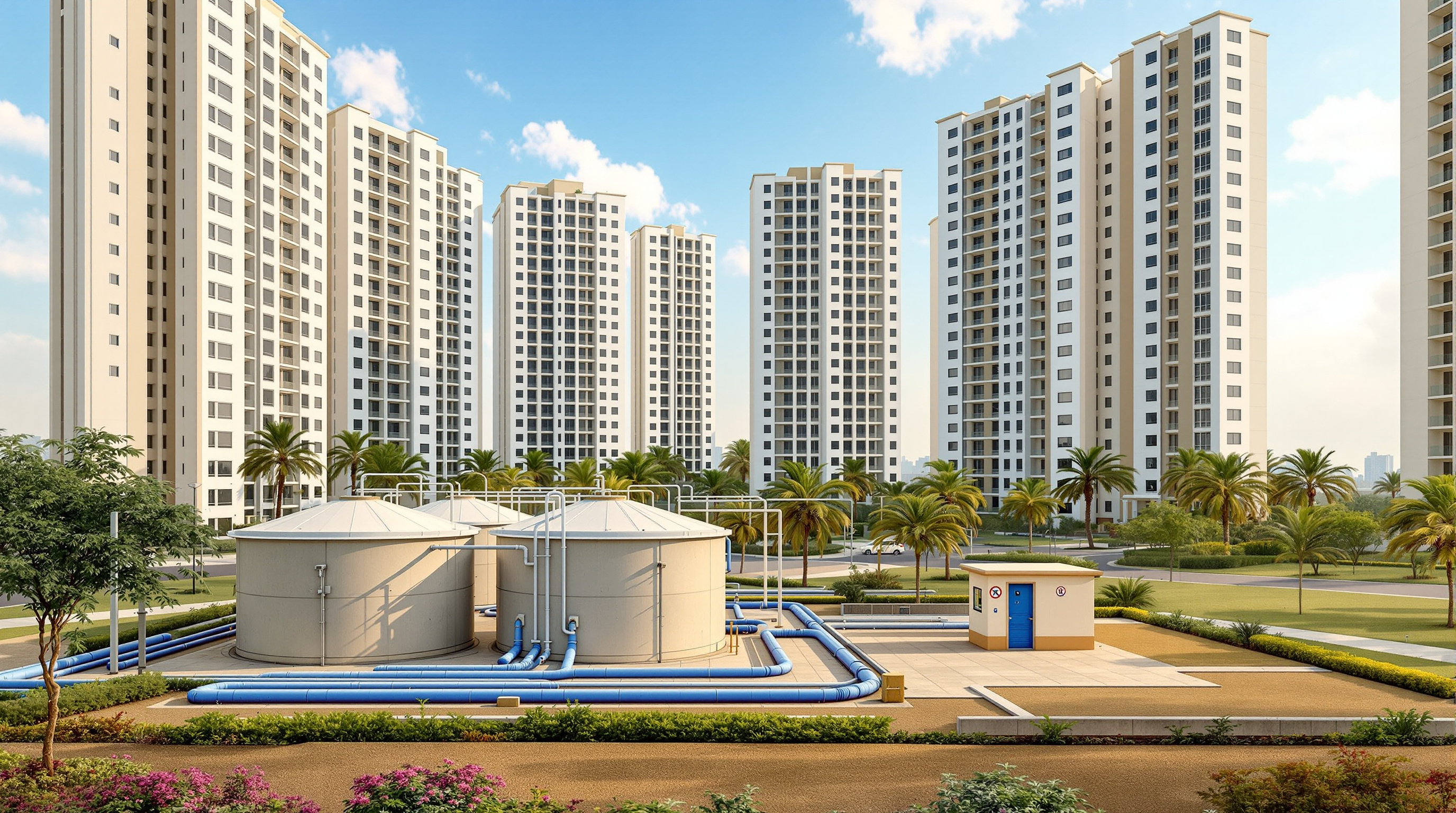
There is no single "STP switch" in Telangana law. Instead, the obligation is triggered through building permission conditions and pollution-control consent, layered on top of the national baseline set by the CPCB. In practice, an STP becomes compulsory when any of these apply:
- Apartment complexes above a unit threshold. The Greater Hyderabad Municipal Corporation (GHMC) has made an STP mandatory for apartment projects of roughly 50 dwelling units and above, and has held back occupancy certificates until the plant is actually built and functioning (Deccan Chronicle).
- Larger plots and high-rise buildings. Building permissions in Telangana run through the TG-bPASS self-certification and single-window system. Non-high-rise buildings on plots of 200–500 sq.m and high-rise buildings on plots of 500 sq.m and above go through a process that attaches environmental conditions — sewage treatment and reuse among them (TG-bPASS). Buildings 21 metres and taller are now classified as high-rise and carry the fullest set of conditions (NewsMeter).
- Commercial, institutional and hospitality projects. Hotels, hospitals, malls, IT parks and educational campuses are treated as generating trade or municipal effluent and require TSPCB consent with an STP.
- Large layouts. Under Telangana's layout and building rules, developers must set aside land — around 1% for utilities including the STP — and may use up to 10% of the cellar for the STP and allied plant rooms (HMDA building rules).
If your project is smaller than these thresholds, you may fall back on a septic tank or municipal connection — but for anything at apartment or commercial scale, assume an STP is required and design for it from day one. To size the plant your building needs, the STP Capacity Calculator converts occupancy into a treatment capacity in litres per day.
The TSPCB consent process: CTE and CTO
Every STP in Telangana operates under a two-stage consent granted by the Telangana State Pollution Control Board under the Water (Prevention & Control of Pollution) Act, 1974 (sections 25/26) and the Air Act, 1981 (section 21) (TSPCB).
| Stage | What it is | When you need it |
|---|---|---|
| Consent to Establish (CTE) | Prior approval to build the project and its STP, based on your design, expected effluent and monitoring plan | Before construction begins; valid for 5 years |
| Consent to Operate (CTO) | Approval to run the completed STP, issued after the Board inspects the site | Before you occupy and operate; renewed periodically |
The mechanics mirror the national pattern, so the deep-dives in Consent to Establish (CTE) and Consent to Operate (CTO) apply directly in Telangana. In brief:
1. Apply online through the TSPCB portal with your project report, STP design, effluent characteristics and layout.
2. Site inspection. The concerned TSPCB regional office inspects and assesses the pollution load your project will create.
3. CTE issued with conditions — the treatment technology, capacity and discharge standard you must build to.
4. Build, commission, then apply for CTO. The Board verifies the plant performs before granting the operating consent.
5. Renew the CTO on schedule and keep it live for the building's life.
For the broader picture of how state boards fit under the CPCB, see SPCB approvals for STPs and the national overview in STP regulations in India.
Local byelaws: GHMC, HMDA and the Water Board
What makes Telangana distinctive is the density of overlapping local authorities in the Hyderabad metropolitan region:
- GHMC / HMDA building rules decide whether your project must have an STP and gate the occupancy certificate on it. The plant, its capacity and reuse plumbing are checked as part of building approval. See our general primer on building byelaws and STPs.
- HMWSSB (the Hyderabad Metropolitan Water Supply & Sewerage Board) governs how treated water and any surplus discharge are handled. It has actively penalised misuse — imposing a ₹1 lakh fine on a Jubilee Hills establishment for letting STP-treated water run onto a public road, and warning that non-payment would bring disconnection of water and sewerage services (Telangana Today).
- HYDRAA and buffer-zone rules matter around Hyderabad's lakes and the Musi. Construction within Full Tank Level (FTL) and buffer zones is restricted, and STP siting near waterbodies has drawn judicial scrutiny — the Telangana High Court halted a 36.5 MLD municipal STP at Gandhamguda over environmental concerns, a reminder that even the state's own projects face review.
The practical lesson: in Telangana you are answerable not just to the TSPCB but to the building authority that approved you and the Water Board that supplies you.
Discharge and reuse expectations
Telangana does not publish a radically different set of numbers from the national baseline — the TSPCB anchors its effluent norms in the Water Act and the Environment (Protection) Act, and applies the CPCB / NGT discharge standards that were tightened by National Green Tribunal orders in 2017 and 2019 (HECS). Broadly, treated sewage is expected to meet parameters in this range before reuse or discharge:
| Parameter | Typical treated-water expectation |
|---|---|
| pH | 6.5 – 8.5 |
| BOD | ≤ 10–20 mg/L (stricter limit for metro/large plants) |
| COD | ≤ 50 mg/L (higher caps apply to specific industrial effluent) |
| TSS | ≤ 10–20 mg/L |
| Faecal coliform | Disinfected to the prescribed limit |
Because the exact figure that binds your consent is written into your CTO, always treat the table above as indicative and confirm the conditions on your own consent order. Our guide to treated-water quality standards explains what each parameter means and how to hit it, and CPCB guidelines for STPs covers the national framework the TSPCB applies.
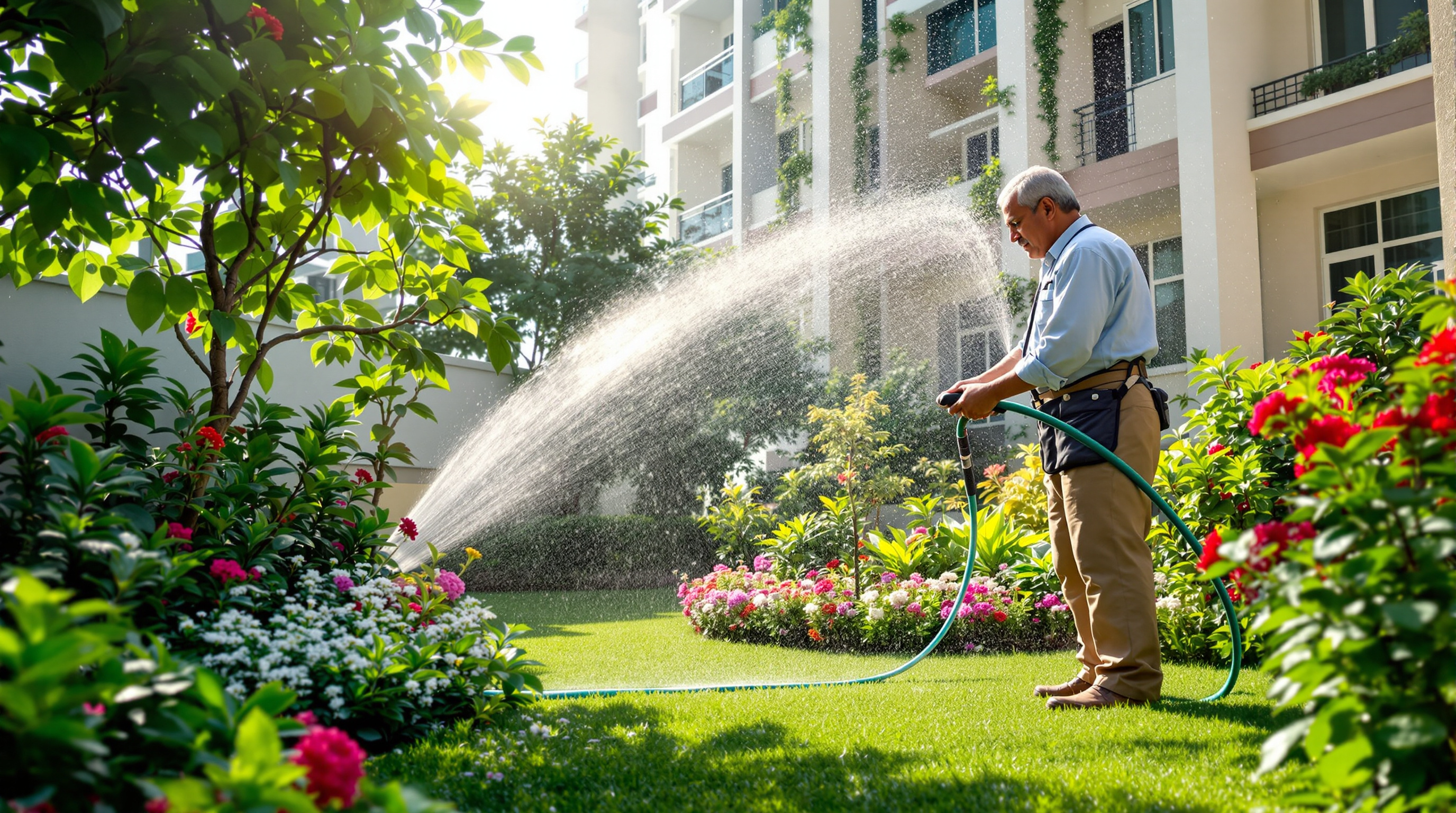
Reuse is the point. In a water-scarce state, treated water is expected to be recycled on site — for toilet flushing, landscape irrigation, cooling towers, common-area washing and groundwater recharge — with only unavoidable surplus discharged. A well-run STP recovers 80–85% of a building's water, which in Hyderabad's tanker-dependent summers is as much a cost saving as a legal duty.
Monitoring and ongoing compliance
Getting the CTO is the start, not the finish. The TSPCB conducts scheduled and surprise inspections and expects operators to hold continuous records of effluent quality. For larger STPs, online continuous effluent monitoring systems (OCEMS) that stream data to the Board are increasingly required. Owners and RWAs should keep:
- A live, unexpired CTO and evidence of the CTE it followed.
- Monthly lab test reports of inlet and outlet water against your consent parameters.
- Electricity, blower run-hour and sludge-disposal logs proving the plant actually runs.
- An Annual Environment Statement where applicable and any OCEMS calibration records.
Practical compliance tips for owners and RWAs
- Design for the real load, not the brochure. Undersized STPs are the most common reason apartments fail inspection. Size to peak occupancy and confirm with the capacity calculator.
- Never let treated water reach a public road or storm drain. As the Jubilee Hills fine shows, the Water Board treats this as a fineable, supply-cutting offence. Plumb reuse properly.
- Keep the plant running, not mothballed. Many RWAs inherit a builder's STP and quietly switch it off to save power. An idle plant is a compliance failure the day an inspector visits. See apartment association STP compliance.
- Handover diligence. When taking over from a builder, insist on the CTE, CTO, as-built drawings and O&M manual. Use our STP compliance checklist at handover and annually.
- Mind the lake buffers. If your site is near a waterbody, verify FTL/buffer clearances before you build the STP, not after.
The bottom line
For most apartment, commercial and institutional projects in Telangana, a functioning STP with valid TSPCB consent is mandatory — mandated through GHMC/HMDA building rules, enforced by the TSPCB's CTE/CTO regime, and policed on the ground by the Water Board and HYDRAA. The numbers largely follow the national CPCB/NGT standards, but the enforcement culture in water-scarce Hyderabad is unusually active. Build the plant, keep it running, recycle the water, and keep your consents current.
A note on accuracy: building rules, consent procedures, fees and discharge norms change, and thresholds can differ across GHMC, HMDA and other urban local bodies. This guide is a practical orientation, not legal advice — always confirm the current position directly with the Telangana State Pollution Control Board (TSPCB) and your local building authority before acting.
For neighbouring and comparative context, see Andhra Pradesh STP regulations, Karnataka STP regulations and Tamil Nadu STP rules, or compare all states in the state-wise STP approval comparison. New to the topic? Start with what an STP is, then browse the full Sewage Treatment Plants guide library.
Export this guide
Related Guides — Deep-dive reading
CPCB Guidelines for STPs Explained: Discharge Standards & the 2017/2019 History
What the Central Pollution Control Board actually prescribes for sewage treatment plants — the effluent parameters, the contested 2015–2017–2019 notification history, the NGT interventions, and which numbers your plant is really held to today.
Sewage Treatment PlantsSPCB Approvals for STPs: The State Pollution Control Board Consent Regime Explained
How State Pollution Control Boards actually administer STP approvals in India — their role versus the CPCB, the Consent to Establish and Consent to Operate regime, inspections and monitoring, and why the rules differ from one state to the next.
Sewage Treatment PlantsTamil Nadu STP Rules & TNPCB Norms: The 2026 Compliance Guide
When a sewage treatment plant is mandatory in Tamil Nadu, how the TNPCB consent process (CTE and CTO) works, the discharge and reuse standards your treated water must meet, and what apartment owners and RWAs in Chennai, Coimbatore and beyond must actually do to stay compliant.
Sewage Treatment PlantsRelated Tools — Try Free
STP Building Approval Checklist
An interactive checklist that tracks every sewage-treatment-plant requirement from building-plan sanction through Consent to Establish/Operate to occupancy, showing live completion and readiness.
ChecklistCPCB Compliance Checklist for STPs
Tick off CPCB/SPCB outlet standards, monitoring duties and record-keeping to score your sewage treatment plant's compliance readiness.
ChecklistSTP Compliance Checklist Tool
Interactive self-audit that ticks off STP consents, discharge norms, reuse metering, online monitoring and O&M records to give a live compliance readiness score.
Checklist