
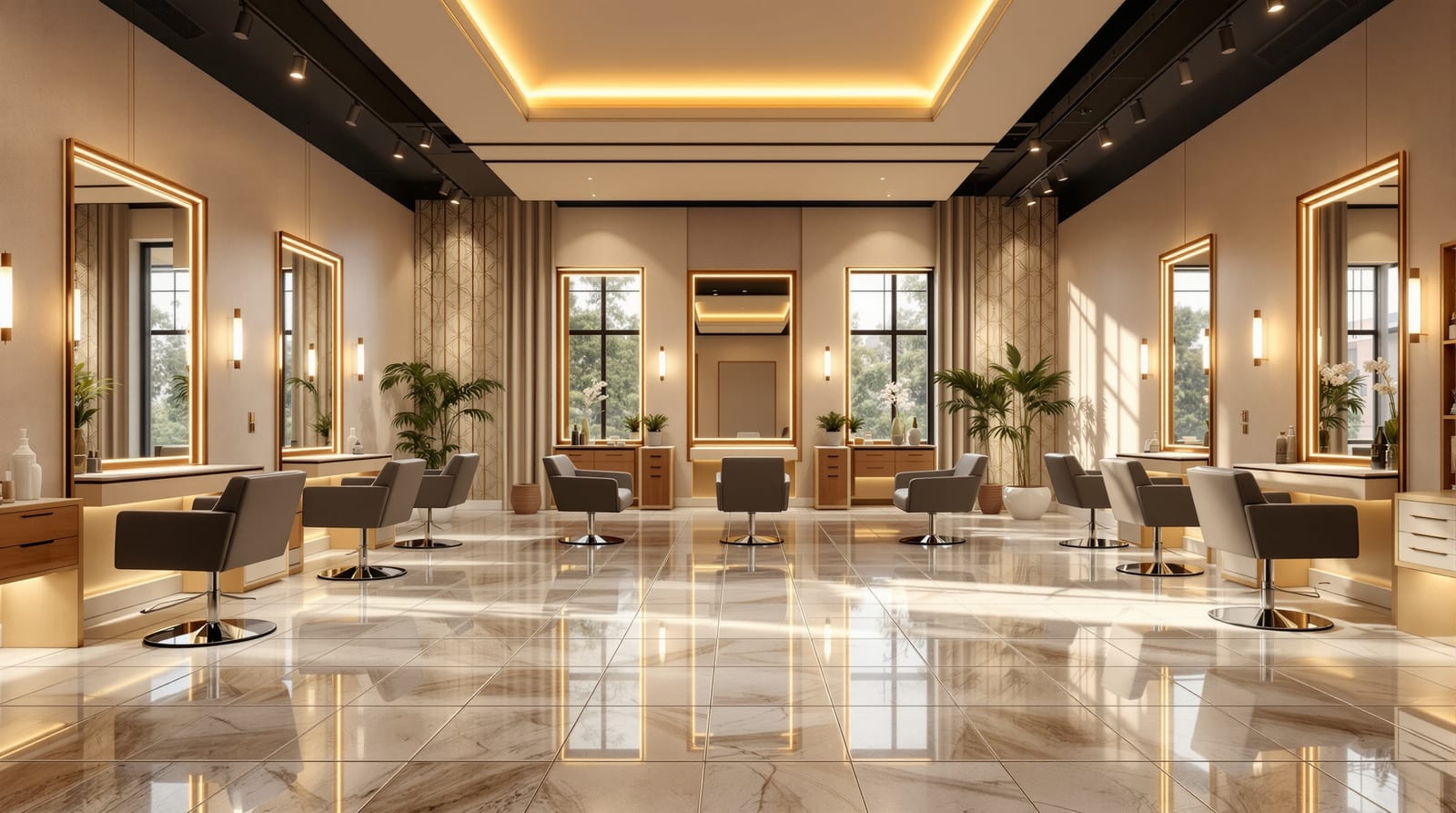
Salon Flooring in India: Salon, Spa & Wet-Zone Floors That Survive Dye, Acetone & Water
Zone-by-zone flooring for Indian salons and spas — chic easy-clean porcelain and LVT at the chair, anti-slip wet-safe stone and WPC in spa and pedicure zones, plus chemical resistance and cost per square foot.
A salon floor lives a double life. From the reception sofa it has to read chic, premium and on-brand — the floor is the first thing a client judges against the price on the menu. But fifteen feet away at the styling chair it is being attacked all day by clipped hair, splashed water, hair colour, bleach, peroxide, nail polish, acetone remover and the wheels of a loaded trolley. A spa adds a third demand: wet feet on a wet floor must never slip, while the whole room stays calm and soothing. Floor a salon or spa the way you would floor a living room — for looks alone — and you will be re-grouting stained joints and watching clients skate across a pedicure puddle within a year. This is the zone-by-zone decision: the right floor, its chemical and slip behaviour, and the ₹/sq ft for every part of a beauty-and-wellness space, grounded in Indian practice and codes.
What a salon and spa floor actually has to survive
Six pressures decide a beauty-and-wellness floor, and they pull in different directions from zone to zone.
Chic ambience and brand. In a salon or spa the floor is part of the experience clients are paying for. It must photograph well, suit the styling (industrial-chic, boho-natural, clinical-modern, luxe), and stay looking good under salon lighting. This is why so many owners default to wood-look, marble-look or terrazzo finishes — they project warmth or luxury at the chair and reception.
Stain and chemical resistance. This is the salon-specific killer. Permanent hair colour, bleach and developer, keratin and smoothing chemicals, nail lacquer and acetone remover, waxing strips and oils all land on the floor near the chair, the colour bar and the nail station. A porous or grouted floor drinks dye and stains for life; a non-porous, chemical-tolerant surface wipes clean. Acetone in particular dissolves some vinyl wear layers and softens some adhesives, so material choice at the nail station matters.
Easy hair and water clean-up. Hair has to sweep or vacuum off cleanly between clients, and water has to mop away fast. A smooth, low-texture, joint-free or wide-format floor sweeps in seconds; a heavily textured or small-mosaic floor traps cut hair and slows turnaround. The two demands — easy-sweep smoothness and anti-slip texture — conflict, which is exactly why a salon needs different floors in dry styling zones versus wet zones.
Anti-slip in wet zones. Hair-wash basins, pedicure and foot-soak stations, steam, sauna, shower, wet treatment and the spa wet lounge all combine water and bare or wet feet. These zones legally and practically need a DIN 51130 R10-R11 anti-slip surface (R11 for genuinely wet, barefoot-adjacent zones), never a polished or glazed floor. Slip liability in a paying-customer space is real; the National Building Code (NBC 2016) and RPwD Rules 2021 expect anti-slip surfaces in public wet areas, thresholds no higher than 12mm and step-free or ramped access. See anti-slip flooring for wet areas for the ratings.
Durability under chairs, trolleys and footfall. Hydraulic styling chairs, rolling trolleys, pedicure thrones, dryers on castors and a steady stream of clients in heels punish a floor. You want a hard, abrasion-resistant surface (PEI Class IV-V tile, or a thick 0.55mm+ wear layer on resilient floors) that resists scratching, point loads and wheel tracking.
Budget and ₹/sq ft. A neighbourhood salon and a five-star spa have very different budgets, but both must weigh lifecycle cost: a cheap floor that stains, slips or wears within a year is expensive. Because beauty businesses refit every 5-8 years to stay current, durable-but-replaceable systems (LVT, vitrified) often beat permanent stone in a leased unit.
Zone-by-zone: the right floor for each part of a salon or spa
A salon or spa is not one floor — it is a set of zones with opposite needs. Map the floor to the zone.
Reception and waiting is the brand zone. It takes footfall and rolling luggage but stays dry, so you can use the most decorative durable option: large-format vitrified tile, terrazzo tiles for a fashionable speckled look, or wood-look luxury vinyl tile (LVT) for warmth. Avoid real wood here if the entrance tracks monsoon water in — choose an anti-skid finish at the threshold.
Styling, colour and nail stations (dry but chemical-attacked) are the heart of the salon. The floor must sweep hair off cleanly, wipe dye and acetone away, and roll chairs and trolleys without scratching. The winners are wood-look LVT/SPC (chic, warm, smooth-sweep, chemical-tolerant wear layer), large-format porcelain or vitrified tile (hardest, fully non-porous, dye wipes off, joints minimised by big formats), and polished concrete for an industrial-chic look. Keep grout lines tight, dark or epoxy-grouted so hair colour does not stain them. Never carpet a styling or colour area — it is a permanent dye and chemical trap.
Hair-wash basins, pedicure and wash zones (wet) combine water, products and wet feet. These need an anti-slip R10-R11 surface: anti-skid porcelain, flamed or leathered natural stone, or anti-slip vitrified, laid to a slight fall toward a drain. A polished tile here is a fall waiting to happen. See anti-slip flooring for wet areas.
Spa wet zones — wet lounge, shower, steam, sauna surround, foot-soak — are the most demanding: barefoot clients, constant water, and an expectation of a calming, natural, warm-underfoot feel. Here natural materials come into their own: leathered or flamed natural stone pavers, a pebble flooring inlay (reflexology underfoot and unmistakably spa), WPC or outdoor deck tiles for a wood feel that shrugs off water, or anti-slip porcelain. All must be R11 and waterproof; never use polished marble or glazed tile in a barefoot wet zone. Avoid real solid wood near water — it cups and rots.
Spa dry treatment and relaxation rooms want quiet, warmth and a natural, soothing surface: WPC, engineered wood, wood-look LVT or a light stone. These are dry, so comfort and acoustics lead.
Recommendation and cost table by zone
This table pairs each salon/spa zone with the floors that win in India, the indicative installed cost in 2026, and the one driver that should decide it. Ranges are broad — confirm with current quotes and the flooring cost per square foot guide.
| Zone | Recommended floors | ₹/sq ft (installed) | Key driver |
|---|---|---|---|
| Reception / waiting | Large-format vitrified, terrazzo, wood-look LVT | 120-300 | Chic brand image + footfall durability |
| Styling / cutting (dry) | Wood-look LVT/SPC, large-format vitrified, porcelain, polished concrete | 120-330 | Easy hair-sweep + non-porous, chair/trolley-tough |
| Colour bar / nail station (dry, chemical) | Porcelain, vitrified (epoxy grout), SPC | 120-330 | Dye, bleach and acetone resistance |
| Hair-wash basin area (wet) | Anti-slip porcelain/vitrified, flamed stone | 130-330 | Anti-slip R11 + waterproof |
| Pedicure / foot-soak (wet, barefoot) | Anti-slip porcelain, leathered stone, pebble inlay | 130-350 | Grip + waterproof + spa feel |
| Spa wet lounge / shower / steam (wet, barefoot) | Leathered/flamed natural stone, WPC/deck tiles, pebble, anti-slip porcelain | 130-400 | R11 anti-slip + calming, warm-underfoot |
| Spa dry treatment / relaxation | WPC, engineered wood, wood-look LVT, light stone | 130-400 | Warm, quiet, soothing, natural |
The pattern: dry zones optimise for chic looks plus easy hair-and-chemical clean-up (LVT, vitrified, porcelain, polished concrete); wet zones swing entirely to anti-slip and waterproof (R11 porcelain, leathered stone, WPC, pebble), accepting a more textured surface because grip beats sweep-ability the moment water and bare feet meet. To shortlist by your exact layout, run the space flooring selector; to size the budget, use the commercial flooring cost calculator.
Materials ranked for the salon and spa brief
Porcelain and large-format vitrified are the all-rounders. Non-porous, so hair dye, bleach and acetone wipe straight off; available in glossy chic, marble-look, terrazzo-look and wood-look; and in an anti-skid R11 finish for wet zones. Large formats (600x1200mm and up) cut grout lines so hair sweeps freely and there are fewer joints to stain. This is the most versatile salon floor in India — see porcelain tile flooring.
Wood-look LVT and SPC give the warm, premium, boutique look that dominates modern salon design, at a smooth surface that sweeps hair cleanly and tolerates most salon chemicals on its wear layer. Click-lay systems let a leased salon refit fast. The caveat: choose a thick (0.55mm+) wear layer for chair-and-trolley traffic, and keep neat acetone off it for prolonged periods, as strong solvents can mar some vinyl surfaces — wipe spills promptly. See luxury vinyl tile (LVT).
Polished concrete suits the industrial-chic and minimalist-clinical salon: seamless (no grout to stain), tough under chairs, easy to mop. Seal it well so colour does not soak in, and use an anti-slip finish anywhere it could get wet.
Natural stone and pebble belong in the spa. Leathered or flamed stone is naturally grippy and luxurious; a pebble flooring inlay reads unmistakably spa and massages the feet. Keep stone sealed against products and water, and never use a polished stone in a barefoot wet zone.
WPC and outdoor deck tiles give the warm-wood spa look in a waterproof, anti-slip body that handles shower, steam and foot-soak zones where real wood would rot — a common pick for wet relaxation lounges.
Terrazzo (terrazzo tiles) is having a moment in reception and styling zones: speckled, chic, hard-wearing and on-trend for beauty brands, in tile or poured form.
What to avoid: carpet anywhere near basins, styling or colour (a permanent water, hair and dye trap); real solid wood near wet zones (cups and rots); and any polished or glazed floor in a wet, barefoot zone (slip liability).
Do and don't for salon and spa floors
Do split the floor by zone — chic easy-sweep surfaces in dry styling and reception, anti-slip R11 waterproof surfaces in every wet zone. Do use epoxy or dark grout in colour and styling areas so hair dye does not stain the joints, and prefer large formats to minimise joints. Do lay wet zones to a slight fall toward a drain and specify R10-R11 there. Do seal natural stone and polished concrete against products. Do keep thresholds under 12mm and access step-free or ramped for RPwD accessibility, since clients of all mobilities visit.
Don't carpet a styling, colour or nail area — it traps hair, water and dye permanently. Don't put polished marble or glazed tile in a pedicure, hair-wash or spa wet zone — it is a slip and a liability. Don't leave acetone or strong solvents pooled on vinyl floors; wipe promptly. Don't choose a heavily textured small-mosaic floor for dry styling zones — cut hair lodges in it and slows turnaround. Don't floor a leased unit in expensive permanent stone if you refit every few years; durable LVT or vitrified is the smarter spend. For the broader sector view across all commercial spaces, see the commercial flooring guide.
Care and maintenance
Sweep or vacuum dry styling zones between clients to clear cut hair, then damp-mop daily with a neutral cleaner. Wipe hair-colour, bleach and acetone spills immediately — even non-porous floors stain if dye sits in a grout line overnight. In wet zones, squeegee standing water toward the drain and let surfaces dry to keep grip and prevent biofilm. Reseal natural stone and polished concrete on schedule. On vitrified, porcelain and LVT, avoid harsh acid descalers that can etch grout; use the products in the floor cleaning guide and follow the floor resealing guide for stone.
Frequently asked questions
What is the best flooring for a salon in India?
For most salons, large-format porcelain or vitrified tile and wood-look LVT/SPC are the best all-round choices: they look chic, sweep hair cleanly, wipe dye and acetone off a non-porous surface, and survive chairs and trolleys. Use an anti-slip R11 finish in any wet zone such as the hair-wash basins.
What flooring is best for a spa or wellness centre?
Spas blend calming natural materials with wet-safety. Leathered or flamed natural stone, WPC or outdoor deck tiles for a wood feel that resists water, a pebble flooring inlay for the spa look, and anti-slip porcelain all work. Every wet, barefoot zone must be R11 anti-slip and waterproof — never polished marble or glazed tile.
Will hair dye and acetone stain my salon floor?
Permanent dye, bleach and acetone will stain a porous floor or open grout for life, but wipe straight off a non-porous surface — porcelain, vitrified tile, polished concrete and the wear layer of quality LVT. Protect grout with epoxy or dark joints, use large formats to minimise joints, and wipe spills promptly; do not leave acetone pooled on vinyl.
What anti-slip rating do salon and spa wet zones need?
Hair-wash, pedicure, shower, steam and spa wet zones need a DIN 51130 R10-R11 anti-slip surface (R11 for genuinely wet, barefoot-adjacent areas), laid to a fall toward a drain. The NBC 2016 and RPwD Rules 2021 expect anti-slip floors in public wet areas, thresholds under 12mm and step-free access. See anti-slip flooring for wet areas.
How much does salon and spa flooring cost per square foot in India?
Indicatively in 2026: ₹120-330/sq ft for chic dry zones in vitrified, porcelain, LVT or polished concrete; ₹130-350/sq ft for anti-slip wet zones in porcelain or leathered stone; and ₹130-400/sq ft for premium spa zones in natural stone, WPC or pebble. Lifecycle and refit cycle matter — model both in the commercial flooring cost calculator.
Export this guide
Related Guides — Deep-dive reading
Anti Slip Flooring for Bathroom and Wet Areas in India: R-Ratings, Finishes and Genuinely Safe Tile Choices
How to choose genuinely safe flooring for bathrooms, kitchens, balconies, pools, entrances and elderly- or child-friendly homes — the R-rating system, finishes that grip wet feet, anti-skid natural stone, slope to drains and the tiles to avoid.
Flooring & SurfacesDining Room Flooring in India: Spill-Proof Floors That Flow With Your Living Room
How to choose a dining-area floor that shrugs off food, drink and chair-scraping while flowing seamlessly with the adjacent living room and kitchen.
Flooring & SurfacesEpoxy Grout vs Cement Grout for Tiles in India: Which to Specify (2026)
A plain-English guide to tile grouts for Indian homes: what grout does, how cementitious grout compares with epoxy grout on cost, stain and water resistance, hygiene and durability, and exactly where each one belongs - kitchens, bathrooms, pools, dry rooms and more.
Building MaterialsRelated Tools — Try Free
Flooring Cost Calculator
Estimate the all-in cost of a floor — material, laying, wastage, skirting and GST — by area and material.
Flooring CalculatorAcoustic Privacy (STC) Visualizer
Indian healthcare acoustic visualizer — compare wall assemblies and noise sources, see received SPL after STC attenuation, and check FGI 2018 / IS 1950 / NABH speech-privacy compliance with live dual-canvas waveform.
Acoustic ToolFlooring Material Selector
Get the best flooring material for your room, budget and climate, with anti-slip checks for wet areas.
Flooring Tool