
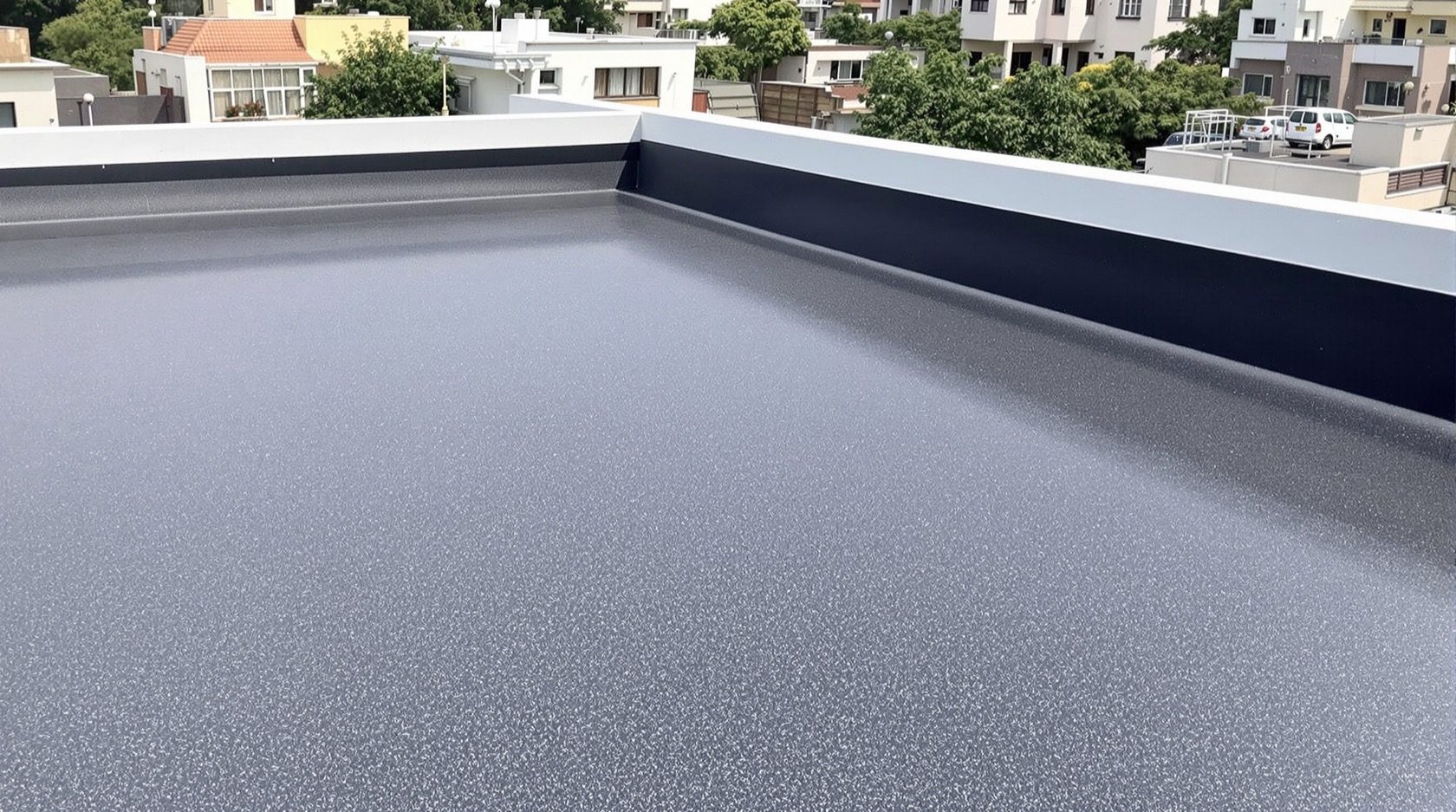
Roofing Warranties & Guarantees in India: What They Really Cover
The professional and owner guide to the most misunderstood clause in a roofing contract. Material versus workmanship versus single-source system warranties, what each excludes, what voids them, and how to specify, secure, keep and claim a strong roof warranty in Indian conditions.
On paper a roof warranty looks like reassurance: a stamped promise that if the roof fails, someone else pays. In practice it is the most misread clause in the whole roofing contract. Owners assume "twenty-year warranty" means twenty years of dry ceilings; it usually means twenty pro-rated years on a product defect that almost never happens, with the installation that actually leaks left uncovered. The gap between what people think they bought and what the paper says is where disputes, denied claims and bitter monsoons live.
This is the warranties chapter of the Roofing Knowledge Hub and a companion to the Ultimate Guide to Roofing Systems. It is written for the professional who has to specify and administer these promises — the architect, the waterproofing consultant, the project manager, the quantity surveyor, the facility manager — and for the serious owner who wants to hold the team to a high standard. The aim is simple: to let you read a warranty for what it is, specify a genuinely strong one at tender, and make sure it is still valid on the day a leak appears.
The single idea to carry through everything below: a warranty is only as good as who stands behind it, and how the roof was actually built and maintained. Reliable execution and honest upkeep protect the roof far more than the certificate ever will. Treat the paper as the fall-back, not the plan.
Scope & safety. This guide explains how roofing warranties and guarantees are typically structured in India and how to specify, secure and administer them; it is an educational best-practice aid, not legal, contractual or insurance advice. Warranty and guarantee wordings differ by manufacturer, contractor and project — the operative document is always the signed certificate and the contract, read in full. The licensed structural engineer remains responsible for structural design and certification, and the licensed contractor for execution and site safety. Verify every clause against the actual document, the project and the current standards and authority.
Warranty, guarantee, and the statutory period: three different promises
The words get used loosely, so start by separating them, because they behave differently when something goes wrong.
- Warranty / guarantee (a contractual promise). A voluntary undertaking — by a manufacturer, a contractor, or both — to repair, replace or make good defined defects, within a defined scope, for a defined period, subject to conditions. In Indian roofing practice "warranty" and "guarantee" are used almost interchangeably; what matters is not the label on the certificate but the scope, the exclusions, the duration and who signs it. A guarantee that promises the earth in the headline and excludes everything in the fine print is weaker than a modest warranty with a clean scope.
- The statutory / contractual defect-liability period (DLP). Separate from any product warranty, most construction contracts carry a defect-liability (or maintenance) period — commonly 12 months, sometimes longer — during which the contractor must return and rectify defects that appear, usually backed by retention money or a bank guarantee held by the client. This is a contract mechanism, not a manufacturer promise, and it typically runs from practical completion. It is your first line of recourse and it overlaps the early life of the warranty.
- Consumer and general-law rights. Independent of the above, statutory consumer-protection and contract law give an owner rights against deficient service and defective goods. These are a backstop, not a substitute for a well-drafted warranty; do not rely on litigation as your quality plan.
The practical takeaway for the specifier: name all three in the contract. Set the DLP and its security (retention/bank guarantee), require the product and workmanship or system warranties as deliverables, and keep the consumer-law backstop in reserve. Do not let a shiny manufacturer certificate quietly replace the contractor's own obligation to return during the DLP.
The three warranties you will meet
Almost every roofing or waterproofing warranty is one of three kinds. Understanding which one you are being offered — and which one you should have specified — is the heart of the subject.
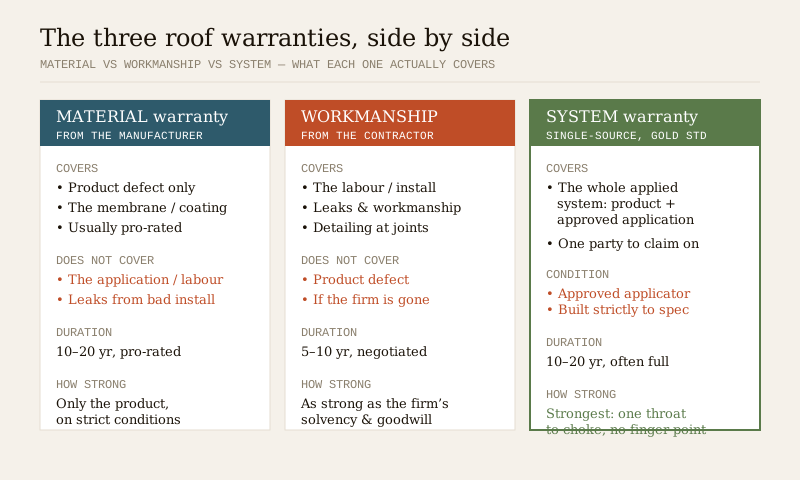
1. The manufacturer's material (product) warranty. Given by the maker of the membrane, coating or tile, this warrants the product against manufacturing defect — that it leaves the factory fit for purpose and does not fail prematurely from a fault in the material itself. It says nothing about how the product was installed. It is very commonly pro-rated: the payout falls year by year over the term, so a failure late in life recovers only a fraction of value, and typically covers material replacement cost, not labour, access or consequential damage. It is almost always conditional on approved application — correct substrate, primer, thickness, laps and detailing — which is precisely why makers insist those conditions are met before they will honour it.
2. The contractor's workmanship (installation) guarantee. Given by the applicator, this covers the labour — the quality of the application and, crucially, the leaks that come from it: poor detailing at drains and parapets, inadequate laps, missed priming, wrong falls. Since the large majority of roof failures are application failures, not product failures, this is the warranty that matters most for leaks. Its fatal weakness is that it is only as strong as the contractor's solvency and willingness: a firm that has folded, moved on or simply stopped answering the phone cannot honour a guarantee, however generous the wording.
3. The single-source (system) warranty. The gold standard for waterproofing. Here the manufacturer warrants the whole applied system — product and installation together — on the condition that it was installed by one of their approved or certified applicators, strictly to their specification, and usually inspected and registered by the manufacturer. Because one party warrants the entire assembly, there is no finger-pointing between "bad product" and "bad install" when a leak appears: a single throat to choke. This is what you should specify on any roof where a leak is expensive to chase — podiums, basements, terraces over occupied space, large commercial and institutional roofs.
Types compared
| Attribute | Material (product) | Workmanship (installation) | System (single-source) |
|---|---|---|---|
| Given by | Manufacturer | Contractor / applicator | Manufacturer (backed by approved applicator) |
| Covers | Product defect only | Labour, detailing, install-related leaks | The whole applied assembly: product + application |
| Excludes | Application, labour, leaks from bad install | Product defect; anything after the firm is gone | Work outside the approved spec; misuse; the usual exclusions |
| Typical value basis | Often pro-rated; material cost only | Full make-good within term; labour included | Often full value; may include labour and make-good |
| Typical duration | 10–20 yr (pro-rated) | 5–10 yr (negotiated) | 10–20 yr |
| How strong in practice | Only the product, on strict conditions | As strong as the firm’s solvency & goodwill | Strongest — single accountable party, no finger-pointing |
| Specify when | Always a minimum floor | Always, alongside the material warranty | Any roof where a leak is costly to chase (the default for waterproofing) |
The columns explain a common trap: a contractor waves a "twenty-year warranty," but it is the manufacturer's pro-rated material warranty on the membrane roll, not a workmanship or system warranty at all. The membrane is covered; the way it was stuck down is not. Always ask which of the three you are being handed, and get it named on the certificate.
Pro-rated versus full value
Two warranties with the same headline number can be worth very different amounts, because of how they pay out.
- Full-value (non-pro-rated). A qualifying defect is made good in full for the whole term. A leak in year nine of a ten-year full-value warranty is remedied to the same extent as one in year one.
- Pro-rated. The recoverable value declines over the term, usually on a straight-line basis. A defect in year nine of a twenty-year pro-rated warranty may recover only a small fraction of the original value — and often only the material portion, leaving you to fund labour and access.
- Labour and consequential loss. Read carefully whether the warranty pays for the labour to remove and reinstate, the access (scaffolding, cranage) to reach the defect, and any consequential damage to finishes and contents below. Many material warranties cover none of these; a good system warranty may cover labour and make-good but almost never consequential loss.
For the specifier: prefer full-value where you can get it, and always read the value basis, not just the year count. A ten-year full-value workmanship-plus-material system warranty routinely beats a twenty-year pro-rated material-only certificate.
What warranties exclude — and what voids them
Read the exclusions first. They are where the promise actually lives. Almost every roofing warranty carves out the same families of events, and a separate set of conditions can void the whole thing.
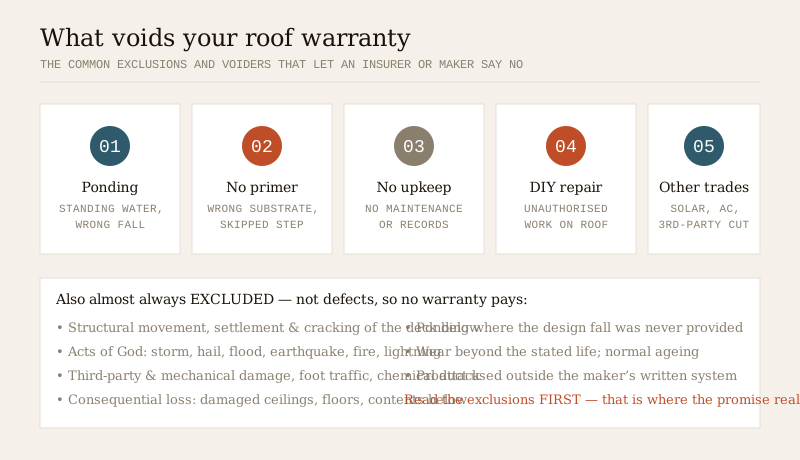
Exclusions — things that were never defects, so no warranty pays:
| Exclusion (typical) | Why it sits outside a warranty |
|---|---|
| Ponding / standing water | Where the design fall was never provided, ponding is a design/execution issue, not a product defect — and it accelerates every failure |
| Structural movement & settlement | Cracking or deflection of the deck below is a structural matter, outside the roofing product’s control |
| Acts of God | Storm, hail, flood, earthquake, lightning, fire — catastrophe, not defect; look to insurance, not warranty |
| Third-party & mechanical damage | Foot traffic, dropped tools, chemical spills, later penetrations — harm from outside the system |
| Wear beyond the stated life & normal ageing | The warranty covers premature failure, not the end of designed service life |
| Consequential loss | Damaged ceilings, floors and contents below are almost always excluded — the warranty fixes the roof, not the room |
| Use outside the approved system | Mixing the warranted product with an unapproved primer, coating or detail steps outside the warranted assembly |
Voiders — conditions that can invalidate an otherwise valid warranty:
| Voider | The failure it points to |
|---|---|
| Wrong or unprepared substrate | Application over a damp, dusty, weak or contaminated deck — a breach of the maker’s conditions |
| Skipped primer or wrong system build-up | Missing a required primer, coats or thickness — the assembly is no longer the warranted one |
| No maintenance / no records | Failure to perform (and evidence) the required upkeep the warranty is conditional on |
| Unauthorised repair | Do-it-yourself patching or a non-approved contractor working on the roof breaks the chain of responsibility |
| Other trades’ damage | Solar mounts, air-conditioning, antennae or plumbing installed through the membrane after handover |
| Late or unproven notification | Not notifying the defect in writing within the required window, or without evidence to support the claim |
The pattern is clear: warranties cover premature failure of the warranted assembly, correctly built and looked after, and exclude almost everything else. That is not a scandal — it is why the specification, the approved applicator and the maintenance regime matter more than the certificate. Get those right and few exclusions ever bite; get them wrong and the warranty was never going to save you.
Who is responsible for what
A warranty only works if each party plays its part, from tender through the life of the roof. Confusion over these roles is a common reason a claim fails.
| Party | Warranty-related responsibility |
|---|---|
| Architect / lead consultant | Specify the required warranty type, scope and duration in the tender; ensure the detail is warrantable |
| Waterproofing / roofing consultant | Choose a warrantable system; define approved applicator and inspection requirements |
| Structural engineer | Design and certify the deck and falls so the roof is warrantable (no ponding by design); own structural defects |
| MEP / services consultant | Coordinate penetrations and rooftop plant so later trades do not void the warranty |
| Contractor / applicator | Build strictly to the approved system; hold applicator certification; issue the workmanship guarantee; return during the DLP |
| Project manager / PMC | Register the warranty with the manufacturer; secure the certificates at handover; enforce the DLP and retention |
| Quantity surveyor | Price the warranted system (not a cheaper substitute); hold retention against the DLP |
| Facility manager / client | Perform and record maintenance; commission only approved contractors; notify and claim correctly |
How to secure a strong warranty at tender
The warranty is won or lost at the specification stage, long before anyone climbs to the roof. By the time you are holding a certificate, the terms are already fixed.
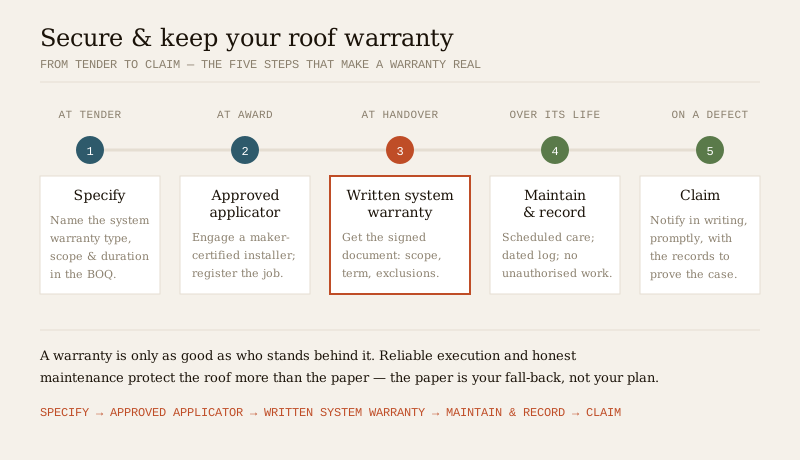
- Specify the warranty in the BOQ and tender. State the type (require a single-source system warranty for anything watertight-critical), the scope, the value basis (prefer full-value) and the duration, as a priced, mandatory deliverable — not an afterthought. See the roofing specification guide and the roofing BOQ & tender guide for how to word it.
- Require approved / certified applicators. Make manufacturer-approved applicator status a precondition of tendering, and require the job to be registered with the manufacturer. A system warranty is simply not available otherwise. Vet the applicator as the roofing contractor guide sets out.
- Insist on manufacturer involvement. For a true system warranty, require the manufacturer's technical representative to approve the substrate, witness key stages and inspect before the finish — the same discipline as the flood-test in the roof waterproofing guide.
- Get it in writing, with clear scope and duration. A verbal or WhatsApp promise is not a warranty. Require the certificate as a handover deliverable, tied to a payment milestone, naming the system, the term, the value basis, the exclusions and the claim procedure.
- Align the DLP, retention and security. Set the defect-liability period, hold retention or a bank guarantee against it, and make sure the DLP overlaps at least the first full monsoon — the true test of a roof.
- Do not accept a substitute. If the priced system is quietly swapped for a cheaper membrane or a non-approved applicator, the promised warranty evaporates. The QS and PMC must hold the line the membrane vs liquid waterproofing guide helps you understand.
How to keep it valid
A secured warranty is a conditional promise; the conditions run for its whole life. Break one and the strongest certificate is worthless.
- Maintain to the required regime, and record it. Follow the manufacturer's and contractor's maintenance schedule, and keep a dated log with photographs — cleared drains, cleaned surfaces, inspections. No records is a common reason a claim is refused. The roof maintenance guide and the pre-monsoon inspection guide give the routine.
- Commission only approved contractors for any work. Repairs, penetrations and additions must go through the warranting contractor or a manufacturer-approved applicator. An unauthorised patch — even a well-meant one — can void the lot.
- Control other trades on the roof. Solar, air-conditioning, water tanks, railings and cabling installed through the membrane after handover are a classic voider. Route them through the warranty holder and document the approval.
- Keep the full document set. The signed warranty and guarantee certificates, the product data, the as-built details, the flood-test record and the handover file from the roof inspection & handover guide. A warranty you cannot produce is a warranty you cannot claim.
- Do not ignore early symptoms. Blistering, damp patches or ponding are notifiable events, not things to watch and hope. The roof defects guide helps you tell a warrantable defect from ordinary wear.
How to claim
When a defect appears within the term, a warranty is claimed, not simply invoked. A methodical claim, backed by records, is the one that succeeds.
1. Notify in writing, promptly. Most warranties require written notice within a defined window from discovery. Send it to the correct party — the manufacturer for a material or system warranty, the contractor for a workmanship guarantee — and keep proof of sending.
2. Document the defect. Photographs, dates, the location on the roof, the symptoms below, and the maintenance log showing the roof was cared for. Evidence turns a contested claim into a straightforward one.
3. Do not disturb the evidence with an unauthorised repair. Emergency measures to protect life and property are one thing; a permanent patch by a non-approved contractor before assessment can forfeit the claim.
4. Establish it is a covered defect, not an exclusion. Distinguish a genuine premature failure of the warranted assembly from an excluded cause — storm damage, third-party penetration, ponding by design, wear beyond life. An honest reading here saves a wasted claim.
5. Escalate through the contract, then the backstop. Work the warranty and the DLP/retention first; use the consumer-law and contractual backstop only if the warrantor defaults. Keep the whole exchange in writing.
A ready-to-adapt checklist: secure and keep a roof warranty
Adapt this to the project; it is a starting point, not a substitute for the actual certificate and contract.
| Stage | Action | Done |
|---|---|---|
| Tender | Warranty type specified (system warranty for watertight-critical roofs) | |
| Tender | Scope, value basis (prefer full-value) and duration stated in BOQ | |
| Tender | Approved-applicator status made a precondition of bidding | |
| Tender | DLP, retention / bank guarantee and security defined | |
| Award | Certified applicator engaged; job registered with the manufacturer | |
| Execution | Manufacturer approves substrate and witnesses key stages | |
| Execution | Correct substrate, primer, thickness, laps and falls verified (no ponding) | |
| Handover | Written warranty certificate(s) received: scope, term, exclusions, claim route | |
| Handover | Full document set collected (warranty, product data, as-builts, flood-test) | |
| In service | Maintenance performed to schedule and logged with dates and photos | |
| In service | Only approved contractors used; other trades routed through warranty holder | |
| On a defect | Notified in writing promptly; documented; evidence preserved; claim pursued |
The one-line answer
A roof warranty is a conditional contractual promise, not a guarantee of dry ceilings: the manufacturer's material warranty covers the product only and is usually pro-rated; the contractor's workmanship guarantee covers the installation and the leaks but is only as strong as the firm behind it; and the single-source system warranty, in which the manufacturer warrants the whole applied assembly installed by an approved applicator to spec, is the gold standard for waterproofing because it leaves one accountable party and no finger-pointing. Every warranty excludes ponding, structural movement, acts of God, third-party damage and consequential loss, and can be voided by the wrong substrate, a skipped primer, no maintenance records, unauthorised repairs or other trades' damage. Secure a strong one by specifying the system warranty at tender, requiring approved applicators, and getting it in writing with clear scope and duration; keep it valid by maintaining, recording and never letting unauthorised work touch the roof; and claim it by notifying promptly, in writing, with the evidence to prove the case. Above all, remember that a warranty is only as good as who stands behind it — reliable execution and honest maintenance protect the roof far more than the paper ever will.
Where to go next
- The whole subject: Ultimate Guide to Roofing Systems · the hub map: Roofing Knowledge Hub.
- Specify it right: Roofing Specification Guide · Roofing BOQ & Tender Guide.
- Get the right hands and the right handover: Roofing Contractor Guide · Roof Inspection & Handover Guide.
- Understand what you are warranting: Roof Waterproofing Guide · Membrane vs Liquid Waterproofing.
- Keep it valid: Roof Maintenance Guide · Pre-Monsoon Roof Inspection · Roof Defects Guide.
- Tools: Roofing Specification Builder · Roofing Homeowner Toolkit.
References
- National Building Code of India (SP 7), Bureau of Indian Standards — refer by topic to its provisions on structural design, building services and waterproofing that a warranted roof must meet; the 2016 edition has been superseded, so verify the current edition and part structure via the BIS catalogue.
- IS 456: Plain and Reinforced Concrete — Code of Practice (RCC decks, falls, crack control that make a roof warrantable) — Bureau of Indian Standards; verify the current edition via the BIS catalogue.
- IS 3067, IS 1346, IS 13182 and IS 2645: waterproofing and integral water-proofing standards a warranted system should reference — Bureau of Indian Standards; verify current status and editions via the BIS catalogue.
- IS 875 (Parts 1–5): design loads (dead, imposed, wind, snow and load combinations) relevant to roofs and rooftop plant — Bureau of Indian Standards; verify the current edition via the BIS catalogue.
- Warranty, guarantee and defect-liability terms are set by each manufacturer, contractor and contract and vary widely — the operative document is always the signed certificate and the contract read in full. Consumer-protection and contract law provide a backstop. Verify any standard’s current status via the BIS catalogue: https://www.services.bis.gov.in/
This is an educational best-practice overview, not legal, contractual or insurance advice. Warranty wordings, exclusions and durations differ by manufacturer, contractor and project; read the actual signed certificate and contract in full, and engage the appropriate professionals. Structural design and certification remain the licensed structural engineer’s responsibility and execution and site safety the licensed contractor’s. Verify any standard’s current edition and status via the BIS catalogue before relying on it.
Export this guide
Related Guides — Deep-dive reading
Waterproofing Failures Explained: Why Systems Fail and How to Spot It
Why waterproofing so often leaks again within a year or two — the weak links in the system, the junctions that really fail, the flood test everyone skips, and how to tell a real repair from a cosmetic patch.
Structural SafetyHow to Choose a Fire Alarm in India (2026): A Life-Safety, Code-Governed Buying Guide
A fire alarm is not shopped on price or looks. It is specified to the National Building Code and the local fire officer, built from listed and certified parts, and installed by a licensed contractor. This guide shows a homeowner, manager or architect how to choose and verify one correctly.
SecurityHow to Write a Roofing Specification (India): Scope, Materials, Workmanship & Warranty
The anchor pro guide to writing a clear, tender-ready roofing specification — so the roof you designed is the roof you get, not the cheapest thing a bidder could read into a vague clause.
RoofingRelated Tools — Try Free
Interior Contract Clause Checklist
16 sections and 98 checkboxes covering scope, BOQ, milestones, penalties, warranty, and disputes.
Contract ChecklistMonsoon-Readiness Checklist
Pre-rain home audit across 9 categories — terrace, drains, waterproofing, electrical, HVAC, pest, vehicles, documents.
Seasonal AuditContract Studio
AI generates professional architecture service agreements with milestones and scope.
ArchitectAI