
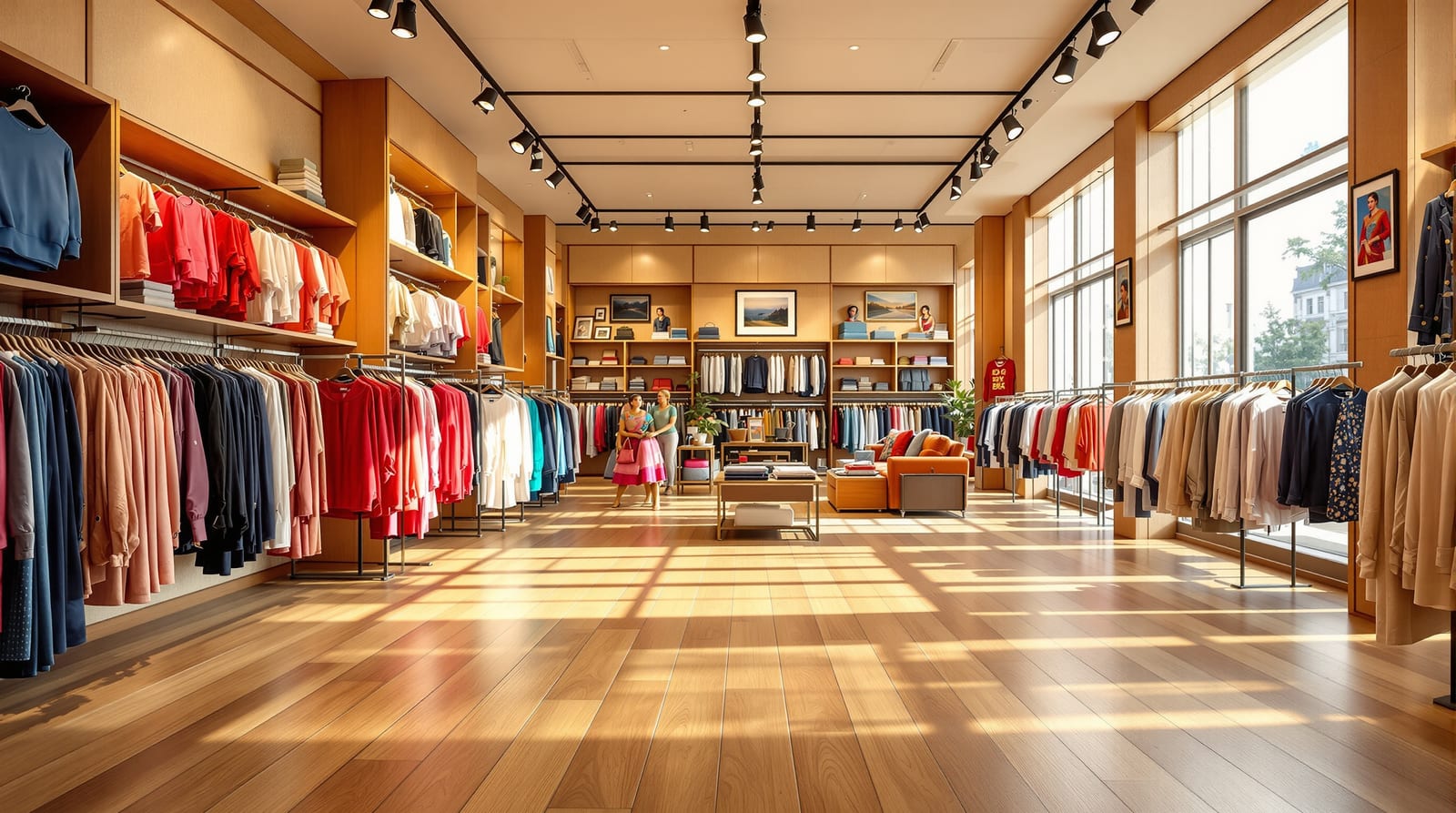
Retail Store Flooring in India: Best Floors by Store Type, Footfall Durability & Cost
The floor sells the merchandise and survives the footfall — picked by store type from apparel and lifestyle to jewellery, supermarket and electronics, with entrance slip safety, zoning, ₹/sq ft and lifecycle.
A retail floor has a job most floors never do: it has to sell. The right floor flatters the merchandise, bounces the lighting the way the visual-merchandising team wants, guides a shopper from the door to the till, and still looks unscuffed after a hundred thousand feet have crossed it. Pick the wrong one and you get a floor that scratches grey in a season, goes slick at the monsoon entrance, fights the lighting, and forces an expensive refit before the lease is up.
This guide picks the floor by store type — apparel and lifestyle, jewellery and premium, supermarket and grocery, electronics and big-box — because the right answer for a denim store is the wrong answer for a diamond counter. It covers the drivers that actually decide a retail floor in India: footfall durability, looks that sell, easy cleaning, fast fit-out and refit, entrance slip safety in the rains, zoning and wayfinding, and the ₹/sq ft and lifecycle maths a retailer signs off on.
What a retail floor has to do
Before the material, list the demands. In retail they rank your choices for you, and they are not the same as a home or even an office.
- Footfall durability. A busy high-street or mall store sees relentless traffic, trolley and pram wheels, stiletto heels and dragged stock. The floor needs a hard, abrasion- and impact-resistant surface that holds its finish for the whole lease, because a tired floor reads as a tired brand.
- Looks that sell the merchandise. The floor is the stage. It must flatter the product and obey the lighting plan — a warm wood-look under apparel, a calm light field under colourful goods, a luminous polished surface that lifts spotlight pools over a jewellery counter. Colour, gloss and grain are merchandising decisions.
- Easy, fast cleaning. Retail floors are mopped daily and must wipe clean of scuffs, spills and tracked-in grime without staining or holding dirt in joints, because a grubby floor kills the premium.
- Fast fit-out and refit. Retail runs on deadlines and short leases. A floor that lays fast over the existing slab, or lifts and changes without demolition, saves shut days and refit cost — which is why glue-down LVT and polished concrete are retail favourites.
- Entrance slip safety. The shopfront takes monsoon water, wet footwear and umbrellas straight onto a glossy floor right where shoppers step in fast. Slip resistance at the entry zone is a safety and liability requirement, not a nicety.
- Zoning and wayfinding. A change of floor material or tone is the cheapest, most durable way to mark the entrance, the main aisle, display bays and the cash zone, and to steer the shopper through the store.
- Cost and lifecycle. Retailers buy on installed ₹/sq ft and on years-per-rupee: how long before it looks worn, how much daily upkeep, how cheaply it refits.
Hold all of this and the store type points to its floor: warm and refit-friendly for fashion, luminous and premium for jewellery, tough and trolley-proof for grocery, neutral and durable for electronics.
Picks by store type
Apparel, fashion and lifestyle — wood-look LVT, large-format vitrified, polished concrete
Fashion sells on warmth, texture and a sense of place, and the floor sets that mood. Wood-look luxury vinyl tile (LVT) is the apparel default worldwide: it gives the warm, characterful look of timber that flatters clothing and skin tones, it is quiet and comfortable underfoot for browsing shoppers, it is forgiving of dropped hangers and stock, and — the retail clincher — it glues down fast over the existing slab and lifts cleanly at refit, so a brand can change its look without demolition. For a grander, more architectural field, large-format vitrified tiles (600x1200 mm and bigger) give a low-joint, easy-clean, near-indestructible surface that suits high-street and mall fashion. For a stripped-back, industrial-luxe lifestyle brand, polished concrete reads as honest and on-trend, takes the footfall, and lets the merchandise be the colour.
Jewellery and premium — marble, granite, PGVT
A jewellery or premium boutique sells aspiration, and the floor has to whisper luxury under tightly controlled lighting. Marble is the classic: a book-matched Indian or Italian marble field, or a marble medallion under the central chandelier, makes the space read as expensive and reflects the spotlight pools that make stones sparkle. Granite gives a similar luxury at far greater hardness and lower upkeep, which matters in a high-value, high-footfall counter zone. Where the budget or maintenance burden of natural stone is too high, polished glazed vitrified tiles (PGVT) print a convincing marble or stone face on a near-zero-absorption, scratch- and stain-resistant body — the luminous, premium look with a fraction of the worry. Keep gloss high in the dry interior, but soften it to a matt anti-skid band at the wet entrance.
Supermarket and grocery — vitrified, polished concrete, VDF
Grocery is the toughest retail floor: trolley wheels run all day, spills are constant, and the store rarely closes for repairs. Standard and double-charged vitrified tiles handle the trolley traffic and wipe clean of spills, and a matt anti-skid grade keeps the aisles safe when something leaks. Polished concrete is the modern big-store choice — a single seamless, joint-free surface that takes heavy trolley and pallet-jack loads, cleans with a scrubber-drier, and never needs re-grouting. For very large floors and warehouse-club formats, vacuum-dewatered concrete (VDF) gives a dense, flat, abrasion-hard base that carries the load and can be polished or sealed. Slip safety matters most here: target a matt, R10–R11 grip in shopping aisles and R11 at the entrance and any wet aisle.
Electronics, mobile and big-box — vitrified, LVT
Electronics and gadget stores want a calm, neutral, durable floor that does not compete with backlit displays and product walls. Large-format vitrified tiles in a light, low-pattern field are the standard: hard, easy to clean, and a neutral stage for the merchandise and lighting. Where a warmer or quieter floor suits the brand — or where speed of fit-out over an existing mall slab matters — LVT gives a comfortable, fast-laid, refit-friendly surface. In stores handling sensitive electronics or a service counter, an anti-static specification can be layered in; for that the anti-static (ESD) flooring guide covers the detail.
Store type → recommended floor → cost
| Store type | Recommended floor | Why it wins | Indicative ₹/sq ft |
|---|---|---|---|
| Apparel / fashion | Wood-look LVT | Warm, sells clothing, quiet, fast glue-down refit | 120–400 |
| Lifestyle / concept | Polished concrete | Industrial-luxe, seamless, footfall-proof | 130–420 |
| Apparel / mall | Large-format vitrified | Grand low-joint field, near-indestructible | 90–220 |
| Jewellery / premium | Marble | Luxe, reflects spotlights, aspirational | 150–1500 |
| Jewellery / premium | Granite | Luxury look, far harder than marble | 130–350 |
| Premium (value) | PGVT (marble-look) | Marble look, scratch/stain resistant | 100–250 |
| Supermarket / grocery | Polished concrete / VDF | Seamless, trolley- and pallet-proof, scrubber-clean | 130–420 |
| Supermarket aisles | Matt anti-skid vitrified | Trolley-tough, wipes clean, R10–R11 grip | 90–200 |
| Electronics / big-box | Large-format vitrified | Neutral, durable stage for displays | 90–220 |
| Electronics / service | LVT (anti-static if needed) | Warm, fast fit-out, ESD option | 120–400 |
Costs are indicative installed-ish figures for 2026 and vary by city, brand, format and laying. Price your own store with the Studio Matrx retail flooring cost calculator and the broader commercial flooring cost calculator.
Zoning and wayfinding with the floor
The cheapest, most durable wayfinding in a store is the floor itself. A deliberate change of material or tone does more than a hundred signs: it marks the entrance, draws the eye down the main aisle, frames the display bays and signals the cash zone. The plan below shows the pattern — a darker anti-skid entry band that catches monsoon grit, a continuous main-aisle field that pulls the shopper through, warmer display-zone flooring under the merchandise, and a defined floor at the till.
A few rules make zoning work. Keep the main-aisle floor continuous and slightly cooler or plainer than the display zones, so the eye reads it as the path. Use the warmer, more characterful floor under the merchandise, where shoppers slow down and the floor flatters the product. Mark thresholds between zones with a clean material change, not a fussy border. And keep the cash-zone floor durable and easy to clean, because it takes concentrated standing traffic.
Entrance slip safety — the monsoon liability
The shopfront is the riskiest square metre in any Indian store. For three to four months a year, wet footwear, dripping umbrellas and tracked-in water hit a floor that was specified glossy to look premium — right where shoppers stride in without looking down. A slip here is a safety issue and a liability claim, and it happens at the busiest point of the store.
Handle it in three layers. First, specify the entry band and the first one to two metres inside as a matt, anti-skid surface — a textured vitrified, a matt PGVT, or a grippy stone — targeting roughly R11 grip for the wet zone, while the dry interior field can stay glossier. Second, trap the water at the door with a recessed mat well and entrance matting so it never travels onto the polished floor. Third, where a glossy floor is already laid, an anti-skid floor treatment micro-etches the surface to raise grip without changing the look. For the full picture see anti-slip flooring for wet areas and the anti-slip flooring standards guide, and align entrance thresholds and any ramp with accessible flooring standards under NBC 2016 and RPwD 2021 — threshold under 12 mm and ramp at 1:12.
Fit-out, refit and lifecycle
Retail lives on short leases and tight handover deadlines, so how a floor installs and refits is part of the spec, not an afterthought. Glue-down LVT is the fastest premium option: it lays over a sound existing slab in days, with no demolition, and lifts cleanly when the brand changes its look — a real saving across a chain's refit cycle. Polished concrete uses the slab you already have and never needs re-grouting, so its lifecycle cost is low even if the upfront grind-and-polish is not. Large-format vitrified tiles cost more to lay but last the whole lease with almost no upkeep beyond daily mopping.
Think in years-per-rupee, not just ₹/sq ft. A floor that looks tired after eighteen months forces an early refit and reads as a tired brand long before that; a floor that holds its finish for the lease quietly protects the store's premium. For the full commercial context, see the retail and showroom flooring guide and the commercial flooring guide for India.
Do and don't
- Do pick the floor by store type and the merchandise it must flatter — warm wood-look for fashion, luminous marble or PGVT for jewellery, tough seamless concrete for grocery.
- Do specify a matt, anti-skid entrance band (target R11) and a recessed mat well for the monsoon, whatever the interior floor.
- Do use a change of floor material or tone to zone the entrance, main aisle, display bays and cash counter — it is durable, sign-free wayfinding.
- Do weigh fit-out speed and refit cost, not just installed ₹/sq ft — short leases reward glue-down LVT and re-grout-free concrete.
- Don't lay a high-gloss polished floor right to the shopfront door — it becomes a skating rink in the rains.
- Don't over-pattern the main aisle; let the merchandise be the colour and keep the path calm.
- Don't choose soft, etch-prone marble for a high-footfall grocery or fast-fashion floor; save it for sheltered premium counters or use granite or PGVT instead.
Frequently asked questions
What is the best flooring for a retail store in India?
It depends on the store type. Apparel and lifestyle stores do best on warm wood-look LVT, large-format vitrified or polished concrete; jewellery and premium boutiques on marble, granite or marble-look PGVT; supermarkets and grocery on polished concrete, VDF or matt anti-skid vitrified; and electronics and big-box stores on neutral large-format vitrified or LVT. Match the floor to the merchandise it has to flatter and the footfall it has to survive.
How much does retail store flooring cost per square foot in India?
Indicative 2026 installed-ish ranges are roughly ₹120–400/sq ft for wood-look LVT, ₹90–220 for large-format vitrified, ₹130–420 for polished concrete, ₹100–250 for marble-look PGVT, and ₹150 upward for marble. Price your own store with the Studio Matrx retail flooring cost calculator and commercial flooring cost calculator, since city, brand, format and laying all move the number.
What flooring survives the heaviest retail footfall?
For relentless footfall, trolley and pallet traffic, polished concrete, VDF concrete and large-format double-charged vitrified tiles hold their finish best. They are hard, abrasion-resistant and seamless or near-seamless, so they clean fast and never need re-grouting — the lowest-worry choice for supermarkets, malls and big-box stores.
How do I make a retail entrance safe in the monsoon?
Specify the entry band and the first metre or two inside as a matt anti-skid surface (target around R11), add a recessed mat well with entrance matting to trap water at the door, and where a glossy floor is already laid, apply an anti-skid floor treatment. Keep thresholds under 12 mm and any ramp at 1:12 per NBC 2016 and RPwD 2021. See anti-slip flooring for wet areas for the full method.
Why is LVT so popular in fashion retail?
Wood-look LVT gives the warm, characterful timber look that flatters clothing, is quiet and comfortable for browsing shoppers, and forgives dropped stock. The retail clincher is fit-out: it glues down fast over the existing slab with no demolition and lifts cleanly at refit, so a brand can change its look across a chain without long shut days — a real saving on short-lease retail.
Export this guide
Related Guides — Deep-dive reading
Mall Flooring in India: The Right Floor for Concourse, Atrium, Food Court and Anchor Stores, with Costs
Shopping malls floor millions of footfalls a year while projecting a premium image and passing slip checks — here is the floor, ₹/sq ft and key driver for the concourse, atrium feature, food court, entrance, anchor stores, lift lobbies, parking and washrooms.
Flooring & SurfacesFoyer & Entrance Flooring in India: Best Materials, Anti-Skid Picks, Vastu & Cost
The floor that makes the first impression and takes the hardest hits — grit, monsoon mud and footfall — done durable, impressive and safe, with a dirt-trapping entry zone and Vastu welcome notes.
Flooring & SurfacesSupermarket Flooring in India: Zone-by-Zone Floors for Aisles, Fresh & Wet Areas, Checkout, Cold Storage and Loading
How to specify a trolley-tough, anti-slip, fast-to-clean floor across every zone of a supermarket or hypermarket — large-format vitrified or polished concrete for the aisles, R11 anti-slip for fruit-veg and dairy, PU resin for cold rooms, and VDF for the back-of-house and loading bay — at the lowest lifecycle cost per square foot.
Flooring & SurfacesRelated Tools — Try Free
Flooring Cost Calculator
Estimate the all-in cost of a floor — material, laying, wastage, skirting and GST — by area and material.
Flooring CalculatorRetail Flooring Cost Calculator
Estimate a retail store flooring fit-out cost by store type — apparel, jewellery, supermarket, electronics.
Flooring CalculatorFlooring Material Selector
Get the best flooring material for your room, budget and climate, with anti-slip checks for wet areas.
Flooring Tool