
The Complete Guide to Residential HVAC in India
Everything a homeowner needs to plan and choose home cooling, ventilation and comfort — how to select the right system for your home, size it correctly, get clean air and low bills, and where smart HVAC genuinely helps, all grounded in India's climate and market.
For most Indian homes, "HVAC" means cooling — but doing it well means thinking beyond just buying an AC. The right system choice, correct sizing, good ventilation and air quality, and sensible efficiency together decide whether a home is genuinely comfortable and cheap to run, or cold-in-one-corner and expensive. This guide is the complete homeowner's grounding in residential HVAC for India — how to choose, size, and get the most from home cooling and comfort.
It applies the Ultimate HVAC Guide to the home, and is a pillar of the HVAC Knowledge Hub.
The safety line & scope. This guide helps you plan and choose. Installation, refrigerant charging and any ductwork are a qualified HVAC technician's job. Safe homeowner tasks — cleaning filters, setting the thermostat, booking servicing, comparing equipment — are yours, and covered here.
Start with the load, not the shop
The most common — and expensive — home HVAC mistake is buying by the room's size alone ("1 ton for 100 sq ft") or, worse, by a salesperson's guess. Real cooling need (the cooling load) depends on much more:
- Room size and ceiling height.
- Sun exposure — west- and south-facing rooms and large glass gain far more heat.
- Insulation, shading and the roof — a top-floor room under an un-insulated roof needs much more.
- Occupancy and appliances — people, TVs, kitchens and lights all add heat.
- Local climate — a Chennai coastal room differs from a Delhi one.
A rough 1 ton per ~120–150 sq ft rule of thumb exists, but it's only a starting point — an oversized AC short-cycles (cools fast, dehumidifies poorly, leaves the room clammy and wastes energy), while an undersized one never keeps up. For anything beyond a single room, a proper load calculation pays for itself.
Choosing the right system
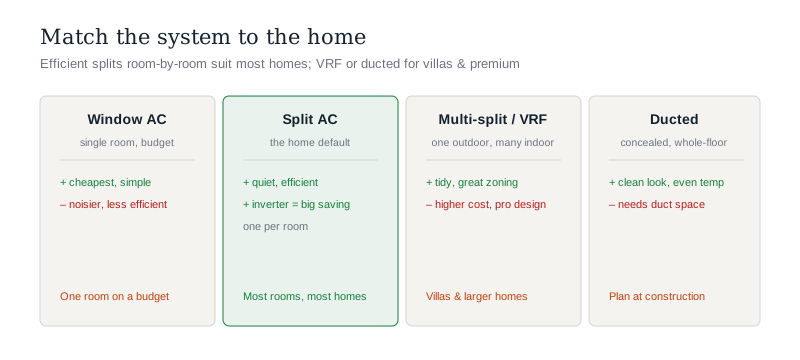
Match the system to the home:
- Window AC — cheapest, single-room, easy; but noisier and less efficient. Fine for one room on a budget.
- Split AC — the Indian home default: quiet indoor unit, efficient (especially inverter models), one per room. The right choice for most rooms.
- Multi-split / VRF — one outdoor unit serving several indoor units; tidy for a villa or larger home with many rooms, fewer outdoor units, good control — higher cost and professional design.
- Ducted — concealed ducted cooling for a whole floor/home with a clean look and even temperatures; needs planning and duct space, best decided at construction.
- Fans first — ceiling and BLDC fans plus good design handle much of the year; AC for the peak. Comfort isn't only compressors.
For most homes, efficient split ACs room by room is the pragmatic answer; villas and premium homes weigh VRF or ducted for looks and control.
Efficiency: the rating that pays back
Because HVAC is a home's biggest energy load, efficiency is where the money is:
- Buy by the BEE star rating — a 5-star inverter AC uses roughly a third less energy than a 1-star fixed-speed unit for the same cooling (see energy management); over years of use, the higher price pays back.
- Inverter over fixed-speed — variable-speed compressors modulate to the load, saving energy and running quieter and steadier.
- Right-size — don't oversize; it costs more and dehumidifies worse.
- Design and shade the home — the efficient-design levers (orientation, shading, insulation, cool roofs) cut the cooling load before the AC is chosen, so a smaller, cheaper unit suffices.
- Set it sensibly — around 24–26 °C is comfortable and far cheaper than 18 °C; each degree lower costs meaningfully more.
Don't forget ventilation and air quality
Cooling gets the attention; fresh air and clean air are what make a home healthy — and modern, sealed, AC'd homes can trap stale air and pollutants:
- Ventilation — bring in fresh air (natural cross-ventilation when the weather allows; mechanical fresh-air or ERV systems in sealed/polluted environments). CO₂ builds up in closed AC rooms.
- Filtration & air purification — AC filters catch dust; HEPA air purifiers tackle PM2.5, important in polluted cities.
- Humidity — India's coasts and monsoon bring high humidity; ACs dehumidify, and dehumidifiers help where needed. Controlling moisture prevents mould and improves comfort.
- Kitchen and bathroom exhaust — removing cooking smoke, steam and odours is basic, essential ventilation.
Good indoor air quality is increasingly recognised as central to health, sleep and productivity at home.
Where smart HVAC helps
Smart features are worth it where they save energy or add real convenience:
- Smart thermostats / AC controllers — scheduling, remote control, and turning cooling off when rooms are empty.
- Zoning — cooling only occupied rooms.
- Energy monitoring — seeing what your cooling actually costs (see energy monitoring).
- Integration — with a smart home and rooftop solar (run cooling on daytime solar).
Skip the gimmicks; adopt the smart features that genuinely cut runtime or bills.
The homeowner's maintenance basics
What you can and should do (the rest is a technician's):
- Clean/replace filters every few weeks in the cooling season — the biggest lever on efficiency and air quality.
- Keep outdoor units clear of dust, leaves and obstruction.
- Book professional servicing before summer — coil cleaning, refrigerant/gas check, drainage.
- Watch for warning signs — weak cooling, strange noises, water leaks, high bills — and call a technician.
The one-line answer
Doing home HVAC well in India means more than buying an AC: start with the cooling load (size, sun, insulation, roof, occupancy — not just floor area), choose the right system (efficient split ACs room-by-room for most homes; VRF or ducted for villas and premium homes; fans and good design for much of the year), and buy for efficiency (a 5-star inverter AC, right-sized, set around 24–26 °C, in a well-shaded insulated home). Don't neglect ventilation and air quality (fresh air, filtration/HEPA for PM2.5, humidity control) — sealed AC homes trap stale air — and add smart controls where they genuinely cut runtime. Handle the safe basics (filters, thermostat, servicing) yourself, and leave installation, refrigerant and ductwork to a qualified HVAC technician.
Where to go next
- The whole field: Ultimate Guide to HVAC Systems.
- Building new: HVAC Planning Guide for New Homes.
- Upgrading an old system: HVAC Renovation Guide.
- Cut the load first: Energy-Efficient Home Design Guide.
References
- IS 1391 (Part 1 : 2023 Unitary & Part 2 : 2023 Split) Room Air Conditioners; IS 8148 : 2018 Ducted & Package Air-Conditioners, Bureau of Indian Standards.
- Bureau of Energy Efficiency (BEE) — Star Labelling for room air conditioners; Eco Niwas Samhita: https://beeindia.gov.in/
- National Building Code of India, SP 7 (Part 8 — Building Services; verify current edition), BIS; ISHRAE Indoor Air Quality guidance.
- ASHRAE Standard 55 (thermal comfort) and 62.2 (residential ventilation).
System selection, sizing and installation should be done with a qualified HVAC professional; efficiency figures are indicative. Verify any standard's current status via the BIS catalogue before relying on it.
Export this guide
Related Guides — Deep-dive reading
Designing a Naturally Energy-Efficient Indian Home
Comfort first, gadgets last — passive design, orientation, insulation, ventilation and the climate wisdom that cuts Indian energy bills
SustainabilityHow to Choose an Exhaust Fan in India: CFM Sizing, Noise, Features & Budget Tiers
A buyer's guide to picking the right bathroom exhaust fan for your room — calculate the CFM you actually need, match wall vs ceiling vs inline to your layout, judge noise in sones, decide which extras earn their price, and spot the underpowered cheap fans that never clear the steam.
BathroomsSmart HVAC & Climate Control for Indian Homes: Thermostats, AC, Fans & Air Quality
In a country where cooling is the biggest slice of a home's electricity bill, climate control is where a smart home earns its keep. A hot-climate, honest playbook for smart ACs, BLDC fans, ventilation and air quality — with real brands and rupee costs.
Smart HomeRelated Tools — Try Free
Cross-Ventilation Analyzer
Estimate airflow and air changes per hour (ACH) from room size, window areas, layout, and local wind — with NBC 2016 Part 8 compliance check.
Ventilation CalculatorWindow Cleaning Cost Calculator
Estimate professional window cleaning cost per visit and per year by access and frequency.
Window CalculatorMonsoon-Readiness Checklist
Pre-rain home audit across 9 categories — terrace, drains, waterproofing, electrical, HVAC, pest, vehicles, documents.
Seasonal Audit