
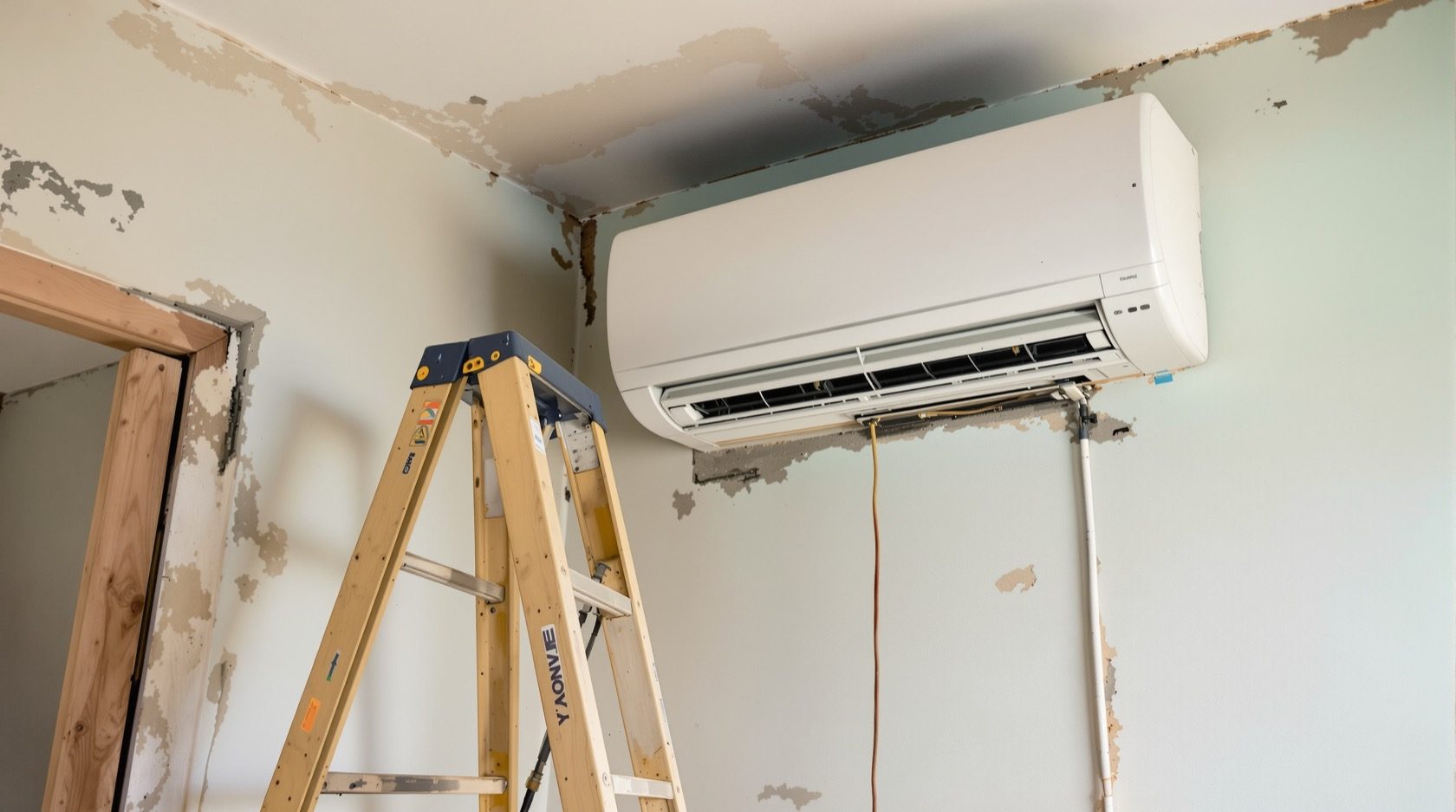
HVAC Renovation & Retrofit Guide: Upgrading Comfort in an Existing Home
How to modernise the cooling and air in a home that's already built — when to replace ageing ACs, how to retrofit better ventilation and air quality without tearing the place apart, the energy-efficient upgrades that pay back, and how to budget it sensibly.
Not every home gets HVAC designed in from scratch — most existing homes have cooling that grew piecemeal: an old window AC here, an ageing split there, little thought to ventilation or air quality. Renovating HVAC is about modernising that intelligently — replacing what's worn out, upgrading to efficiency, and retrofitting better air without tearing the home apart. The constraint is that the walls are already closed, so the art is choosing upgrades that deliver the most comfort and savings for the least disruption. This guide is how to plan an HVAC renovation in an Indian home.
It applies the Ultimate HVAC Guide to existing homes, and is a pillar of the HVAC Knowledge Hub.
The safety line & scope. This guide helps you plan upgrades and decide what to replace. The removal, installation, refrigerant recovery and any ductwork are a qualified HVAC technician's job — old refrigerant especially must be recovered properly, not vented.
When to replace an old AC
The commonest renovation question. Replace (rather than repair) when:
- It's old and inefficient — an old fixed-speed AC uses far more power than a modern BEE 5-star inverter unit; the energy saved often pays back a new unit over its life.
- It uses an obsolete/high-GWP refrigerant — very old units may use refrigerants being phased out; newer units use lower-GWP R32/R290.
- Repairs are frequent or costly — a compressor failure on an old unit usually means replace, not repair.
- It cools poorly — weak cooling, clamminess or uneven temperatures despite servicing.
- Your needs changed — a room now used differently, or you want quieter, smarter, better-filtered cooling.
The honest test: an old, inefficient, frequently-failing AC is usually cheaper to replace than to keep feeding — the running-cost saving of an efficient inverter unit does the maths.
Energy-efficient upgrades that pay back
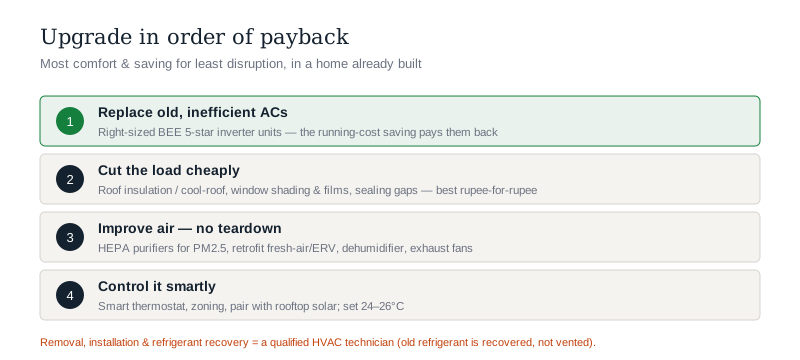
Beyond swapping units, the upgrades with the best payback:
- Efficient replacement units — 5-star inverter ACs, right-sized (don't just match the old ton blindly — the room's needs may differ).
- Cut the load cheaply — even in an existing home, roof insulation/cool-roof coating, window shading/films and sealing gaps reduce the cooling load, so the AC works less. Often the best rupee-for-rupee upgrade (see efficient design).
- Smart controls — a smart thermostat/AC controller to schedule and avoid cooling empty rooms.
- Solar — pairing cooling with rooftop solar so it runs on daytime sun.
- Right-set temperatures — free: 24–26 °C instead of 18 °C.
The pattern: replace the inefficient equipment, cut the load, control it smartly — in that order of value.
Retrofitting better air — without a teardown
Improving indoor air quality in an existing home is very doable without major works:
- Air purifiers — standalone HEPA purifiers tackle PM2.5 (vital in polluted cities) with zero construction.
- Better filtration — good filters on ACs, cleaned regularly.
- Fresh air / ventilation — retrofit fresh-air units or an ERV where the home is sealed and stuffy; even simple exhaust fans in kitchens/bathrooms help a lot.
- Humidity control — a dehumidifier for damp coastal/monsoon homes prevents mould and improves comfort.
- Fix the obvious — repair leaky old ducts, clean coils, and seal gaps letting hot/polluted air in.
Much of this is plug-in or minor work — a big air-quality gain for little disruption.
Retrofitting ducted or VRF into an existing home
Bigger upgrades are possible but need care:
- Ducted retrofit is hard in a finished home (ducts need ceiling void) — usually only feasible during a major renovation with new false ceilings.
- VRF/multi-split retrofit is more achievable — it uses refrigerant piping (smaller than ducts) to several indoor units from one outdoor unit, and can often be routed with less disruption; a professional assesses feasibility.
- High-wall/cassette splits remain the least-disruptive way to add or upgrade cooling room by room.
Match ambition to disruption: whole-home ducted usually waits for a gut renovation; room-by-room splits and VRF are the practical retrofits.
Budgeting an HVAC renovation
Plan the spend sensibly:
- Prioritise — replace the worst/oldest units and add cheap load-cutting first; phase the rest.
- Count running cost, not just price — an efficient unit costs more upfront but less over years; factor the saving.
- Get professional quotes — itemised, from a qualified HVAC contractor; understand what's equipment vs labour vs any building work.
- Bundle with other renovation — if you're already redoing ceilings/interiors, that's the moment for ducted or concealed work.
- Don't over-spec — buy the efficiency and air quality you'll use, not the most expensive gadgetry.
The one-line answer
Renovating a home's HVAC is about modernising intelligently within closed walls: replace old, inefficient, frequently-failing ACs with right-sized BEE 5-star inverter units (the running-cost saving usually pays back a new unit), cut the cooling load cheaply with roof insulation, shading and sealing, and add smart controls and solar where they pay. Improve air quality without a teardown — HEPA purifiers for PM2.5, retrofit fresh-air/ERV for sealed homes, dehumidifiers for damp climates, and simple exhaust fans. Save whole-home ducted for a gut renovation; use room-by-room splits or VRF for practical retrofits. Prioritise by payback, count running cost not just price, and have a qualified HVAC technician handle the removal, installation and refrigerant recovery.
Where to go next
- The whole field: Ultimate Guide to HVAC Systems.
- Choosing new equipment: Complete Guide to Residential HVAC.
- Cut the load cheaply: Energy-Efficient Home Design Guide.
- Manage the running cost: Home Energy Management Guide.
References
- IS 1391 (Part 1 : 2023 & Part 2 : 2023) Room Air Conditioners; Bureau of Energy Efficiency (BEE) — Star Labelling & Eco Niwas Samhita: https://beeindia.gov.in/
- National Building Code of India, SP 7 (Part 8 — Building Services; verify current edition), Bureau of Indian Standards.
- Refrigerant phase-down under the Kigali Amendment to the Montreal Protocol (R32/R290 low-GWP transition); ISHRAE indoor air quality guidance.
Replacement, installation and refrigerant recovery are professional work; old refrigerant must be recovered, not vented. Costs and paybacks are indicative. Verify any standard's current status via the BIS catalogue before relying on it.
Export this guide
Related Guides — Deep-dive reading
Designing a Naturally Energy-Efficient Indian Home
Comfort first, gadgets last — passive design, orientation, insulation, ventilation and the climate wisdom that cuts Indian energy bills
SustainabilityEnergy-Efficient Facades in India: How the Building Skin Cuts Your Cooling, Heating & Lighting Bills
How a building facade drives cooling, heating and lighting energy in India, the three levers of solar-heat-gain control, insulation and daylighting, U-value, SHGC, VLT and WWR in plain terms, ECBC and Eco-Niwas expectations, and real Indian green buildings.
Building FacadesDucted & Cassette AC: Concealed Cooling for a Clean Ceiling
When you want the cooling but not the wall units — how ducted and cassette air conditioners hide in the ceiling to deliver even, discreet comfort, how each works, where each fits, and why they must be planned into the ceiling before it closes.
HVAC & CoolingRelated Tools — Try Free
Cross-Ventilation Analyzer
Estimate airflow and air changes per hour (ACH) from room size, window areas, layout, and local wind — with NBC 2016 Part 8 compliance check.
Ventilation CalculatorWindow Replacement Cost Calculator
Estimate the cost to replace existing windows — material, glass, removal and floor access.
Window CalculatorHome Building & Interior Cost Calculator — 20 Cities
Construction + interior costs for 20 Indian cities across kitchen, wardrobes, flooring, painting, ceiling.
Cost Calculator