

STP Pump Maintenance: A Practical O&M Guide for Submersible & Dosing Pumps
How to keep the pumps that move sewage and dose chemicals running reliably — impeller and seal checks, clog and dry-run prevention, standby rotation, and a fault-finding table you can hang on the plant-room wall.
Ask any STP operator what breaks first and most often, and the answer is almost always the same: the pumps. Blowers hum along for years, tanks just sit there — but pumps are the moving heart of the plant, running thousands of start-stop cycles a month while handling the dirtiest, most abrasive, rag-laden water in the building. A single failed raw-sewage pump with no working standby can back the whole plant up in hours and put untreated sewage where nobody wants it.
This guide is the practical, checklist-friendly companion for the two pump families every Indian building STP depends on: the submersible transfer pumps that move sewage and treated water between stages, and the small chemical dosing pumps that meter chlorine and other reagents. It sits alongside the deeper background in STP Pumps & Instrumentation.
Pumps rarely fail without warning. A rising amperage reading, a new vibration, a hotter casing, a float that no longer clicks — the plant tells you it is about to fail days before it does. Good pump maintenance is mostly disciplined listening.
The pumps in your STP, and what kills them
A typical decentralised STP runs several pump duties, each with its own failure story:
- Raw sewage / inlet pumps — submersibles sitting in the collection or equalisation sump, lifting screened-but-still-dirty sewage into the plant. Biggest enemy: clogging by rags, wipes, hair and plastic.
- Transfer / MLSS pumps — moving mixed liquor or settled water between the aeration tank, clarifier and downstream units.
- Sludge / recirculation pumps — returning activated sludge or feeding the sludge holding tank. These see the thickest, most abrasive fluid.
- Filter feed / treated water pumps — cleaner duty, feeding the pressure sand filter and reuse lines.
- Chemical dosing pumps — small diaphragm or peristaltic pumps metering hypochlorite into the chlorination system. Enemies: gas-locking, crystallisation and a cracked diaphragm.
The three things that quietly destroy STP pumps are almost always the same: clogging, dry running, and worn seals and impellers. Get those three under control and you have solved most of the problem.
Clogging: the number-one submersible killer
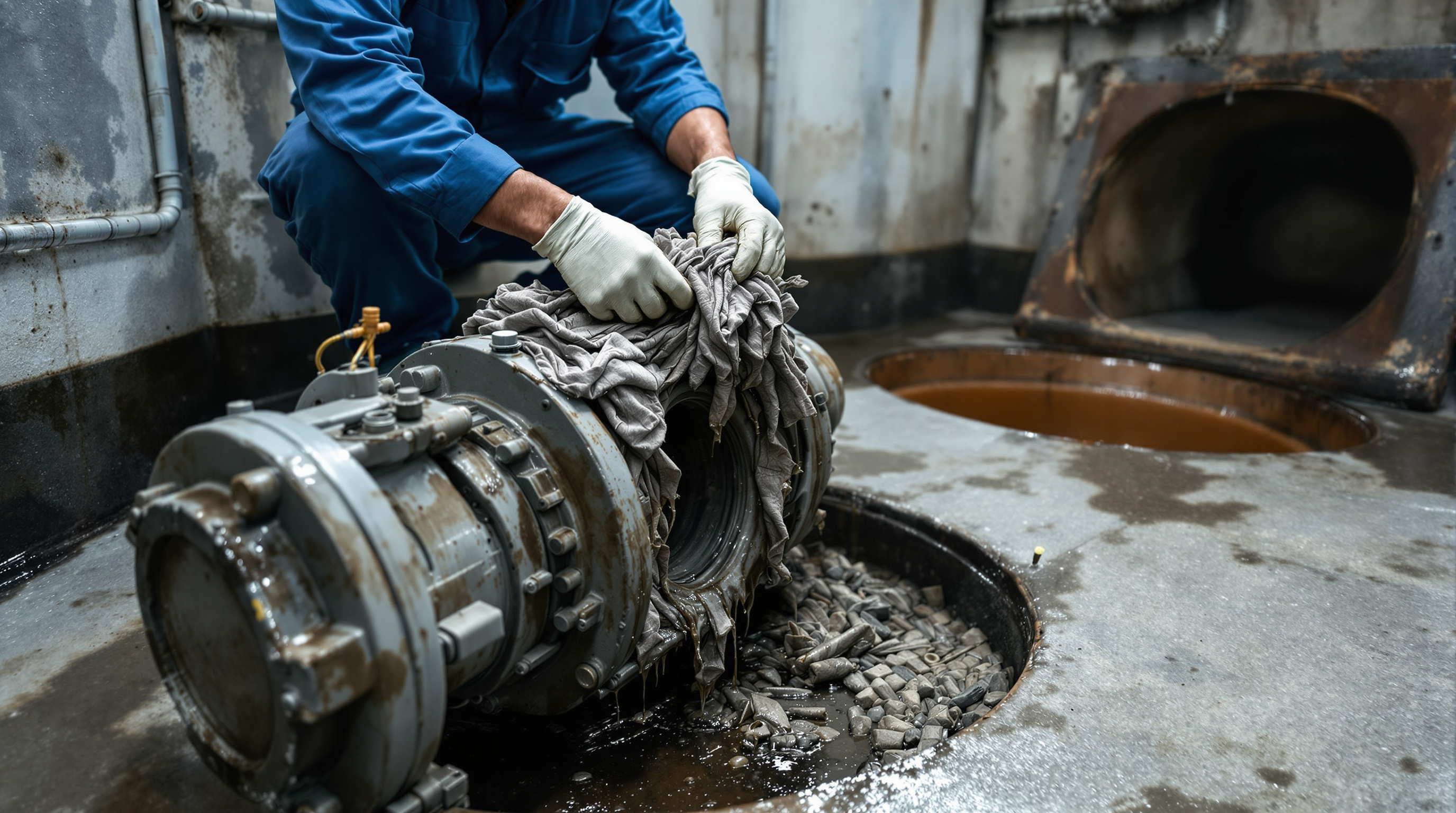
Indian domestic sewage is full of things that should never have gone down a drain — sanitary cloth, wet wipes marketed as "flushable" (they are not), hair, kitchen rags. These wrap around the impeller and choke the pump.
Your first line of defence is upstream of the pump entirely: a well-maintained bar screen. If the screen is cleaned every shift, half your clogging problem disappears. Then, at the pump:
- Watch the running current. A pump straining against a partial clog draws higher amps and may trip on overload — log the normal full-load amperage on the panel so any operator can spot a rise.
- Listen for a change in note or new vibration; a fouled impeller runs rough and out of balance.
- Note falling output — the sump takes longer to draw down, or level alarms start nagging.
- When you do lift a pump to declog, isolate power at the panel first, then clear the volute and impeller by hand (gloved), checking the leading edges for wear while it is open.
Where clogging is chronic, specify or retrofit non-clog, vortex or channel-impeller pumps, and make sure impeller passage size actually suits screened domestic sewage.
Dry running: the fastest way to burn a pump
A submersible pump is cooled and lubricated by the very liquid it sits in. Run it dry — because the sump emptied, a float stuck, or an air-lock formed — and the mechanical seal overheats and the motor cooks, sometimes in minutes.
Dry-run protection is non-negotiable:
- Level controls done right. Float switches or level sensors must stop the pump before the sump uncovers the suction. Test that the low-level cut-out actually cuts out — do not assume.
- Free-moving floats. Floats foul with grease and rag and hang up in one position. Wipe and free-swing them on every weekly round.
- Thermal and moisture protection. Use the pump's built-in motor thermal cut-out and, where fitted, the seal-chamber moisture probe. Wire them to trip, not just to a lamp nobody watches.
- Never let a dosing pump run against an empty tank — a diaphragm pump pushing air does no dosing and can gas-lock; low-level float in the chemical tank should stop it.
Mechanical seals and impellers: the wear items
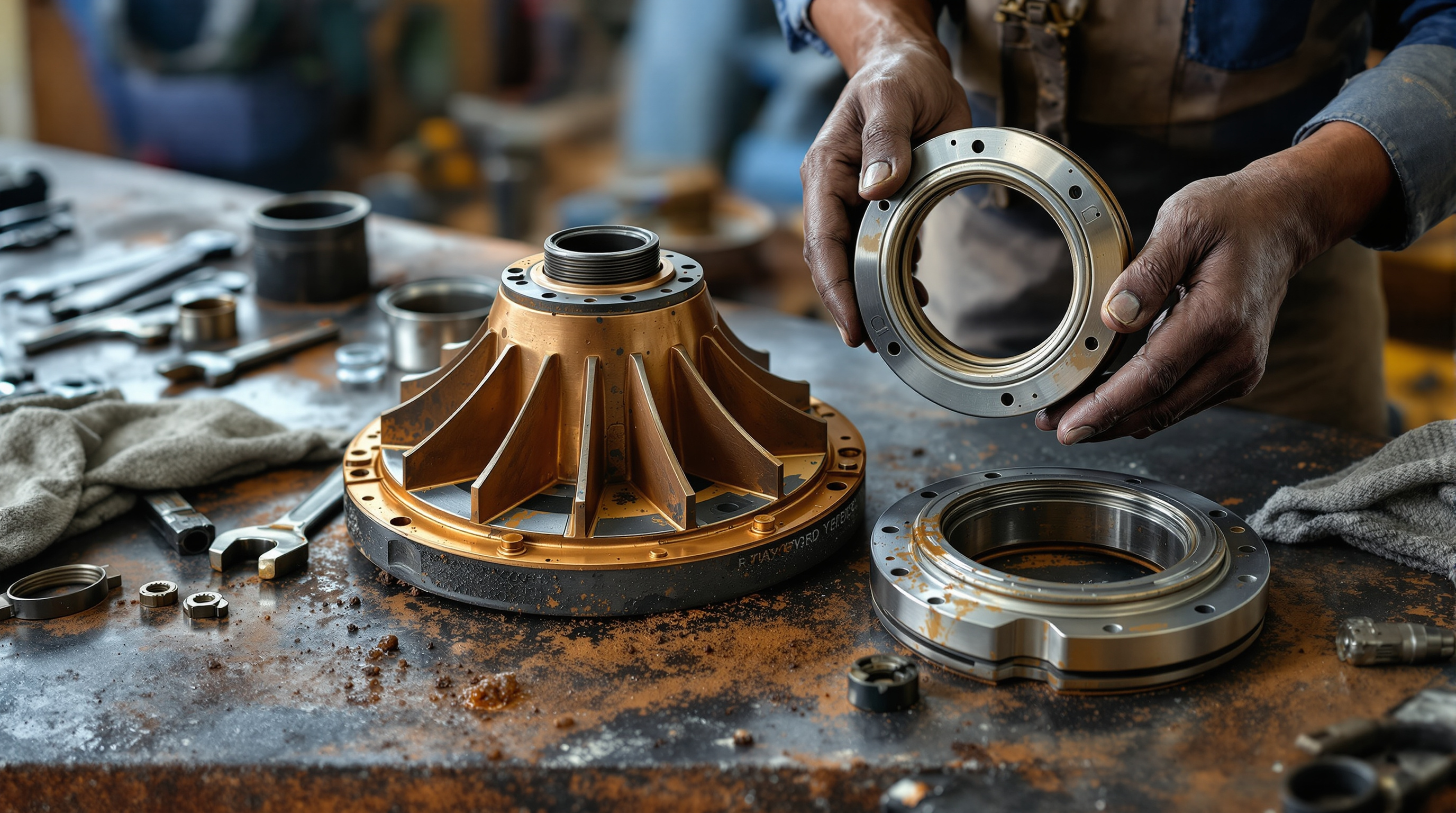
The mechanical seal is the pump's most delicate part — two lapped faces keeping sewage out of the motor. Signs it is failing: water or milky emulsion in the oil chamber, a moisture-probe trip, or a motor that keeps tripping on earth fault. A seal caught early is a cheap swap; a seal ignored floods the windings and turns a Rs-few-thousand job into a full rewind.
The impeller and wear ring erode slowly on abrasive sludge duty, opening clearances so the pump moves less water for the same power — your energy bill climbs even as output falls. Check both whenever a pump is open, and keep electricity consumption in view as an early warning.
For dosing pumps, the wear item is the diaphragm/tube and the suction/delivery valves; hypochlorite crystallises and stiffens them. Flush the dosing head with clean water at the interval below and keep a spare diaphragm kit on the shelf.
Standby rotation: use both pumps, or lose one
Almost every STP duty is specified as duty + standby — two pumps, one running, one resting. The classic mistake is to run pump A forever and keep pump B "safe" as the spare. Do that and the day A fails, B has sat idle for two years, its seal has dried, and it will not start when you finally need it.
Alternate them. Either let the panel's auto-changeover swap duty on each cycle, or manually rotate lead/standby every week so both accumulate similar hours and both are proven to work. A five-minute weekly test-run of the standby is the cheapest insurance in the plant. This discipline belongs in your weekly STP maintenance routine.
A pump maintenance schedule you can post on the wall
| Frequency | Task |
|---|---|
| Daily / per shift | Log running amps and note any change; clean the bar screen; check for unusual noise, vibration or sump-level alarms; confirm the duty pump is actually pumping. |
| Weekly | Free-swing all floats and level sensors; test-run the standby pump for 5 minutes; verify low-level dry-run cut-out; flush dosing pump heads and check dosing rate. |
| Monthly | Rotate duty/standby if not auto-changing; check seal-chamber oil colour (milky = seal leak); inspect cable glands, guide rails and lifting chains; calibrate dosing stroke against actual chlorine demand. |
| Quarterly / half-yearly | Lift each submersible; inspect impeller, wear ring and volute for wear and clogging; change seal oil; megger-test the motor insulation; replace dosing diaphragm and valves. |
| Annually | Full overhaul of worn units — reseal, re-impeller as needed; verify all protections (thermal, moisture, level) trip on test; review whether pump duty still matches the plant. |
Fold these into your broader monthly and annual STP maintenance programmes rather than treating pumps in isolation.
Troubleshooting: symptom, cause, fix
| Symptom | Likely cause | What to do |
|---|---|---|
| Pump runs but no/low flow | Clogged impeller, air-lock, worn wear ring, closed valve | Isolate and declog; bleed air; check delivery valve; inspect clearances |
| Pump trips on overload | Partial clog, jammed impeller, bearing failure, low voltage | Clear obstruction; check bearings; verify supply voltage and amps |
| Pump trips on earth fault | Failed mechanical seal — water in motor | Take out of service; check seal-chamber moisture; reseal or rewind |
| Motor won't start | Blown fuse, tripped protection, stuck float, control fault | Reset and check panel; free the float; confirm level logic |
| Rapid start-stop cycling | Floats too close, oversized pump, sensor fault | Widen level differential; check float positions |
| Milky oil in seal chamber | Lower seal leaking | Replace seal before it reaches the motor |
| Dosing pump not dosing | Gas-lock, crystallised valves, cracked diaphragm, empty tank | Prime/flush head; clean or renew valves; replace diaphragm; check tank level |
| Excessive vibration/noise | Imbalance from wear or partial clog, worn bearing, cavitation | Declog; check bearing; confirm adequate submergence |
For the wider plant picture — foaming, poor settling, odour and the rest — pair this with STP troubleshooting: common problems.
The bottom line
STP pumps do not fail randomly; they fail from neglect of three things — rags in the impeller, running dry, and worn seals no one checked. Screen the sewage well, protect against dry running, rotate your standby so both pumps stay alive, and lift-and-inspect on a fixed calendar, and your pumps will run for years instead of months.
If you are sizing or replacing a pump — or want to check that the existing one is not badly oversized and short-cycling itself to death — run the numbers through the Pump Size Calculator, and browse the full Sewage Treatment Plants guide library for the rest of the O&M series.
Export this guide
Related Guides — Deep-dive reading
STP Troubleshooting: Common Problems & Fixes (Operator's Guide)
Odour, cloudy effluent, high BOD, sludge bulking, foaming, choked diffusers, pump trips and rising power bills — a practical symptom-to-cause-to-fix guide for facility managers running an Indian building STP.
Sewage Treatment PlantsWater Pump Maintenance & Troubleshooting in India: Fix a Pump That Won't Start, Runs Dry or Loses Prime
A homeowner's guide to keeping a domestic water pump alive and diagnosing it when it fails — a routine maintenance schedule (leaks, bearing noise, capacitor, foot valve, priming, dry-run protection, impeller) and a symptom-to-cause-to-fix table for the five faults every Indian pump eventually throws: won't start, runs but no water, low flow, won't stop, and trips or overheats.
PlumbingCollection Tank (Raw Sewage Sump) in an STP: The First Sump Explained
The raw sewage sump is where a building's drains empty and treatment begins. Here is what the collection tank does, how its float switches and submersible transfer pumps work, and why it is not the same thing as the equalisation tank.
Sewage Treatment PlantsRelated Tools — Try Free
Daily STP O&M Checklist Tool
An interactive daily operator round for a sewage treatment plant — tick off biology, flows, equipment and output checks and see a live completion score, per-section progress and shift readiness.
ChecklistChlorine Dose Calculator
Compute chlorine demand for water and sewage disinfection from daily flow and dose, returning chlorine consumption in kg/day and kg/month.
STP CalculatorRainwater Tank Sizer
How big should your rainwater tank be? Computes annual harvest, recommended tank capacity in litres, water-bill savings, and payback — for 10 Indian cities.
RWH Calculator