
CCTV Object Tracking Explained (India 2026): When Auto-Tracking PTZ Helps
How a PTZ camera's auto-tracking follows a moving person or vehicle, where it genuinely helps on a large open plot or yard, and the blind spots that mean a tracking PTZ can never replace fixed cameras.
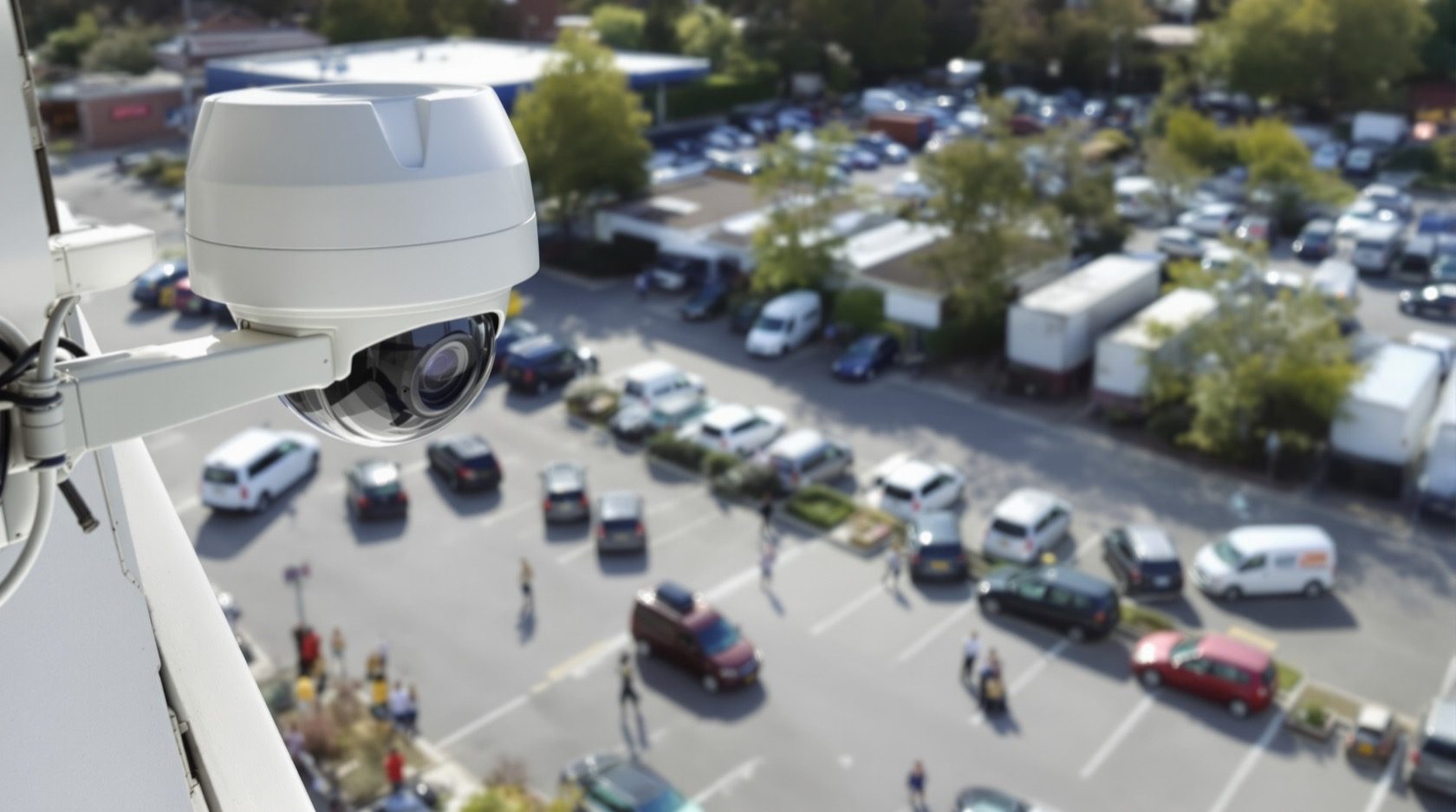
CCTV object tracking is the feature that makes a motorised camera chase what it sees. Instead of holding one fixed view, an auto-tracking PTZ (pan-tilt-zoom) camera detects a moving person or vehicle, locks on, and swings its lens to keep that subject in frame — panning left and right, tilting up and down, even zooming in — all on its own. Watched live, it looks almost intelligent: the camera notices someone cross an empty yard and follows them across it.
That capability is genuinely useful in a few specific settings, and genuinely oversold in most others. This guide is the focused explainer on object/auto tracking in Studio Matrx's CCTV hub. It is a feature guide — what "auto-tracking" on a PTZ spec sheet actually does, where it earns its place, and, most importantly, the built-in blind spot that means a tracking PTZ is a supplement to fixed cameras, never a substitute for them.
Scope & safety. This guide helps you decide whether tracking belongs in your scheme and brief an installer well. Mounting a PTZ on a pole or high wall, running cabling and any mains-electrical work belong to licensed professionals. A camera must never block a fire-escape route, and tracking must stay on your OWN property and shared areas — never bathrooms, bedrooms or changing areas. A camera that automatically follows and zooms in on people carries MORE privacy duty, not less; keep its patrol and tracking zone inside your boundary in the spirit of the Digital Personal Data Protection Act, 2023.
What auto-tracking actually does
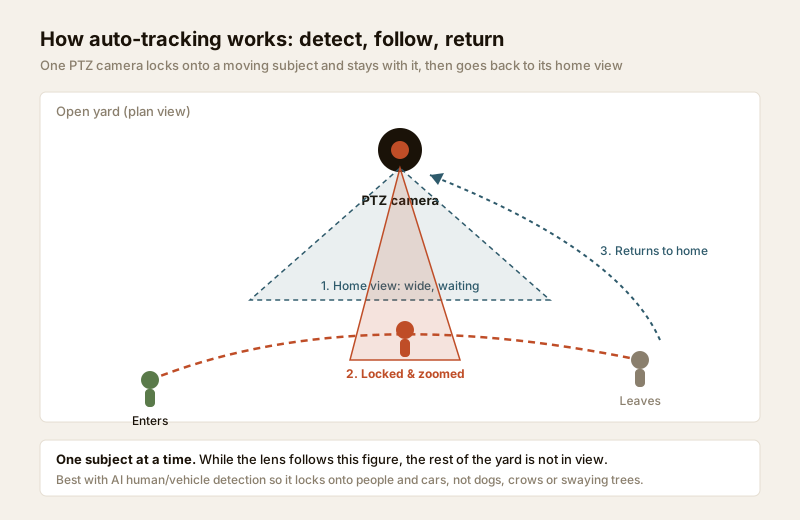
A PTZ camera is a motorised camera that can pan, tilt and zoom — the mechanics are covered in the PTZ cameras guide. Auto-tracking is the software layer on top of those motors. It works in three steps:
1. Detect. The camera's analytics spot movement — better units use AI human and vehicle detection so they lock onto a person or car rather than a swaying branch.
2. Lock and follow. Once locked, the camera drives its own motors to keep the subject roughly centred, zooming in to hold detail as the subject moves closer or further.
3. Return. When the subject leaves the scene or is lost, the camera returns to its home preset — a default view it rests at until the next event.
Most tracking PTZs run this in one of two modes. In auto-track from a fixed home view, the camera sits on one wide scene and only breaks away to follow something that enters it. In preset-tour tracking, the camera slowly patrols a set of saved views (a "tour" or "cruise") and interrupts the patrol to track anything it detects, then resumes. Both share the same fundamental behaviour: one camera, one subject at a time.
Where object tracking genuinely helps
Tracking is not a gimmick — in the right setting it does something no fixed camera can. Its natural home is a large, open, low-traffic area where a single subject at a time is the normal event and there is more ground than a fixed lens can cover in detail.
- A large industrial or farm yard. A godown compound, a factory yard, a poultry or dairy farm, a plot under construction — wide open ground where, after hours, any movement is worth following. The PTZ can pick up a figure at the gate and stay zoomed on them right across the yard.
- Big car parks and society parking. A large apartment or mall basement or open parking lot, where the camera can follow a person weaving between vehicles and hold enough zoom to keep them identifiable.
- Long boundaries and open fields. A single tracking PTZ on a tall pole can follow someone walking a long stretch of fence line that would otherwise need several fixed cameras — useful as an overview layer.
- Playgrounds, yards and open shopfronts where staff want to keep eyes on one incident as it moves.
The common thread: space, low normal traffic, and one-thing-at-a-time. In those conditions, tracking turns a wide, low-detail scene into a close, followed one — exactly when something is happening.
The blind spot you must plan around
Here is the trade-off that decides everything, and the reason a tracking PTZ is never a complete system on its own.
A PTZ has exactly one lens. While it is zoomed in following one subject in the north-east corner of your yard, every other part of the yard is completely unwatched. A second person entering at the far gate, a vehicle leaving the other side, a door being tried on the far wall — none of it is seen, and worse, none of it is recorded, because the camera is pointed elsewhere. Tracking does not widen coverage; it narrows it onto one moving thing at the cost of everywhere else.
There are three failure modes to plan around:
- It loses the subject. Tracking breaks when the person steps behind a parked truck, a pillar or a wall, crosses another moving object, or moves faster than the motors can follow. The camera hunts, then gives up and returns home — and whatever happened during those seconds is gone.
- It can be pulled away. Because it chases the first movement it sees, a tracking PTZ can be drawn to a decoy — a stray dog, a thrown stone, a person walking one way — while the real event happens elsewhere. This is precisely why it must never be your only camera on a boundary.
- It leaves gaps in the record. Even in normal use, the moments the camera spends slewing between the home view and a subject, or touring away from a spot, are moments that spot is not covered.
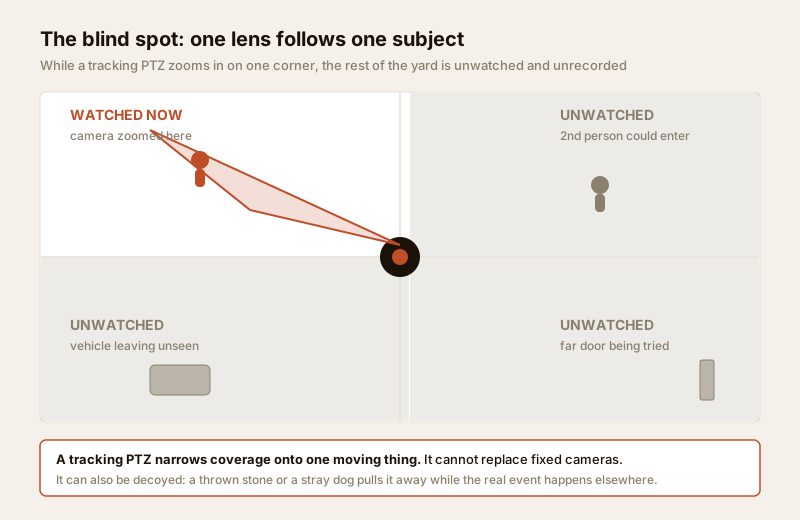
None of this means tracking is useless. It means tracking is an overview and follow layer that sits on top of continuous fixed coverage — not a replacement for it.
Auto-track vs fixed cameras — the honest comparison
| Factor | Auto-tracking PTZ | Fixed cameras |
|---|---|---|
| Coverage at any instant | One subject only; rest of scene unwatched | Every camera's whole field, continuously |
| Continuous recording | Only where it happens to point | Every angle, all the time |
| Detail on a moving subject | Excellent — zooms and follows | Fixed; detail drops as subject moves off-centre |
| Big open area with one camera | Strong — one PTZ overviews a wide yard | Needs several fixed cameras to match |
| Can be decoyed away | Yes — follows the first movement | No — each holds its own view |
| Loses subject behind cover | Common | Not applicable; view is fixed |
| Cost per unit | High (₹8,000 – ₹60,000+) | Lower (₹1,500 – ₹8,000 each) |
| Best role | Overview + follow on large open ground | The backbone — every gate, door, line |
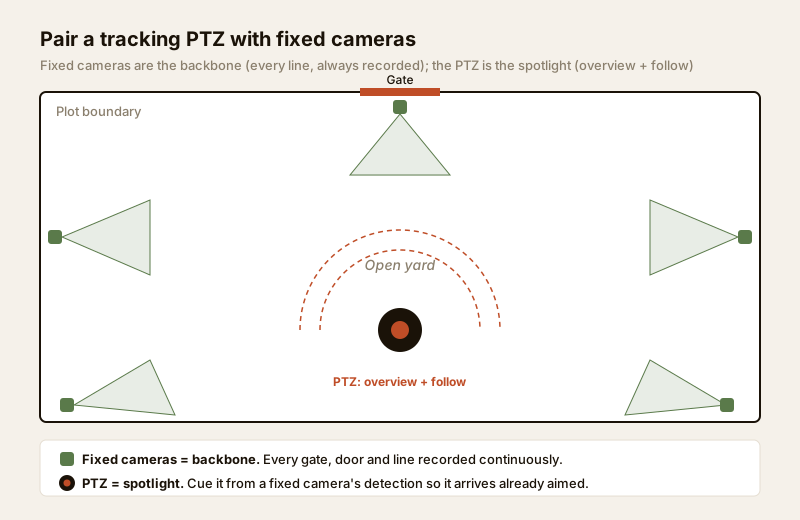
The takeaway from the table is simple: fixed cameras are the backbone, a tracking PTZ is a spotlight. Use fixed cameras to guarantee that every gate, door, driveway and boundary line is recorded continuously, and add a tracking PTZ where a large open area also benefits from the ability to zoom in and follow.
Pairing a tracking PTZ with fixed cameras
The professional pattern is to let each camera do what it is good at.
- Fixed cameras own the lines and choke-points. A bullet or turret on every gate, door, driveway and stretch of boundary, recording continuously, is your evidence layer. This is also where line-crossing and intrusion-zone detection do their best work, because a fixed camera never looks away.
- The PTZ overviews the open middle and follows. Place the tracking PTZ high, with a commanding view of the large open area, so it can pick up and zoom on a subject that the fixed cameras have already caught entering.
- Wire tracking to a real trigger. The best schemes let a fixed camera's detection — a person crossing the gate tripwire — cue the PTZ to a preset covering that spot, so the PTZ arrives already pointed the right way instead of hunting. Ask your installer whether your NVR supports this preset-linkage.
- Keep a home preset that matters. Set the PTZ's rest position to the single most important view (the main gate), so that between events it is watching something useful, not the sky.
Manual override, presets and tours
Auto-tracking should never take the controls away from a human. Three manual features matter:
- Manual override. At any moment an operator (via the app or the NVR) can grab the joystick or on-screen controls and drive the camera themselves — to check a spot, follow a subject the software missed, or hold on something. Manual input should instantly pause auto-tracking; confirm this behaviour before you buy.
- Presets. Saved positions (gate, parking, back wall) the camera can jump to instantly — by a tap, a schedule, or a trigger from another camera. Presets are what make a PTZ genuinely useful even without tracking.
- Tour / cruise. An automatic patrol that cycles through presets on a timer. Useful for a periodic look around a large site, but remember: while touring, the camera is by definition not watching the presets it is between.
For a home, honestly, presets and the ability to manually swing to a spot deliver most of the day-to-day value; full auto-tracking is a large-plot and commercial feature more than a bungalow one.
India realities: false triggers, night and power
Auto-tracking inherits every false-trigger source that plagues motion detection, and adds the cost of acting on them — the camera physically slews to chase a false event.
| Trigger in India | Effect on a tracking PTZ | Mitigation |
|---|---|---|
| Stray dogs, cats, cattle, crows | Camera chases the animal, leaves the real area | Use AI human/vehicle-only tracking; raise mount height |
| Monsoon rain, swaying trees | Constant false locks; motors wear, log floods | Tune sensitivity; exclude tree zones from the scene |
| Headlight glare, moving shadows | Camera locks onto light, not a person | AI classification; avoid pointing at busy roads |
| Insects on the lens at night | IR-lit bugs read as a subject, trigger a slew | Clean the housing; keep IR set back from the glass |
| Power cuts | PTZ and NVR both die; motors mid-slew | Put PTZ and recorder on a UPS; note PTZ draws more power |
Two India-specific notes. First, PTZs draw more power than fixed cameras (motors plus heaters), so size the UPS accordingly and expect the camera to need its own or a Hi-PoE supply — a licensed electrician's and installer's call. Second, plain motion tracking (no AI) will chase every dog and crow all night; insist on AI human/vehicle-classified tracking so the camera only follows what matters. To decide which detection features you actually need across your cameras, use the CCTV detection feature selector.
When to bring in a professional. Decide where a tracking PTZ helps and where fixed cameras must cover — that is planning you can do yourself with this guide. Then hand the pole or high-wall mounting, the heavier PoE/power supply, cabling, weatherproof terminations and preset/tracking configuration to a licensed installer, and anything at the mains board to a licensed electrician (see the electrical hub). Ask the installer to demonstrate the tracking, the loss-of-subject behaviour and the manual override before they leave.
Key takeaways
- CCTV object tracking is a PTZ camera automatically following a moving person or vehicle by panning, tilting and zooming to keep it in frame, then returning to a home preset.
- It genuinely helps on large, open, low-traffic areas — industrial and farm yards, big car parks, long boundaries — where one camera can overview and then zoom in to follow.
- Its defining limit: one lens, one subject. While it chases one target it leaves everywhere else unwatched and unrecorded, and it can lose the subject behind cover or be decoyed away.
- Therefore a tracking PTZ is a spotlight, never the backbone — fixed cameras must cover every gate, door and line continuously; the PTZ adds a follow-and-overview layer on top.
- Insist on AI human/vehicle-classified tracking to survive India's dogs, crows, rain and headlights, keep manual override and presets, put the PTZ on a UPS, and route mounting, power and configuration to a licensed professional. Plan features with the detection feature selector and the wider video analytics guide.
References
- Digital Personal Data Protection Act, 2023 — a camera that automatically follows and zooms in on identifiable people carries heightened privacy responsibility; keep tracking and patrol zones inside your own property and shared areas with a legitimate purpose.
- Manufacturer specification sheets — verify auto-tracking mode, loss-of-subject behaviour, preset/tour support, power draw (PoE/Hi-PoE) and weatherproofing (IP66+ for outdoors) before ordering.
- National Building Code of India (SP 7), Bureau of Indian Standards, and local municipal bye-laws for any structural, electrical or life-safety aspect of a pole or high-wall install; verify the current edition via the BIS catalogue: https://www.services.bis.gov.in/
This is an educational overview. Pole or high-wall mounting, cabling and any electrical work are qualified professional tasks — engage licensed installers and verify any standard's current status via the BIS catalogue before relying on it.
Export this guide
Related Guides — Deep-dive reading
How to Choose a CCTV Camera (2026): The Homeowner's Decision Guide for India
Cut through the spec-sheet noise and choose the right CCTV camera for each spot around an Indian home. What actually matters — sensor and low-light performance, lens and field of view, form factor, IP and IK ratings, honest smart features — and the marketing claims to ignore.
SecurityPTZ Cameras: When One Moving Camera Is Worth It in India
What a PTZ (pan-tilt-zoom) camera really does, the blind-spot catch every homeowner must understand, and where a motorised zoom camera earns its keep versus plain fixed cameras.
SecurityMotion-Activated Security Lighting in India (2026): Sensor Types, the False-Trigger Problem, and Pairing Motion With a Base Light So Your Camera Never Goes Blind
How PIR, microwave and dual-tech sensors really behave in Indian conditions, how to stop the stray-dog-and-passing-auto false triggers that make owners disable the light, and why a motion-only light leaves a camera dark until it is too late.
SecurityRelated Tools — Try Free
CCTV Camera Type Selector
Answer five questions and get the right camera form factor — dome, vandal dome, bullet, turret or PTZ — with reasons.
Camera SelectorCCTV Camera Coverage & Count Calculator
Estimate how many CCTV cameras you need, the NVR channels, storage in TB for your retention period, and an indicative all-in cost with GST.
CCTV CalculatorApartment Video Door System Planner
Enter flats, entrances, floors and guard desk for a first-pass building intercom plan — door stations, indoor monitors, guard station, the right architecture and an indicative cost band.
Building Planner