
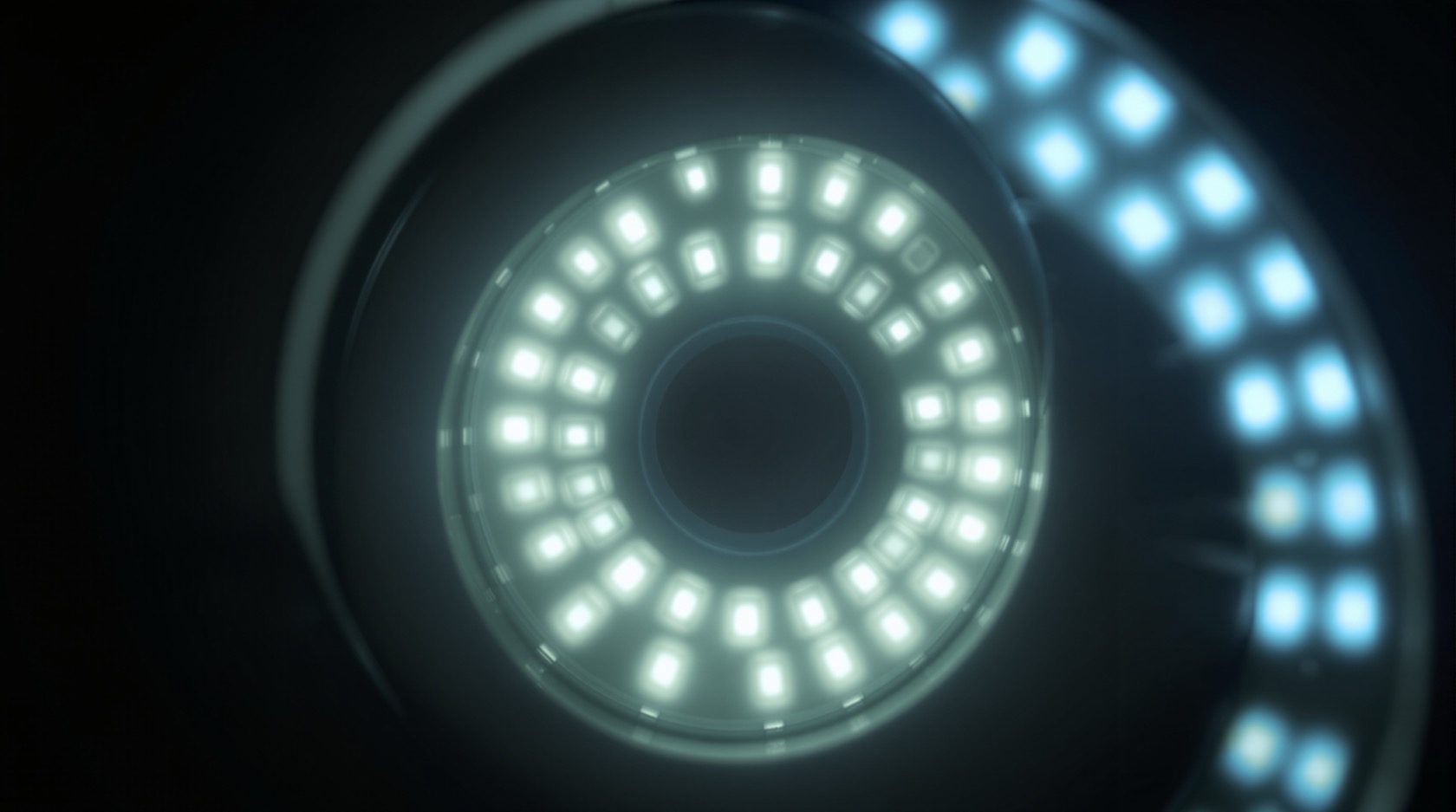
Infrared Cameras in India: How IR CCTV Sees in Total Darkness, and Its Pitfalls
How built-in IR LEDs light a scene with invisible light, why the night image is black-and-white, and the glare, range and reflection pitfalls to plan around for an Indian home.
The infrared cameras on most Indian gates, porches and boundary walls are so common that people forget there is any cleverness to them. Point one down a pitch-dark driveway on a power-cut night and it still shows you a usable black-and-white picture — no street lamp, no porch light, nothing a human eye could use. That trick is infrared (IR) night vision, and it is the classic, cheapest, most widely-fitted way to make a camera see after dark.
This guide is the focused explainer on IR night vision in Studio Matrx's CCTV hub. It sits alongside its siblings — the night-vision overview, low-light cameras and colour night vision — and stays in its lane: what IR is, why it is black-and-white, and the specific pitfalls that catch people out. For heat-sensing thermal imaging, which is a wholly different technology, see the thermal camera guide.
Scope & safety. This guide helps you choose and plan. Mounting cameras at height, running cabling and any mains-electrical work belong to licensed professionals — plan positions here, have them installed by a qualified installer, and never let hardware block a window, door or fire-escape route. Cameras belong only on your own property and shared areas — never bathrooms, bedrooms or changing areas — positioned to respect neighbours and the spirit of the DPDP Act, 2023.
How IR night vision actually works
Infrared light sits just beyond the red end of what your eye can see. It is all around us — the sun and a warm bulb throw plenty of it — but our eyes are blind to it. An IR camera exploits exactly that: it makes its own infrared light and reads by it, so the scene is brightly lit to the sensor while looking pitch-dark to a person.
Two pieces of hardware make this happen:
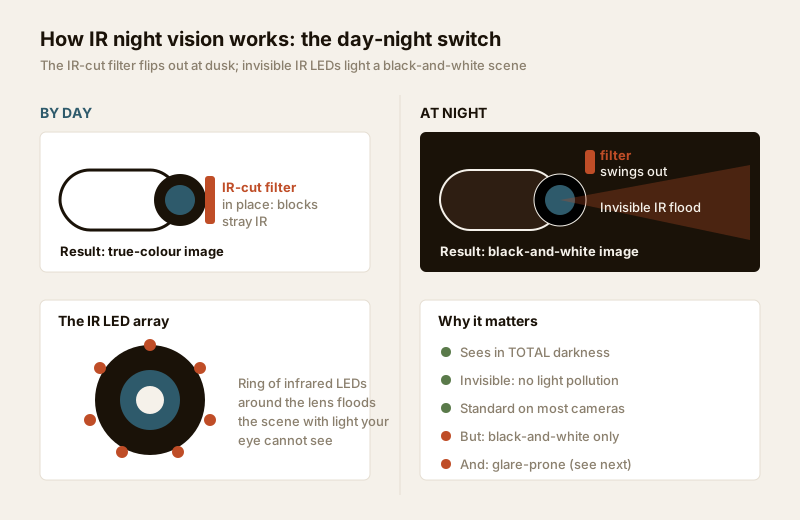
- The IR LED array. The ring or cluster of small emitters you see around the lens are infrared LEDs. At night they switch on and flood the scene with invisible IR (usually 850nm, which leaves a faint red glow, or 940nm, which is all but invisible). This is the camera's private floodlight — no visible glare, no light pollution, nothing to annoy a neighbour or announce the camera's beam.
- The IR-cut filter. By day, a tiny mechanical IR-cut filter sits in front of the sensor to block stray infrared so daytime colours look natural. At dusk the camera senses the light dropping and flips that filter out of the way — you can often hear a faint click — so the sensor now drinks in the IR its own LEDs are throwing. At the same moment it drops colour and switches to a black-and-white image, because reading by a single band of IR leaves no real colour information to recover.
The upshot: in total darkness the camera lights its own scene and shows you a clear monochrome picture. You lose colour, but you see — and you see it in conditions where a colour or low-light camera would show only black.
The strengths — why IR is the default
IR earned its place as the standard night mode for good, practical reasons.
- It works in total darkness. This is the headline. Unlike a low-light camera, which needs some ambient light to amplify, an IR camera brings its own light. On a moonless, power-cut night down an unlit lane — very much an Indian reality — IR still delivers a picture. Nothing else at this price does.
- It is cheap and standard. IR LEDs cost almost nothing to add, so nearly every bullet, dome and turret camera on the market already has them built in. You are not paying a premium for night vision; it comes in the box.
- It is invisible, so no light pollution. The IR floodlight does not glare, does not throw shadows a person can see, and does not keep the household awake or irritate a neighbour the way a bright white security light would. For a residential street it is a considerate way to light a scene.
- Good detail up close. Within its designed range, IR gives crisp, well-lit monochrome — plenty to make out a face, a movement or a vehicle at the gate.
For where IR sits among all the ways a camera can see at night, the night-vision overview lays out the full menu, and the night-vision selector tool helps you pick per view.
The pitfalls — read these before you commit
IR is genuinely useful, but it fails in specific, predictable ways. Planning around these is most of the skill.
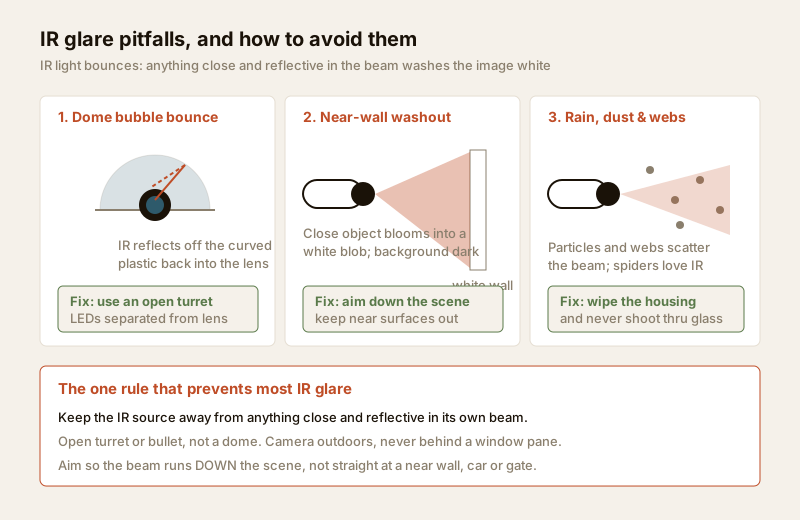
- IR glare and reflection. This is the big one. IR light bounces. Aim a camera through a dome bubble, and some of the LED light reflects straight back off the curved plastic into the lens, fogging the whole image white — the single biggest reason turret cameras (open face, LEDs separated from the lens) beat domes at night. The same washout happens off a nearby wall, glass, a parked car, rain, dust, or a spiderweb strung across the housing. Anything close and reflective in the beam can bleach the picture.
- Over-exposure of close objects. IR falls off fast with distance, so a person or wall right in front of the camera gets blasted with light and blooms into a featureless white blob, while the background stays dark. A whitewashed wall or a light-coloured car close to the lens is a classic offender.
- Optimistic IR range. A box that says "30m IR" is quoting a best case — a reflective target, clean air, no rival light. In real dust, humidity and monsoon haze, usable detail often lands well short of the number. Plan for perhaps half to two-thirds of the stated figure, and choose a camera whose rated range comfortably exceeds the distance you actually need.
- Bugs and spiders. Insects are drawn to the faint 850nm glow, and spiders follow the insects — spinning webs right across the lens that both blur the image and trigger endless false motion alerts at night. It is a maintenance item, not a fault: the housing needs an occasional wipe.
- Black-and-white only. IR night footage carries no colour, so you cannot tell a red shirt from a green one or read the colour of a car — a real limitation for identification. If colour after dark matters, that is the job of a colour night-vision camera, not IR.
IR pros, cons and best-fit
| Aspect | What IR night vision gives you |
|---|---|
| Best strength | Sees in total darkness — brings its own invisible light |
| Cost | Cheapest; built into most bullet, dome and turret cameras |
| Light pollution | None — invisible IR, no glare, neighbour-friendly |
| Image at night | Black-and-white (monochrome) — no colour identification |
| Main pitfall | IR glare / reflection off domes, walls, glass, rain, dust, webs |
| Range reality | Stated "30m" is optimistic; plan for less in dust and haze |
| Maintenance | Wipe the housing — spiders and webs love the IR glow |
| Best-fit | Dark perimeters, gates, driveways, unlit approaches, power-cut nights |
| Poor fit | Behind glass; through a dome; where colour ID after dark matters |
Getting IR right — the practical rules
Most IR disappointment comes from a handful of avoidable mistakes.
- Prefer a turret or bullet over a dome for IR. An open-faced turret or a bullet keeps the IR LEDs away from the lens, so there is no bubble to bounce light back. A dome behind curved plastic is the shape most prone to IR washout — fine by day, often milky at night.
- Never shoot IR through a window. Point a camera out through glass at night and the IR reflects straight off the pane back into the lens — a total whiteout. Mount cameras outside, in their own weatherproof housing, for any outdoor view.
- Mind close reflective surfaces. Keep a whitewashed wall, a parked car or a glossy gate out of the immediate foreground, or angle the camera so the beam runs down the scene rather than straight at a near surface.
- Size the range honestly. Match a camera's rated IR to a bit more than the real distance to the target, and remember monsoon haze and dust eat range.
- Plan the light with the rest of the scene. IR pairs well with a modest amount of ambient light; the lighting and visibility assessment helps you decide where a little warm light lets a camera do more, and where pure IR is the neighbour-friendly choice.
IR vs low-light vs colour night vision
These three are cousins, and homes often mix them. The short version: IR makes its own invisible light and shows mono; low-light amplifies whatever ambient light exists and shows mono; colour night vision uses a very sensitive sensor plus a little white light to keep colour after dark.
| Factor | Infrared (IR) | Low-light | Colour night vision |
|---|---|---|---|
| Needs ambient light? | No — brings its own IR | Yes — amplifies existing light | A little (some warm/white light) |
| Image colour | Black-and-white | Black-and-white | Full colour |
| Total darkness | Works well | Fails — nothing to amplify | Needs its own light on |
| Light pollution | None (invisible) | None | Some — visible white light |
| Glare / reflection risk | High off domes, glass, rain | Low | Low-moderate |
| Cost | Lowest; standard | Moderate | Higher |
| Colour ID after dark | No | No | Yes |
| Best-fit | Dark unlit perimeters | Streets with some ambient light | Where colour ID matters |
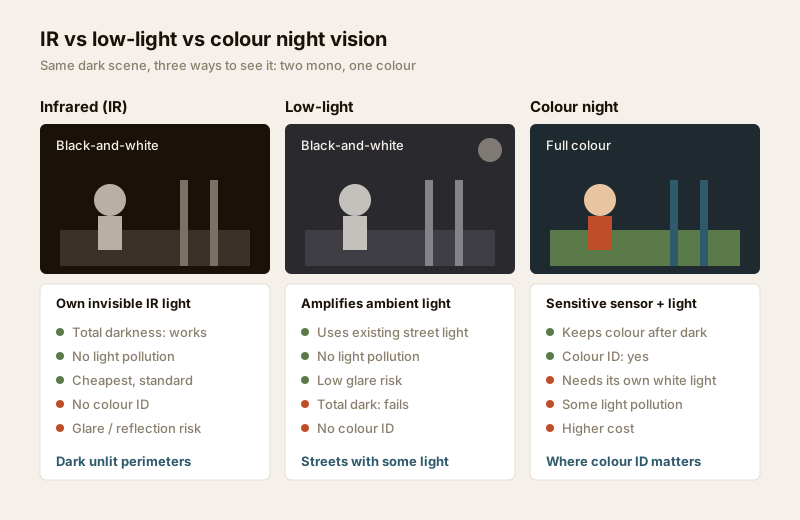
Many Indian homes settle on a sensible blend: IR turrets and bullets on the dark perimeter and unlit approaches, and a colour night-vision camera reserved for the one view — the gate, say — where reading a shirt or car colour genuinely helps. Weigh it view by view with the night-vision selector and the camera type selector.
India climate and price bands (indicative)
IR is the mode you least need to pay extra for — it is standard — but housing quality, IR power and sensor still move the price. Treat these as ballparks to sanity-check a quote, not fixed rates.
| Item | Typical range (₹) | Notes |
|---|---|---|
| 2MP IR bullet/turret (short IR) | ₹1,200 – ₹3,000 | Entry level; ~20m rated IR, fine for a short drive |
| 4MP IR camera (the home workhorse) | ₹2,500 – ₹6,000 | Sweet spot; insist on IP66 and a turret for outdoors |
| Long-range IR (rated 40m+) | ₹5,000 – ₹12,000 | For long approaches; verify the range claim realistically |
| Weatherproof junction box / gland | ₹300 – ₹900 | Keeps the cable joint dry — do not skip outdoors |
| Mounting + aiming labour (per camera) | ₹400 – ₹1,200 | Part of the installer's quote |
For India specifically, weight two things. Dust and monsoon haze shorten real IR range and coat the housing — so oversize the rated IR and plan a periodic wipe. Power cuts are exactly when IR earns its keep, so put the recorder and network on a UPS — a camera that dies with the lights sees nothing at all. Size a whole system with the camera coverage calculator and the security system cost estimator.
When to bring in a professional. Decide the night-vision mode, shapes and positions yourself — then hand the mounting at height, cable pulling, weatherproof terminations and recorder commissioning to a licensed installer. Anything at the mains board is a licensed electrician's job; see the electrical hub. A well-aimed IR turret out of the glare of nearby walls is worth far more than a powerful IR camera fogging itself behind a dome.
Key takeaways
- Infrared cameras flood a scene with invisible IR light and, by flipping out the IR-cut filter, switch to a black-and-white image — so they see in total darkness at the lowest cost.
- IR is standard on most bullet, dome and turret cameras, causes no light pollution, and gives crisp mono detail up close.
- Its pitfalls: IR glare and reflection (worst behind a dome bubble, glass or off near walls, rain and webs), over-exposed close objects, optimistic range, bugs and spiders, and no colour.
- Favour an open turret or bullet over a dome for IR, never shoot through glass, keep near reflective surfaces out of frame, and size the rated range honestly.
- For colour after dark use colour night vision; where some ambient light exists, weigh low-light; and route all mounting, cabling and mains work to a licensed professional.
References
- Digital Personal Data Protection Act, 2023 — position cameras to cover only your own property and shared areas with a legitimate purpose; avoid capturing neighbours' private spaces.
- Ingress Protection (IP) ratings — verify a camera's weatherproofing (IP66 or higher for outdoors) on the manufacturer's specification sheet before ordering, and treat quoted IR distances as best-case figures.
- National Building Code of India (SP 7), Bureau of Indian Standards, and local municipal bye-laws for any structural, electrical or life-safety aspect of an install; verify the current edition via the BIS catalogue: https://www.services.bis.gov.in/
This is an educational overview. Mounting at height, cabling and any electrical work are qualified professional tasks — engage licensed installers and verify any standard's current status via the BIS catalogue before relying on it.
Export this guide
Related Guides — Deep-dive reading
How to Choose a CCTV Camera (2026): The Homeowner's Decision Guide for India
Cut through the spec-sheet noise and choose the right CCTV camera for each spot around an Indian home. What actually matters — sensor and low-light performance, lens and field of view, form factor, IP and IK ratings, honest smart features — and the marketing claims to ignore.
SecurityLow-Light Camera Illumination in India (2026): The IR and White-Light Illuminators That Let a Camera See in the Dark
The emitter side of night vision — how an infrared illuminator gives a camera an invisible monochrome image, how a white-light illuminator gives a usable colour one, and how to match the light to the scene without dazzling your own lens.
SecuritySecurity Lighting vs Infrared Illumination in India (2026): Which Lights Your Cameras at Night?
Visible white security lighting deters intruders and gives colour and facial detail to the naked eye and the camera; invisible infrared (IR) lets a camera see in total darkness without light pollution or a power-hungry floodlight. They solve different problems, and most good setups use both, thoughtfully.
SecurityRelated Tools — Try Free
CCTV Night-Vision Selector
Answer five questions and get the right night technology — infrared, low-light, colour night vision or thermal — with reasons.
Night-VisionCCTV Night-Vision Range Planner
A realistic infrared night range versus the datasheet claim, and whether it covers your target for identification.
IR RangeCCTV Camera Type Selector
Answer five questions and get the right camera form factor — dome, vandal dome, bullet, turret or PTZ — with reasons.
Camera Selector