
Best Lift Location as per Vastu (India): Direction by Direction for Every House Facing
Where the home lift belongs in a north, east, south or west facing plan — favoured zones, the stair core, the main door and the pit direction, reconciled with structure and safety.
When families plan a home lift, one of the first questions is rarely about ropes or pits. It is "which direction should it face?" Vastu Shastra has a view, and for many Indian households that view matters deeply. But the honest answer is that the best lift location is not a single magic corner. It shifts with which way your home faces — and it must always be reconciled with the structural core, the staircase, the main door and plain safety.
This guide is organised the way real plans are drawn: by house facing. North-facing, east-facing, south-facing, west-facing — each has its own favoured band for the lift, its own relationship to the entrance and stair, and its own preferred pit direction. We give ranges, not absolutes, because reputable vastu consultants genuinely differ. Treat this as a respected cultural preference to be balanced with engineering — not as a rulebook that overrides your architect.
Two companion guides go alongside this one. For the general principles — favoured zones, the Brahmasthan, cabin colours and remedies — read our Lift Placement as per Vastu guide. For the broad, whole-picture treatment of vastu and home lifts, see Vastu for Home Lifts in India. This guide is the by-facing deep-dive — where the lift actually lands in your plan once you know your home's orientation.
First, what "house facing" means
A home's facing is the direction the main entrance opens toward — the direction you look when you step out of the front door. A door that opens to the north is a north-facing home, regardless of which way the plot's other sides point. Get this right before applying anything below; people often confuse the road direction with the facing.
Three fixed ideas run through every facing, so we will state them once:
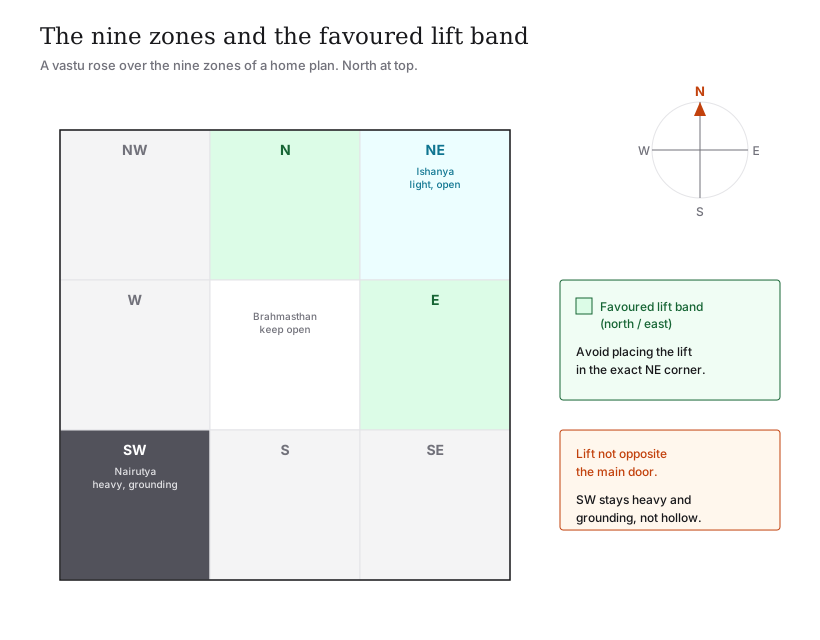
- The north-east (Ishanya) is treated as the lightest, most sacred zone — kept open, clean and uncluttered. Some consultants therefore avoid heavy lift machinery in the exact north-east corner even while favouring the broader north/north-east band. We flag this nuance honestly rather than pretending the schools agree.
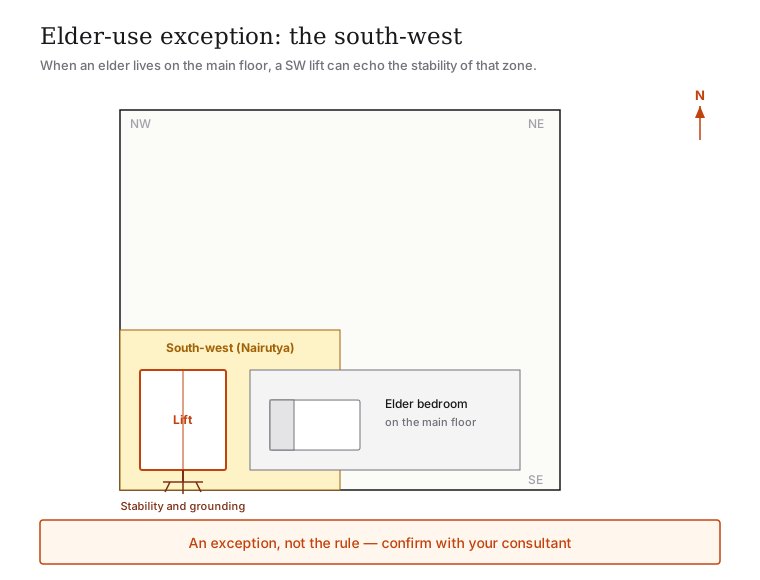
- The south-west (Nairutya) is the "heavy, grounding" zone — traditionally the master bedroom and the staircase live here. As a general rule the lift is kept out of the exact south-west. The one exception, discussed below, is a lift used mainly by elders.
- The centre (Brahmasthan) stays open in every facing — never place the shaft through the heart of the plan. And the lift should not sit directly opposite the main door.
The facing-by-facing table
Use this as your map, then read the section for your facing for the reasoning and the pit direction.
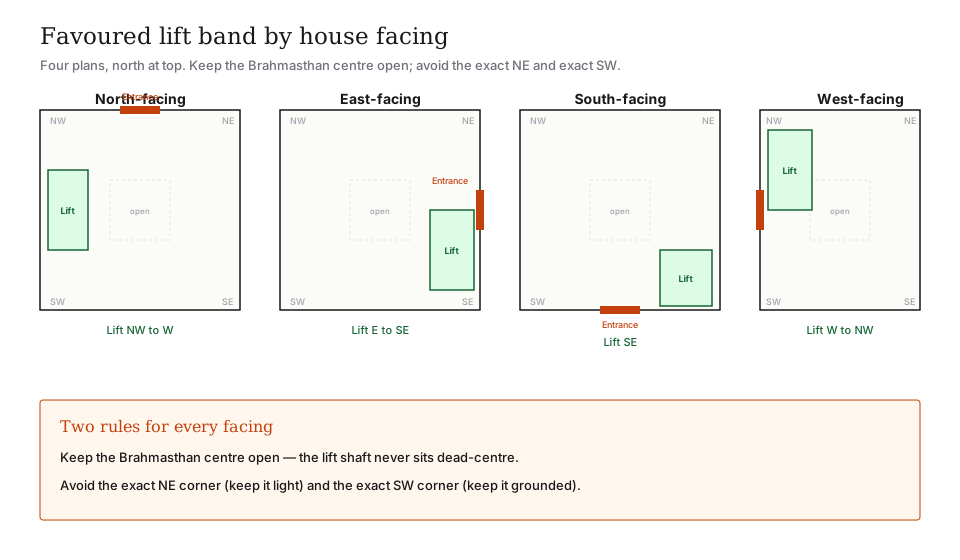
| House facing | Favoured lift zones (ranges) | Best avoided | Notes on door, stair and pit |
|---|---|---|---|
| North-facing | North-west to west band; west; some readings allow the north band away from the exact NE corner | Exact north-east corner; centre; directly opposite the entrance | Keep the north and north-east open for the entrance light. Stair often south-west; lift adjacent or to the west. Pit toward north or east. |
| East-facing | East to south-east band; south-east (Agni) for the well | Exact north-east; centre; blocking the eastern morning light path | Entrance and morning light stay east; place the lift toward the south-east so it does not crowd the door. Pit toward east or north. |
| South-facing | South-east; south band toward the south-west (but not the exact SW); west | South-west exact corner (keep heavy/grounding); centre; opposite the door | Strengthen the south and south-west mass; the lift sits comfortably in the south-east. Stair south-west, lift beside it. Pit toward east or north. |
| West-facing | West to north-west (Vayu) band; south-west adjacency for the stair core | Exact north-east; centre; directly facing the entrance | Lift reads well in the west/north-west; keep it off the entrance axis. Pit toward north or east. |
Across all four facings the pit is most often advised toward the north or the east — the lighter, water-aligned directions. Where the south-east is favoured for the car (an east- or south-facing home), the east pit reading still holds. None of this is universal: your consultant may read your specific plot differently, which is exactly why we give bands.
North-facing homes
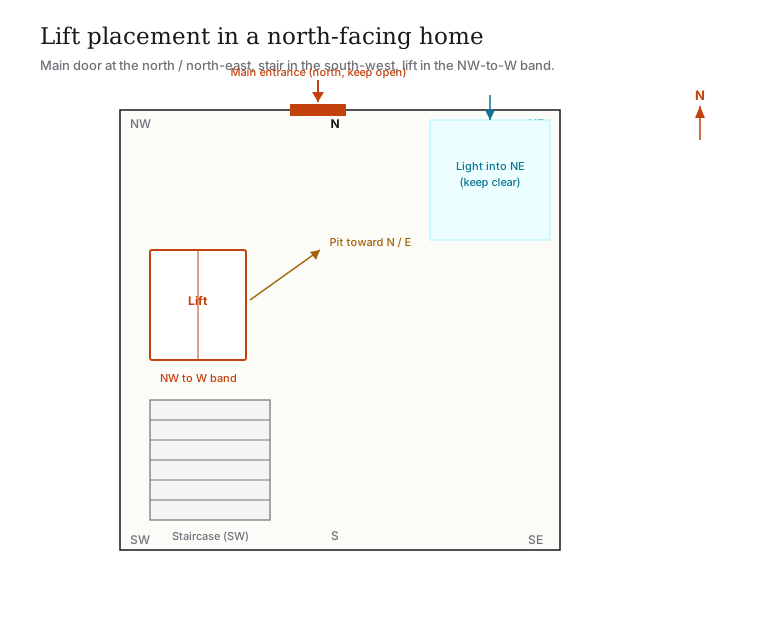
A north-facing home draws its prized light and the entrance from the north and north-east, so those zones are kept open. The lift therefore drifts toward the north-west to west band, often sitting in the west of the plan or along the north-west. Some consultants permit the north band itself provided the machinery stays clear of the exact north-east corner.
- Relationship to the main door: the lift should not sit directly opposite the north entrance, nor block the flow of light into the north-east. Tuck it to the west side of the circulation.
- Relationship to the stair core: the staircase commonly occupies the south-west; the lift is usually kept adjacent to it so the two vertical routes read as one core. If your stair is elsewhere, follow the stair.
- Pit direction: north or east.
East-facing homes
An east-facing home celebrates the morning sun from the east, so the eastern light path stays clear. The favoured band runs from the east to the south-east (Agni) for the lift well, keeping it off the doorway axis.
- Relationship to the main door: position the lift toward the south-east so it does not crowd the eastern entrance or its light.
- Relationship to the stair core: keep the lift beside the stair core wherever it lands (typically south-west), so circulation is single and legible.
- Pit direction: east or north.
South-facing homes
A south-facing home is often the most misunderstood, but it works perfectly well in vastu when the south and south-west are kept heavy and grounded. The lift sits comfortably in the south-east, and some readings allow it through the south band toward the south-west — without occupying the exact south-west corner.
- Relationship to the main door: keep the lift off the entrance axis; the south-east placement does this naturally.
- Relationship to the stair core: stair in the south-west, lift immediately beside it, reinforcing the grounded mass on that side.
- Pit direction: east or north.
West-facing homes
A west-facing home reads the lift well in the west to north-west (Vayu) band. The stair core in the south-west again invites the lift to sit adjacent.
- Relationship to the main door: do not place the lift directly facing the western entrance; offset it into the west or north-west.
- Relationship to the stair core: adjacent to the south-west stair, forming a single core.
- Pit direction: north or east.
The south-west exception: a lift mainly for elders
There is one reading worth knowing because it bridges vastu and real life. While the general rule keeps the lift out of the south-west, some consultants favour a south-west location when the lift is used mainly by elders — the heavy, grounding energy of Nairutya is felt to suit stability and rootedness, the same logic that places the master bedroom there.
This is a genuinely useful idea when a home is being adapted for ageing parents. It also tends to put the lift close to a ground- or main-floor elder bedroom, which is good practical planning quite apart from vastu. If this matches your household, raise it specifically with your consultant. For the lifestyle and independence case behind it, see our guide on home lifts for ageing in place.
The reconciliation rule (this overrides everything above)
Vastu is a cultural preference many families hold sincerely, and a good design honours it where it can. But a lift is also a piece of engineered, load-bearing, safety-critical infrastructure. So the rule is firm:
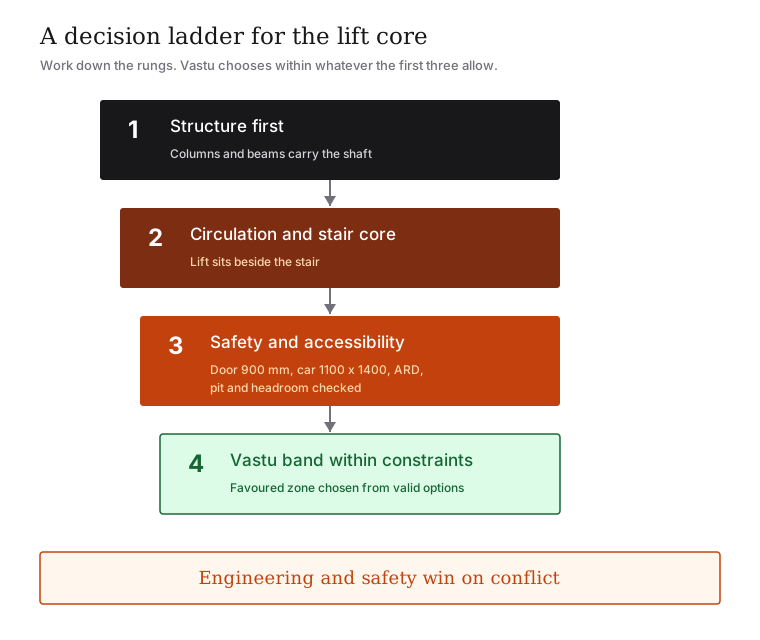
Where vastu placement conflicts with the structural core, the staircase and circulation, accessibility or plain safety, engineering and safety win. A shaft must land on columns and beams that can carry it, away from the central Brahmasthan only if the structure agrees, with a pit and headroom the chosen lift actually needs, and reachable by a step-free path.
In practice you reconcile in this order:
1. Structure first. The shaft must sit where the frame can carry it and where it does not compromise the stair core. A "perfect" vastu corner over a beam you cannot move is no corner at all.
2. Circulation and the stair. Keep the lift and stair as one legible core. A vastu-ideal spot that strands the lift far from the stair fails the home.
3. Safety and accessibility. Door clear width at least 900 mm, a car large enough for a wheelchair and attendant (around 1100 by 1400 mm), a battery-backed Automatic Rescue Device for power cuts, and the pit/headroom the model requires — none of these bend for direction. See the accessibility standards for residential lifts for the numbers.
4. Vastu within those constraints. Now choose the most favoured band that the first three allow. That is your best lift location.
If an existing lift is already in a "wrong" zone and relocation is impossible, vastu offers gentle remedies — keep it light, clean and quiet, use calm earthy cabin colours, and add mirrors or plants nearby. The general placement guide covers these in detail.
A quick checklist before you fix the location
- Confirm your house facing from the main door direction, not the road.
- Identify your structural core and stair — the lift usually belongs beside the stair.
- Pick the favoured band for your facing from the table, keeping the Brahmasthan open and the lift off the door axis.
- Keep heavy machinery out of the exact north-east corner; keep the lift out of the exact south-west unless it is an elder-use lift.
- Set the pit toward north or east where the structure allows.
- Confirm door width, car size, pit, headroom and ARD with a licensed lift contractor and your architect — engineering and safety win on any conflict.
Don't invent a budget around any of this; lift cost depends on type, floors and civil work, and we keep those figures in one place — see the home lift cost guide for India 2026. For how the lift ties an accessible home together once its location is fixed, read accessible homes with elevators, and for stair-direction vastu that pairs with the lift core, see staircase vastu and the broader vastu house plan.
References
- RPwD Act 2016 (Rights of Persons with Disabilities) — accessibility benchmark for door widths and car sizing: https://ssepd.odisha.gov.in/sites/default/files/2024-01/RPWD%20ACT.pdf
- CPWD Harmonised Guidelines & Space Standards for a Barrier-Free Built Environment (2016) — accessible-lift dimensions: https://www.cpwd.gov.in/Publication/Harmonisedguidelinesdreleasedon23rdMarch2016.pdf
- IS 14665 (Electric Traction Lifts), Part 1 — outline dimensions (pit, headroom, car), BIS: https://law.resource.org/pub/in/bis/S05/is.14665.1.2000.pdf
- National Building Code of India 2016, Part 8 Section 5 (Lifts), BIS: https://www.bis.gov.in/standards/technical-department/national-building-code/
- Elite Elevators — Vastu for home elevators: https://www.eliteelevators.com/blog/vastu-home-elevator/
- NoBroker — lift vastu placement: https://www.nobroker.in/blog/lift-vastu/
- SubhaVaastu — lift/elevator vastu tips: https://www.subhavaastu.com/vastu-tips-lift.html
Vastu guidance here is a respected cultural preference presented as ranges; consultants differ. All dimensions and regulatory points are indicative — confirm with your architect, a licensed lift contractor and your local municipal bye-laws.
Export this guide
Related Guides — Deep-dive reading
Vastu for Home Lifts (India): Direction, Colour, Materials and Remedies
The complete vastu picture for a home lift — favoured and avoided directions, the honest north-east nuance, cabin colour and material, the door, light and cleanliness, the stair relationship, and remedies when an existing lift cannot be moved — always reconciled with structure, safety and accessibility.
Home Lifts & AccessibilityDesigning Adaptable & Universal-Design Homes
Accessibility, Aging-in-Place, and the Multi-Stage Family — Code, Anthropometrics, and Plan-Stage Discipline for Indian Residential Architects
Room PlanningLift Placement as per Vastu (India): Directions, the Staircase and Practical Reconciliation
What lift-Vastu writers recommend, where it collides with structure and stairs, and how a sensible architect reconciles the two.
Home Lifts & AccessibilityRelated Tools — Try Free
Cross-Ventilation Analyzer
Estimate airflow and air changes per hour (ACH) from room size, window areas, layout, and local wind — with NBC 2016 Part 8 compliance check.
Ventilation CalculatorWindow Orientation Planner
Pick the best window type, glass and shading by wall direction — north, east, south and west.
Window ToolAccessibility Compliance Calculator
Check a planned lift against the CPWD and RPwD accessible-lift benchmarks for a score.
Lift Checker