
Security Lighting vs Infrared Illumination in India (2026): Which Lights Your Cameras at Night?
Visible white security lighting deters intruders and gives colour and facial detail to the naked eye and the camera; invisible infrared (IR) lets a camera see in total darkness without light pollution or a power-hungry floodlight. They solve different problems, and most good setups use both, thoughtfully.
Stand in your garden after dark and you face a simple-looking question with two very different answers. Do you flood the boundary with visible white light so intruders are deterred and everyone, eye and camera alike, sees in full colour? Or do you leave it dark to the eye and let the camera see for itself using invisible infrared, keeping the night quiet, the electricity bill down and the neighbours unbothered? The honest answer is the least satisfying one: they are not really rivals. Visible security lighting and infrared illumination solve different problems, and most good home setups use both, each where it earns its place.
Visible light does something infrared can never do: it is seen. A person walking up to a suddenly-lit gate knows they are seen, and often turns around. It also gives you colour and true facial detail, which is what actually identifies a person after the fact. Infrared does something visible light cannot: it lets a camera see in total darkness while a human standing next to it sees nothing at all, with no glare, no light pollution and no floodlight humming all night. This guide is a straight head-to-head so you can decide which belongs at your gate, your backyard and your sensitive boundary, and why the answer is usually "a bit of each".
Scope and how to read this. This is a neutral, honest comparison for a homeowner choosing how to light for cameras and for the eye at night, not a sales pitch and not a price or buying guide. Both approaches are valid, and neither wins everywhere. Any camera and its footage hold personal data under the Digital Personal Data Protection (DPDP) Act 2023, and light and cameras aimed across a boundary become a neighbour matter, so aim them at your own property. For picking specific fittings and depth on each side, follow the cross-links; this page is about the choice between the two.
What each one actually is
Visible security lighting
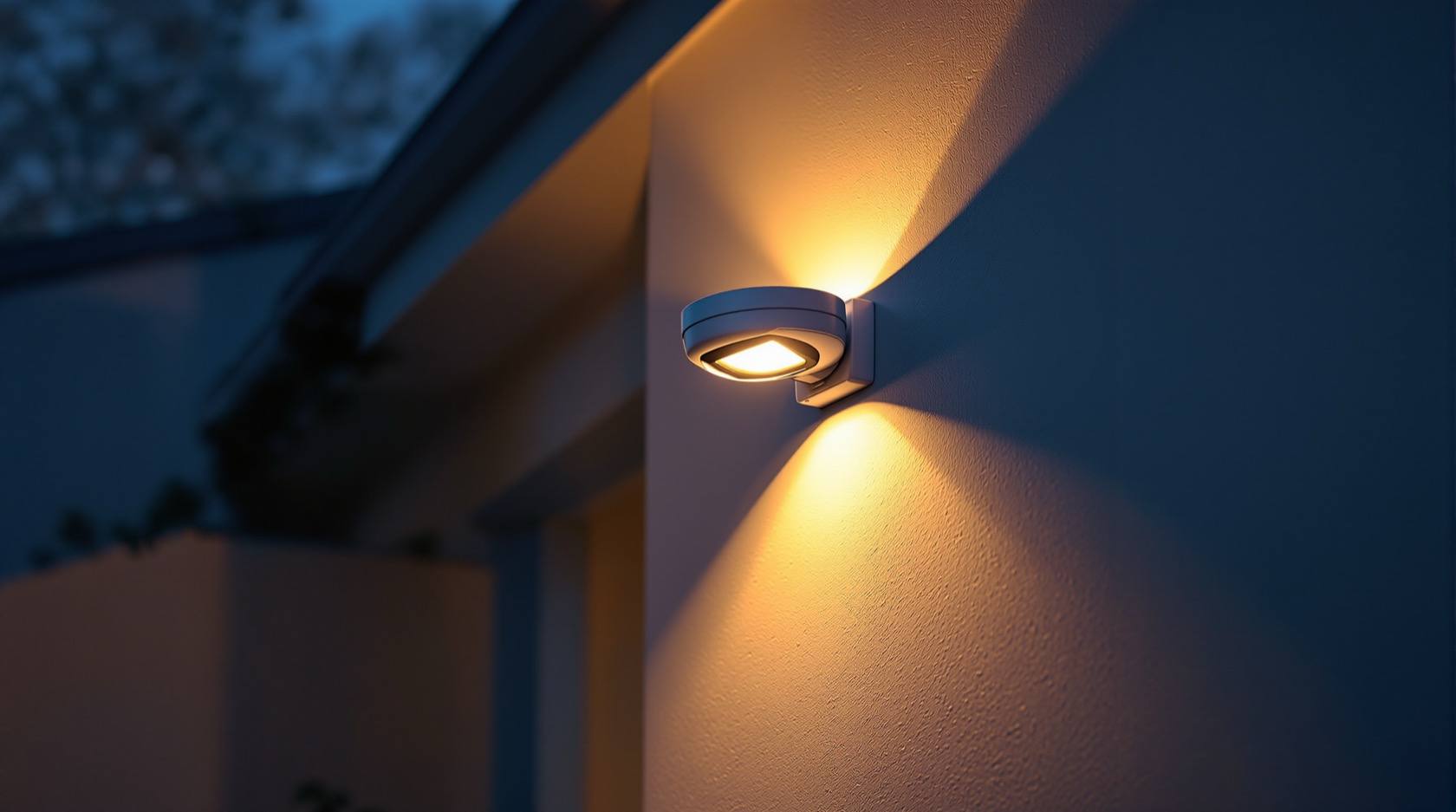
This is light you can see: LED floodlights, motion-activated lamps, dusk-to-dawn wall lights and general boundary and yard lighting. Its jobs are threefold. It deters — a dark corner that suddenly lights up as someone approaches tells them they are noticed, and a lot of opportunist intrusion simply leaves. It helps the naked eye — you, a guard or a passer-by can see what is happening in real time, which no invisible system does. And it gives a colour image to an ordinary camera, so you get clothing colour, vehicle colour and true facial tone, which is what identifies a person rather than merely detecting one.
The costs are real. Visible light is light pollution: it spills into bedrooms, your own and the neighbours', and a badly aimed floodlight is a genuine nuisance and a frequent cause of complaints. It uses energy every hour it burns, unless it is switched by motion or a sensor. Poorly placed, it creates glare and deep shadows that a camera cannot see into, and a bright lamp pointed near a camera can wash the image to white. And it can be defeated — a light on a simple timer or an obvious bulb can be avoided, unscrewed or shot out. Done well, though, visible lighting is the only one of the two that changes an intruder's behaviour before anything happens. The security lighting guide and how to choose security lighting cover doing it well.
Infrared (IR) illumination
Infrared is light just beyond what the human eye can see. A camera with IR LEDs, or an external IR illuminator, floods the scene with near-infrared that the sensor reads but your eye does not, so the camera sees a bright, usable picture of a yard that looks pitch dark to you. Most home IR is 850nm, which is efficient and long-range but shows a faint red glow at the LEDs up close; 940nm is truly invisible with no glow, at the cost of some range and brightness. The infrared CCTV cameras guide covers the hardware.
Its strengths are the mirror image of visible light. It is invisible, so no light pollution, no glare, no neighbour nuisance and nothing that tells an intruder where the cameras look. It lets a camera see in total darkness, which a colour camera alone cannot. And a camera's own IR LEDs draw far less power than a floodlight covering the same view. Its weaknesses are equally real. IR gives a monochrome image only, grey and detailless, so you can detect a person but rarely identify one by face or read a colour. It offers no deterrence at all, because the intruder cannot see it. It has limited range, and objects close to the camera can wash out to a bright blob while the far scene stays dark. And IR reflects off nearby walls, glass, rain, fog and even a spider web strung across the lens, bouncing light back as haze or bright spots. "IR bleed" from a light-coloured wall next to the lens is a classic cause of a milky night image.
The head-to-head
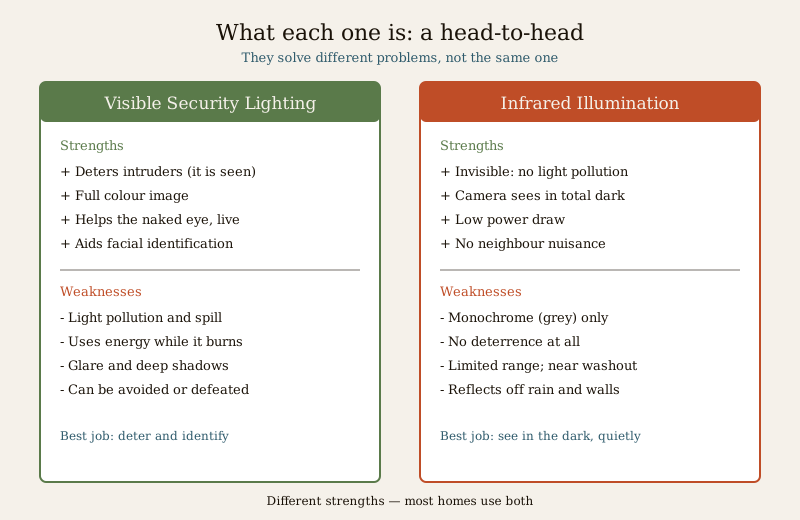
Here is the same comparison across the dimensions that decide it. Neither column is all wins; each is genuinely better at some things.
| Dimension | Visible security lighting | Infrared illumination |
|---|---|---|
| Deterrence | Strong — a sudden light changes behaviour | None — invisible to the intruder |
| Colour vs monochrome | Full colour | Monochrome (grey) only |
| Useful to the naked eye | Yes — you and a guard see live | No — only the camera sees |
| Facial identification | Best — colour and true skin tone | Weak — detect a person, rarely identify |
| Energy use | Higher (unless motion or sensor switched) | Low — camera LEDs sip power |
| Light pollution and neighbour nuisance | Real — spill, glare, complaints | None — invisible |
| Range | As far as the lamp throws light | Limited; near objects can wash out |
| Cost | Fittings, wiring and running cost | Usually built into the camera |
| Monsoon and fog behaviour | Cuts through better; less bounce-back | IR reflects off rain and fog as haze |
| Glare and washout | Bright lamp near a lens washes the image | Near objects and reflective walls bloom |
| Best single job | Deter and identify | See in the dark, quietly |
Read across and the pattern is clear. Visible lighting wins wherever a human decision matters — being seen, being deterred, being identified in colour. Infrared wins wherever you simply need the camera to see in a place you do not want lit. That is the whole comparison in one line. For a deeper treatment of the camera side specifically, see infrared vs colour night vision.
The third option: colour night vision
The choice is not always binary any more. Many current cameras offer full-colour night vision: a low-light sensor plus a small built-in warm-white LED that gives a colour image at night without a full floodlight. Others run smart hybrid modes that sit in low-power IR until motion is detected, then snap on the warm light to grab a colour, identifiable frame, then drop back to IR. This blends the two philosophies: mostly-invisible and low-nuisance, with a burst of visible colour exactly when it matters. It is not magic, though. The built-in light is small, so range is short, and in true darkness a colour sensor still struggles where IR would see. Treat colour night vision as a strong middle path for a near-camera, moderately lit spot like a porch or gate, not a replacement for deterrent floodlighting or long-range IR. The low-light camera illumination guide goes into the sensor side.
Which suits whom
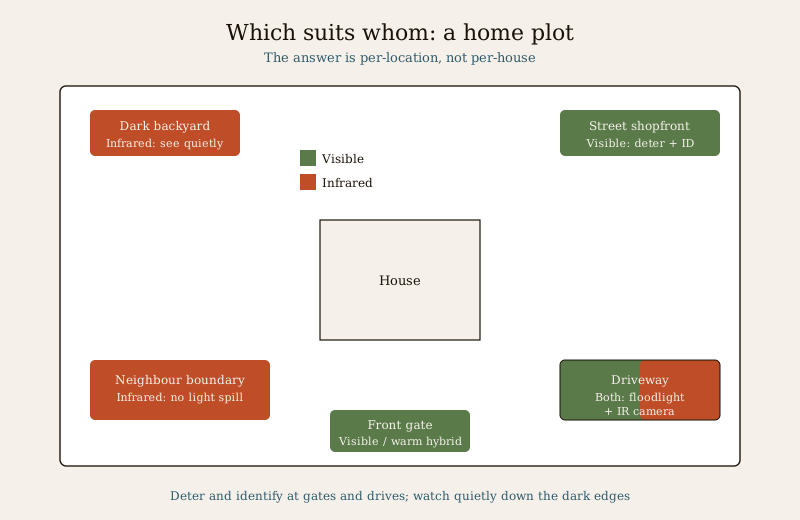
The right answer is per-location, not per-house. Walk your property and place each spot in one of these buckets.
- Front entrance or main gate — visible, or a warm-light hybrid. This is where you most want deterrence and where you most need to identify a face and read a colour. Motion-activated visible lighting, or a colour night vision camera with a warm light, beats plain IR here. See lighting for facial identification.
- Dark backyard or side return — infrared. A place nobody overlooks, where you simply need the camera to see if something moves. IR keeps it dark, quiet and unlit while the camera watches. No point paying to floodlight a corner no one looks at.
- Driveway — motion-activated visible light plus an IR camera. The motion lamp deters and lights a colour frame of an arriving person or vehicle; the camera's IR covers the rest of the time in darkness. This pairing is the classic "use both" case.
- A boundary shared with a close neighbour — infrared. Where a floodlight would spill into someone's bedroom and start a dispute, invisible IR lets the camera see without lighting anyone's window. This is where IR's invisibility is worth most.
- A shop storefront or a face-to-street boundary — visible. Deterrence and a bright, colour, identifiable image in a public-facing spot argue for visible light; a lit shopfront is itself a deterrent and a reassurance.
Monsoon, fog and the Indian night
Two India-specific notes tip real decisions. First, monsoon and fog: heavy rain and fog scatter infrared badly, and a camera relying on IR can white out into haze in a downpour as its own light bounces back off the drops. Visible light cuts through a little better and a wet colour scene stays readable, so if your worst-visibility nights matter most, do not lean on IR alone. Second, power: a motion-switched visible light draws nothing until it triggers, so the energy worry is smaller than it looks. A dusk-to-dawn light is simple but always on; a motion-activated light deters by surprise and saves power, at the cost of a moment of darkness before it triggers. And when you run visible light near cameras, keep it camera-compatible — warm, even, and never pointed into the lens.
The honest caveat. Neither approach identifies a face on its own in every condition. Visible light can be avoided or create harsh shadows; IR gives you grey shapes, not names. Identification depends on the right light, the right camera placement and a sensible field of view far more than on choosing a camp. Do not expect either to turn a distant, badly-angled camera into courtroom-grade evidence.
How to decide
Put the location, not the technology, first. For each spot, ask three questions in order.
1. Do I want to deter, or just to watch? If deterrence matters — a gate, a drive, a shopfront — you need something visible. If you only need the camera to see, IR is enough.
2. Do I need colour and a face, or is detection enough? Colour and identification argue for visible light or a warm-light hybrid. If detecting movement is all the spot needs, IR is fine.
3. Will visible light cause a nuisance here? A boundary against a neighbour's window, or a bedroom-facing wall, pushes you toward invisible IR regardless of the first two answers.
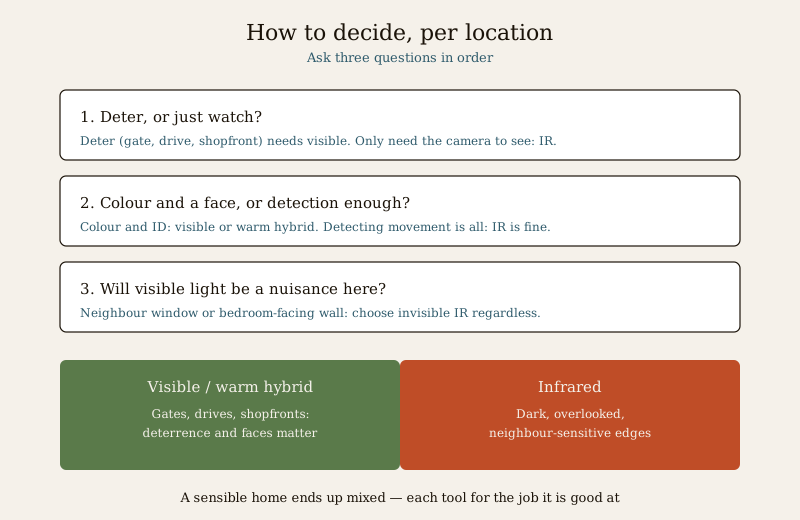
Answer those honestly per location and a sensible home almost always ends up mixed: motion-activated visible or a warm hybrid at the gate and drive where people and faces matter, and quiet IR down the dark, overlooked, neighbour-sensitive edges where you just need the camera to see. That is not a compromise; it is using each tool for the job it is actually good at. For a structured walk through designing the visible side of this, see the security lighting design guide, and for the wider set of "this or that" security decisions, the security comparison guide.
Key takeaways
- Visible security lighting and infrared illumination solve different problems — they are complements, not rivals, and most good home setups use both.
- Visible light deters, gives colour and identifies a face — but it pollutes, uses energy, can glare or be defeated, and annoys neighbours if misaimed.
- Infrared lets a camera see in total darkness, invisibly and cheaply — but it is monochrome, offers no deterrence, has limited range, and reflects off rain, fog and nearby walls.
- Colour night vision is a strong middle path — a low-light sensor plus a small warm light gives colour at a near-camera spot, but not long range or true-dark performance.
- Decide per location, not per house — visible or hybrid at gates and drives for deterrence and faces; IR down dark, overlooked, neighbour-sensitive edges.
- In monsoon and fog, do not lean on IR alone — it hazes over, while a readable colour scene survives the rain better.
Where to go next
- Security lighting and how to choose security lighting — the visible side in depth.
- Infrared CCTV cameras and infrared vs colour night vision — the camera and night-vision side.
- CCTV-compatible lighting and low-light camera illumination — making light and camera work together.
- Dusk-to-dawn and motion-activated security lighting — how you switch the visible light.
- Lighting for facial identification and the security lighting design guide — getting an identifiable image.
- The security comparison guide — the rest of the "this or that" security decisions.
References
- Digital Personal Data Protection Act, 2023 — camera footage of identifiable people is personal data; aim cameras and lights at your own property, agree who may view recordings, and set a retention period.
- Bureau of Indian Standards catalogue — verify the current status of any lighting or CCTV standard before relying on it: https://www.services.bis.gov.in/
- Crime Prevention Through Environmental Design (CPTED) — the design tradition behind using light, sightlines and natural surveillance to deter, rather than lighting for its own sake.
This is an educational comparison for homeowners, not installation, legal or security-consulting advice. Both visible lighting and infrared illumination are valid and are usually best used together; choose per location and aim cameras and lights at your own property. Engage a licensed installer for a specific site, and verify any standard's current status via the BIS catalogue before relying on it.
Export this guide
Related Guides — Deep-dive reading
Infrared vs Colour Night Vision CCTV in India (2026): Which Sees Better in the Dark?
A homeowner's head-to-head between traditional infrared (IR) night vision, which lights the scene invisibly and shows a black-and-white image, and colour night vision, which keeps the picture in colour at night using a very sensitive sensor and a little white light — with an honest verdict on when each wins and why a hybrid camera is usually the smartest buy.
SecurityHow to Choose a CCTV Camera (2026): The Homeowner's Decision Guide for India
Cut through the spec-sheet noise and choose the right CCTV camera for each spot around an Indian home. What actually matters — sensor and low-light performance, lens and field of view, form factor, IP and IK ratings, honest smart features — and the marketing claims to ignore.
SecuritySecurity Lighting in India (2026): Lighting the Boundary Without Dazzling the Camera or the Neighbour
How to use light as a security layer that deters intruders and lets your cameras see, done well with uniform shielded downlight, no glare, no neighbour trespass and a power-cut backup.
SecurityRelated Tools — Try Free
CCTV Night-Vision Selector
Answer five questions and get the right night technology — infrared, low-light, colour night vision or thermal — with reasons.
Night-VisionWindow Hardware Cost Calculator
Estimate window hardware cost — hinges, handles, locks, rollers and multipoint gears.
Window CalculatorCCTV Camera Coverage & Count Calculator
Estimate how many CCTV cameras you need, the NVR channels, storage in TB for your retention period, and an indicative all-in cost with GST.
CCTV Calculator