
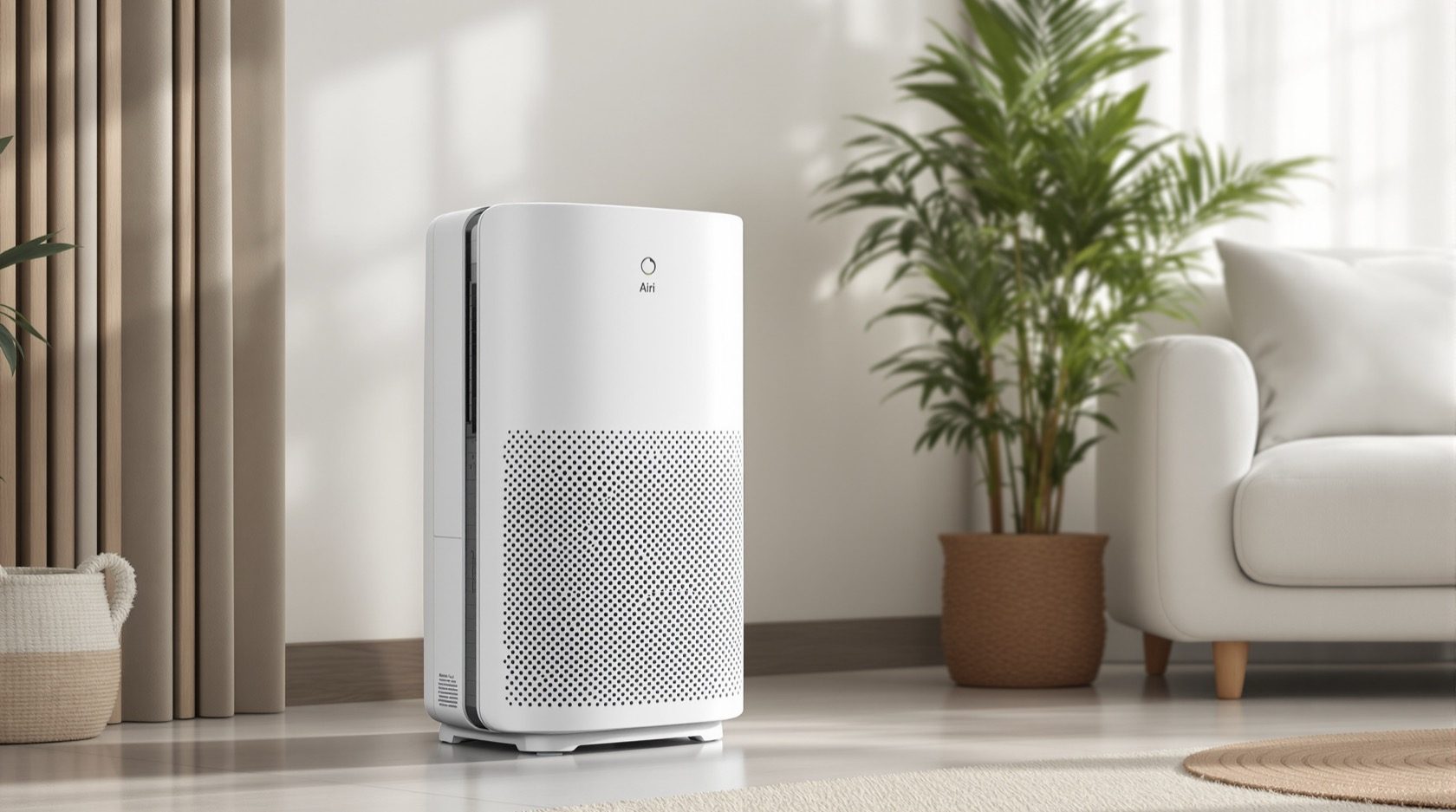
Air Purifiers & HEPA Filters: Do You Need One, and How to Choose
The honest guide to air purifiers for India's polluted cities — how they work, what HEPA and activated-carbon filters actually remove, how to size one to your room using CADR, where they genuinely help (and where ventilation matters more), and what to ignore.
In India's polluted cities, the air purifier has gone from luxury to near-necessity — and for good reason: it's the most direct way to cut the PM2.5 that dominates indoor air. But purifiers are also over-marketed, with confusing claims and gimmick features. This guide cuts through it honestly: how a purifier actually works, what its filters do and don't remove, how to size one properly (the one number that matters), and where a purifier genuinely helps versus where fresh air or fixing the source matters more.
It builds on the Indoor Air Quality Guide, part of the HVAC Knowledge Hub.
The safety line & scope. Air purifiers are plug-in consumer devices — homeowner-level. This guide helps you decide and choose; for whole-home filtration built into HVAC/fresh-air systems, a qualified professional designs it.
How an air purifier works
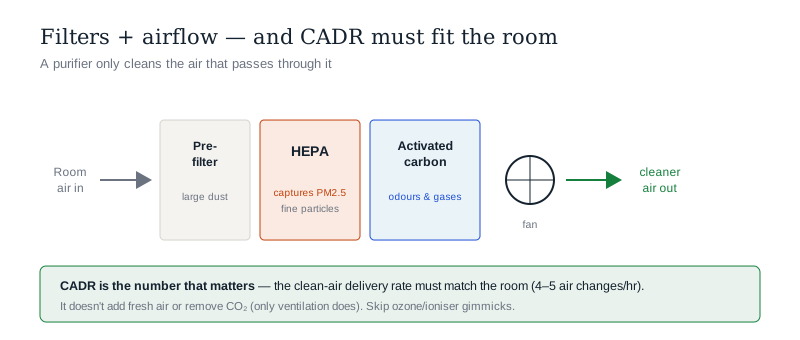
A purifier is simple: a fan draws room air through filters and returns it cleaner, cycling the room's air repeatedly. Its effectiveness comes down to the filters and how fast it moves air:
- The pre-filter catches large dust and hair (and protects the main filter).
- The HEPA filter — the heart — captures fine particles, including PM2.5.
- The activated-carbon filter — adsorbs odours, smoke and some gases/VOCs (a different job from HEPA).
- The fan — moves the air; faster airflow means more of the room cleaned per hour.
The key: a purifier only cleans the air that passes through it, so it must move enough air for your room size — which is where CADR comes in.
What the filters remove
Matching the filter to the pollutant:
- HEPA — a High-Efficiency Particulate Air filter captures at least 99.9%+ of fine particles at the standard test size; this is what removes PM2.5, dust and smoke particles. Look for a genuine HEPA filter (beware "HEPA-type" imitations).
- Activated carbon — adsorbs gases, odours, smoke smell and some VOCs — a different function; HEPA alone doesn't remove smells or gases.
- What purifiers don't fix — they don't add fresh air or remove CO₂ (only ventilation does that), and standalone units clean one room, not the whole home.
- Be wary of — "ioniser" and ozone-generating features (ozone is itself a pollutant), and unsubstantiated claims. HEPA + carbon + adequate airflow is what genuinely works.
Sizing it: CADR is the number that matters
The single most important spec — and the one buyers ignore:
- CADR (Clean Air Delivery Rate) — how much clean air the purifier actually delivers per hour (in m³/hr or CFM). A purifier's CADR must match your room's size to clean it effectively.
- Too small a CADR for the room = the purifier runs forever and never really cleans it. This is the commonest mistake.
- Rule of thumb — pick a CADR that gives the room several air changes per hour (roughly 4–5×), so buy for your room's floor area, and size up for a large room.
- Manufacturers state a "room size" rating — sanity-check it against CADR and your actual room, and don't put a small bedroom unit in a large living room.
Where a purifier genuinely helps — and where it doesn't
An honest placement:
- It genuinely helps — in polluted cities with high outdoor PM2.5, in the bedroom (where you spend 8 hours), during cooking or high-pollution days, and for allergy/asthma sufferers. Real, measurable benefit.
- It's less the answer when — the problem is CO₂/stuffiness (you need ventilation, not a purifier), or a pollution source you could fix (a proper kitchen exhaust, low-VOC materials, managing damp).
- The right combination — ventilate and cut sources first, then purify the PM2.5 that remains. A purifier in an unventilated, high-source room is fighting uphill.
For a bedroom in a polluted city, a well-sized HEPA purifier is one of the best health buys there is; as a substitute for ventilation or source control, it isn't.
Choosing and running one well
- Genuine HEPA + activated carbon, from a reputable brand.
- CADR matched to the room — the decisive spec.
- Noise — check the noise at the speed you'll actually run it (especially in a bedroom).
- Filter cost and life — filters are a recurring cost; factor it, and replace filters on schedule (a clogged filter barely works).
- Running it — run it continuously on high-pollution days and overnight in the bedroom; a monitor (IAQ guide) shows it working.
- Skip the gimmicks — ozone/ioniser marketing; buy filtration and airflow.
The one-line answer
An air purifier draws room air through a pre-filter, a genuine HEPA filter (which captures PM2.5) and activated carbon (which adsorbs odours and gases) and returns it cleaner — so in India's polluted cities it's the most direct way to cut the PM2.5 that dominates indoor air, with real benefit in the bedroom, while cooking, on bad-air days and for allergy sufferers. The one spec that matters is CADR (clean air delivery rate): it must match your room size to actually clean it — under-sizing is the commonest mistake, so buy for your room's area with several air changes per hour. But be honest about its limits: a purifier doesn't add fresh air or remove CO₂ (only ventilation does), doesn't fix a pollution source you could eliminate, and cleans one room. So ventilate and cut sources first, then purify — a well-sized HEPA-plus-carbon unit is one of the best health buys in a polluted city, but not a substitute for fresh air. Skip ozone/ioniser gimmicks and replace filters on time.
Where to go next
- The full picture: Indoor Air Quality Guide.
- Fresh air (what a purifier can't give): Home & Building Ventilation Guide.
- Whole-home fresh air with filtration: HRV & ERV Guide.
- Size the airflow: Air Changes Per Hour Calculator.
References
- HEPA filter classification (EN 1822 / ISO 29463); CADR (Clean Air Delivery Rate) — AHAM test method.
- Central Pollution Control Board (CPCB) — indoor air quality guidance; World Health Organization PM2.5 guidelines: https://cpcb.nic.in/
- ISHRAE — indoor air quality guidance; ASHRAE Standard 62.1 (filtration & ventilation).
Filter and CADR standards are set by international bodies; verify a product's genuine HEPA rating and CADR. Whole-home filtration built into HVAC is professional work.
Export this guide
Related Guides — Deep-dive reading
Smart Air Purifiers for Indian Homes: Beating PM2.5
Across Delhi-NCR winters and year-round urban haze, indoor air is often worse than the street. This guide explains what actually makes a purifier smart, how CADR and room sizing work, what HEPA and activated carbon really remove, honest running costs on filters and power, and which brands earn their price in Indian conditions.
Smart HomeHow to Choose a CCTV Camera (2026): The Homeowner's Decision Guide for India
Cut through the spec-sheet noise and choose the right CCTV camera for each spot around an Indian home. What actually matters — sensor and low-light performance, lens and field of view, form factor, IP and IK ratings, honest smart features — and the marketing claims to ignore.
SecuritySmart Water Purifiers (RO) for Indian Homes: A Buyer's Guide
India's water is as varied as its geography — hard borewell in one city, chlorinated municipal supply in the next. This guide explains what makes an RO purifier smart, how to choose between RO, UV and UF by your actual water quality, the truth about water wastage, the maintenance and AMC reality, and which brands earn their price against IS 10500.
Smart HomeRelated Tools — Try Free
Full-Room BOQ — Living, Bedroom, Kitchen, Bath
Room-wise BOQ across living, bedrooms, kitchen, utility, and bathrooms with line-item pricing.
Full-Room BOQBathroom Exhaust Fan Calculator
Size a bathroom exhaust fan from room volume and air changes per hour — output in CFM and CMH with a recommended fan rating and diameter.
Bathroom CalculatorHome Building & Interior Cost Calculator — 20 Cities
Construction + interior costs for 20 Indian cities across kitchen, wardrobes, flooring, painting, ceiling.
Cost Calculator