

Home & Building Ventilation: Why Fresh Air Matters and How to Get It
The most under-rated half of HVAC — how ventilation brings in fresh air and removes stale air, moisture and pollutants, the difference between natural and mechanical ventilation, what 'air changes per hour' and fresh-air rates mean, and why sealed, air-conditioned homes especially need it.
Everyone thinks about cooling; almost no one thinks about ventilation — yet it's half of what makes indoor air comfortable and, more importantly, healthy. Ventilation is the exchange of stale indoor air for fresh outdoor air, carrying away the moisture, odours, CO₂ and pollutants that build up wherever people live and cook. As Indian homes become more sealed and air-conditioned, they trap that stale air — which is exactly when good ventilation matters most. This guide explains ventilation: why it matters, natural versus mechanical, and the numbers behind it.
It is the ventilation anchor of the HVAC Knowledge Hub, building on the Ultimate HVAC Guide.
The safety line & scope. This guide helps you understand and specify ventilation. Mechanical ventilation systems (ducted fresh air, HRV/ERV, exhaust systems) are designed and installed by qualified HVAC professionals. Simple exhaust fans and opening windows are homeowner-level; the engineered systems are professional.
Why ventilation matters
Air that just sits indoors goes stale and unhealthy:
- CO₂ builds up from people breathing — high CO₂ causes drowsiness and poor concentration (a real issue in closed AC bedrooms and classrooms).
- Moisture accumulates from cooking, bathing and breathing — leading to condensation, damp and mould if not removed.
- Pollutants and odours — cooking smoke, VOCs from furnishings, and outdoor pollution that gets in — concentrate without fresh air.
- Oxygen and freshness — fresh air simply feels and is better for health, sleep and productivity.
The paradox of modern homes: we seal and air-condition them for comfort, which traps all of the above — so the more sealed the home, the more deliberate ventilation it needs. Cooling without ventilation gives you a cold, stale box; you need both.
Natural vs mechanical ventilation
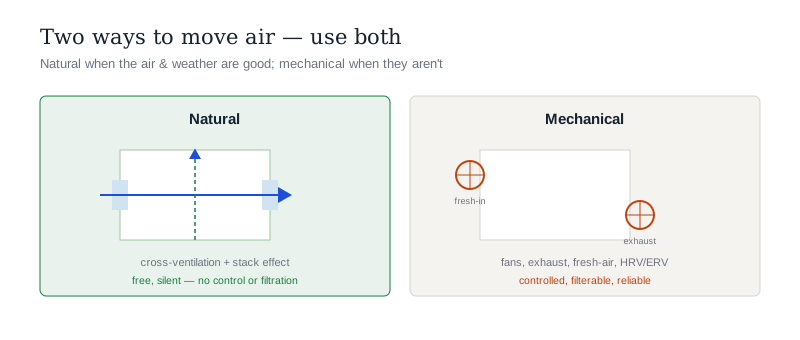
There are two ways to move air, and good buildings use both:
Natural ventilation
- Wind-driven cross-ventilation — openings on opposite sides let breeze flow through (the traditional Indian home strength).
- Stack effect — warm air rises and escapes high openings, drawing fresh air in low.
- Free, silent and healthy when the outdoor air is clean and the weather allows — ideal for much of the year in many parts of India (see efficient design).
- Limits — no control, no filtration, and useless when it's too hot, too polluted, or the windows must stay shut for AC.
Mechanical ventilation
- Fans and systems move air deliberately — exhaust fans, fresh-air systems, and HRV/ERV units.
- Controlled, filterable, reliable — works regardless of weather, can filter incoming air against pollution, and suits sealed/AC'd homes.
- Needs power and design — engineered mechanical ventilation for the bigger jobs.
The best homes are hybrid — natural ventilation when the air and weather are good, mechanical (with filtration and recovery) when they aren't.
The numbers: ACH and fresh-air rates
Ventilation is measured, and two ideas matter:
- Air Changes per Hour (ACH) — how many times per hour a room's entire volume of air is replaced. Different spaces need different ACH: a kitchen or bathroom needs high air change (to clear smoke/moisture fast), a bedroom much less. Estimate the airflow for a target ACH with the ACH Calculator.
- Fresh-air rate per person — codes (NBC, ASHRAE 62.1/62.2, ISHRAE) set how much outdoor air each occupant needs, which drives fresh-air system sizing in offices, schools and sealed homes.
- The practical takeaway — wet, smelly, high-occupancy rooms need lots of air change; living spaces need a steady trickle of fresh air; and the system is sized to hit these rates.
Ventilation in an Indian home
Practical priorities:
- Kitchen exhaust — a chimney/exhaust to clear cooking smoke and moisture (essential).
- Bathroom/toilet exhaust — exhaust fans to remove moisture and odour (prevents mould).
- Fresh air for sealed AC rooms — a fresh-air provision or ERV where windows stay shut, so CO₂ doesn't build up.
- Filtration against pollution — in polluted cities, incoming air (and air purifiers) should filter PM2.5.
- Cross-ventilation by design — plan openings for natural airflow (free comfort for much of the year).
- Humidity management — ventilation plus dehumidification in damp coastal/monsoon climates.
The one-line answer
Ventilation — exchanging stale indoor air for fresh outdoor air — is the under-rated half of HVAC, carrying away the CO₂, moisture, odours and pollutants that build up wherever people live and cook. It matters most in modern sealed, air-conditioned homes, which trap all of that, so cooling without ventilation just gives you a cold, stale box. Use natural ventilation (cross-ventilation and stack effect — free and healthy when the air and weather are good) and mechanical ventilation (fans, fresh-air and HRV/ERV systems — controlled, filterable, reliable when they aren't), ideally as a hybrid. Size it to the right air changes per hour and fresh-air rate for each space — lots for wet, smoky, crowded rooms; a steady trickle for living spaces — with kitchen and bathroom exhaust, fresh air for sealed rooms, and filtration against city pollution, engineered by a professional for the bigger systems.
Where to go next
- The air you're protecting: Indoor Air Quality Guide.
- Efficient fresh air: HRV & ERV Guide.
- The engineered systems: Mechanical Ventilation Guide.
- Size the airflow: Air Changes Per Hour Calculator.
References
- National Building Code of India, SP 7 (Part 8 — Building Services: ventilation; verify current edition, SP 7 : 2026), Bureau of Indian Standards.
- ASHRAE Standard 62.1 (ventilation for acceptable IAQ) and 62.2 (residential ventilation); ISHRAE indoor air quality guidance.
- IS 2312 : 1967 (reaffirmed) Propeller Type AC Ventilating Fans, BIS: https://www.bis.gov.in/
Ventilation rates and mechanical systems are designed to the applicable codes by qualified professionals. Verify any standard's current status via the BIS catalogue before relying on it.
Export this guide
Related Guides — Deep-dive reading
How Ventilation Changes Home Quality
The invisible factor behind health, comfort, smell and freshness in your home
Design EducationBathroom Ventilation India: The Complete Guide to Moisture, Mould, NBC 2016 Air Changes & Windowless Solutions
Why bathroom ventilation matters more than any fitting in an Indian home — how moisture, mould and odour build up, natural versus mechanical options, what NBC 2016 actually requires, how to size a fan by air changes and CFM, and how to ventilate a windowless bathroom that stays dry through the monsoon.
BathroomsUnderstanding Wind Analysis for a Comfortable Home
How to read your site's breeze and design openings that keep an Indian home naturally cool — long before you switch on an air-conditioner.
Site PlanningRelated Tools — Try Free
Cross-Ventilation Analyzer
Estimate airflow and air changes per hour (ACH) from room size, window areas, layout, and local wind — with NBC 2016 Part 8 compliance check.
Ventilation CalculatorFull-Room BOQ — Living, Bedroom, Kitchen, Bath
Room-wise BOQ across living, bedrooms, kitchen, utility, and bathrooms with line-item pricing.
Full-Room BOQAir Changes Per Hour (ACH) Calculator
The ventilation airflow a room needs (CFM & m³/hr) from its size and type — to size an exhaust fan or fresh-air system.
Ventilation