
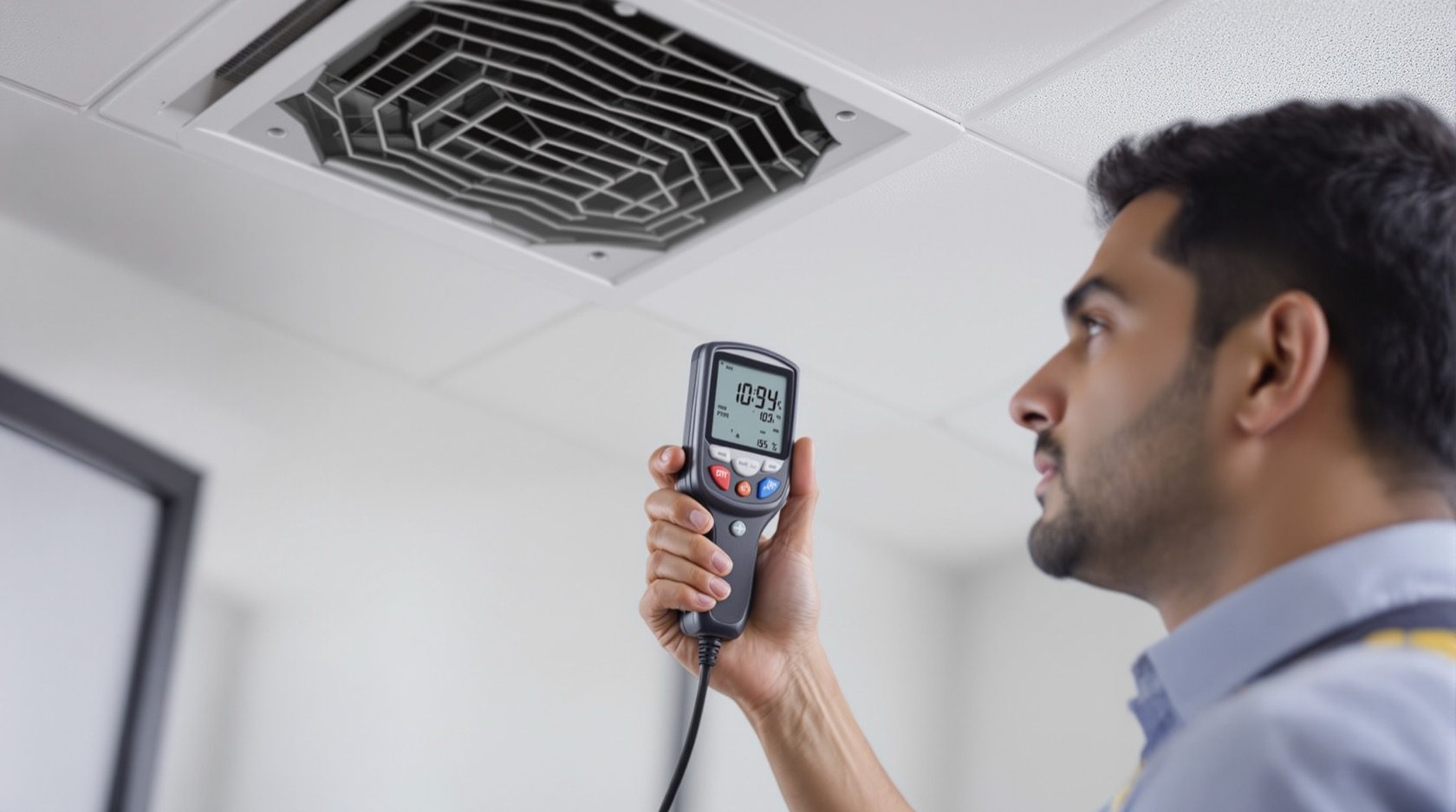
HVAC Commissioning & TAB: Proving the System Actually Works
An installed HVAC system isn't a working one until it's commissioned — what testing, adjusting and balancing (TAB) and commissioning involve, why an uncommissioned system rarely performs as designed, and how the process delivers the comfort and efficiency you paid for.
Here's a truth that surprises many building owners: an HVAC system that's fully installed is often not yet a system that works. Fans move too much air to some rooms and too little to others, water isn't balanced across the coils, controls aren't tuned, and the whole thing runs inefficiently — until it's commissioned. Commissioning, including testing, adjusting and balancing (TAB), is the process that turns an installation into a system that actually delivers its designed comfort, air quality and efficiency. Skipping it is how expensive HVAC ends up disappointing. This guide explains what commissioning involves and why it's non-negotiable.
It builds on the HVAC Design Process Guide, part of the HVAC Knowledge Hub.
Scope. An orientation to commissioning. It is specialist work performed by qualified commissioning/TAB professionals with calibrated instruments, against the design intent.
Why an installed system isn't a finished one
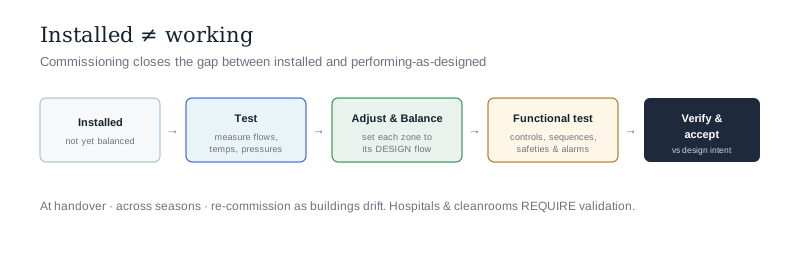
Installation and performance are not the same thing:
- Systems don't self-balance — left as installed, air and water take the path of least resistance, so near rooms get too much and far rooms too little; the design flows only happen when someone sets them.
- Controls need tuning — sensors, setpoints and control sequences must be checked and adjusted to actually hold conditions and run efficiently.
- Faults hide until tested — a reversed valve, a mis-wired sensor, a duct leak or a fan turning the wrong way often only surfaces under functional testing.
- Efficiency is on the line — an unbalanced, untuned system wastes energy for its whole life (see efficiency).
Commissioning is what closes the gap between installed and working as designed.
What TAB and commissioning involve
- Testing — measuring actual performance: airflows at every diffuser, water flows, temperatures, pressures, fan/pump operation, with calibrated instruments.
- Adjusting — setting dampers, valves and drive speeds so each zone gets its design flow — the balancing act (hence TAB: Testing, Adjusting, Balancing).
- Balancing — distributing air and water correctly across the whole system so every space gets its intended share.
- Functional testing — running the controls through their sequences (start-up, staging, safeties, alarms) to prove they behave as designed.
- Verification against design intent — confirming the system meets the specified conditions, ventilation rates and efficiency — the acceptance.
- Documentation — recorded results, as-built data and settings, handed over.
On larger or critical projects, an independent commissioning agent oversees this (and special buildings like hospitals and cleanrooms require validation).
When commissioning happens — and again later
- At handover — the primary commissioning, before the building is accepted and occupied.
- Seasonal — some tests need summer and winter conditions to fully verify cooling and heating.
- Re-commissioning / retro-commissioning — existing buildings drift over time; periodically re-commissioning restores lost performance and efficiency — often a high-return exercise on older buildings (see predictive maintenance).
- After changes — any significant modification warrants re-balancing.
Commissioning isn't a one-time box-tick; it's how performance is established and maintained.
The one-line answer
An HVAC system that's fully installed is often not yet working — air and water take the path of least resistance (near zones over-served, far zones starved), controls sit untuned, and hidden faults lurk — until it's commissioned. Commissioning, centred on TAB (Testing, Adjusting, Balancing), closes that gap: testing measures actual airflows, water flows, temperatures and pressures with calibrated instruments; adjusting sets dampers, valves and drive speeds so each zone gets its design flow; balancing distributes air and water correctly across the whole system; functional testing runs the controls through their sequences and safeties; and verification against the design intent confirms the specified conditions, ventilation rates and efficiency are met — all documented as the acceptance. It's specialist work (with an independent commissioning agent on large or critical jobs, and mandatory validation for hospitals and cleanrooms), done at handover, sometimes across seasons, and worth repeating as re-commissioning because buildings drift. Skipping it is how expensive HVAC ends up disappointing; doing it is how you actually receive the comfort and efficiency you paid for.
Where to go next
- The workflow: HVAC Design Process Guide.
- What it verifies against: HVAC Specification Guide.
- Keeping performance after handover: HVAC Operation & Maintenance · HVAC Predictive Maintenance.
- Where validation is mandatory: Special Buildings HVAC Guide.
References
- ISHRAE — testing, adjusting & balancing and commissioning guidance; ASHRAE Guideline 0 & 1.1 (the commissioning process) and Standard 202.
- AABC / NEBB-style TAB practice; National Building Code of India, SP 7 : 2026 (building-services testing).
- Bureau of Energy Efficiency (BEE) — commissioning for energy performance & ECBC compliance: https://beeindia.gov.in/
An orientation to commissioning. It is specialist work performed by qualified commissioning/TAB professionals against the design intent. Verify current standards before relying on them.
Export this guide
Related Guides — Deep-dive reading
Smart Water Infrastructure & the Modern STP: A Practical Guide
How sensors, smart metering and automated control are turning the sewage treatment plant from a noisy basement box into a data-driven asset — and what that actually means for developers, owners and RWAs in India today.
Sewage Treatment PlantsFire Sprinkler Systems in India (2026): How They Work, Types & When NBC Requires Them
Automatic fire sprinklers control or extinguish a fire at its origin, day or night - and only the head over the fire opens, not the whole building. This guide explains wet, dry, pre-action and deluge systems and where the NBC requires them.
SecurityFire System Approval Process in India (2026): Getting Your Fire Systems Signed Off
The systems side of fire compliance, explained for homeowners and RWAs. How the alarms, sprinklers, hydrants, pumps and emergency lighting in a building get designed to the fire scheme, installed by a competent agency, tested, commissioned, inspected and certified as part of the fire approval.
SecurityRelated Tools — Try Free
CCTV Commissioning & Handover Checklist
An interactive go/no-go checklist to run at handover — cameras day and night, recording, alerts, passwords and documents — before you clear the final bill.
Handover ChecklistCross-Ventilation Analyzer
Estimate airflow and air changes per hour (ACH) from room size, window areas, layout, and local wind — with NBC 2016 Part 8 compliance check.
Ventilation CalculatorSTP Commissioning Checklist
An interactive step-by-step checklist that takes a sewage treatment plant from installation readiness through wet commissioning, biological start-up and handover, tracking live completion toward Consent to Operate.
Checklist