

HVAC Energy Efficiency: Cutting the Biggest Energy Bill in the Building
HVAC often runs half a building's electricity, so trimming it saves the most — the practical measures that cut HVAC energy without cutting comfort: right-sizing, inverter and efficient plant, smart controls and zoning, recovery, good maintenance and sensible set-points.
In most buildings, HVAC is the single biggest slice of the electricity bill — often around half in a heavily air-conditioned building. That's the flip side of a problem and an opportunity: because HVAC uses so much, making it efficient saves more than anything else. And the good news is you rarely have to sacrifice comfort — most efficiency comes from doing the same cooling smarter. This guide is the practical playbook for cutting HVAC energy, for homes and buildings, without cutting comfort.
It applies the Sustainable HVAC strategy at the equipment-and-operation level, part of the HVAC Knowledge Hub.
The safety line & scope. Set-points, filters and habits are homeowner-level; equipment selection, right-sizing, controls and plant work are qualified HVAC/MEP design and installation. Efficiency must not compromise indoor air quality or ventilation.
Where HVAC energy goes — and the levers
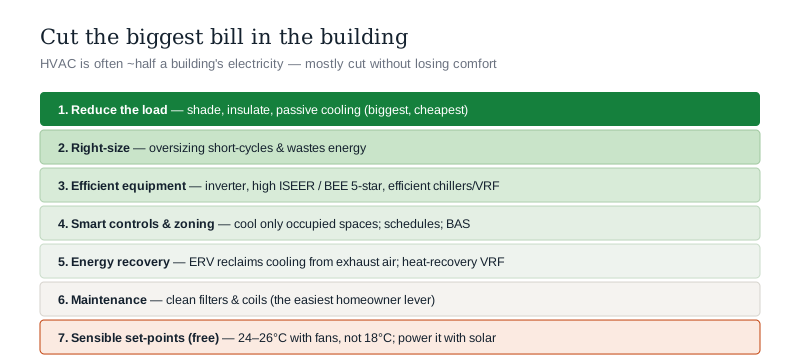
HVAC energy is driven by how much cooling is needed, how efficiently it's produced, and how it's controlled — so the levers are:
1. Reduce the load (biggest, cheapest)
- A passively-cooled, shaded, insulated building simply needs less HVAC — the efficiency-first foundation. You can't out-efficiency a building that's fighting a huge heat gain.
2. Right-size
- Oversizing wastes energy — an oversized AC short-cycles, dehumidifies poorly and runs inefficiently. A proper load calculation is a direct efficiency measure.
3. Efficient equipment
- Inverter / variable-speed compressors and high ISEER / BEE 5-star units modulate to the load instead of cycling — a large saving (see energy management).
- Efficient chillers, VRF and variable-speed drives at building scale, chosen to ECBC.
4. Smart controls and zoning
- Cool only occupied spaces — zoning and occupancy control avoid cooling empty rooms.
- Smart thermostats — schedule, set back when away, and optimise.
- A Building Automation System (BAS) optimises large-building plant continuously.
5. Energy recovery
- ERV recovers most of the cooling in exhaust air; heat-recovery VRF reuses energy between zones — free cooling reclaimed.
6. Maintenance
- Clean filters and coils — a clogged filter or dirty coil makes the system work far harder; the single easiest homeowner efficiency lever.
- Correct refrigerant charge and servicing keep efficiency up; a neglected system degrades steadily.
7. Sensible set-points (free)
- Every degree lower costs meaningfully more — running around 24–26 °C instead of 18 °C is a large, free saving.
- Use fans alongside AC — moving air lets you feel comfortable at a higher set-point.
- Don't cool empty spaces or run cooling with windows/doors open.
Putting it together — a simple efficiency plan
1. Design/retrofit to cut the load (shading, insulation, passive) — the foundation.
2. Right-size the equipment to the reduced load.
3. Choose inverter / high-ISEER / efficient plant.
4. Control it smartly — zoning, schedules, set-backs.
5. Recover energy (ERV) where ventilation is needed.
6. Maintain it — filters, coils, charge.
7. Set it sensibly (24–26 °C, fans, don't over-cool).
8. Power it with solar for the final, structural cut.
Done together, these can dramatically cut the biggest bill in the building — see roughly what your cooling costs with the AC running cost calculator.
The one-line answer
Because HVAC is the biggest slice of a building's electricity (often around half), making it efficient saves more than anything else — and mostly without sacrificing comfort, by doing the same cooling smarter. Pull the levers in order of impact: reduce the load first (a passively-cooled, shaded, insulated building needs less HVAC), right-size (oversizing wastes energy), choose inverter / high-ISEER / efficient plant, control it smartly (zoning, smart thermostats, set-backs — cool only occupied spaces), recover energy with ERV, maintain it (clean filters and coils — the easiest lever), and set it sensibly (24–26 °C with fans, not 18 °C) — then power it with solar for a structural cut. Together these dramatically shrink the biggest bill in the building, engineered and installed by a qualified HVAC professional where equipment and controls are involved.
Where to go next
- The strategy: Sustainable HVAC Guide.
- The design foundation: Passive Cooling Guide.
- Recover energy: HRV & ERV Guide.
- See the cost: AC Running Cost Calculator.
References
- Bureau of Energy Efficiency (BEE) — Energy Conservation Building Code (ECBC), Star Labelling & ISEER for room ACs: https://beeindia.gov.in/
- ISHRAE — energy-efficient HVAC design & commissioning guidance; ASHRAE Standard 90.1 (energy).
- IS 1391 (Parts 1 & 2 : 2023) Room Air Conditioners; National Building Code SP 7 (verify current edition), BIS.
Equipment selection, right-sizing and controls are qualified HVAC/MEP work; efficiency must not compromise ventilation or air quality. Savings are indicative and depend on the building, climate and usage. Verify any standard's current status via the BIS catalogue.
Export this guide
Related Guides — Deep-dive reading
Energy-Efficient Lighting: Bright Homes, Lower Bills (2026)
A homeowner's design playbook for lighting an Indian home beautifully while cutting the electricity it burns — the LED switch, right-sizing so you never over-light, controls as the efficiency multiplier, daylight and solar first, and how to measure and lower the bill.
LightingSmart HVAC & Climate Control for Indian Homes: Thermostats, AC, Fans & Air Quality
In a country where cooling is the biggest slice of a home's electricity bill, climate control is where a smart home earns its keep. A hot-climate, honest playbook for smart ACs, BLDC fans, ventilation and air quality — with real brands and rupee costs.
Smart HomeDesigning a Naturally Energy-Efficient Indian Home
Comfort first, gadgets last — passive design, orientation, insulation, ventilation and the climate wisdom that cuts Indian energy bills
SustainabilityRelated Tools — Try Free
Cross-Ventilation Analyzer
Estimate airflow and air changes per hour (ACH) from room size, window areas, layout, and local wind — with NBC 2016 Part 8 compliance check.
Ventilation CalculatorBrise-Soleil Visualizer
Interactive horizontal-louvre cut-off angle calculator — sun altitude, louvre depth, and spacing inputs with a live shadow preview. Computes θ = arctan(spacing/depth) for façade shading, ECBC envelope compliance, hospital daylight design, and tropical sun-control detailing.
Sun Shading ToolWindow Energy Savings Calculator
Compare standard glazing vs Low-E and DGU windows — annual cooling savings, 10-year savings and payback.
Window Calculator