
Hot Water Systems Guide (India): How to Choose the Right Water Heater
Electric, gas, solar or heat-pump? Central or point-of-use? A homeowner's how-to-choose overview that compares every water-heating option on upfront cost, running cost and where each one actually suits an Indian home.
Every home needs hot water, but there is no single "best" way to make it. The right choice depends on how you pay for energy, how much sun your roof gets, whether you have a gas connection, and how patient your family is on a cold morning. This is the how-to-choose overview: it compares every water-heating hot water systems option side by side, then points you to the deep-dive guide for whichever one fits.
This guide sits inside the Studio Matrx Plumbing Systems hub. It is about how you heat the water. How that hot water then reaches the tap — pipe runs, insulation, recirculation — is a separate craft covered in hot water distribution. Read them together and you get both a warm tank and a fast tap.
The cheapest hot water is the water you never over-heat. Before you shop, right-size the heater and place it close to the bathrooms it serves — that decision saves more money than any star rating.
The four ways Indian homes heat water
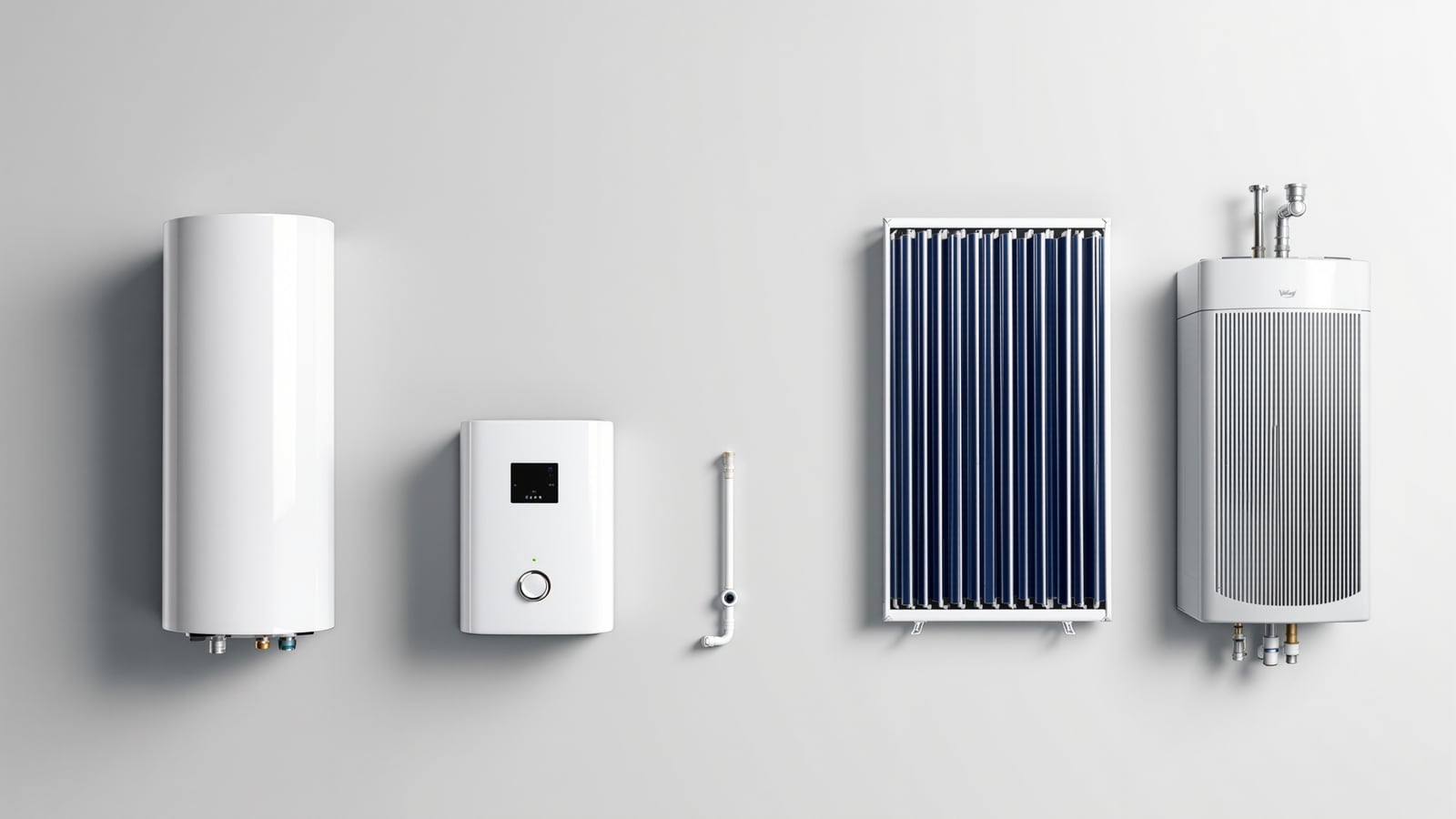
Almost every domestic system is one of four technologies. Each turns a different energy source into hot water, and each has a distinct cost profile.
- Electric water heaters (geysers) — a resistance element heats water in a tank (storage) or on the fly (instant). Cheapest to buy, simplest to install, but every litre costs grid-tariff electricity. This is the default Indian appliance, and it is fully covered by the Bathrooms hub — see storage vs instant geyser and the smart geyser guide. We link rather than repeat.
- Gas water heaters — an LPG or piped-gas (PNG) burner heats water instantly as it flows. Low running cost where gas is cheap, but they need proper flue and ventilation. See gas water heaters.
- Solar water heaters — rooftop collectors warm water using free sunlight, storing it in an insulated tank with an electric backup for cloudy days. Highest upfront cost, lowest running cost, needs sound roof and sun. See solar water heaters.
- Heat-pump water heaters — a small refrigeration cycle moves heat from the air into the water, delivering two to four units of heat per unit of electricity. Efficient year-round, higher upfront cost, needs airflow and makes some fan noise. See heat-pump water heaters.
The first diagram shows how the same taps can be fed by any of these sources.
Compare them at a glance
The table below is the heart of this guide: which technology suits which home, and how the money splits between what you pay once and what you pay every month. Costs are indicative for a typical 2-4 bathroom home in 2026 and vary by brand, city, tariff and installation — always verify a live quote locally.
| Technology | Best for | Indicative upfront ₹ | Running cost | Watch-outs |
|---|---|---|---|---|
| Electric storage geyser | Most homes; single-bathroom use | ₹8,000-₹20,000 | High (grid tariff, every litre) | Standby heat loss; size it right |
| Electric instant geyser | Kitchens, powder rooms, low-use taps | ₹4,000-₹12,000 | High but only when running | Small flow; not for bucket baths |
| Gas water heater (LPG/PNG) | Homes with cheap piped gas, big families | ₹8,000-₹22,000 | Low-medium where gas is cheap | Needs flue and ventilation; safety-critical |
| Solar water heater | Sunny climates, own rooftop, 4+ persons | ₹22,000-₹60,000+ | Very low (sun is free) | Roof space and structure; cloudy-day backup |
| Heat-pump water heater | Year-round high demand, warm/coastal areas | ₹35,000-₹90,000+ | Lowest per unit heated | Airflow and fan noise; bigger footprint |
A pattern jumps out. Electric is cheap to install and expensive to run; solar and heat-pump are the reverse. The right pick is not the lowest sticker price — it is the lowest total cost over the years you will own it, weighted by how much hot water you actually use.
Storage vs instant, and central vs point-of-use
Two architecture choices cut across all four technologies.
Storage vs instant. A storage unit keeps a tankful hot and ready — good for baths and simultaneous outlets, but it loses standby heat. An instant unit heats only while water flows — no standby loss, but limited flow and no reserve. The full trade-off (with numbers) lives in storage vs instant geyser; don't over-think it here — match the tank to how you bathe.
Central vs point-of-use. Do you heat once in a central unit and pipe hot water everywhere, or put a small heater at each point of use?
- Point-of-use (decentralized) — one geyser per bathroom, close to the taps. Short pipe runs, fast hot water, no long-distance heat loss, and a failure only affects one room. This is the norm for most Indian homes; see decentralized plumbing.
- Central (centralized) — one larger heater or solar/heat-pump plant serves the whole home through a hot-water loop. Efficient for big houses and simultaneous demand, but needs a well-designed centralized system with insulation and often a recirculation return to avoid long waits.
The second diagram contrasts the two layouts.
Sizing at a glance
Under-size and you run out mid-shower; over-size and you pay to keep water hot that nobody uses. A rough starting point for a storage system:
- 1 bathroom, bucket bath — 10-15 litre storage or an instant unit.
- 1 bathroom, shower — 15-25 litre.
- 2 bathrooms sharing one heater — 25 litre or larger, or one unit each.
- Bathtub or overhead rain shower — 25 litre and up; check flow, not just volume.
Don't guess — the Bathrooms hub has a proper geyser size calculator that factors people, fixture type and inlet temperature. Solar and heat-pump systems are sized on daily litres-at-temperature and are usually specified by the installer against your family size.
Install and safety — the part people skip
Every technology carries its own installation demands, and the safety-critical ones are non-negotiable. Get these wrong and you trade a lower bill for a real hazard.
- Gas water heaters must vent their combustion gases outdoors through a proper flue, and the room needs cross-ventilation for fresh air. Never fit an unflued instant gas heater inside a small, closed bathroom — incomplete combustion produces carbon monoxide, which is odourless and deadly. Have a licensed gas fitter do the connection and test for leaks.
- Solar water heaters put a heavy, water-filled collector and tank on your roof, so the structure must take the load and the mounting must survive wind. In cold-region winters, plumbing must be protected against freeze damage, and the tank and pipes need good insulation to hold overnight heat.
- Heat-pump water heaters breathe air, so they need airflow — an open or ventilated space, not a sealed cupboard — and they exhaust cool air you may not want indoors. The compressor and fan make a low hum, so keep noise in mind near bedrooms.
- Electric geysers need proper earthing, an ELCB/RCCB, and a working temperature-and-pressure relief valve. Route hot-water pipe in a material rated for the temperature — see hot water distribution for CPVC and PPR limits.
What it costs to run
Running cost, not sticker price, is where these systems separate over five to ten years. Estimate it with the geyser running-cost calculator for electric units. As a rule of thumb:
- Electric is the baseline — you pay full grid tariff for every unit of heat.
- Gas is often cheaper per unit of heat where piped gas is available, though LPG-cylinder economics shift with cylinder prices.
- Solar slashes running cost to near-zero on sunny days, with the electric backup carrying cloudy spells.
- Heat-pump uses roughly one unit of electricity to deliver two to four units of heat (its coefficient of performance), making it the lowest-running electric option where the climate is warm.
Look for the BEE star rating on electric and heat-pump units — more stars means less standby loss and lower bills. Solar water heaters and, in some states, heat pumps may qualify for government incentives or subsidies; check the current scheme with your state agency or installer rather than trusting any figure quoted online, including here.
The decision, in four questions
| Ask yourself | Points you toward |
|---|---|
| Tight budget, low daily use? | Electric storage or instant geyser |
| Cheap piped gas and a big family? | Gas water heater (with proper flue) |
| Sunny roof you own, high demand? | Solar water heater + electric backup |
| High year-round demand, warm climate, can absorb upfront cost? | Heat-pump water heater |
Weigh four factors in order: upfront vs running cost over your ownership horizon, your climate (sun and ambient air temperature), your roof (space, structure, orientation for solar), and gas availability. Match those to the table above, open the sibling guide for your winner, then read hot water distribution so the heat you paid for actually reaches the tap.
References
- Bureau of Energy Efficiency (BEE) — Standards & Labelling star-rating programme for storage water heaters.
- Ministry of New and Renewable Energy (MNRE) — solar water heating systems programme.
- Bureau of Indian Standards — IS specifications for electric storage water heaters and solar water heating systems.
Export this guide
Related Guides — Deep-dive reading
Solar vs Electric Water Heater: Which to Choose for Your Home in India
The energy-source decision for whole-home hot water — a solar water heater's high upfront cost and near-free running against an electric geyser's cheap install and steep monthly bill. Upfront vs running cost, payback, roof needs, seasonal reliability, and a clear verdict by household.
PlumbingHow to Choose a Geyser in India: Buyer's Guide to Size, Type, Star Rating & Price (2026)
A buyer's decision guide to picking a bathroom geyser in India — sizing instant vs storage by family and use, storage vs instant vs gas vs solar, BEE star rating and running-cost maths, glass-lined vs stainless tank for hard water, pressure rating, warranty, good-better-best price tiers, the IS 302 safety mark, and how to spot a refurbished unit.
BathroomsBathroom Water Supply India: Cold & Hot Feed, Pipe Sizing, Pressure & Booster Pumps (2026)
How water actually reaches your fixtures in an Indian home — gravity-fed cold from the overhead tank, hot from the geyser, the pipe sizes that decide whether your shower gushes or dribbles, isolation valves at every fixture, booster pumps and hard-water protection, all mapped to IS 1172.
BathroomsRelated Tools — Try Free
Geyser Size Calculator
Find the right water-heater capacity (litres) or instant kW for your bathroom and household, with an indicative running-cost note.
Bathroom CalculatorCross-Ventilation Analyzer
Estimate airflow and air changes per hour (ACH) from room size, window areas, layout, and local wind — with NBC 2016 Part 8 compliance check.
Ventilation CalculatorGeyser Running Cost Calculator
Work out a water heater's electricity use and running cost per day, month and year — and compare electric, gas, heat-pump and solar.
Bathroom Calculator