
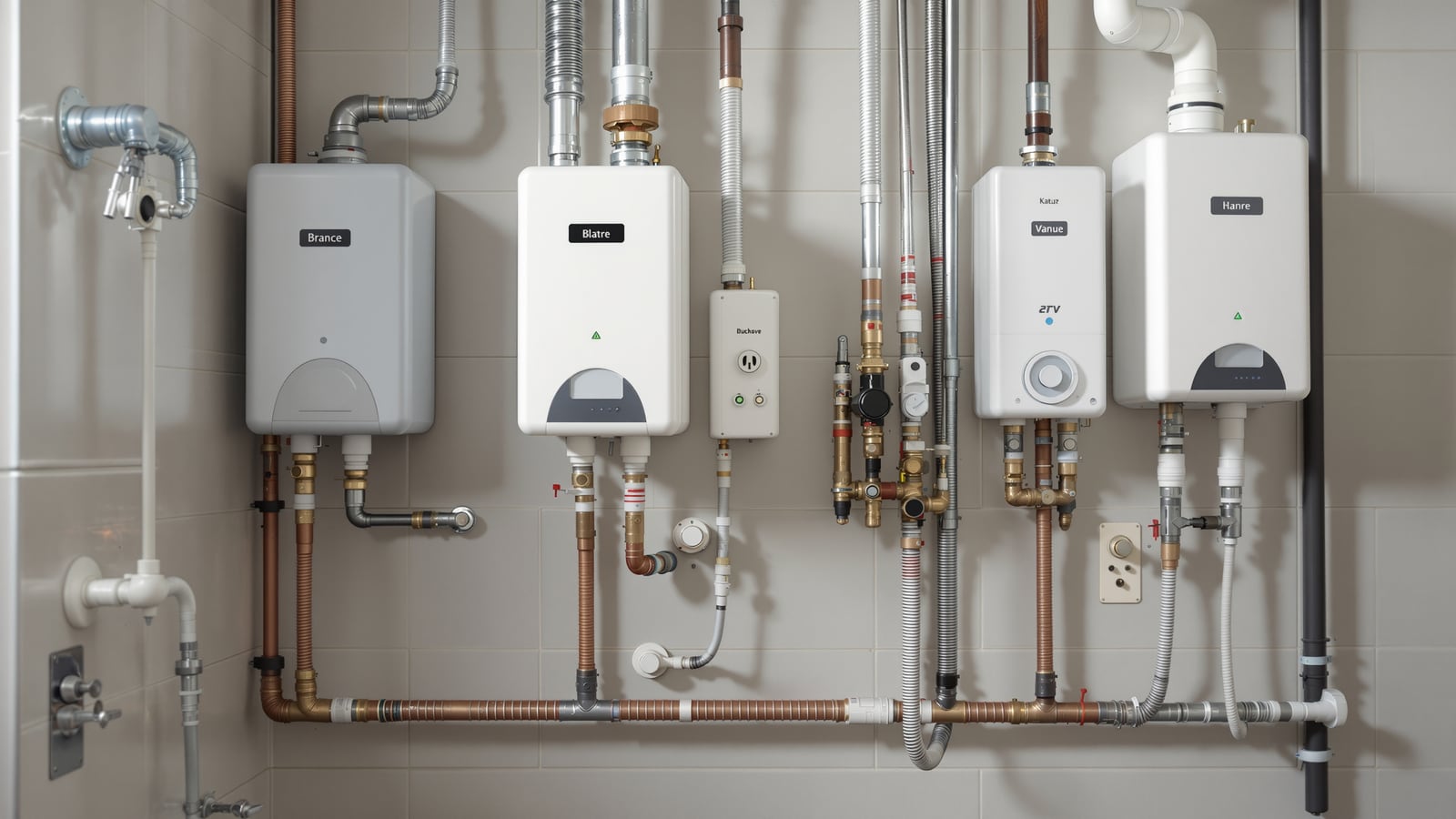
Decentralized Plumbing System in India: The Point-of-Use Guide for Homes
The most common pattern in Indian homes — hot water made at each bathroom, shut-offs at every fixture and short pipe runs — explained end to end, with the pros, cons and hybrids versus a centralized system.
Walk into almost any Indian flat or independent house and you will find the same arrangement without anyone ever calling it by name: a small geyser bolted above each bathroom, a stop-cock under every basin, and cold water arriving from the overhead tank through short branches. That is a decentralized plumbing system — hot water and control produced locally, at the point of use, rather than from one central plant. This guide explains the pattern properly, why it suits Indian homes, and when to mix it with a central approach.
This is a system-architecture guide within the Studio Matrx Plumbing Systems hub. It is the natural companion to the centralized plumbing system guide — read both to choose well. For how these choices land inside an actual home, see the residential plumbing guide.
"Decentralized" is not a downgrade. It is a deliberate design principle: keep the source of heat, pressure and control as close as possible to where the water is used, so the losses, delays and dependencies of long shared lines simply never occur.
What "decentralized" actually means
A plumbing system is decentralized when its key services — heating, and often isolation and even treatment — are distributed to each use-point instead of concentrated in one location. In a home this usually shows up as three habits:
- Point-of-use hot water. Each bathroom (and often the kitchen) has its own geyser — a small storage geyser or an instant/tankless unit — sized for that room alone, instead of one large central heater feeding the whole house.
- Local isolation. Every fixture has its own angle valve or stop-cock, so one tap can be serviced without draining the flat.
- Local treatment where needed. A point-of-use RO or a small in-line filter sits under the kitchen sink for drinking water, rather than treating every drop the house consumes.
The cold-water backbone can still be shared — most Indian homes feed everything from a single overhead tank via gravity. Decentralization is about where the services live, not about running a separate tank per room.
Point-of-use vs central hot water — the core difference
The clearest way to feel the difference is hot water. In a central scheme, one heater in a utility area warms water and pushes it through long insulated pipes to distant bathrooms. In a decentralized scheme, the heater sits within a few metres of the shower it serves.
| Aspect | Point-of-use (decentralized) | Central hot water |
|---|---|---|
| Heater location | One per bathroom/kitchen | One plant for the house |
| Typical unit | 3–6 L instant or 10–25 L storage geyser | 100 L+ storage / heat pump |
| Hot-water pipe run | 1–3 m | 8–20 m+ |
| Wait for hot water | Seconds | Tens of seconds unless recirculated |
| Standing heat loss | Only the small local tank | Whole distribution loop |
| Failure impact | One bathroom affected | Whole house affected |
| Best for | Flats, retrofits, staggered use | Large homes, simultaneous demand, hotels |
For picking the right litre-rating per bathroom, use the Studio Matrx geyser size calculator in the Bathrooms hub — it covers instant versus storage, bucket versus shower, and family size, which is bathroom-fixture detail this systems guide deliberately does not duplicate.
Why the decentralized pattern fits Indian homes
Four realities of Indian housing push homes toward point-of-use by default.
- Staggered usage. In most households people bathe at different times through the morning, not all at once. There is rarely a need to keep a large central volume hot around the clock.
- Short runs, low heat loss. A geyser directly above the shower means the hot water travels barely a metre or two. Less pipe means less stored heat bleeding into the wall between uses — a real saving when a central line can sit full of cooling water all day.
- Retrofit-friendly. Adding a second bathroom, or upgrading one, means adding one geyser and one branch — not re-plumbing a central plant and its distribution.
- Intermittent municipal supply. Where water arrives for only a few hours, homes already store cold water overhead and draw locally; layering point-of-use heating on top of that gravity feed is simple and forgiving.
Shorter pipe runs and less heat loss
Heat loss from hot-water pipes is proportional to how much pipe is kept hot and for how long. A decentralized layout minimises both. Every time you open a distant tap on a central line, the first slug of water is cold — it has been sitting in the pipe losing heat since the last use — and you run it to waste while you wait. Multiply that by every use, every day, and central systems without recirculation quietly waste both water and energy. Point-of-use heaters cut that dead leg to near zero.
Indicative rule of thumb: hot water arrives usefully in roughly one second per half-metre of run once the heater is on. A 2 m point-of-use branch feels almost instant; a 15 m central branch does not, unless it is recirculated — which then costs its own pump energy and standing loss. Verify against your own layout.
Per-fixture isolation: the quiet superpower
The second pillar of decentralization is control. When every fixture has its own shut-off — the humble angle valve under a basin, the stop-cock before a geyser, the isolating valve on a WC — you gain enormous practical freedom:
- A dripping tap or a failed cartridge is fixed by closing one valve, not the flat's main.
- The rest of the household keeps running water while a plumber works.
- Leaks are contained locally instead of flooding from a system you cannot quickly isolate.
- Renovating one bathroom does not mean shutting the others.
This is cheap to build in and expensive to add later, so it is the single easiest decentralization habit to insist on in any new home or renovation. Specify a quarter-turn isolation valve at every fixture, and a labelled stop-cock feeding each wet zone.
A decentralized layout, drawn
Pros and cons versus centralized
Neither approach is universally right. The decentralized model trades a little duplication of small units for resilience and low standing loss; the centralized model trades higher first-cost and pipe runs for simultaneous high-volume delivery. Weigh them honestly for your home.
| Factor | Decentralized (point-of-use) | Centralized |
|---|---|---|
| Upfront cost | Lower — small units, no plant room | Higher — plant, insulated distribution |
| Energy standby loss | Low (small local tanks) | Higher unless well insulated / heat-pump |
| Simultaneous heavy demand | Weaker — each unit is small | Strong — one large reservoir |
| Wait for hot water | Very short | Long unless recirculated |
| Resilience | High — one failure is local | Low — one failure hits everyone |
| Maintenance | Many small units to service | One plant to service |
| Retrofit / extension | Easy — add one unit + branch | Hard — resize plant + mains |
| Best fit | Flats, most Indian homes, phased builds | Villas, hotels, hostels, high simultaneous use |
The honest weaknesses of decentralization are worth naming: you own more devices (three geysers instead of one heater means three anodes, three thermostats, three failure points over time), each is small so a long simultaneous shower and kitchen draw can strain one unit, and instant geysers pull a heavy electrical load that your wiring must support. None of these is a deal-breaker for a typical home; all deserve a sanity check with a licensed plumber and electrician.
Hybrid approaches — the real-world answer
Most well-designed Indian homes are not purely one or the other. Sensible hybrids include:
- Shared cold, local hot. The overwhelmingly common pattern: one overhead tank and cold riser feed the house (efficient, simple), while each bathroom has its own geyser (short hot runs, resilience).
- Central solar preheat, local top-up. A rooftop solar water heater feeds warmed water to bathrooms, and a small point-of-use geyser boosts temperature on cloudy days or in winter — solar economics with point-of-use reliability.
- Central for the master suite, point-of-use elsewhere. A larger home may justify a central or recirculated loop for a high-use master bathroom while smaller bathrooms stay decentralized.
- Point-of-use treatment on a treated backbone. Whole-house softening or filtration on the incoming main, plus a final RO at the drinking tap.
The best system is chosen fixture by fixture, not by ideology. Decide the default — for most Indian homes, decentralized hot water on a shared cold feed — then centralize only the specific zone whose usage pattern truly demands it.
A quick zoning view
Getting it right — a short checklist
- Size each geyser to its bathroom's real use, not to the whole house — the geyser size calculator does this properly.
- Put a quarter-turn isolation valve at every fixture and a labelled stop-cock per wet zone.
- Keep hot runs short — mount the geyser close to the shower it serves.
- Confirm your electrical circuit can carry an instant geyser's load before choosing tankless.
- Default to decentralized hot water on a shared cold feed; centralize only a zone that genuinely needs simultaneous high volume.
- Treat all indicative figures here as starting points — confirm sizing, valve ratings and local bye-laws with a licensed plumber.
Decentralization is less a product than a discipline: bring heat, control and treatment to where water is used, share only what is cheap to share, and the everyday result is a home where hot water is quick, leaks stay small, and upgrades never mean tearing out the whole system.
References
- National Building Code of India (NBC) 2016, Part 9 — Plumbing Services — the governing framework for water supply and drainage in Indian buildings.
- Central Public Health and Environmental Engineering Organisation (CPHEEO) — Manual on Water Supply and Treatment, for supply and demand norms (indicative domestic demand around 135 lpcd).
- Bureau of Indian Standards — the IS codes covering water supply piping, plastics piping systems and electric storage water heaters; confirm the current code and edition applicable to your installation with a licensed professional.
- Manufacturer installation and electrical-load data for the specific geyser or point-of-use unit chosen. Verify all sizing and safety details locally.
Export this guide
Related Guides — Deep-dive reading
Low-Rise Plumbing Systems in India: Houses, Villas & Buildings up to 4 Storeys
How plumbing is organised for independent houses, villas and low-rise buildings up to about four storeys — the simple overhead-tank gravity model, when a small booster is still worth adding, single- versus multi-floor distribution, and the simpler stack and venting a low building can get away with.
PlumbingBathroom Planning for New Homes in India: Get It Right Before You Build
The bathroom decisions you cannot undo once the slab is cast — location and stacking, sunken vs non-sunken slabs, waterproofing, and the plumbing, electrical and ventilation you must coordinate with the civil work, stage by stage.
BathroomsDomestic Water Distribution in India: Piping Cold Water to Every Fixture
How water travels from the overhead tank or pump to every tap, shower and cistern in an Indian home — trunk-and-branch versus manifold layouts, pipe sizing by simultaneous demand, pressure balancing across floors, isolation valves per wet area, and how to kill water hammer.
PlumbingRelated Tools — Try Free
Rainwater Tank Sizer
How big should your rainwater tank be? Computes annual harvest, recommended tank capacity in litres, water-bill savings, and payback — for 10 Indian cities.
RWH CalculatorGeyser Running Cost Calculator
Work out a water heater's electricity use and running cost per day, month and year — and compare electric, gas, heat-pump and solar.
Bathroom CalculatorPlumbing Pressure-Test & Leak Checklist
Pre-closure pressure and leak test — 9 categories, 60+ checkpoints across water supply, drainage, fixtures, waterproofing, hot water, tanks.
Pre-Closure Test