
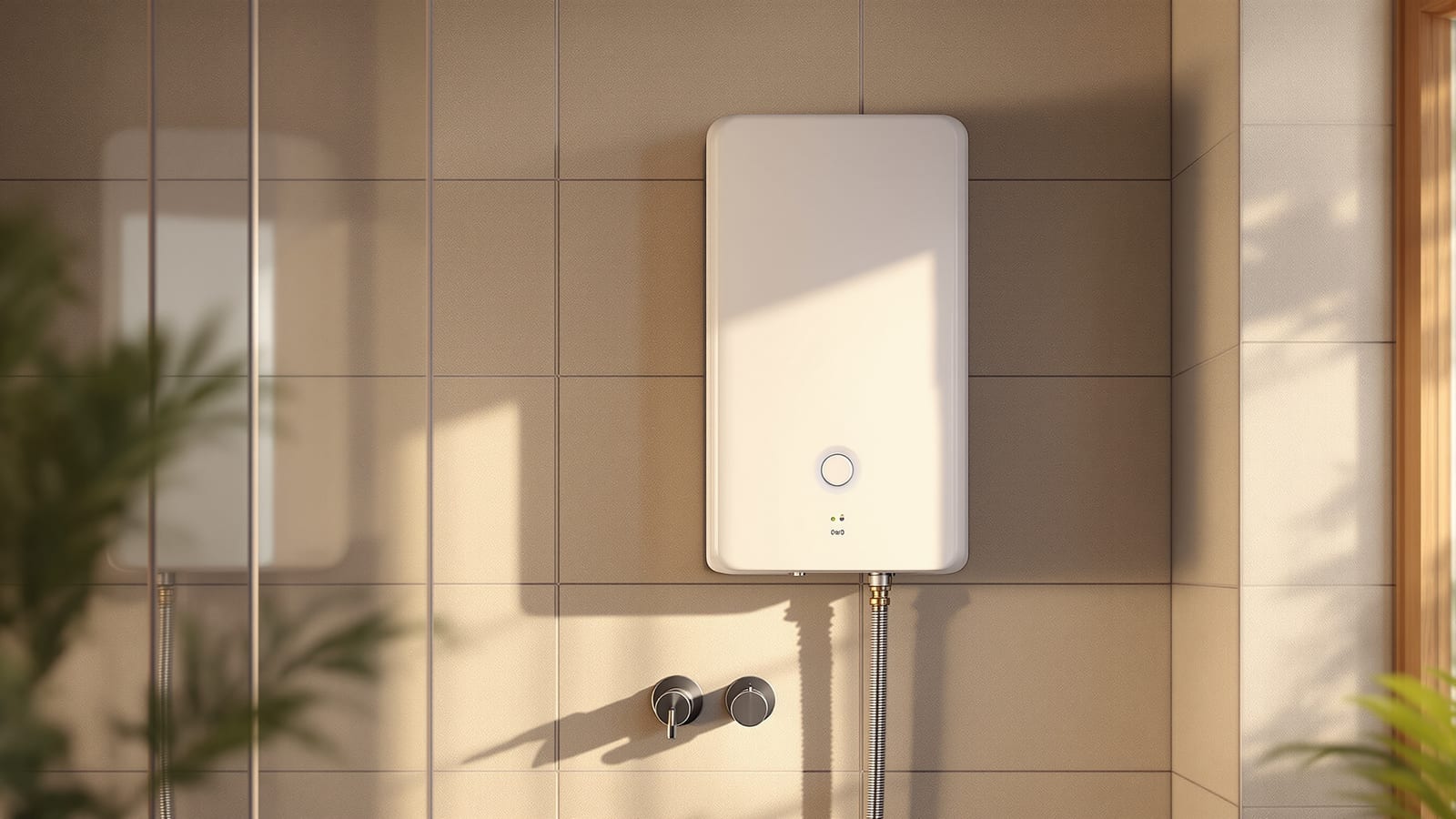
Smart Geysers & Water Heaters in India: The Biggest Energy Saver in Your Home
The water heater is one of the largest single loads on an Indian electricity bill — and the easiest to tame. This guide covers what makes a geyser smart, why scheduling saves the most, the 16A smart-plug retrofit and its caveat, storage vs instant, BEE star ratings, hard-water descaling, safety, real energy-savings math, and brands with prices.
Ask most Indian families which appliance costs them the most to run and they will guess the air conditioner. Often the real answer, month after month across the year, is the water heater. A 3 kW geyser left switched on for hours, or left on all day by a family that forgets the switch, quietly burns more units than almost anything else in the home. That is exactly why the geyser is the single most rewarding appliance to make smart: the savings are large, the fix is cheap, and you can start with a ₹1,000 plug this week.
This guide goes deep on smart geysers because they deserve it. We cover what actually makes a geyser "smart", why scheduling — not colour or voice — is where the money is, the smart-plug retrofit and its all-important 16A caveat, storage versus instant heaters, BEE star ratings, the hard-water descaling problem that shortens every Indian geyser's life, the safety systems that matter, honest energy-savings math with payback, and brands with real prices. It builds directly on the smart plugs guide and the smart home energy management guide, and slots into the wider smart homes pillar guide. To put numbers on your own case, use the smart home energy savings calculator.
A geyser does not need to be warm all day. It needs to be warm for the fifteen minutes before your bath. Every hour it stays hot beyond that is money heating water that will simply cool down unused.
Why the geyser is the biggest prize
A typical storage geyser draws 2,000–3,000 watts. The heating element runs full power to bring the tank up to temperature, then cycles on and off to hold that temperature against standing heat loss. The waste is in the holding: a geyser switched on "so hot water is always ready" spends most of its energy reheating a tank nobody is using, losing heat through the insulation hour after hour. The more expensive electricity gets — and Indian tariffs have only risen — the more that idle heating hurts.
Put it in context against other loads and the picture is clear.
| Appliance | Typical power | Daily hot-use | Waste pattern |
|---|---|---|---|
| Storage geyser (left on) | 2–3 kW | 30–60 min actual | Reheats idle tank all day |
| Air conditioner | 1–1.5 kW | 4–8 hrs | Runs while in use — less idle waste |
| Refrigerator | 0.1–0.2 kW | 24 hrs | Efficient, unavoidable |
| Washing machine | 0.5–2 kW | 1 hr | Short, task-bound |
| Water pump | 0.5–1 kW | 20–40 min | Short, task-bound |
The geyser is unique: a very high power draw combined with a habit of being left on far longer than the hot water is actually used. Fix that mismatch and you fix the biggest controllable line on the bill.
What makes a geyser "smart"
There are two honest routes to a smart geyser, and for most Indian homes the cheaper one wins.
Native smart geysers ship with Wi-Fi built in. Through the manufacturer's app you get scheduling, remote on/off, temperature setting, a "heat now" button that estimates ready time, energy tracking, and often voice control through Alexa or Google. Better models add features a plug cannot touch — variable temperature control, precise energy metering, and safety monitoring of the element and thermostat.
Retrofit with a smart plug turns an ordinary geyser smart for the price of a plug. The geyser's own thermostat still controls temperature; the smart plug simply controls whether the geyser has power, on a schedule and by app or voice. Because a geyser resumes heating the moment power returns (no "press start" needed), a plug controls it perfectly — the classic best-case retrofit described in the smart plugs guide.
| Capability | Native smart geyser | Smart-plug retrofit |
|---|---|---|
| Scheduling | Yes | Yes |
| Remote on/off + app | Yes | Yes |
| Voice control | Yes | Yes |
| Set water temperature | Yes | No (geyser thermostat only) |
| Precise energy metering | Yes (per-litre on some) | On monitoring plugs (whole-load) |
| Element / safety monitoring | Yes | No |
| Cost to add | ₹8,000–₹30,000 (new unit) | ₹1,000–₹1,800 (plug only) |
The punchline: the single biggest saving — scheduling — is available from a ₹1,000 plug. You do not need to replace a working geyser to capture most of the benefit. Buy a native smart geyser when you are replacing an old unit anyway and want temperature control and safety monitoring built in.
The 16A caveat — do not skip this
A geyser is a heavy load, typically 2–3 kW, which means it draws well over 10 amps. It must be on a 16A smart plug and a 16A wall socket, never a 6A or 10A plug. Plugging a geyser into an under-rated 10A plug is the single most common — and most dangerous — smart-plug mistake in India: the relay and contacts overheat, the plastic melts, and it becomes a fire hazard. Buy a genuine, BIS/ISI-certified 16A plug from a real brand; the ₹300 you save on a no-name unit is not worth the melted socket. If your geyser is hard-wired rather than plugged in, a plug retrofit is not appropriate at all — use a native smart geyser or a properly installed smart switch/contactor by a licensed electrician.
Why scheduling saves the most
Colour, voice and apps are nice. Scheduling is where the rupees are. The idea is simple: heat the water just before you need it, not all day.
A worked routine for a family with a morning and evening bath: schedule the geyser on at 6:15 AM (ready by 6:45), off at 8:00 AM; on again at 7:00 PM, off at 8:30 PM. The rest of the 24 hours it is completely off, losing nothing to standing heat. Compare that to a geyser switched on at 6 AM and forgotten until night, or left on permanently, and the difference is several units a day.
The other big lever, on native smart geysers, is temperature. A tank held at a lower set point loses less heat and mixes to a comfortable bath with less cold water added. Dropping the thermostat from a scalding maximum to a sensible 55–60°C both saves energy and reduces scald risk. Beyond scheduling, geyser control belongs inside your whole-home energy picture — the smart home energy management guide shows how to treat the geyser as the flagship controllable load, and the smart home scenes and automations guide covers linking it to alarms and routines ("morning" scene pre-heats the geyser).
Storage vs instant — and where smart fits
India uses two geyser types, and smart control suits them differently.
Storage geysers (6–25 litre tanks) heat and hold a reservoir. They are the mainstream choice for baths and bucket use, and they are where scheduling delivers the most, because holding a hot tank all day is precisely the waste smart control eliminates.
Instant / instantaneous geysers (1–3 litre) heat water on demand as it flows, with little or no storage. They waste far less standing energy by design, so the scheduling saving is smaller — but a smart plug still adds the safety of a guaranteed off and remote control. Their high momentary draw makes correct wiring and plug rating even more important.
| Factor | Storage geyser | Instant geyser |
|---|---|---|
| Tank | 6–25 L | 1–3 L |
| Standing loss | High (main saving target) | Low |
| Best use | Baths, bucket, kitchen | Quick handwash, single tap |
| Smart benefit | Scheduling saves a lot | Mostly safety + remote off |
| Wiring care | 16A | 16A, high momentary draw |
BEE star ratings — buy efficient once
When you do replace a geyser, the Bureau of Energy Efficiency star label on storage water heaters tells you how well insulated it is — a 5-star tank loses far less standing heat than a 1-star tank of the same size. Since standing loss is exactly what you are fighting, a higher star rating compounds with smart scheduling: better insulation means the water you heated before your bath is still warm if plans shift by an hour, and the daily idle loss on the schedule is lower. Pay the small premium for 5-star; it returns over the geyser's 8–10 year life.
Hard water and descaling — the Indian reality
Much of India runs on hard water, and hard water is a geyser's slow enemy. Dissolved calcium and magnesium deposit as scale on the heating element and tank walls. Scale insulates the element, so it works harder and longer for the same hot water — quietly eroding the very savings you set up — and eventually the element burns out or the tank corrodes. This is why geyser elements in hard-water cities fail every couple of years without care.
Practical defences: choose a geyser with a glass-lined or Blue Diamond-type coated tank and a good anode rod, which sacrifices itself to protect the tank; get the geyser descaled and the anode checked once a year (more often in very hard water); and consider a point-of-entry softener if your water is severely hard. A smart geyser's energy monitoring is useful here too — if the same heating cycle starts drawing more units or taking longer to reach temperature, that rising trend is often scale telling you it is time to descale. No smart feature substitutes for annual maintenance, covered more broadly in the smart home maintenance guide.
Safety — where smart genuinely helps
A geyser combines mains electricity, water and heat, so safety is not optional. The core protections live in the geyser itself — a thermostat, a thermal cut-out that kills power if the thermostat fails, a pressure-relief valve, and proper earthing on a 30 mA RCCB circuit. Never run a geyser on an unearthed socket, and have the RCCB tested.
Smart control adds a genuine safety layer on top:
- Guaranteed off — a scheduled or app-controlled off means the geyser is never accidentally left on for hours, reducing both waste and the wear of continuous cycling.
- Dry-heating protection — better native smart geysers detect if the element is energised without water (for example after a supply cut left the tank empty) and cut power before the element burns out.
- Over-temperature and leak alerts — premium models alert your phone to abnormal temperature or a sensed leak, so you can cut power remotely before damage spreads. This overlaps with the leak-sensing logic in the smart home security systems guide.
- Remote shut-off — leaving for a trip? One tap kills the geyser for the whole holiday instead of trusting everyone to remember the wall switch.
A retrofit smart plug gives you the first and last of these; native smart geysers add the dry-heating and leak monitoring.
The savings math and payback
Numbers make the case. Take a 3 kW storage geyser, an electricity tariff of ₹8 per unit, and a family using hot water for about an hour a day across morning and evening.
| Scenario | Effective heating hours/day | Units/day | Monthly cost (₹8/unit) |
|---|---|---|---|
| Left on all day (careless) | ~4.0 equivalent | ~4.5 | ~₹1,080 |
| On manually, roughly timed | ~2.0 equivalent | ~2.4 | ~₹576 |
| Smart scheduled, pre-heat only | ~1.0 equivalent | ~1.5 | ~₹360 |
Moving from a left-on habit to smart scheduling saves on the order of ₹600–₹700 a month for a heavy user — several thousand rupees a year. Against that, a genuine 16A energy-monitoring smart plug costs around ₹1,000–₹1,800, so the payback is often under two months, after which it is pure saving. Even a household that already switches the geyser off manually usually saves meaningfully, because a schedule heats more precisely and never forgets. Model your own tariff and usage in the smart home energy savings calculator, and see how the geyser fits total spend in the smart home cost calculator.
There is no cheaper, faster-paying smart-home upgrade in an Indian home than putting the geyser on a schedule.
Brands and prices in India
| Brand | Range | Typical price band | Notes |
|---|---|---|---|
| AO Smith | Storage, smart Wi-Fi models | ₹9,000–₹35,000 | Premium tanks, strong warranty, Wi-Fi range |
| Racold | Storage, instant, smart | ₹7,000–₹30,000 | Wide range, good efficiency, popular |
| Havells | Storage, instant | ₹6,500–₹22,000 | Trusted electrical brand, ISI, good service |
| Bajaj | Storage, instant, value | ₹5,000–₹15,000 | Value mainstream, widely stocked |
| V-Guard | Storage, instant | ₹6,000–₹18,000 | Strong in South India, reliable |
| Crompton | Storage, instant | ₹6,000–₹16,000 | Solid mid-market, good efficiency |
Prices move with tank size, star rating and features, so treat these as bands. Two honest routes: if your geyser works, spend ₹1,000–₹1,800 on a certified 16A energy-monitoring smart plug and capture nearly all the saving today; if you are replacing an old unit, buy a 5-star BEE-rated model — with Wi-Fi if your budget allows temperature control and dry-heating protection — and put it on a schedule from day one. Either way the geyser goes from your biggest silent cost to your best-behaved appliance. From here, extend the same scheduling discipline across the home with the smart home energy management guide.
References
- Bureau of Energy Efficiency — star-rated water heaters and standards
- BEE Star Label — storage water heater rating programme
- Bureau of Indian Standards — IS 2082 electric storage water heaters
- Central Electricity Authority — electrical wiring and safety regulations
- AO Smith India — smart and storage water heaters
- Racold India — water heater range and specifications
Export this guide
Related Guides — Deep-dive reading
Smart Ceiling Fans in India: BLDC, Remote & Voice Control
The ceiling fan is the hardest-working appliance in an Indian home — running eight months a year, often all night. A smart BLDC fan cuts its power draw by two-thirds, adds a remote and app, and answers to Alexa and Google. Here is what actually matters when you buy one.
Smart HomeSmart Plugs: The Cheapest Way Into a Smart Home (India Guide)
What a smart plug does, the best and worst things to plug into it, the load-rating warning that matters most, energy-monitoring models, Wi-Fi vs Zigbee, scheduling and automations, safety, and brands with real Indian prices.
Smart HomePoE vs Wi-Fi CCTV: Which Home Security Cameras Are Better?
One camera type runs power and video down a single Cat6 cable to an NVR and almost never drops out; the other clips to a wall in minutes and streams over your home Wi-Fi. This guide settles PoE vs Wi-Fi CCTV for Indian homes — reliability, video quality and bandwidth, cabling and power, retrofit versus new-build effort, NVR versus SD and cloud storage, hacking risk, real rupee costs, scalability and outdoor use — and gives a clear verdict for each kind of home.
Smart HomeRelated Tools — Try Free
Electrical Safety & Load Audit
Home electrical audit — 10 categories, 65+ checkpoints across earthing, RCCB, MCB, wiring, switchboards, appliance circuits, DG/inverter backup.
Safety AuditBefore vs After — Cost Reality Check
Compare what you expected to pay vs what you actually paid, category by category.
Reality CheckGeyser Size Calculator
Find the right water-heater capacity (litres) or instant kW for your bathroom and household, with an indicative running-cost note.
Bathroom Calculator