
Electrocoagulation for Wastewater Treatment: How It Works and Where It Fits
How electrocoagulation uses electrodes instead of dosing drums to destabilise pollutants, strip colour and heavy metals, and where it earns its place in Indian industrial and tertiary treatment — with an honest look at the cost, sludge and maintenance trade-offs against chemical coagulation.
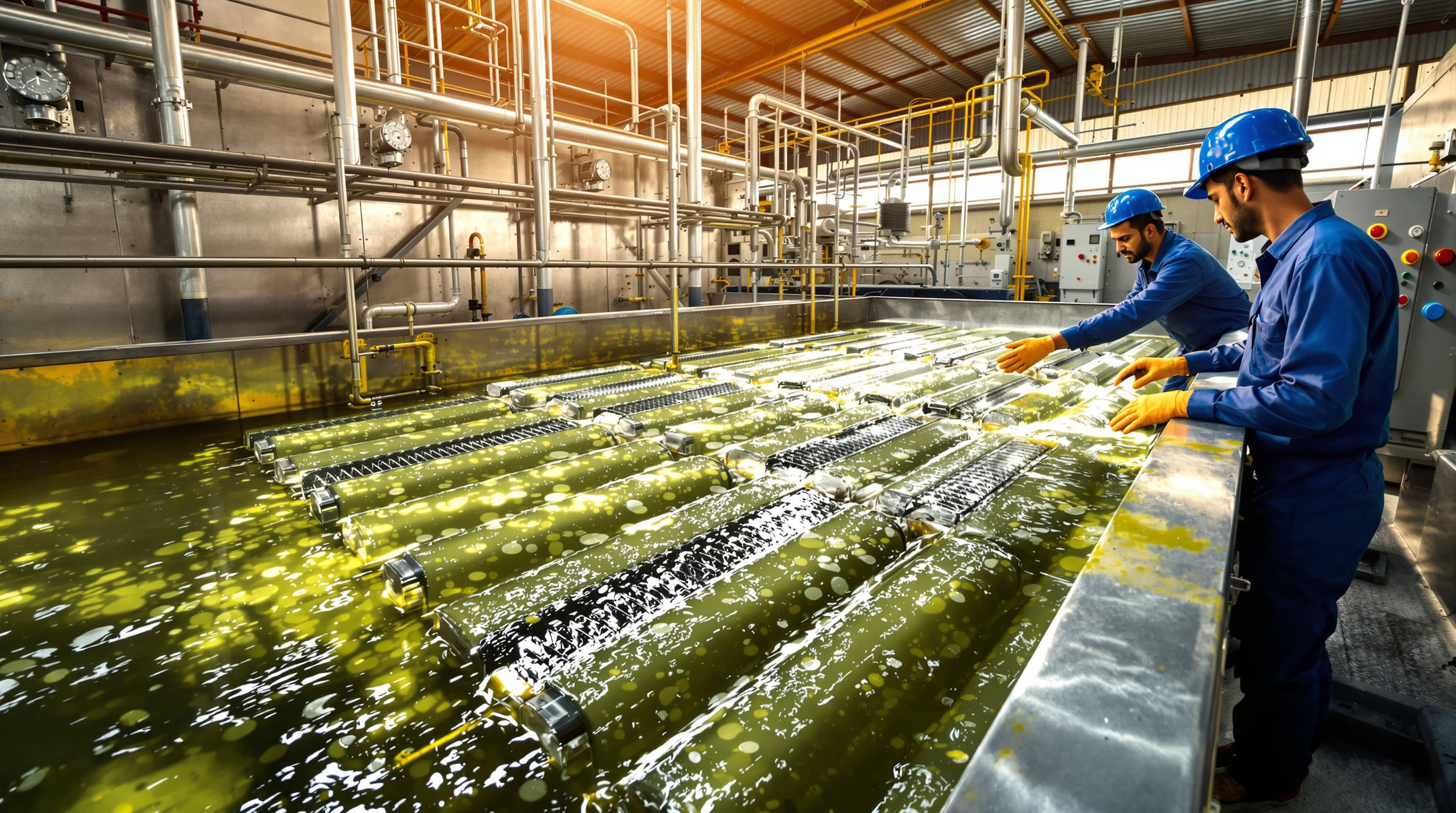
Most treatment plants remove fine, dissolved and coloured pollutants by dosing a chemical coagulant — alum, ferric chloride, poly-aluminium chloride — from a drum, letting it neutralise the charges that keep particles suspended so they clump and settle. Electrocoagulation (EC) does the same job, but instead of pouring the coagulant in, it manufactures it inside the water using an electric current and a set of sacrificial metal plates. No dosing tank, no bag of alum — just electrodes, a DC power supply, and the reactor itself.
For an Indian designer weighing options for a difficult industrial effluent or a tertiary polishing step, EC is one of those technologies that sounds like magic in a vendor pitch and needs a sober second look. This guide explains what it actually does, where it genuinely fits, and how it compares with the chemical coagulation it is often sold to replace.
Electrocoagulation is not a new kind of chemistry — it is the same coagulation every clarifier relies on, with the coagulant generated on demand by electricity instead of dosed from a drum. That single change moves the trade-offs, it does not remove them.
How electrocoagulation works
An EC reactor is a tank holding closely spaced metal plates — usually aluminium or iron — wired to a DC power supply as alternating anodes and cathodes. When current flows, three things happen at once:
- The anode dissolves. At the positive plate, metal atoms give up electrons and enter the water as ions — Al³⁺ or Fe²⁺/Fe³⁺. This is why the plates are called sacrificial: they are slowly consumed, exactly like the alum in a chemical plant, only released atom by atom where it is needed.
- Coagulant species form in-situ. Those metal ions immediately hydrolyse into aluminium or iron hydroxide flocs — the same active coagulant a dosing pump would deliver — which neutralise the surface charge on suspended and colloidal particles so they stop repelling each other and aggregate.
- The cathode makes gas. At the negative plate, water is split and fine hydrogen bubbles stream upward. These bubbles latch onto the fresh flocs and float them to the surface — a built-in dissolved-air-flotation effect — so EC often produces a floating scum as well as a settling sludge.
The result is destabilised, aggregated pollutant that can then be separated by flotation, settling in a clarifier, or filtration. In practice EC is a front-end step: it conditions the water, and a downstream separation stage removes what it has clumped together.
What electrocoagulation is good at removing
EC shines on pollutants that are hard for a plain biological plant to touch:
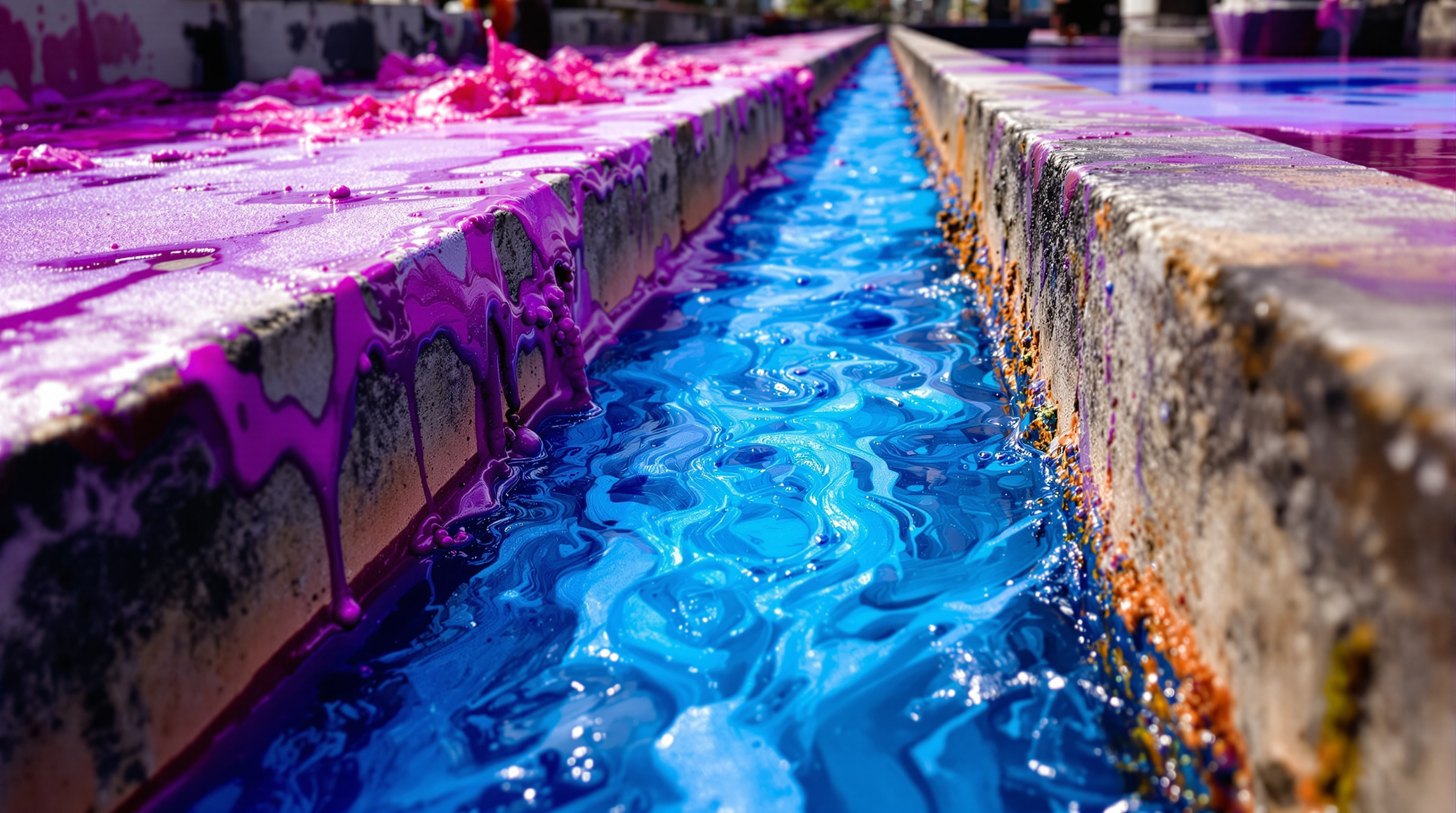
- Colour and dyes — textile, dyeing and printing effluent, where dissolved dye molecules pass straight through an activated sludge process but are readily destabilised by EC.
- Heavy metals — arsenic, chromium, lead, nickel, cadmium — co-precipitated or adsorbed onto the metal-hydroxide flocs. This is a major reason EC appears in electroplating, tannery and battery-industry effluent trains.
- Emulsified oil and grease — dairy, food-processing and machining coolant wastewater, where EC breaks stable oil-in-water emulsions that gravity separators cannot.
- Suspended solids, turbidity and phosphate, and a share of COD carried on colloidal matter.
Because it targets colour, metals and stubborn colloids, EC is almost always positioned as an industrial or tertiary technology — a polishing or pre-treatment step — rather than a replacement for the biological core of a municipal sewage treatment plant. It sits alongside the secondary stage, not instead of it.
Where it fits in the treatment train
Think of EC as a specialist you call in for a specific problem, placed at one of two points:
1. As pre-treatment, ahead of a biological stage, to knock down colour, metals or oil that would otherwise poison the microbes or pass through untreated. A textile ETP might run EC first, then biology, then filtration.
2. As tertiary polishing, after secondary treatment, to pull residual colour, phosphate or metals down below discharge limits before the water meets CPCB norms or goes to reuse. Here it competes with — or precedes — a UF membrane or an ozonation step.
For domestic sewage, the standard treatment process flow rarely needs EC at all — biology plus filtration plus UV disinfection does the job more cheaply. EC earns its keep precisely where conventional biology struggles.
Electrocoagulation vs chemical coagulation
The honest comparison is against the alum/PAC/ferric dosing that EC is pitched to replace. Both do the same chemistry; the differences are operational.
| Factor | Electrocoagulation | Chemical coagulation |
|---|---|---|
| Coagulant source | Generated in-situ from sacrificial electrodes | Dosed as alum, ferric or PAC from drums |
| Chemical storage & handling | Minimal — no bulk acid/coagulant store | Bulk chemical storage, dosing pumps, handling risk |
| Added dissolved salts (TDS) | Low — no counter-ions added | Raises TDS via sulphate/chloride counter-ions |
| Sludge volume | Generally lower, denser sludge | Higher, more hydrated sludge |
| Colour & metal removal | Excellent | Good, but often needs higher doses |
| Running cost driver | Electricity + electrode replacement | Chemical consumption |
| Main headache | Electrode passivation, plate replacement | pH correction, chemical logistics, sludge volume |
| Automation | Simple — vary current | Needs accurate dosing control per flow/load |
The genuine advantages of EC are real: no chemical storage, less operator dosing skill, lower added TDS, and typically less sludge that dewaters better. For sites chasing water reuse where every added milligram of TDS matters, the low-salt argument is compelling.
The catch: cost, electrodes and passivation
EC is not a free lunch, and the drawbacks are where projects come unstuck:
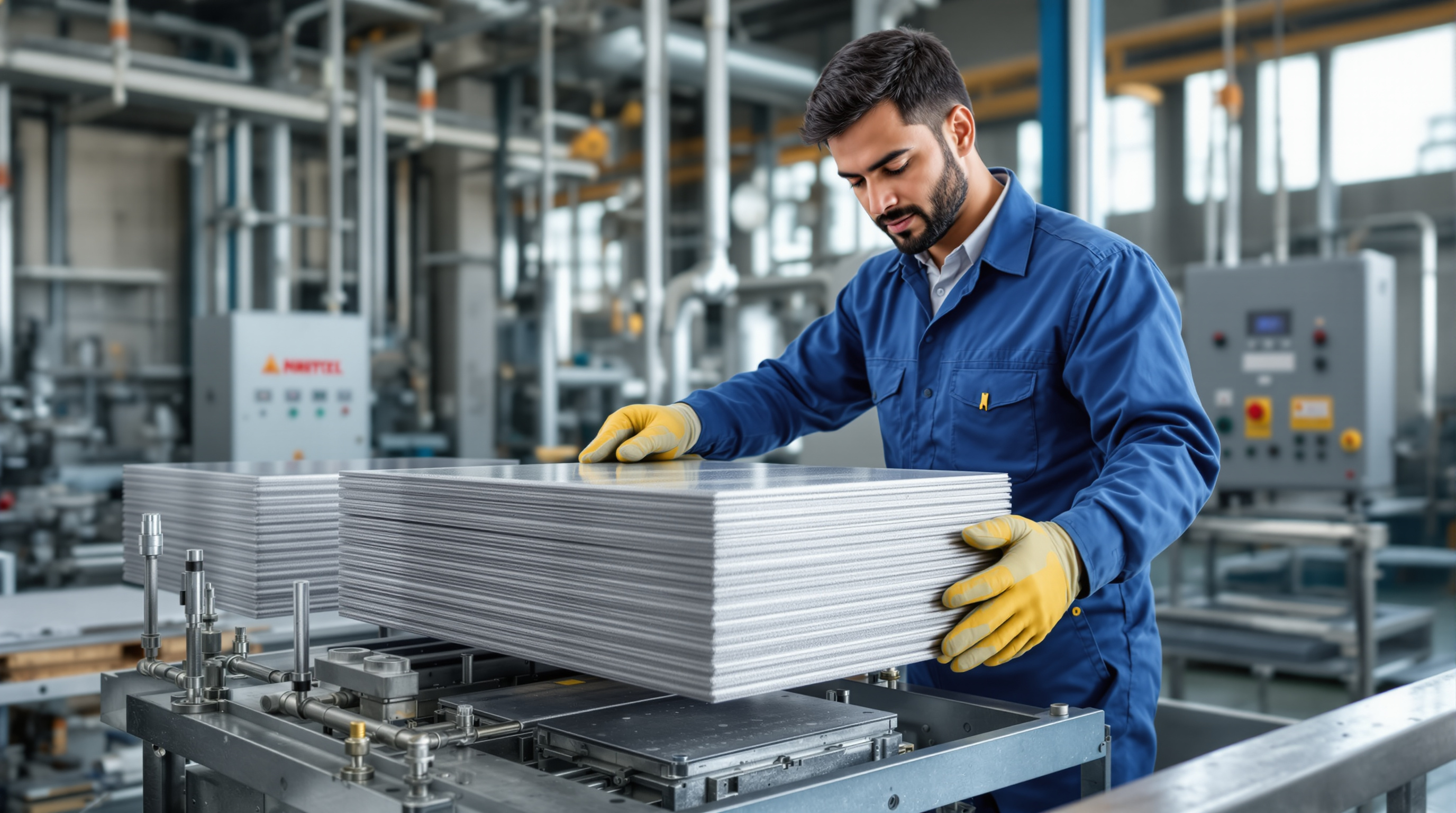
- Electrode passivation. Over time an insulating oxide film builds on the plates — especially aluminium — raising resistance, cutting efficiency and forcing more voltage. Managing it means polarity reversal, periodic acid cleaning, or physical scrubbing. It is the single most common operational complaint.
- Electrode replacement is a consumable. The sacrificial plates are literally dissolving. Budgeting plate replacement — and the downtime to swap them — is essential; skip it and performance quietly decays.
- Power quality and cost. EC needs reliable DC. In a plant already watching its electricity consumption, the rectifier load is a real line item, though often offset by chemical savings.
- Sludge is still sludge. Metal-hydroxide sludge laden with heavy metals may be classified as hazardous and needs compliant disposal — the pollutants are concentrated, not destroyed.
- Sensitivity to water chemistry. Conductivity, pH and flow all shift EC performance, so it wants reasonably steady influent, not wild swings.
For a first-order feel of the energy footprint against your baseline, the Energy Benchmark Calculator is a useful sanity check before committing to a rectifier size.
The bottom line
Electrocoagulation is coagulation with the coagulant delivered by electrons instead of a dosing pump — and that swap is genuinely useful for colour, heavy metals, emulsified oil and hard-to-settle colloids, especially where low added TDS and minimal chemical handling matter. It belongs in the industrial and tertiary part of the toolkit, working with biology rather than replacing it. But it trades chemical logistics for electrode maintenance and passivation, and it concentrates rather than eliminates pollutants into a sludge you must still dispose of responsibly.
Treat it as a targeted tool, not a universal upgrade. If your problem is dye, metals or oily emulsion that conventional dosing handles poorly or at high salt cost, EC deserves a pilot. If it is ordinary domestic sewage, the standard biological train is almost always the better buy. To place it in the wider picture, browse the full Sewage Treatment Plants guide library, and use the STP Technology Selector to see which processes suit your effluent before you shortlist a vendor.
Export this guide
Related Guides — Deep-dive reading
How Does an STP Work? A Step-by-Step Explanation
Follow a single drop of sewage from the building drain to reusable water — through screening, settling, the living microbial heart of the plant, and final polishing — with every stage explained in plain language and no engineering background assumed.
Sewage Treatment PlantsTextile Industry Wastewater Treatment: The Complete Engineering Guide
Why textile and dyeing effluent is one of the hardest industrial wastewaters to treat — its colour, high TDS, swinging pH and refractory dyes — and the coagulation-to-membrane treatment train, colour removal and Zero Liquid Discharge that India now demands.
Sewage Treatment PlantsAutomobile Industry Effluent Treatment: Oil, Paint-Shop Chemicals & Metals
Why a car plant's wastewater needs an ETP and not a domestic STP — the oil and grease, phosphates, paint-shop solvents and heavy metals it carries, and the oil-separation, physico-chemical, biological and metal-removal train that cleans it for reuse or zero liquid discharge.
Sewage Treatment PlantsRelated Tools — Try Free
Industrial Wastewater Treatment Planner
Pick your dominant industrial wastewater and daily flow to see whether you need an STP or ETP, a 1–5 treatment complexity rating, and how rough capex scales.
PlannerWater Reuse Savings Calculator
Estimate the money you save by reusing STP-treated water instead of buying fresh supply, with daily, monthly and annual savings.
STP CalculatorBefore vs After — Cost Reality Check
Compare what you expected to pay vs what you actually paid, category by category.
Reality Check