

Defensive Planting in India (2026): Thorny Barriers, Clear Zones & Natural Security
How to use plants as a security layer around an Indian home — dense thorny barriers along the boundary and under ground-floor windows, kept low near the wall so greenery deters intruders instead of hiding them.
Plants are the friendliest security layer you own. A well-chosen, well-placed hedge costs a fraction of a spiked wall, softens the look of a fortified boundary, and quietly does two hard jobs — it makes an intruder's approach painful and noisy, and it signals a cared-for, watched property. Done wrong, the exact same plants do the opposite: a tall, unmaintained shrub against the wall becomes the best hiding spot on the plot and a convenient step up over the boundary.
This guide is about defensive planting — using greenery deliberately as part of your home's security, the pleasant and low-cost complement (or alternative) to spikes and wire. It is written for the Indian homeowner and for RWAs and landscape designers who want the grounds to work for security rather than against it. It is a companion to the landscape design for security guide, which covers the whole site, and to the green boundary plants guide, which covers boundary greenery for privacy, shade and looks — here we focus only on the security use, and deliberately do not repeat the plant-care and aesthetic side those guides cover.
Scope & safety. This is a planning guide, not a call to weaponise your garden. Defensive planting is one soft layer that works alongside a sound wall, lighting and cameras — never a substitute for them. Any planting must stay clear of fire-tender access and escape routes, must not obstruct sightlines or CCTV, and must be safe around children and pets. Where a boundary wall, drainage or a fire lane is involved, coordinate with a landscape professional and your local bye-laws. Strictly defensive throughout.
Why plants belong in a security plan
Security design has a well-known frame: Crime Prevention Through Environmental Design, or CPTED. It says the layout of a place can quietly encourage safety — by keeping sightlines open so people can see and be seen (natural surveillance), by guiding visitors to one controlled entrance (natural access control), by making the owned boundary obvious (territorial reinforcement), and by keeping the whole property visibly maintained (neglect invites trouble; care deters it). Planting touches every one of those ideas, which is why it earns a place in the plan rather than being an afterthought the gardener decides alone.
A would-be intruder wants three things from your garden: cover to work unseen, an easy approach to the house, and a climb-aid to get over the wall. Defensive planting is simply the discipline of denying all three with greenery — putting hard-to-cross plants where an intruder would step, and keeping everything near the wall and windows low enough that nobody can hide or climb. Assess where those weaknesses are first with the site perimeter security assessment and the home security risk scorecard.
Job one: the thorny barrier
The first job of defensive planting is a barrier — a band of dense, spiky, hard-to-push-through growth exactly where you least want someone to walk or reach. Two places matter most.
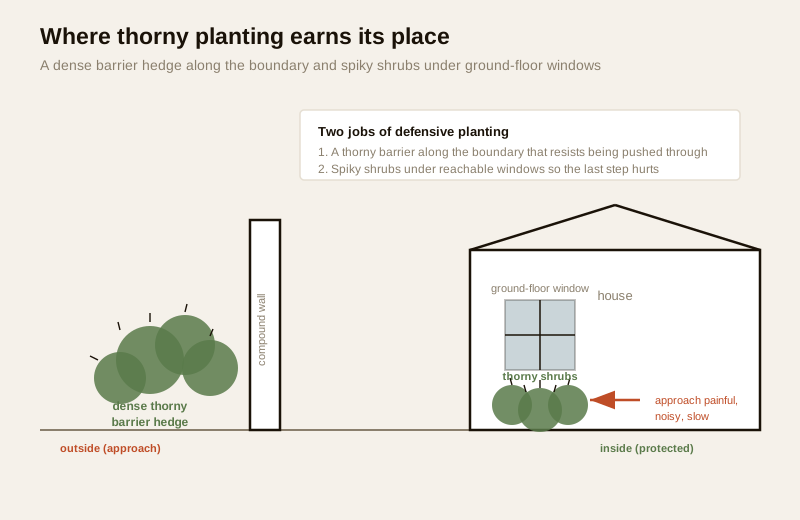
Along and atop the boundary. A continuous thorny hedge on the inside face of the compound wall, or a spiky band along a fence line, turns a smooth vault into a painful, snagging, noisy struggle. It also stops the casual approach — the person who would otherwise stroll along the wall looking for a soft spot finds there is nowhere comfortable to stand. Paired with a sound wall (see the compound wall security guide) and fencing (the security fencing guide), the hedge adds delay and discomfort without adding a single sharp metal edge to injure a passer-by on the public side.
Under ground-floor windows. This is the highest-value and most-missed placement in India. A reachable ground-floor window is the classic entry point; the last thing an intruder does before reaching it is stand in the flower bed under it. Fill that bed with low, dense, thorny shrubs and the final step becomes painful and slow — and the rustle and snap of stiff growth is its own alarm. This pairs naturally with grille and glazing measures and with the wider boundary intrusion detection guide.
Kept as a category rather than a shopping list, India offers plenty of suitable material: sprawling thorny climbers such as bougainvillea, spiny succulents such as agave and columnar euphorbia or cactus, dense fruiting thorns such as karonda (carissa) and citrus or lime, and old-fashioned thorny roses. The green boundary plants guide covers how to actually grow and care for boundary planting; choose from it with these security traits in mind:
| Barrier trait | Why it matters for security | What to look for |
|---|---|---|
| Genuinely thorny or spiny | Makes contact painful, discourages pushing through | Stiff thorns, spines or sharp leaf tips, not soft prickles |
| Dense, twiggy growth | Removes gaps to slip through; harder to part | Multi-stemmed, bushy habit rather than leggy |
| Naturally low or trainable low | Deters without becoming cover or a climb-aid | Species that stay low near the wall, or take hard trimming |
| Noisy / stiff when disturbed | The rustle and snap acts as a crude alarm | Woody, crackly stems near windows |
| Hardy for the local climate | An unhealthy hedge thins out and leaves gaps | Suited to your region, drought and monsoon |
| Not a fire or safety hazard by the house | Dense dry growth near walls is a fire risk | Avoid oily, flammable, very dry species against the building |
The point of a barrier is delay and deterrence, not injury. A dense thorn hedge that makes an approach slow, uncomfortable and audible has done its job long before anyone is hurt — and it does it quietly, legally, and without the harsh look of razor wire.
Job two: the clear-zone discipline
Here is the trap that turns landscaping against you. The same plants that protect a boundary when they are low will sabotage it when they grow tall. A shrub allowed to reach head height beside the wall gives an intruder a screen to work behind and, often, a stiff frame to step up on. Tall planting under a window hides someone forcing it. Defensive planting only works if it is disciplined by a clear zone.
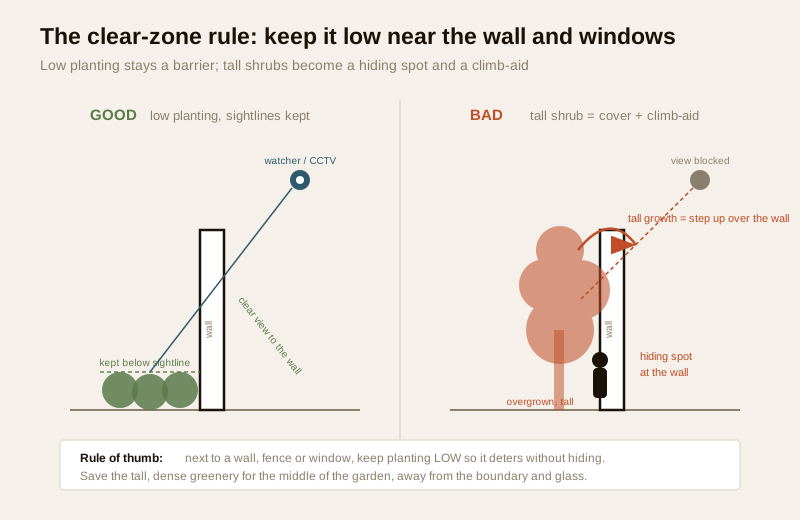
The rule is simple: near a wall, fence or window, keep planting low; save the tall, dense greenery for the middle of the garden, away from the boundary and away from the glass. Low planting still deters — thorns at ankle-to-knee height are just as unpleasant to step into — while keeping the wall top, the window and the approach in plain view of the street, the guard and the camera.
| Location | Keep planting | Because | The failure to avoid |
|---|---|---|---|
| Against the compound wall | Low — below the wall top | Preserves the wall as an obstacle; no step-up | Tall shrub as a climb-aid over the wall |
| Under ground-floor windows | Low and thorny | Deters the last step without hiding it | Tall bush screening someone at the glass |
| Along the entrance path | Low and open | Visitors are seen; no ambush cover | Overgrown edges hiding a waiting figure |
| Camera and light sightlines | Clear or low | Keeps coverage and illumination unbroken | Foliage blinding a camera or lamp |
| Middle of the garden / away from house | Tall is fine | No boundary or window to compromise | (Nothing — this is where height belongs) |
This is where planting and the rest of the perimeter meet. Low planting keeps the security lighting doing its job — a lamp behind a grown-out bush lights leaves, not the ground — and keeps the perimeter CCTV seeing the wall rather than a green wall of its own. Think of the clear zone as the planting side of the same rule that keeps parked vehicles, sheds and stacked material away from the boundary: nothing near the wall should give cover or a leg up.
Maintenance is the whole game
A defensive hedge is not a product you install; it is a discipline you keep. Left alone, every barrier hedge grows toward becoming the hiding place it was meant to prevent. The single most important thing you can do for planting-based security is trim it, on a schedule — keep the boundary and window planting low and dense, cut back anything creeping over sightlines, and clear the leaf litter that lets a bed thin out.
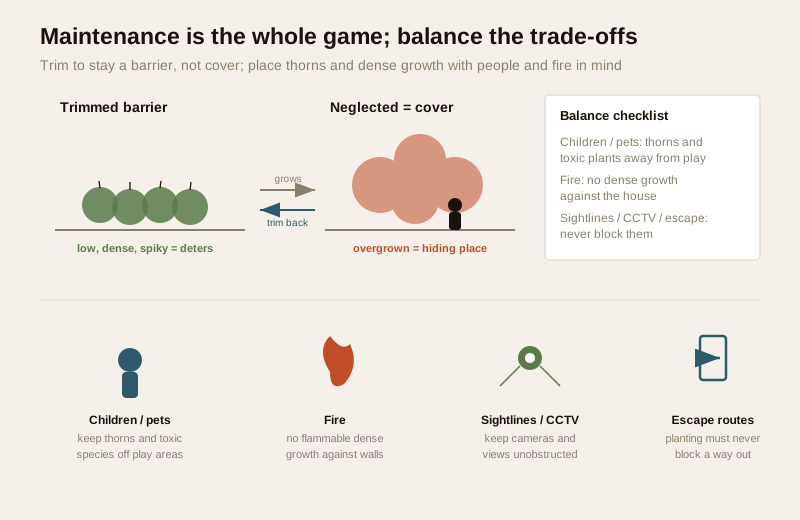
An overgrown thorn hedge is worse than no hedge: it is cover and it is armoured against anyone (including you) trying to see or clear behind it. In India the failure is everywhere — a beautiful, tall shrub giving perfect cover right at a ground-floor window, or a boundary hedge grown into a thicket that the family has stopped being able to see through. The remedy is a calendar, not a redesign.
Defensive planting also has to be balanced against the other people and hazards on your plot. A thorn barrier is only a good idea if it is placed with judgement:
| Consideration | The risk | How to balance it |
|---|---|---|
| Children and pets | Thorns and toxic species where kids and animals play | Keep spiny and toxic plants along the boundary and off play areas, paths and pet runs |
| Fire | Dense, dry, flammable growth against the house | Do not plant flammable dense growth right against walls; keep a gap; favour less combustible species near the building |
| Sightlines and CCTV | Foliage blinding a camera or the view from the house | Route hedges away from lenses and lamps; keep them low on sightlines |
| Escape routes and fire access | A barrier that blocks a way out or a fire-tender lane | Never plant across an exit, a gate escape path or a fire-tender approach |
| Neighbours and the street | Overhang, roots and thorns onto public space | Keep growth within your line; thorns must not injure passers-by |
The design goal is a hedge that is unpleasant to cross but safe to live beside. That is a placement and pruning question as much as a plant-choice one.
Where planting fits in the whole perimeter
Planting is one layer, and its value comes from working with the others rather than pretending to replace them. It sits inside the layered approach set out in the complete guide to perimeter security in India: a sound wall or fence for the physical obstacle, lighting to remove dark cover, cameras for evidence and deterrence, detection where the risk warrants, and planting to make the approach painful, the boundary uninviting and the whole property look cared-for. For RWAs and gated layouts, the same clear-zone thinking applies at community scale — see the gated communities security guide and the whole-property view in the ultimate guide to home security in India.
Used this way, defensive planting punches well above its cost. It is the layer that a homeowner can plan and maintain themselves, that makes the harder layers look softer, and that quietly turns the garden from a would-be intruder's friend into the home's.
Dignity, safety & when to bring in a professional. Defensive planting must never become a hazard to the people it protects. Keep thorny and toxic species away from children, pets and shared paths; never let a barrier block an escape route, a gate or a fire-tender lane; and remember overhanging thorns must not injure people on the public side. For boundary walls, drainage, fire access and any planting tied to structural or civil work, engage a landscape professional and check your municipal building bye-laws. Where visitor or delivery movement is designed around the grounds, treat any personal data (visitor logs, camera footage) responsibly under the DPDP Act, 2023. Planting is a soft layer — plan it, maintain it, and let it support, not replace, the harder measures.
Key takeaways
- Plants are a real security layer — a low-cost, pleasant complement to spikes and wire that makes an approach painful and noisy and signals a cared-for, watched home.
- Two jobs: a dense thorny barrier along the boundary and, above all, under ground-floor windows, so the last step to a window hurts and rustles.
- Keep it low near the wall and windows — the clear-zone discipline. Tall shrubs on the boundary become a hiding spot and a climb-aid; save height for the middle of the garden.
- Maintenance is the whole game. An unmaintained hedge grows into the cover it was meant to prevent — trim on a schedule or the plant works against you.
- Balance it — thorns and toxic plants away from children and pets, no flammable dense growth against the house, and nothing blocking sightlines, CCTV or escape routes.
Where to go next
- The site-wide view: Landscape Design for Security and the Complete Guide to Perimeter Security in India.
- Grow the greenery well: Green Boundary Plants for Indian Homes.
- Harden the boundary itself: Compound Wall Security and Security Fencing.
- Light and watch it: Security Lighting and Perimeter CCTV.
- Assess your plot: Site Perimeter Security Assessment and the Home Security Risk Scorecard.
- Or browse the Perimeter Security sub-hub and the Security Knowledge Hub.
References
- Crime Prevention Through Environmental Design (CPTED) — an internationally recognised design approach whose principles of natural surveillance, natural access control, territorial reinforcement and maintenance underpin defensive planting; apply as a named approach, not a fixed standard.
- National Building Code of India (SP 7), Bureau of Indian Standards, and local municipal building bye-laws — govern boundary walls, setbacks, fire-tender access and escape routes that planting must never obstruct; verify the current edition via the BIS catalogue at https://www.services.bis.gov.in/.
- Digital Personal Data Protection Act, 2023 — applies to any personal data (visitor logs, CCTV footage) where site and planting design intersects with visitor or delivery movement.
- Local horticulture and landscape guidance for region-appropriate, child- and pet-safe species selection; take professional advice where structural, drainage or fire-access work is involved.
This is an educational overview for planning and decision-making, not legal, horticultural or security advice. Defensive planting is one soft layer among several; ensure no planting obstructs fire egress, fire-tender access or sightlines, keep thorny and toxic species safe around children and pets, engage a landscape professional for boundary, drainage or civil work, and verify any standard's current status via the BIS catalogue before relying on it.
Export this guide
Related Guides — Deep-dive reading
Landscape Design for Security in India (2026): Designing Grounds That Protect, Not Betray
How the design of your grounds either strengthens or sabotages the perimeter — the CPTED umbrella for Indian homes, gated communities and campuses: sightlines, access control, territorial markers, maintenance and the all-important clear zone.
SecurityThe Complete Guide to Parking and Garage Security in India (2026): Access, CCTV, Lighting, People-Safety & Vehicle Protection
The pillar overview of parking and garage security for Indian apartments, offices and homes — how to control who enters, watch every corner, light and de-isolate the space, and protect the vehicles, without ever blocking the escape route or the fire tender.
SecurityThe Complete Guide to Perimeter Security in India (2026): Walls, Barriers, Detection & Response
The definitive overview of perimeter security for Indian homes, plots and gated communities — how to layer deterrence, delay, detection and response from the boundary line inward so a wall becomes a system, not just a barrier.
SecurityRelated Tools — Try Free
Home Security Risk Scorecard
Score your home across six security layers — perimeter, entry points, lighting, detection, alarm and habits — and get a prioritised action plan.
Security ScorecardCross-Ventilation Analyzer
Estimate airflow and air changes per hour (ACH) from room size, window areas, layout, and local wind — with NBC 2016 Part 8 compliance check.
Ventilation CalculatorWindow Grill Design Selector
Pick a window grille style and material by priority — security, looks, budget, view — and estimate cost.
Window Tool