
Compound Wall Landscaping in India: Green Walls, Creepers and Hedges (2026)
A plain, India-grounded guide to softening a boundary wall with plants — climbers on a trellis, planted hedges and shrub screens, modular green walls on the wall face, and planter beds at the base — for beauty, privacy, cooling and dust, while keeping roots and damp off the structure and the wall protected behind the greenery.
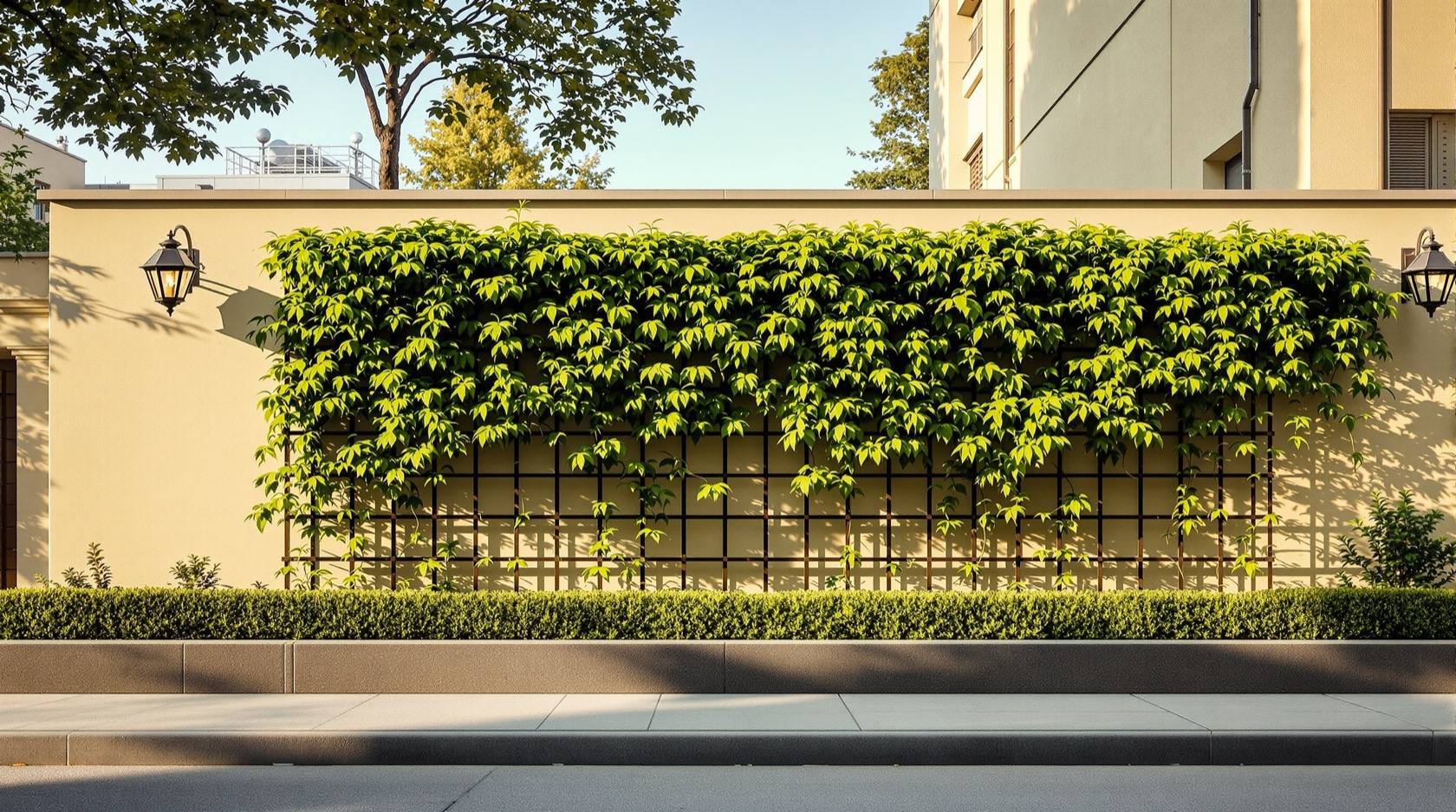
A bare compound wall is a blank, hot, hard edge to a plot — and the fastest way to make it beautiful, private and a few degrees cooler is to green it. Plants soften the line, screen the view without adding built height, trap road dust, muffle noise and shade the wall face so it heats up less. Done well, landscaping turns a boundary from a barrier into the best-looking part of the plot. Done carelessly, aggressive roots and trapped damp quietly wreck the wall behind the leaves.
This is the landscaping guide for the Compound Walls and Gates hub. It sits alongside the compound wall design guide and the boundary-wall design ideas that set the wall's own look, and it deliberately does not re-teach horticulture — for the plants themselves follow the deep Landscape guides on green and living walls and green boundary plants. Here the job is narrower: how to green the compound wall specifically, and how to do it without damaging the structure you spent money building.
Scope & how to read this. Every spacing, weight and cost figure here is typical and indicative to help you plan — confirm plant choice, structural loading and waterproofing against a horticulturist, a structural engineer where a green wall's weight is involved, and your site conditions. Greening a wall must not compromise it: keep roots and damp off the structure, waterproof and finish the wall behind any greenery, and treat a loaded vertical garden as a real load, not decoration. This guide plans and coordinates; the deep plant and living-wall craft lives in the Landscape library, and any wiring for feature lighting is electrician-led.
The green approaches at a glance
There is no single way to green a wall — there are five, and most good boundaries mix two or three. Read cost and upkeep as relative bands, not prices, and read the last column as the non-negotiable: every approach has a way it can harm the wall if you skip the protection.
| Green approach | Main effect | Upkeep reality | Watch-out (wall protection) |
|---|---|---|---|
| Climbers / creepers on a trellis | Fast vertical cover, flowers, shade on the wall face | Regular tying-in and pruning; annual cutback | Keep the trellis off the wall with a gap; avoid self-clinging aggressive species on plaster |
| Self-clinging climbers direct on wall | Cheapest cover, no frame | Hard to remove once established | Aerial roots / suckers grip into plaster and mortar — can damage the finish; generally avoid on a good wall |
| Planted hedge / shrub screen in front | Green privacy layer without built height | Clipping, watering, feeding; takes 1-3 seasons | Plant away from the footing so roots do not push the foundation; leave a maintenance gap |
| Modular green (living) wall on the face | Lush full-height garden look | High — irrigation, feeding, plant replacement | Real weight + constant moisture; needs waterproofing behind and a fixed irrigation plan |
| Planter beds / troughs at the base | Softens the base line, easy and cheap | Watering and seasonal replanting | Drainage must run away from the wall so the base does not stay wet |
Each row is a starting point, not a verdict. The rest of this guide unpacks them so you can match an approach to your wall, your maintenance appetite and your climate. One rule cuts across all five: the wall must be sound and protected first — a well-finished, waterproofed wall behind the greenery, so that damp and roots meet a barrier, not bare masonry.
Climbers and creepers: green the vertical face
Climbers are the quickest way to clothe a wall — a bare boundary can disappear under leaf and flower in a season or two. But how they climb decides whether they are a friend or a slow enemy of the plaster.
Self-clinging vs support-needed
Climbers split into two families, and the difference matters enormously for a compound wall:
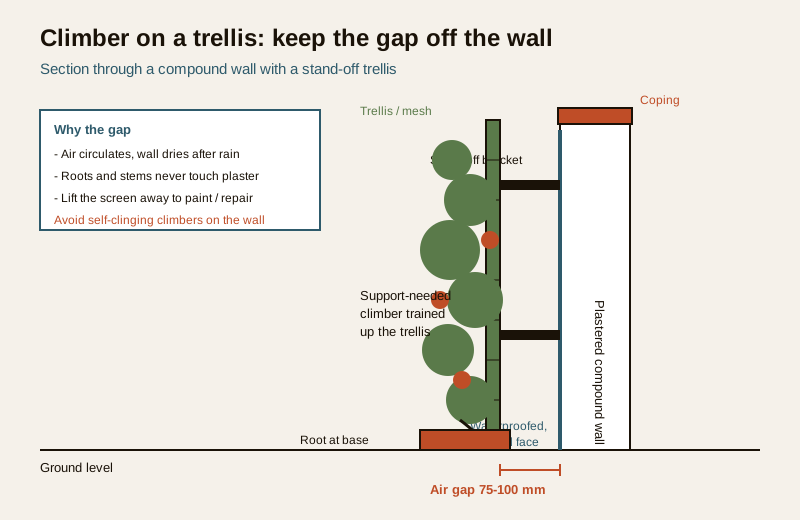
- Support-needed climbers (twiners and tendril-climbers — think many jasmines, bougainvillea trained, passion flower, madhumalti / rangoon creeper) cannot grip on their own. They need a trellis, mesh or wire to wind around. This is exactly what you want on a wall, because you control the frame and the plant never touches the masonry.
- Self-clinging climbers (aerial-root and sucker climbers — some figs, ivy-type creepers) grip the surface directly with roots or adhesive pads. They give the cheapest cover with no frame, but those roots and pads work into plaster joints and mortar, hold damp against the surface, and tear the finish when you eventually pull them off. On a wall you care about, generally avoid them — the saving is not worth the repair.
The safe default for a compound wall is therefore a support-needed climber on a trellis held off the wall, not a self-clinger stuck to it.
The trellis-with-a-gap rule
The single most important detail in wall greening is the air gap. Fix the trellis or mesh on stand-off brackets so it sits roughly 75 to 100 mm clear of the wall face. That gap does three quiet, essential jobs: it lets air circulate so the wall dries after rain, it keeps roots and stems off the plaster so nothing grips or lifts the finish, and it lets you lift the whole screen away to inspect, paint or repair the wall behind. Behind that trellis the wall should already be properly waterproofed and finished — greenery is a soft layer over a protected wall, never a substitute for protecting it. Match the trellis material and the flower colour to the boundary-wall look so the greening reads as design, not afterthought.
For the plants themselves — which climbers suit sun or shade, which flower when, and how to train and prune them — the green and living walls guide goes deep; here the point is the detail, not the botany.
Hedges and shrub screens: privacy without built height
Often the best green move is not on the wall at all but in front of it: a planted hedge or a row of screening shrubs along the boundary. This is the landscaping answer to the most common request in the height and privacy guide — more privacy without building the wall taller, which local bye-laws may cap anyway.
How a green screen buys privacy
A hedge or shrub row raises the effective screen line with living material, not masonry, so it usually sidesteps built-height limits while giving a softer, cooler, better-looking edge than a tall blank wall. It also catches dust and dampens road noise far better than a hard surface. The trade-off is time and care: a hedge takes one to three seasons to fill in, and it needs clipping, watering and feeding to stay dense. Choose species suited to your climate and light — the green boundary plants guide covers which hedges and screening shrubs work where in India, evergreen vs flowering, fast vs slow, and spacing.
Keep roots off the footing
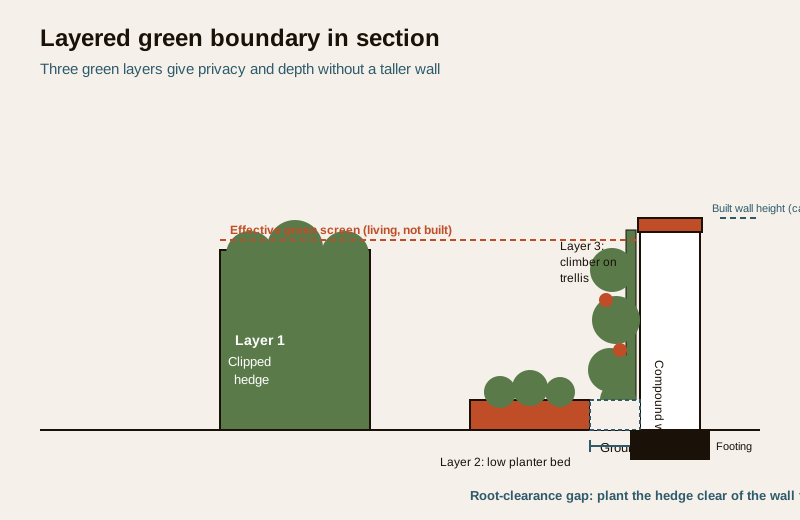
The one structural caution: plant the hedge a sensible distance away from the wall's footing, not tight against it. Vigorous roots pushing against a shallow compound-wall foundation can, over years, lift or crack it — and a hedge crammed against the base traps damp there too. Leave a maintenance gap between hedge and wall so you can walk the line, clip both faces, and inspect the wall. A layered edge — hedge in front, planter or climber-clad trellis on the wall behind — reads richest and keeps every element off the structure.
Green (living) walls on the compound wall
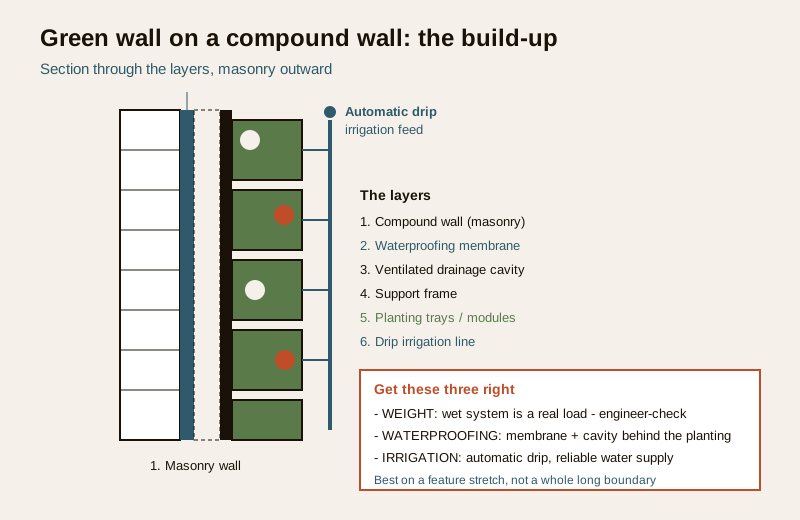
A modular green wall — a vertical garden of planted modules, pockets or trays fixed to the wall face — gives the lushest, most dramatic result: a full sheet of living green where a plastered wall used to be. It is also the most demanding approach, and on a compound wall three things move from "nice to have" to "must get right." The plant systems, module types and planting design are covered in full in the green and living walls guide; here we cover only what changes when the wall carrying it is your boundary wall.
Weight, waterproofing and irrigation
- Weight. A planted, watered green-wall system is heavy — growing medium plus water plus modules add real dead load and, when wet, a lot more. A compound wall is not automatically built to carry it, especially a thin or unreinforced one. Treat the green wall as a structural load: have the wall and its foundation checked by an engineer before you hang a full system, particularly on a tall or thin wall.
- Waterproofing behind. A living wall means constant moisture against the structure. The wall behind it must be thoroughly waterproofed and ideally have a drainage/air cavity between the planting system and the masonry, so water runs away and the wall never sits saturated. Skipping this is how a beautiful green wall silently rots the wall it is mounted on.
- Irrigation. A green wall lives or dies by water. It needs a planned, usually automatic drip or recirculating irrigation system with reliable supply — hand-watering a full vertical garden rarely keeps up, and dead patches look worse than bare wall. Budget for the irrigation and its upkeep, not just the plants.
Because of all three, a green wall suits a feature stretch — the entrance return, a courtyard face — more often than an entire long boundary. For most plots, climbers on a trellis and a hedge deliver most of the greenery for a fraction of the weight, water and money.
Planter beds, base planting and the whole composition
The gentlest greening is at the base: a planter bed or a run of troughs along the foot of the wall. It softens the hard line where wall meets ground, needs no frame and little skill, and is easy to change seasonally. The only caution is drainage — beds and troughs must drain away from the wall, not hold water against the base, or the wall foot stays wet and damp creeps up. Keep a slight fall and a gap, and let the waterproofing at the base do its job.
Pull it together as one composition. The best boundaries layer the approaches — planter bed at the base, a climber-clad trellis on the wall, a hedge stepped in front — so there is depth and green at every level without any single element loading or damping the structure. Coordinate colour and material with the boundary-wall design ideas and, if you are lighting the greenery at night, plan it with the compound wall lighting guide so uplights graze the leaves rather than glaring at neighbours.
A green boundary planning checklist
Work down this list before you buy a single plant, and the plan — and the wall — stay sound.
| Step | What to decide / check | Why it matters |
|---|---|---|
| Is the wall sound and waterproofed? | Finish and waterproof the wall before greening | Greenery over a damp or cracked wall traps the problem |
| Which effect do you want most? | Privacy, beauty, cooling, dust/noise — pick the priority | Drives hedge vs climber vs green wall |
| Climber route | Trellis/mesh held off the wall with a 75-100 mm gap; support-needed species | Keeps roots and damp off the plaster; self-clingers avoided |
| Hedge setback | Plant clear of the footing; leave a maintenance gap | Roots and trapped damp must not reach the foundation |
| Green wall check | Engineer for weight, waterproofing + cavity, automatic irrigation | A wet vertical garden is a real load and constant moisture |
| Base beds | Drain away from the wall; slight fall | Standing water at the base wicks damp up the wall |
| Water & upkeep plan | Who waters, prunes, replaces — and how often | Green boundaries die from neglect, not from bad plants |
| Budget & cost | Band it with the cost calculator; get local quotes | Green walls cost far more than climbers to build and run |
How it connects
- Sits under the Compound Walls and Gates hub and pairs with the compound wall design guide, the boundary-wall design ideas and the height and privacy guide for privacy without extra built height.
- Protect the wall first: compound wall waterproofing and the compound wall foundation guide keep damp and roots off the structure behind the greenery.
- The deep plant and living-wall craft lives in the Landscape guides: green and living walls and green boundary plants; lighting the greenery is covered in compound wall lighting.
- For the wall's own finish behind the plants, see the Wall Finishes library.
- Band the spend with the compound wall cost calculator before you commit — a planning figure, not a quote.
Key takeaways
- Greening a compound wall makes it beautiful, private, cooler and cleaner — but the wall must be sound and waterproofed first, or the greenery just traps damp against it.
- Climbers belong on a trellis held 75-100 mm off the wall, using support-needed species; avoid self-clinging climbers that grip and damage plaster and mortar.
- A planted hedge or shrub screen in front buys privacy without built height — but plant it clear of the footing and leave a maintenance gap so roots do not reach the foundation.
- A modular green wall is the lushest and most demanding option: treat its weight as a real load (engineer-checked), waterproof behind it with a drainage cavity, and give it automatic irrigation — best on a feature stretch, not a whole boundary.
- Planter beds at the base are the easy win, as long as they drain away from the wall so the base never stays wet.
- Every spacing, weight and cost figure here is indicative — confirm plant choice, structural loading and waterproofing with a horticulturist, an engineer and your site, and get local quotes.
References
- IS 1905 and IS 456, Bureau of Indian Standards — structural use of masonry and reinforced concrete (the wall and foundation that must carry any green-wall load; named generally).
- National Building Code of India, NBC (SP 7:2026), Bureau of Indian Standards — general building, drainage, dampness and landscape provisions.
- Local municipal bye-laws and development-control regulations — boundary-wall height and any rules affecting screening and street-edge landscaping (city-specific; these govern what is permitted).
- Horticultural and landscape references for Indian climate zones — climber, hedge and vertical-garden species selection, spacing and irrigation practice.
- Waterproofing-membrane and green-wall-system manufacturer literature — recommended build-ups, drainage cavities and irrigation for wall-mounted planting (verify against your product and site).
- Local landscape contractor, nursery and irrigation-supplier quotations — current plant, system, water and maintenance rates for your specific site.
All spacings, weights, cost bands and plant suggestions here are indicative planning aids only; confirm species, structural loading, waterproofing and irrigation with a horticulturist, a licensed structural engineer where a green wall's weight is involved, and your local municipal bye-laws, and treat all costs as planning figures, not quotes.
Export this guide
Related Guides — Deep-dive reading
The Homeowner's Guide to Compound Walls and Gates in India (2026)
A plain-language, start-to-finish walkthrough of building a boundary wall and gate in India — plan and permit first, then material and height, foundation and structure, building and supervision, the gate, finishes, lighting and greenery, budget and long-term upkeep — with a stage-by-stage roadmap, a full planning checklist and answers to the questions every homeowner asks.
Compound WallsGreen & Living Facades in India — Vertical Gardens and Living Walls as a Building Skin
The honest guide to planted facades: the crucial difference between a green facade (climbers on cables and trellis) and a living wall (plants growing in modular or hydroponic panels), how each is built and watered, the real benefits and the Indian caveats — water, maintenance, cost and what kills them.
Building FacadesCompound Wall Piers and Columns in India: Spacing, Reinforcement and Stability (2026)
Why a long, free-standing boundary wall needs intermediate piers or RCC columns to stay up — the physics of overturning in plain terms, thickened masonry piers vs reinforced-concrete columns on footings, indicative spacing that an engineer sets to your height and wind zone, the coping or tie beam that braces the top, and where to break a long run with movement joints.
Compound WallsRelated Tools — Try Free
Landscape Cost Calculator
Estimate a garden's cost — hardscape, softscape, lawn, irrigation, lighting and annual upkeep — by area, tier and city.
Budget CalculatorGarden Planning Toolkit
Get a tailored garden plan — planting layers, Indian species, features and a checklist — from your climate, space, sun and goals.
PlannerAcoustic Privacy (STC) Visualizer
Indian healthcare acoustic visualizer — compare wall assemblies and noise sources, see received SPL after STC attenuation, and check FGI 2018 / IS 1950 / NABH speech-privacy compliance with live dual-canvas waveform.
Acoustic Tool