
Compound Gate Design in India: Types, Materials and Sizing (2026)
The start-here guide to the gate as the moving part of your boundary wall — how it opens (swing, sliding, cantilever, folding, telescopic), what it is made of (MS, wrought iron, stainless, aluminium, wood), how wide it needs to be for your vehicle, how it is finished against rust, and the posts and footing that carry it. Decisions in order, with automation and security cross-linked, not rebuilt.
Your compound gate is the one part of the boundary wall that moves, the part your hand touches every day, and the first thing every visitor sees. A wall just stands there; the gate has to open, close, carry its own weight on a hinge or a track, survive the wind, resist rust for decades, and still look like the front door of your property. That is a lot to ask of a single fabricated object, which is why a good gate is designed in a sequence of decisions rather than picked off a photo.
This is the start-here guide for gates in the Compound Walls and Gates hub. It walks the decisions in order and then hands you off to the deep guides: how it opens (swing vs sliding vs cantilever, and the space-savers in folding and telescopic gates); what it is made of (gate materials); how wide it needs to be for your car (gate size and width); how it is finished against rust (gate finishes and rust prevention); and the posts and footing that actually carry it (compound wall foundation). Size your opening early with the gate width calculator.
Scope & how to read this. This guide is about the gate as a designed, sized and finished physical object — type, material, size, finish and fit. It is not about securing or automating it. Making the gate the strong point (locks, anti-lift, hardening), fitting a motor with sensors and safety edges, and access control (RFID, intercom, app) all live in the Security and Doors hubs — see motorised gate automation and gate security in the Security library. Automation and security are covered there, not here. Structure is engineer-led where it matters: a heavy gate rips a weak post out of the ground, and a big solid leaf is a sail that catches wind — so a large, tall or heavy gate is engineered and fabricated by a competent fabricator or engineer, and its posts sit on a real footing, never a guessed one. Every size below is typical and indicative — confirm your vehicle, your fabricator and your local bye-laws.
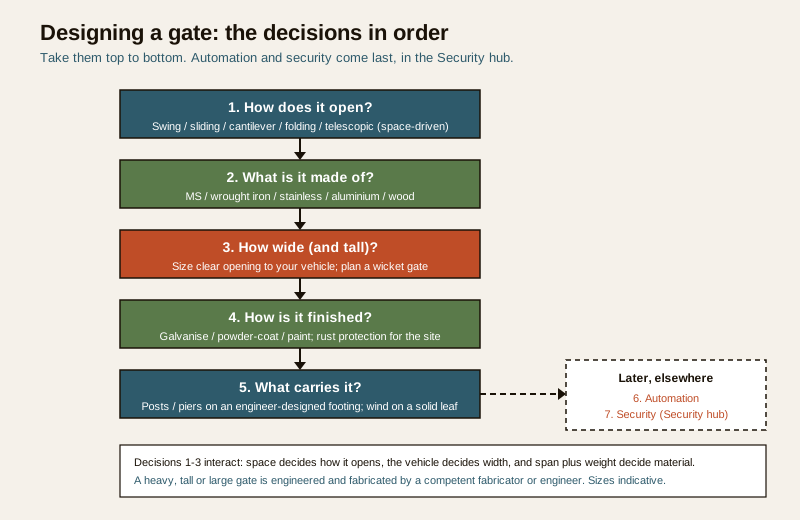
The decisions, in order
Designing a gate is not one choice; it is a short chain of them, and taking them in the right order saves you from the classic mistakes (a beautiful gate too narrow for the car, a heavy leaf on a post that leans within a year, a swing gate that fouls the slope of the driveway). Work top to bottom.
| Decision | Your options | Where to read more |
|---|---|---|
| 1. How does it open? | Swing (single or double leaf), sliding on a track, cantilever (no ground track), folding / bi-fold, telescopic | Swing vs sliding vs cantilever; folding and telescopic |
| 2. What is it made of? | Mild steel (MS), wrought iron, stainless steel, aluminium, wood / wood-and-steel | Gate materials guide |
| 3. How wide (and tall)? | Size the clear opening to your vehicle, turning circle and any future car | Gate size and width; gate width calculator |
| 4. How is it finished? | Galvanising, powder-coat, primer + enamel; rust protection for the coast | Gate finishes and rust prevention |
| 5. What carries it? | Masonry piers or steel posts on an engineer-designed footing | Compound wall foundation |
| 6. Automate it? (later) | Motor, sensors, remotes, safety edges | Motorised gate automation — covered in the Security hub |
| 7. Secure it? (later) | Locks, anti-lift, hardening, access control | Gate security — covered in the Security hub |
The first three decisions interact, which is why order matters. How it opens depends on how much room you have beside or in front of the opening; width depends on your vehicle; and material depends on the span, the weight your posts can carry, and the look you want. Get those three right and the rest is detailing. Decisions 6 and 7 are deliberately last and elsewhere — automation and security are added to a well-built gate, and the deep work lives in the Security hub, not here.
Decision 1 — how the gate opens
The single biggest decision, because it is governed by space and it dictates everything downstream. A gate has to go somewhere when it opens, and where it goes decides the type.
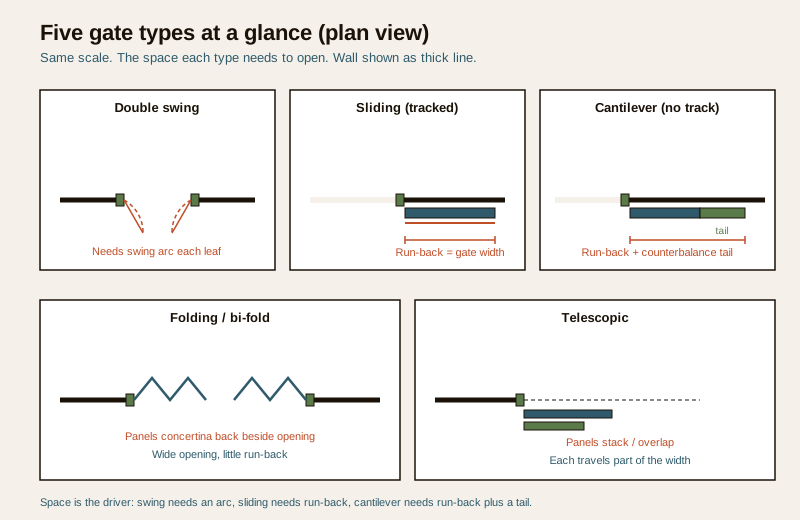
- Swing gates rotate on hinges, single-leaf or double-leaf (two halves meeting in the middle). Simplest, cheapest, most familiar — but each leaf sweeps an arc that must be kept clear, and a swing leaf on a slope fouls the rising ground. Great where you have flat, open room in front of or behind the opening.
- Sliding gates roll sideways on a ground track into a "run-back" alongside the wall — you need a clear length of wall at least as long as the gate to park it. No swing arc, so ideal for short driveways where a car stops close to the gate. The ground track is the thing to keep clean.
- Cantilever gates slide sideways like a sliding gate but hang from rollers on a counterbalanced tail, so there is no ground track to jam with silt, gravel or a flood. They need run-back plus a tail length beyond the opening, and they are heavier engineering — but they are the reliable choice for uneven or dirty ground.
- Folding / bi-fold and telescopic gates are the space-savers: a folding leaf concertinas back on itself, and a telescopic gate splits into panels that stack or overlap so each travels only a fraction of the opening width. Both buy you a wide clear opening where there is not enough run-back for a full sliding gate. The folding and telescopic gates guide covers where each earns its keep.
At a glance — matching type to space
| Gate type | Space it needs | Best for | Relative cost band |
|---|---|---|---|
| Swing (single / double) | A clear swing arc in front of or behind each leaf | Flat sites with open room; the everyday default | Low |
| Sliding (tracked) | A run-back along the wall as long as the gate | Short driveways, cars stopping close; level ground | Low to medium |
| Cantilever (trackless) | Run-back plus a tail beyond the opening | Uneven, dirty or flood-prone ground; no track to jam | Medium to high |
| Folding / bi-fold | Small fold-back beside the opening | Tight sites needing a wide opening; limited run-back | Medium |
| Telescopic | Part run-back (panels stack) | Wide openings with short run-back | Medium to high |
Read cost as a relative band, not a price — actual rates swing with span, material, weight, automation-readiness and your fabricator, so always get local quotes. The full head-to-head, with swing-arc, run-back and tail dimensions drawn out, is in swing vs sliding vs cantilever.
Decision 2 — what the gate is made of
Material sets the weight, the look, the maintenance and the cost. The gate is a fabricated frame with an infill (the pattern between the frame), and both can be different materials. In India the field is:
- Mild steel (MS) — the workhorse. Cheap, strong, welded and fabricated by any local workshop, takes any finish. Its one enemy is rust, which is entirely a finishing problem (see Decision 4). Most Indian compound gates are MS.
- Wrought iron — the decorative, hand-worked look with scrolls and pickets. Handsome and traditional; heavier and pricier than plain MS, and it too must be kept sealed against rust.
- Stainless steel (SS) — corrosion-resistant and low-maintenance with a bright modern look, at a higher cost; often used as an accent or for coastal sites.
- Aluminium — light (kind to the posts and the hinge/motor), rust-free, increasingly used for slat-style modern gates; softer and dearer than steel, so detailing matters.
- Wood, or wood-and-steel — warm and premium; a wooden infill on a steel frame is a common compromise that gives the look without hanging the whole weight on timber. Wood needs its own upkeep against sun and monsoon.
The full comparison — strength, weight, cost band, maintenance and where each fits — is the job of the gate materials guide. The one cross-cutting rule: material choice and weight must match what the posts can carry. A heavy wrought-iron or solid-steel leaf needs stronger posts and footings than a light aluminium slat gate — which is why material and structure are decided together.
Decision 3 — sizing the gate to your vehicle
A gate that does not fit your car is a design failure, however handsome. Size the clear opening — the actual gap you drive through — to your vehicle plus a working margin, and think about the turning geometry, because a car swinging in off a narrow road needs more opening than one approaching straight on.
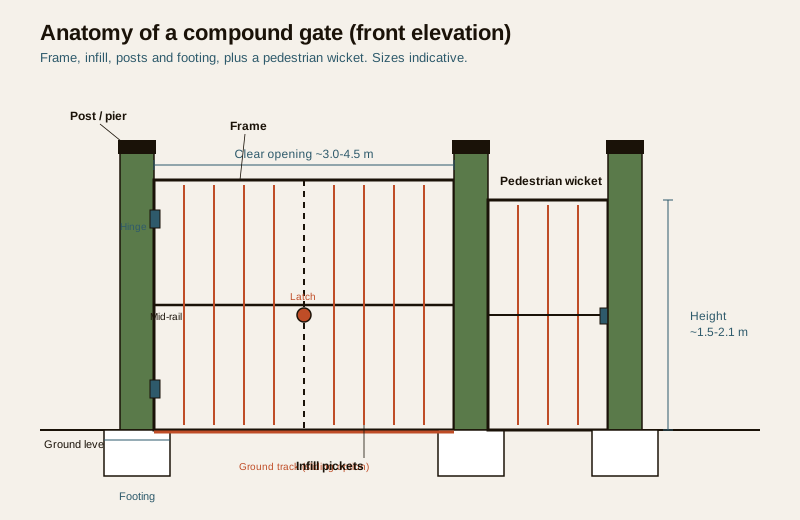
- A single-car opening is commonly around 3.0 to 3.7 m clear; a comfortable two-car or SUV-and-turning opening runs 3.7 to 4.5 m or more. These are indicative — measure your widest vehicle, add mirrors and a margin, and allow for the future car you do not own yet.
- Height is usually 1.5 to 2.1 m for privacy and security, coordinated with the wall height so the gate does not look stunted or tower over the wall.
- How it opens changes the sizing: a double swing splits the span into two leaves (each lighter, each with its own arc); a sliding or cantilever gate is one long leaf that needs run-back equal to the opening.
Get the numbers right early with the gate width calculator, then confirm against your vehicle and driveway. The gate size and width guide works through single vs double, turning circles, and the pedestrian gate beside it.
The pedestrian wicket gate
Do not make people open the big vehicle gate to walk in. A wicket gate — a small pedestrian gate, either a separate leaf set into the wall beside the main gate or a person-sized door built into one leaf of the vehicle gate — is one of the highest-value details on the whole boundary. It saves the main gate's hinges or motor from constant small movements, lets deliveries and family in without swinging the car gate, and is far easier to secure day-to-day. A typical wicket is around 0.9 to 1.1 m wide and full height. Plan it in from the start; retrofitting one is clumsy.
Decision 4 — finish and rust protection
A steel gate lives outdoors in sun, rain and — near the coast — salt air, and rust is the reason gates die young. The finish is not decoration; it is protection, and it is chosen for the site.
- Galvanising (a zinc coating, hot-dip or the components pre-galvanised) is the durable base defence, especially valuable near the coast and for gates you will not repaint often.
- Powder-coating over a properly prepared (and ideally galvanised) surface gives a tough, even, low-maintenance colour finish — the modern default for a clean look.
- Primer plus enamel / PU paint is the traditional, repaintable finish; cheaper up front but it needs periodic recoating, and the discipline of catching rust early at welds and cut edges.
The single most common failure is skipping surface preparation — paint over mill scale or rust flakes off in a year. Coastal and high-humidity sites need the most robust system. The gate finishes and rust prevention guide covers galvanising, powder-coat and paint systems, edge and weld detailing, and a maintenance rhythm.
Decision 5 — the posts, piers and their footing
This is the decision people skip and then regret. A gate is only as steady as what it hangs on. A swing gate concentrates its entire weight and leverage onto the hinge post; every time it opens it tries to lever that post out of the ground. A sliding or cantilever gate loads its guide and end posts. Get the posts wrong and the gate sags, the leaves stop meeting, the latch stops catching, and eventually the post leans.
- Masonry piers (thickened brick or block columns) or steel posts carry the gate; either way they need a proper footing sized to the gate's weight and leverage — deeper and heavier than the general wall foundation because of the concentrated load. See the compound wall foundation guide.
- Wind is a real load. A large solid leaf is a sail: a gate that is fine on a still day can be shoved hard in a squall, and that force goes straight into the posts and hinges. A perforated or slatted infill lets wind through and reduces this; a solid privacy leaf increases it. A big solid gate is engineered for wind, not eyeballed.
- Heavy or large-span gates are fabricator-and-engineer territory. Once a gate is tall, wide, solid or heavy — or automated — its frame section, hinge or roller sizing, counterbalance and post footings should be worked out by a competent fabricator or engineer. This is exactly the case where a drawing beats a photo.
Decision 6 & 7 — automation and security (handed off)
These come last, and they are covered in a different hub — this guide will not rebuild them.
- Automation — a motor, remotes, sensors and safety edges turn any well-built swing, sliding or cantilever gate into an automatic one. That is its own subject (motor sizing to the leaf weight, safety edges, obstruction sensing, backup power) and it lives in motorised gate automation. The one thing to do now, at design time, is build the gate and its posts automation-ready — strong posts, a straight true leaf, and a note to your fabricator.
- Security — making the gate the strong point of the boundary (locks, anti-lift measures, hardening) and access control (intercom, RFID, app) are covered in gate security and the wider Security library. Design a good gate here; secure and automate it there.
How it connects
- Start-here guide under the Compound Walls and Gates hub; it sequences the deep gate guides and hands off automation and security to the Security library.
- How it opens: swing vs sliding vs cantilever and the space-savers in folding and telescopic gates.
- Material, size and finish: gate materials, gate size and width and gate finishes and rust prevention; for big estate and factory gates, farm and industrial gates.
- Structure: the posts and their footing in compound wall foundation.
- Automation and security (elsewhere): motorised gate automation and gate security.
- Size it: the gate width calculator.
Key takeaways
- The gate is the moving, most-touched, most-seen part of the boundary — design it as a sequence of decisions, not from a photo.
- Take the decisions in order: how it opens (space-driven), then material, then size to your vehicle, then finish, then the posts that carry it.
- How it opens is governed by space — swing needs an arc, sliding needs run-back, cantilever needs run-back plus a tail, folding and telescopic save space for wide openings with little run-back.
- Size the clear opening to your vehicle (indicative single ~3.0-3.7 m, double/SUV ~3.7-4.5 m+) and plan a pedestrian wicket gate from the start.
- Finish is protection, not decoration — galvanise / powder-coat / paint chosen for the site, with real surface preparation, especially near the coast.
- Posts and footings carry everything, and wind loads a big solid leaf like a sail — heavy or large gates are engineered and fabricated by a competent fabricator or engineer.
- Automation and security are handed off to the Security hub — build the gate automation-ready, but do not rebuild those subjects here.
References
- IS 2062, Bureau of Indian Standards — hot-rolled steel for general structural purposes (gate frames and members; named generally).
- IS 1161, Bureau of Indian Standards — steel tubes for structural purposes (tubular gate framing and posts; named generally).
- National Building Code of India, NBC (SP 7:2026), Bureau of Indian Standards — general building, wind-load and structural-safety provisions relevant to boundary gates and posts.
- Gate fabricator and hardware / automation manufacturer technical data — leaf weights, hinge and roller ratings, post sizing and finish systems (product-specific; confirm with your supplier).
- Local municipal bye-laws and development-control regulations — gate setback, opening direction and boundary requirements (city-specific; these govern approval).
- Local fabricator and contractor quotations — current steel, fabrication, finishing and installation rates for your specific site.
All sizes, height and width figures, cost bands and material notes here are indicative planning aids only; confirm the clear opening against your own vehicle, the specification and post footings with your fabricator and a competent engineer, and gate setback and opening direction against your local municipal bye-laws. A heavy, tall or large-span gate must be engineered and fabricated by a competent professional for weight and wind. Gate automation and security are covered separately in the Security hub.
Export this guide
Related Guides — Deep-dive reading
Gate Finishes and Rust Prevention in India: Paint, Powder Coat and Galvanising (2026)
A plain, India-grounded guide to keeping a steel gate looking good and not rusting — the protection system in layers (surface prep, primer, topcoat), site enamel and PU paint vs factory powder coating vs hot-dip galvanising compared on durability, cost and best-fit, where gates rust first, coastal and monsoon care, and the maintenance cycle that makes any finish last.
Compound WallsGate Materials in India: MS, Wrought Iron, Steel, Aluminium and Wood (2026)
A plain, India-grounded guide to choosing what your compound gate is made of — mild steel, wrought iron, stainless steel, aluminium and wood or WPC compared on cost band, strength and security, weight, corrosion resistance, look and maintenance, so you pick the material that fits your budget, your coast and your fabricator.
Compound WallsSwing vs Sliding vs Cantilever Gates in India: Which to Choose (2026)
The how-it-opens selection guide for your compound gate — swing on hinges, sliding on a ground track, or cantilever carried on a counterbalance tail with no track — compared on the one thing that actually decides it: the space each one needs beside or in front of your opening, plus slope, width, budget and fit.
Compound WallsRelated Tools — Try Free
Door Paint Calculator
Estimate paint and primer litres and cost to paint your doors by size, number of doors, coats and paint type.
Door CalculatorWindow Hardware Cost Calculator
Estimate window hardware cost — hinges, handles, locks, rollers and multipoint gears.
Window CalculatorWindow Maintenance Cost Calculator
Estimate annual window upkeep by frame material — yearly, per-window and 5-year cost.
Window Calculator