
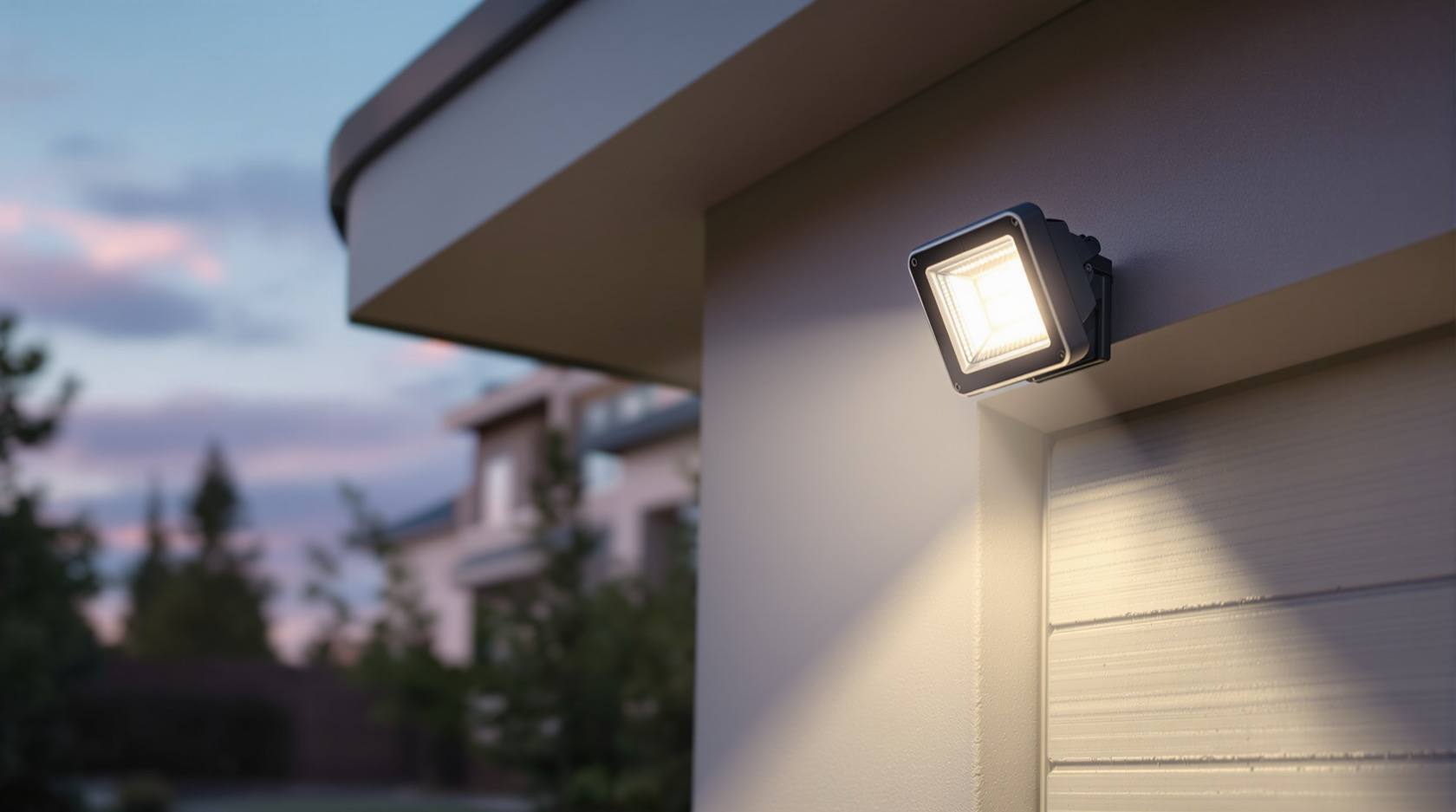
Security Lighting Cost in India (2026): What Fixtures, Sensors and Wiring Really Add Up To
A homeowner's honest, indicative-band guide to what security lighting costs in India — the floodlights, wall-packs, bollards and motion lights, plus the sensors, the hidden wiring and the running electricity — with capex-versus-opex thinking, the mains-versus-solar-versus-motion trade-off, and why over-lighting wastes money and annoys the neighbours.
Security lighting is the strange bargain of home security: the single cheapest deterrent you can buy, and the one whose true cost people most often misjudge. A decent LED floodlight can cost less than a night out. Yet the bill a household actually pays is rarely the sticker on the fitting. It is the wiring buried in the wall to reach that fitting, the sensor that decides when it comes on, the electricity it quietly draws every night for years, and — most expensively of all — the cheap fitting that fails in an Indian monsoon and gets replaced twice while a good one would have lasted.
So the money question is not "what does a security light cost." It is "what does a lit boundary cost me to install and to run, over the years I will own it." Answered that way, lighting is almost always the best value in the whole security budget: it works before anything else does, it makes people uneasy about approaching, and it is what makes your cameras actually see. A camera in the dark is a black rectangle. Light is what turns it into evidence.
This guide gives honest, India-grounded indicative bands — never a precise price — for the fixtures, the sensors, the hidden wiring, the install labour and the running cost, and then does the one thing a fixture catalogue never will: it separates the one-time spend from the ongoing spend, and shows where the smart money goes. It is a companion to the home security cost pillar and sits beside the security cost planning guide; read both to see how lighting fits the whole budget.
Scope and how to read the numbers. These are broad indicative bands to help you budget and read a quote — not price quotes, and not the last word. Prices move a lot with your city, the brand and quality tier, the wattage, the wiring distance and the year. Get at least three written, itemised quotes before you commit, and make each one separate the hardware from the labour from the wiring. Everything here is capex (one-time hardware and install) versus opex (the electricity and the replacements over years) — ignore the opex and you will misjudge which option is cheaper. GST applies to both equipment and installation services and is extra on top of these bands. Where lighting supports life-safety egress (a lit staircase or exit path), never let cost-cutting leave an escape route dark.
Where the money actually goes
A security-lighting job is four cost lines, not one. People price the first and forget the other three — which is exactly why the final bill surprises them. The pattern is the same one that catches people with CCTV: the box on the shelf is the small part; getting power and control to it is the real cost.
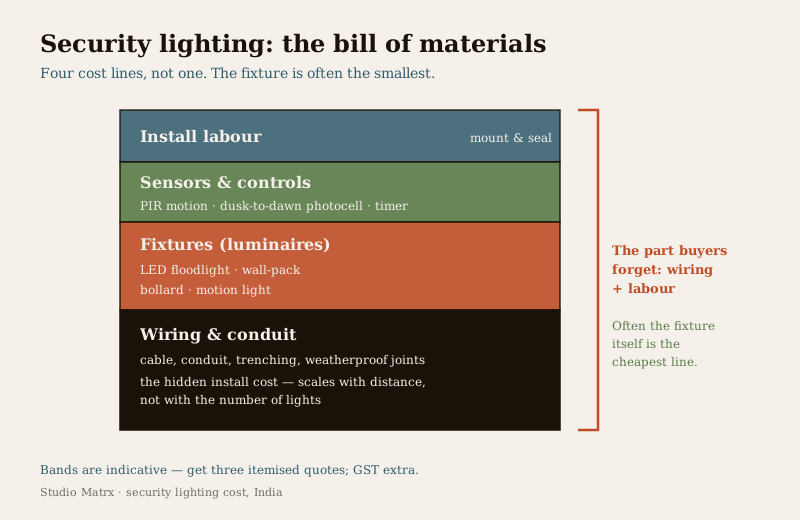
The luminaires (the fixtures). This is what you picture: the LED floodlight over the gate, the wall-pack on the side wall, the bollards along the path, the motion-sensor light by the back door. Per fitting, LED security lights are genuinely affordable, and quality varies enormously — a sealed, properly heat-sinked, IP65-rated outdoor unit from a known brand costs several times a bare marketplace floodlight, and lasts many times longer in Indian heat, dust and rain. This is the line where cheap is a false economy, and we will come back to it.
The sensors and controls. A PIR motion sensor, a dusk-to-dawn photocell, or a timer. Many fittings have these built in for a small premium; standalone sensors and smart controllers cost a little more. This is a small line on the bill and, as you will see, the one that pays you back fastest by slashing the running cost.
The wiring and conduit. The quiet giant. Running mains cable in conduit from your board to each fixture — through walls, along the compound wall, underground to a bollard, weatherproofed at every junction — is skilled labour and material, and it scales with distance and difficulty far more than with the number of lights. Reaching a far gate or a rear boundary can cost more than the fittings it powers. This is precisely why solar becomes interesting: it deletes this line.
The installation labour. Mounting, aiming, weatherproofing, connecting to the board, testing. On a straightforward wall-pack it is modest; on a pole-mounted floodlight or a buried bollard run it is more.
| Cost line | What it covers | Relative weight | Note |
|---|---|---|---|
| Fixtures | Floodlights, wall-packs, bollards, motion lights | Low to moderate per unit | Quality tier changes lifespan sharply |
| Sensors / controls | PIR motion, photocell, timer, smart controller | Low | Cheapest line, biggest opex saving |
| Wiring / conduit | Cable, conduit, trenching, weatherproof joints | Often the largest | Scales with distance, not light count |
| Install labour | Mounting, aiming, sealing, connection, testing | Moderate | Higher for poles and buried runs |
Indicative bands — per fixture, and for a typical home
With the honest caveats above firmly in mind, here are wide ballpark bands to help you frame a budget and sanity-check a quote. Treat every figure as "roughly, verify locally," and remember GST is extra.
Per fixture (hardware only, before wiring and install):
- A basic LED motion-sensor light for a doorway or side passage: roughly a few hundred to around two thousand rupees, depending on brightness and build quality.
- A mains LED floodlight (say 20–50W of LED, throwing usefully across a yard): roughly the low hundreds for a throwaway unit to a few thousand rupees for a sealed, branded, IP65 outdoor fitting worth owning.
- A wall-pack (the shielded fitting that washes a wall face downward): broadly similar to a mid floodlight, a bit more for better optics and glare control.
- A bollard or path light: roughly one to several thousand rupees each, more for solid metal units built to survive being kicked and rained on.
- A standalone solar security light (panel, battery, LED and sensor in one): often roughly one to a few thousand rupees for a garden-grade unit, and meaningfully more for a serious, high-output solar floodlight with a separate panel and a battery that lasts.
For a typical home boundary (fixtures plus sensors plus wiring plus install, all in):
- A modest home — a few motion lights at the doors and one or two floodlights on the approach — is usually a small, high-value project: broadly a few thousand up to the low tens of thousands of rupees all-in, driven mostly by how far the wiring has to travel.
- A larger house or bungalow wanting a properly lit boundary, gate, yard and paths — more fixtures, longer runs, some pole mounts — moves into the mid tens of thousands and can climb from there with quality and coverage.
- An apartment owner is usually lighting only a private balcony, terrace or entry, and common-area lighting is the society's cost — so the personal spend is small, mostly a motion light or two.
The single biggest reason two quotes for "the same" lighting differ is not the fittings. It is the wiring distance and difficulty and the quality tier of the fixtures. Ask every quote to itemise both.
What moves you up or down the band
- Number of fixtures and the area to cover. More boundary, more paths, more dark corners means more fittings and, worse, more cable. Coverage area is the biggest single driver.
- Mains-wired versus solar versus battery. Mains means wiring cost now and electricity forever. Solar means a higher fixture price but almost no wiring and almost no running cost. Battery-only is cheapest to buy and a nuisance to keep charged.
- Plain versus motion-activated. A light that burns all night costs more to run than one that flicks on only when something moves — and, for a boundary, the motion light is also the better deterrent because the sudden change is what startles.
- Lumen output and quality. Brighter, better-sealed, better-driven fittings cost more up front and far less over their life, because they survive the weather and hold their output.
Capex versus opex — the part buyers skip
Here is the honest arithmetic that a fixture price tag hides. Security lighting has two costs, and the cheaper-to-buy option is often the dearer to own.
Capex is the one-time spend: fixtures plus sensors plus wiring plus install. You pay it once.
Opex is what the lighting costs you every year afterwards, and it has two parts people forget:
1. Electricity. With LED this is genuinely modest — LED sips power compared with the old halogen floodlights — but it is real, and it compounds over the years a light burns every night. A cluster of always-on floodlights left blazing dusk to dawn adds a small but steady line to the bill, year after year. Motion and dusk-to-dawn sensors are the single biggest lever here: a light that runs for the few minutes something is actually there, instead of all twelve dark hours, can cut its running electricity by a large fraction. The sensor is the cheapest thing on the whole job and it pays for itself in saved units, quietly, forever.
2. Replacement. This is where cheap fittings punish you. A bottom-of-the-marketplace floodlight that fails after a monsoon or two, and gets bought and mounted again, and again, quietly costs more than one good sealed fitting that runs for years — and it leaves you dark in between, which is the whole point of the light gone. Buying quality once is not a splurge; it is the cheaper path.
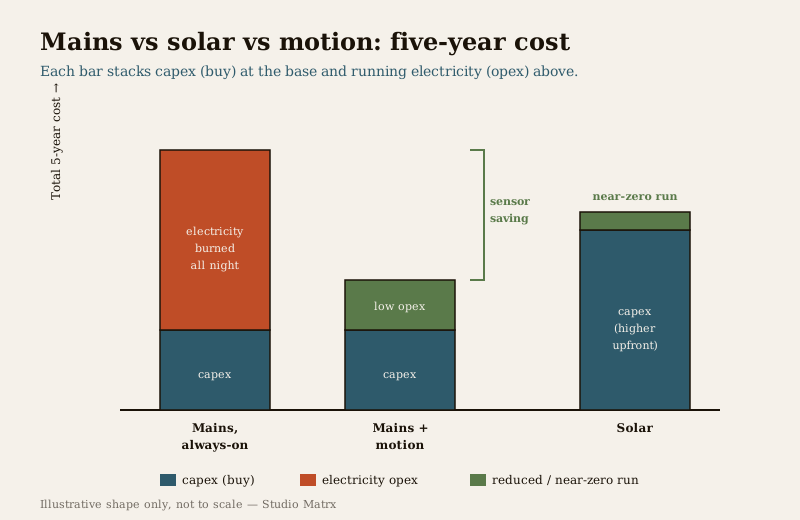
Solar flips the whole equation. A good solar security light costs more to buy than its mains equivalent, but it deletes the wiring line entirely and drops the electricity opex to near zero. Over five years, a solar fitting on a far boundary — where the mains wiring would have been the biggest cost of all — is very often the cheaper total, not just the greener one. Its real ongoing cost is the battery, which wears out and needs replacing every few years, and cheap solar units with weak panels and small batteries that never quite charge in a cloudy monsoon week. For where solar wins and where it disappoints, and how to buy it well, see the wider planning in the security cost planning guide.
| Buy (capex) | Wiring | Run (opex) | Best where | |
|---|---|---|---|---|
| Mains, always-on | Low–moderate | Yes, can be large | Modest but constant | Near the board, need for steady light |
| Mains, motion/dusk | Low–moderate | Yes | Much lower (sensor cuts it) | Boundaries, most homes |
| Solar | Higher per fitting | None | Near-zero | Far gates, rear boundary, no easy power |
| Battery only | Lowest | None | Recharging effort | Temporary, low-priority spots |
Lighting is the best value — if you do not over-light
Now the value-honest heart of it. Good security lighting is one of the cheapest, highest-return things you can spend a security rupee on. It deters before anything else, it costs little to run, and it is the multiplier that makes every camera you own actually work — which is why it is worth pairing your lighting decision with your CCTV installation cost decision and your perimeter security cost decision rather than treating it as an afterthought. A well-lit boundary makes a modest camera useful; an unlit one wastes an expensive camera.
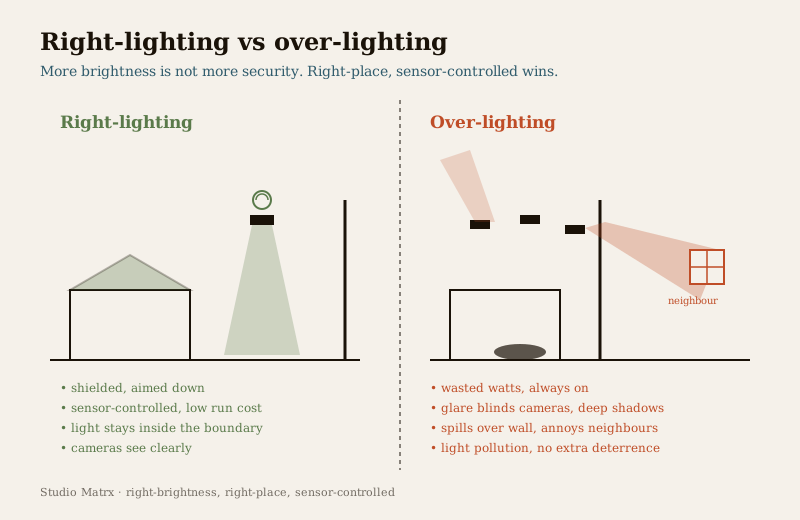
But there is an equal and opposite mistake, and it is the one people who take security seriously fall into: over-lighting. Flooding your plot with more, brighter, always-on light is not more security. It is:
- Wasted money — every extra watt burning all night is opex you did not need, and glare-bombing the whole plot buys no more deterrence than lighting the right places well.
- Worse seeing, not better. Harsh glare blinds the very cameras it is meant to help and creates deep black shadows next to the bright patches — the exact places an intruder stands. Even, controlled light beats brute brightness.
- A neighbour and pollution problem. Light spilling over the wall into a neighbour's bedroom window, or a floodlight aimed flat across the street, is a genuine nuisance, sours the relationship you actually depend on for real-world watchfulness, and is needless light pollution.
The right principle is right-brightness, right-place, sensor-controlled: enough light where the approach and the entries are, aimed downward and shielded so it lights your ground and not the sky or the neighbour, and controlled by motion or dusk sensors so it works when needed and rests otherwise. That is cheaper to run, kinder to keep, and a better deterrent — the sudden light that snaps on as someone approaches unsettles far more than a wall of light that has been on, ignored, since dusk.
How lighting pairs with the rest of the system
Lighting rarely stands alone, and budgeting it alone is a mistake. It is the enabling layer under the two things it makes work:
- With CCTV. Cameras are only as good as the light they have. Money spent lighting the approach well is often more cost-effective than upgrading to a fancier low-light camera; do the lighting sum and the camera sum together. See the CCTV installation cost guide.
- With the perimeter. A lit boundary is a deterrent boundary, and lighting is a standard line in a perimeter budget alongside the wall, the gate and any detection. If you are also weighing harder perimeter measures, the perimeter security cost and electric fence cost guides put lighting in that context — and lighting is almost always the first, cheapest thing to get right before spending on the heavier options.
For where the whole lighting layer sits in the device library, browse the security lighting hub; for how every cost in the system compares, the security costs sub-hub collects the money guides; and the main security hub ties the layers together.
How to budget it well — a short checklist
- Map the dark first, then buy fittings. Walk your plot after dark. Light the entries, the gate and the approach paths — not everything. Right-place beats bright.
- Price the wiring, not just the fittings. Ask each quote to itemise cable and conduit separately. If a far light's wiring costs more than a solar unit, go solar there.
- Put a sensor on nearly everything. Motion or dusk-to-dawn control is the cheapest line and the biggest running-cost saving. Insist on it.
- Buy quality where it lives outdoors. For fittings exposed to sun, dust and monsoon, pay for the sealed, IP65, branded unit. The cheap one is dearer once you have replaced it twice.
- Aim and shield. Every fixture pointed down at your ground, hooded so it does not spill over the wall. Cheaper to run, no neighbour quarrel.
- Get three itemised quotes. Hardware, wiring and labour on separate lines, GST shown. The cheapest total often hides the thinnest fittings and the shortest-lived job.
Key takeaways
- Per fitting, security lighting is cheap — but the wiring and the running cost decide the real bill. Budget the whole lit boundary over years, not the sticker on the floodlight.
- Four cost lines, not one: fixtures, sensors, wiring/conduit and install. Wiring is usually the hidden giant; it scales with distance, not with the number of lights.
- Separate capex from opex. LED electricity is modest but real over years; motion and dusk sensors — the cheapest line on the job — slash it; cheap fittings that fail and get replaced are a false economy.
- Solar trades higher upfront for near-zero running and deletes the wiring line, which makes it the cheaper total on far boundaries where mains cable would cost the most.
- Lighting is the best-value deterrent and it makes your CCTV work — but do not over-light. Right-brightness, right-place, sensor-controlled beats a glaring, wasteful, neighbour-annoying wall of light.
- Get at least three itemised quotes, with hardware, wiring and labour separated and GST shown, before you commit.
Where to go next
- The home security cost pillar and the security cost planning guide — where lighting fits the whole budget.
- CCTV installation cost and perimeter security cost — the layers lighting makes work; budget them together.
- Electric fence cost — the heavier perimeter option lighting should come before, not after.
- The security lighting hub, the security costs sub-hub and the main security hub.
References
- National Building Code of India (SP 7), Bureau of Indian Standards — lighting of escape routes, staircases and exit paths as a life-safety provision; where security lighting overlaps egress lighting it must not be compromised for cost. Verify the current edition (SP 7:2026) via the BIS catalogue: https://www.services.bis.gov.in/
- Goods and Services Tax — GST applies to lighting equipment and to installation and electrical-work services; treat every indicative band in this guide as exclusive of GST, which is extra.
- Bureau of Indian Standards / ISI marking — prefer BIS/ISI-marked, IP-rated outdoor fittings for weather survival and safety; verify a product's marking rather than trusting a listing claim.
- Crime Prevention Through Environmental Design (CPTED) — the design approach behind lighting the approach and entries, aiming light downward, avoiding glare and shadow, and using light as a deterrent and a natural-surveillance aid rather than brute floodlighting.
This is an educational budgeting overview for homeowners, not a price quote, an electrical-design document or legal advice. Indicative bands move with time, place, brand, wattage and wiring distance; get at least three written, itemised quotes and engage a licensed electrician for any mains work. Where lighting serves an escape route, life-safety takes priority over cost. Verify any standard's current status via the BIS catalogue before relying on it.
Export this guide
Related Guides — Deep-dive reading
Wireless CCTV Cost in India (2026): Cheap to Buy, Read the Running Costs First
What Wi-Fi and wire-free CCTV really costs an Indian home — a low, DIY-friendly install price that hides a subscription, battery and reliability bill. An honest, capex-versus-opex look at where the money actually goes over three to five years, with indicative bands and the drivers that move them.
SecurityHow to Choose Security Lighting in India (2026): The Right Light, Not More Light
A homeowner's guide to selecting outdoor security lighting that actually deters and lets cameras work — picking the right fixture type, the right brightness and colour, the right control (motion, dusk-to-dawn or timer) and the right placement, without over-lighting, glaring your camera or annoying your neighbours.
SecurityCompound Wall Lighting in India: Wall Lights, Bollards and Solar (2026)
A plain, India-grounded planning guide to lighting your compound wall and gate — entrance and pillar-top lights so guests find the door, wall-wash and grazing to show off texture, path and bollard lights, step lighting, and no-wiring solar fixtures — with warm-vs-cool colour, glare courtesy to neighbours, IP ratings for rain, and honest hand-offs to a licensed electrician and the Security hub.
Compound WallsRelated Tools — Try Free
CCTV Camera Coverage & Count Calculator
Estimate how many CCTV cameras you need, the NVR channels, storage in TB for your retention period, and an indicative all-in cost with GST.
CCTV CalculatorCross-Ventilation Analyzer
Estimate airflow and air changes per hour (ACH) from room size, window areas, layout, and local wind — with NBC 2016 Part 8 compliance check.
Ventilation CalculatorApartment Video Door System Planner
Enter flats, entrances, floors and guard desk for a first-pass building intercom plan — door stations, indoor monitors, guard station, the right architecture and an indicative cost band.
Building Planner