
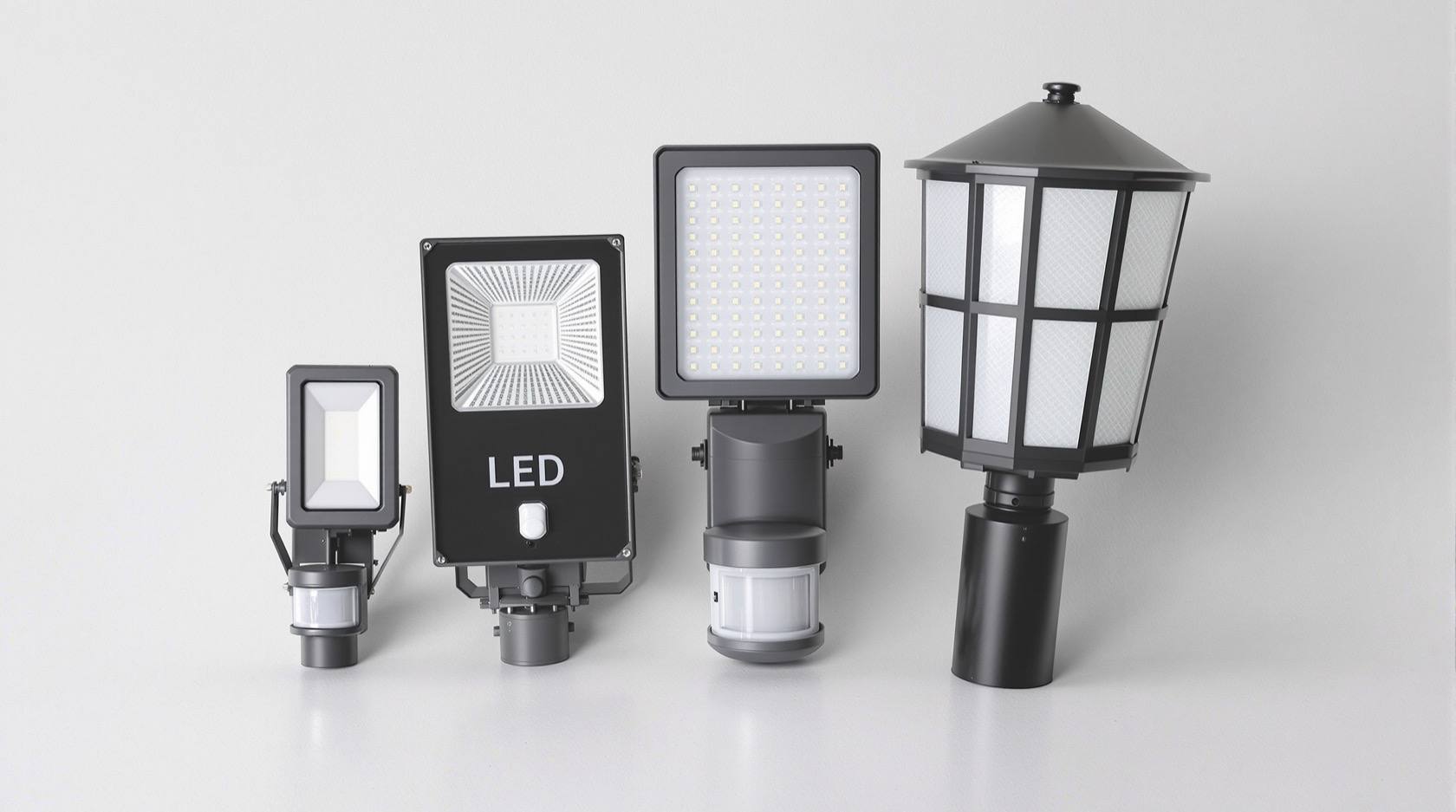
How to Choose Security Lighting in India (2026): The Right Light, Not More Light
A homeowner's guide to selecting outdoor security lighting that actually deters and lets cameras work — picking the right fixture type, the right brightness and colour, the right control (motion, dusk-to-dawn or timer) and the right placement, without over-lighting, glaring your camera or annoying your neighbours.
Of everything you can spend on home security, outdoor lighting gives you the most deterrence per rupee. A prowler wants darkness, cover and the confidence of not being seen; light removes all three. It makes your home look occupied and cared-for, it lets a neighbour or a camera actually see what is happening, and it turns a dark corner where someone could work unseen into an exposed, unwelcoming spot. It is cheap, it is passive, and it works around the clock without anyone watching.
But here is the honest part that most shopfronts will not tell you: more light is not more security. A single harsh, over-bright floodlight blazing into the street does far less good than a few modest, well-placed, well-shielded lights. Over-lighting creates glare that actually helps an intruder — deep black shadows right beside a blinding source, where the eye and the camera both go blind. It blows out your own CCTV footage. It spills into your neighbour's bedroom and into the night sky as waste. Choosing security lighting well is not about buying the brightest fixture; it is about the right amount of light, in the right colour, in the right place, controlled the right way.
This guide walks you through those decisions the way a buyer should think about them — fixture type, brightness, colour, control, power and weatherproofing — so you can specify what you actually need for your gate, driveway, path and dark corners, and brief an electrician to install it safely.
Scope and how to use this. This is a selection guide for a homeowner, not an installation manual and not a price list. Fixed outdoor wiring is mains work — specify what you want here, then hire a licensed electrician to install it to the wiring rules; do not run permanent outdoor circuits yourself. For the money — what fixtures, controls and installation actually cost — see the security lighting cost guide; this guide is about choosing well, not the numbers. Lighting is one layer of a home's security, so fit it into the whole picture via the home security system pillar.
Why lighting is a deterrent — and where it is not
Good lighting deters because it denies concealment. A well-lit approach forces anyone to be seen — by you, by neighbours, by a passing patrol, by a camera. It also signals a home that is occupied and looked-after, which most opportunists avoid. And, critically, it is what makes your cameras useful: a camera can only record what it can see, and most residential incidents happen after dark.
Be clear-eyed about the limits, though. Lighting alone stops nobody who is determined; it is a deterrent and an enabler, not a barrier. A blazing light with no one and no camera watching can even give false reassurance. Lighting earns its keep as part of a layered system — a lit perimeter that a camera watches and a lock that holds. Think of it as the layer that makes every other layer work better, not as a standalone defence.
Decision one: fixture type — match the fixture to the spot
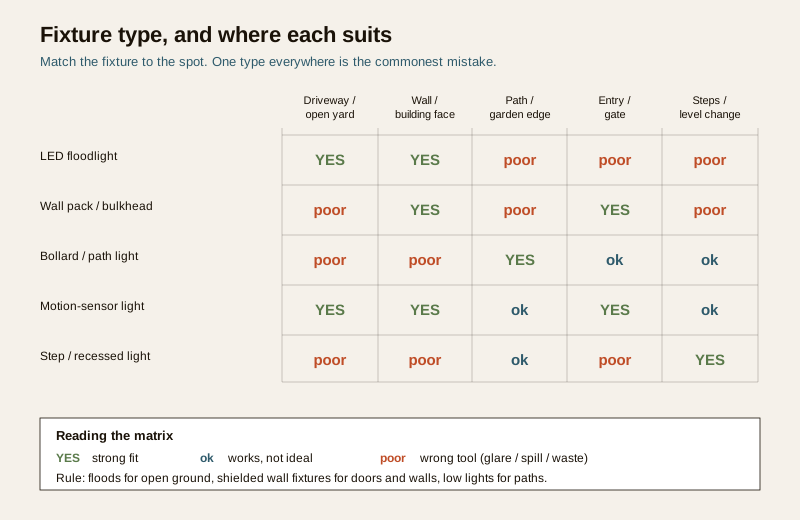
There is no single best security light. Different jobs want different fixtures. Buying one type for the whole house is the commonest mistake.
| Fixture | What it does | Where it suits |
|---|---|---|
| LED floodlight | A broad, wide-angle wash of light over a large area | Driveway, open yard, the blank wall of a building, a large approach |
| Wall pack / bulkhead | A shielded fixture mounted on a wall, throwing light down and out | Entry doors, gates, corridors between compound wall and house, service alleys |
| Bollard / path light | A low fixture casting a pool of light at ground level | Garden paths, driveway edges, boundary walkways — marking a route, not flooding it |
| Step / recessed light | A small, downward light at a level change | Stairs, thresholds, ramps — safety as much as security |
| Motion-sensor light | Any of the above, triggered by a PIR sensor | Side gates, back doors, dark corners — the classic surprise deterrent |
The logic is simple: use a flood for a broad area, a shielded wall fixture for a wall or door, and low path lights for a walkway. Do not aim a 30-watt floodlight down a two-metre path — it will glare and spill; a couple of bollards do the job better and kinder. Reserve the big floods for the driveway and the open yard where you genuinely need to cover ground.
Decision two: brightness — lumens, not watts, and enough is enough
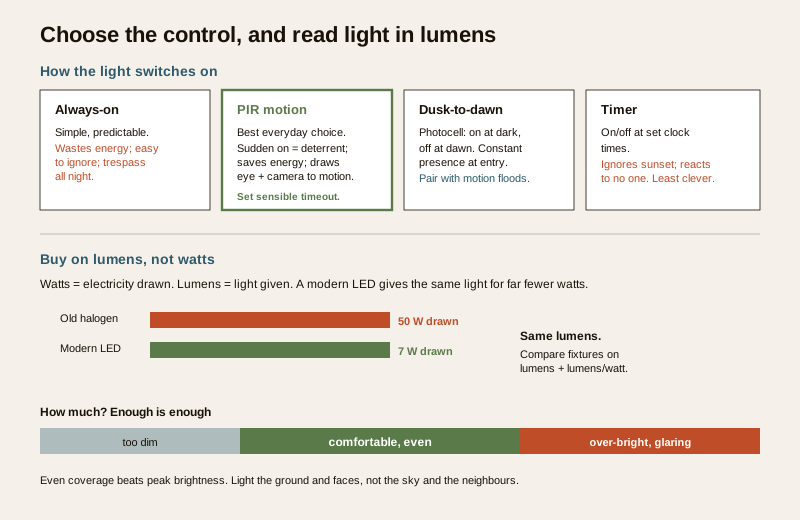
The single most useful thing to learn as a buyer is that brightness is measured in lumens, not watts. Watts tell you how much electricity a fixture draws; lumens tell you how much light it actually gives. With old halogen lamps the two roughly tracked, so people still shop by wattage — but a modern LED gives the same light for a fraction of the watts, so a "50-watt equivalent" LED might draw only 6 to 8 watts. Compare fixtures on lumens (and on efficacy, lumens per watt), and treat a headline wattage as nearly meaningless.
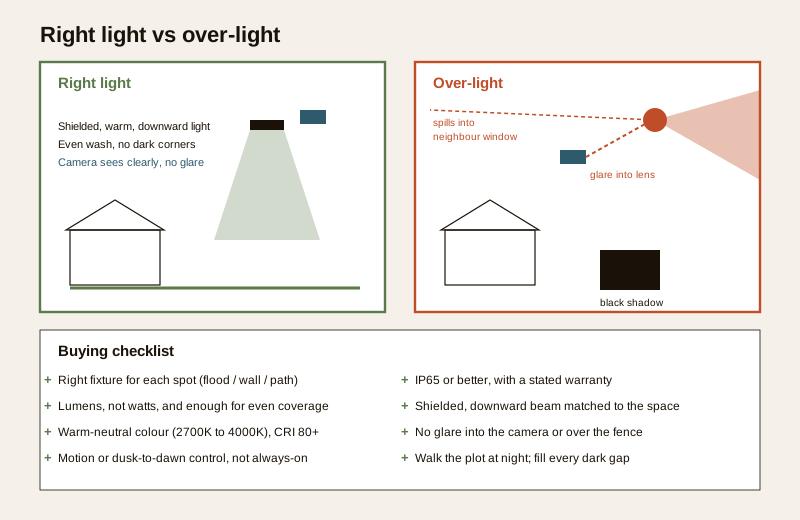
The harder discipline is deciding how many lumens you actually want, because the instinct is always "brighter." Resist it. The goal is even, comfortable light that lets you and your camera see faces and movement — not a floodlit stadium. A modest wash that reveals the whole approach beats a searing beam that lights one patch and blinds you to the rest. Over-lighting is a real fault, not a virtue: it creates glare, hard shadows and waste, and it is the leading cause of the dark hiding spot right next to the bright light.
Two rules of thumb serve a homeowner well. First, even coverage beats peak brightness — a few moderate fixtures spread out give better, more usable light than one giant one. Second, light the ground and the faces, not the sky and the neighbours — if you can see the bare bright lamp from the street or from next door's window, it is aimed wrong or unshielded.
Decision three: colour temperature and CRI — kinder and clearer
Two colour specs quietly decide how useful and how neighbourly your lighting is.
Colour temperature, measured in kelvin, is how warm or cold the light looks. Very cold, blue-white light (high kelvin) feels harsh, glares more, scatters into the sky and is unfriendly to neighbours and to sleep. A warm-to-neutral white — roughly 2700K to 4000K — is the sweet spot for a home: it renders faces and colours naturally, glares less, and is far kinder to the people living around you. Save the icy blue-white for a car park; a home wants warm-neutral.
CRI (colour rendering index) is how faithfully a light shows true colours, on a scale to 100. It matters more than people expect for security: under a poor, low-CRI lamp, a red car looks grey and a person's clothing colour is unreadable — exactly the details you or the police would want from footage. Choose a decent CRI (look for 80 or above) so that what your eye and your camera see matches reality.
Warm-neutral colour and good rendering cost nothing extra to specify and make the light both more useful for recognition and less of an imposition on the street.
Decision four: control — this is where deterrence lives
How the light switches on matters as much as the light itself, and it is where a smart buyer saves energy and gains deterrence at once. There are four common controls:
- Always-on (dusk-illuminated by hand or left on). Simple, predictable, good for a permanently-used entry. But it wastes energy, invites light trespass all night, and a light that is always on is easy to ignore — nothing changes when someone approaches.
- PIR motion sensor. The light stays off, then snaps on when someone enters its zone. This is the best everyday choice for most homes: the sudden change is itself a deterrent (it says "you have been noticed"), it saves energy, and it draws your eye and your camera to exactly the moment something moves. Set a sensible sensitivity and timeout so pets and passing traffic do not trip it constantly.
- Dusk-to-dawn photocell. A light sensor turns the fixture on at dark and off at dawn automatically — no timer to reset, no switch to forget. Good for a low-level entry or path light you want lit all night without thinking about it. Pair a low, warm photocell light for constant presence with motion floods for the alerting punch.
- Timer. On and off at set clock times. Useful for a predictable schedule, but it does not track the changing sunset and does not react to anyone — least clever of the four for security on its own.
The best homes usually mix controls: a soft dusk-to-dawn light for constant, welcoming presence at the entry, plus motion-triggered floods at the driveway, side gate and dark corners that punch on when something moves. That combination gives you presence, deterrence and low running cost together.
Decision five: power source — mains, solar or battery
- Mains-wired is the reliable default for anything you depend on: consistent brightness, no batteries to fade, unaffected by a cloudy week. It needs a licensed electrician and proper outdoor wiring, and that is the right way to do a fixed installation.
- Solar lights have improved a lot and are genuinely useful where running a cable is hard — a far boundary corner, a garden wall, a spot with no nearby circuit. The honest trade-offs: output and run-time depend on the panel getting real daytime sun (a shaded or monsoon-clouded panel underperforms), the battery degrades over a few years and is the part that fails, and cheap units are often much dimmer than their claims. Good for supplementary and hard-to-wire spots; not what you would hang your main driveway flood on.
- Battery / rechargeable units suit temporary or renter situations, but the batteries need tending and can die at the wrong moment. Fine as a stopgap, not a foundation.
For anything security-critical, prefer mains; use solar to reach the awkward corners a cable will not.
Decision six: weatherproofing and beam — the specs that decide survival
Two more specs separate a fixture that lasts from one that fails in the first monsoon.
IP rating (ingress protection) tells you how well the fixture is sealed against dust and water, as two digits — the first for solids, the second for water. For anything outdoors and exposed to rain, look for at least IP65; for a spot that gets driven rain or sits near the ground, higher still. A fixture with no stated IP rating, or a low one, will let water in, corrode and fail — this is the commonest reason a cheap outdoor light dies within a year. Treat a missing IP rating as a red flag.
Beam angle and coverage decide whether the light lands where you need it. A wide beam floods a broad area evenly (good for a yard); a narrower beam throws further down a driveway. Match the beam to the shape of the space, and always prefer a shielded fixture that directs light down onto the ground rather than out into eyes — full-cutoff or hooded fittings light what matters and spill far less.
Lighting and CCTV — make them work together
If you run cameras, your lighting choices should be made with the camera in mind, because bad lighting ruins good footage.
- Even light, no hot-spots. A camera's exposure adjusts to the brightest thing it sees. A single glaring light makes the camera stop down, plunging everything else into black. Aim for even illumination across the scene so the camera can hold detail everywhere.
- Never point a light into the lens. A fixture aimed back toward the camera flares the image and blinds it — the classic self-inflicted blind spot. Light the scene from beside or above the camera's view, not into it.
- Kill the dark hiding spots. Walk your plot at night and look for the black gaps between lights — the side return, the spot behind a pillar, the far corner. Those are exactly where someone would work unseen and where your camera sees nothing. Fill them with a modest motion light rather than blasting the whole yard brighter.
- Warm-neutral, decent-CRI light helps a camera resolve faces and colours; harsh blue-white and low CRI make footage that cannot identify anyone.
For choosing the cameras this lighting serves, see how to choose a CCTV camera. Good lighting and good cameras are a pair; neither does its job well without the other.
Match it to your situation
- Entry and front door. A shielded wall fixture or bulkhead at a warm-neutral colour, ideally on a dusk-to-dawn photocell so it is always welcoming and always sees a visitor's face. Add a doorbell-camera view if you have one.
- Driveway and gate. A wide LED floodlight on a motion sensor covers the ground where a vehicle and a person arrive; a low light for constant presence helps. Aim it down the drive, not out at the street.
- Perimeter and boundary. Even, low-glare light along the wall so both the eye and the camera can see the line, with motion floods at the vulnerable corners. This is the boundary layer of the wider security lighting picture, and its costs sit in the perimeter security cost guide.
- Dark corners, side returns and back doors. The classic job for a motion-sensor light — off until something moves, then a sudden, attention-grabbing wash exactly where an intruder hoped for cover.
- Paths and steps. Low bollards and step lights for safe footing and a marked route — security and safety together, without flooding.
Red flags when buying
Watch for these. A quote or a product that shows these signs is a false economy — cheap to buy, costly to live with.
- No IP rating, or a low one, on an outdoor fixture — it will let water in and fail in a season.
- Sold on watts, not lumens — a vendor talking only wattage is either behind the times or hiding a weak output.
- Harsh blue-white light for a home — glares, scatters, annoys neighbours and renders colour poorly.
- A single over-bright floodlight offered as the whole solution — guarantees glare, hard shadows and a dark spot right beside it.
- Unshielded fixtures that throw light sideways and up — light trespass and sky-glow, and light wasted where it does nothing.
- Flimsy plastic housings and no warranty — the fitting cracks, yellows and lets water in; a real fixture states its IP rating and its warranty.
- A DIY mains-wiring plan — fixed outdoor circuits are an electrician's job; a floating "we'll just tap a wire" quote is a safety red flag.
Buying checklist
- Right fixture for each spot — floods for open ground, shielded wall fixtures for doors and walls, low lights for paths; not one type everywhere.
- Compare on lumens, not watts — and choose enough for even coverage, not the brightest.
- Warm-to-neutral colour (about 2700K to 4000K) and a decent CRI (80 or above) — kinder and clearer.
- Sensor-controlled — motion for most spots, dusk-to-dawn for constant presence; mix the two.
- IP65 or better for anything exposed, with a stated warranty.
- Shielded, downward beam matched to the space — no glare into eyes, into the camera, or over the fence.
- No dark hiding spots — walk the plot at night and fill the black gaps.
- Mains for the important lights, solar only for hard-to-wire corners — and a licensed electrician for the fixed wiring.
Key takeaways
- Lighting is one of the cheapest, highest-value deterrents you can buy — it denies concealment and makes every other layer, especially cameras, work.
- More light is not better. The right amount, colour, place and control beats raw brightness; over-lighting causes glare, dark shadows, waste and light trespass.
- Buy on lumens, not watts; choose warm-neutral colour and good CRI; prefer motion or photocell control — deterrence and low running cost together.
- IP65-or-better and a shielded downward beam decide whether a fixture survives and whether it glares.
- Light with the camera in mind — even light, nothing pointed into the lens, no dark corners.
- Match fixtures to the spot and hire a licensed electrician for the fixed wiring; defer the numbers to the cost guide.
Where to go next
- Security lighting cost guide — what fixtures, controls and installation actually cost.
- How to choose a CCTV camera — the cameras this lighting is designed to serve.
- How to choose a home security system — the whole picture this layer fits into.
- The security lighting hub and the perimeter security cost guide — lighting the boundary and what it costs.
- The security buying guides hub for the rest of the "how to choose" series.
References
- Ingress Protection (IP) ratings, IEC 60529 as adopted in India — the two-digit rating for a fixture's sealing against dust and water; specify at least IP65 for exposed outdoor luminaires. Verify the current standard's status via the BIS catalogue: https://www.services.bis.gov.in/
- Bureau of Indian Standards, luminaire and LED performance standards — confirm a fixture carries relevant BIS/ISI marking and states lumen output, colour temperature (kelvin), CRI and IP rating: https://www.services.bis.gov.in/
- Crime Prevention Through Environmental Design (CPTED) — the design approach behind lighting for natural surveillance, denial of concealment and avoidance of glare and dark shadow.
This is an educational selection guide for homeowners, not legal advice, an installation manual or a price list. Fixed outdoor lighting is mains electrical work — specify what you need and engage a licensed electrician to install it to the wiring rules; verify any standard's current status via the BIS catalogue, and see the cost guide for figures.
Export this guide
Related Guides — Deep-dive reading
Security Lighting Cost in India (2026): What Fixtures, Sensors and Wiring Really Add Up To
A homeowner's honest, indicative-band guide to what security lighting costs in India — the floodlights, wall-packs, bollards and motion lights, plus the sensors, the hidden wiring and the running electricity — with capex-versus-opex thinking, the mains-versus-solar-versus-motion trade-off, and why over-lighting wastes money and annoys the neighbours.
SecurityHow to Choose a CCTV Camera (2026): The Homeowner's Decision Guide for India
Cut through the spec-sheet noise and choose the right CCTV camera for each spot around an Indian home. What actually matters — sensor and low-light performance, lens and field of view, form factor, IP and IK ratings, honest smart features — and the marketing claims to ignore.
SecuritySecurity Lighting in India (2026): Lighting the Boundary Without Dazzling the Camera or the Neighbour
How to use light as a security layer that deters intruders and lets your cameras see, done well with uniform shielded downlight, no glare, no neighbour trespass and a power-cut backup.
SecurityRelated Tools — Try Free
CCTV Camera Coverage & Count Calculator
Estimate how many CCTV cameras you need, the NVR channels, storage in TB for your retention period, and an indicative all-in cost with GST.
CCTV CalculatorCross-Ventilation Analyzer
Estimate airflow and air changes per hour (ACH) from room size, window areas, layout, and local wind — with NBC 2016 Part 8 compliance check.
Ventilation CalculatorCircadian Light Meter
Patient-centric circadian lighting visualizer for Indian healthcare design — time-of-day × intensity → CCT, melanopic lux (EML / mEDI), melatonin suppression, and an alertness curve. Calibrated against WELL v2 L03 Circadian Lighting Design, CIE S 026:2018, Brainard 2001, and Lucas et al. 2014.
Circadian Tool