
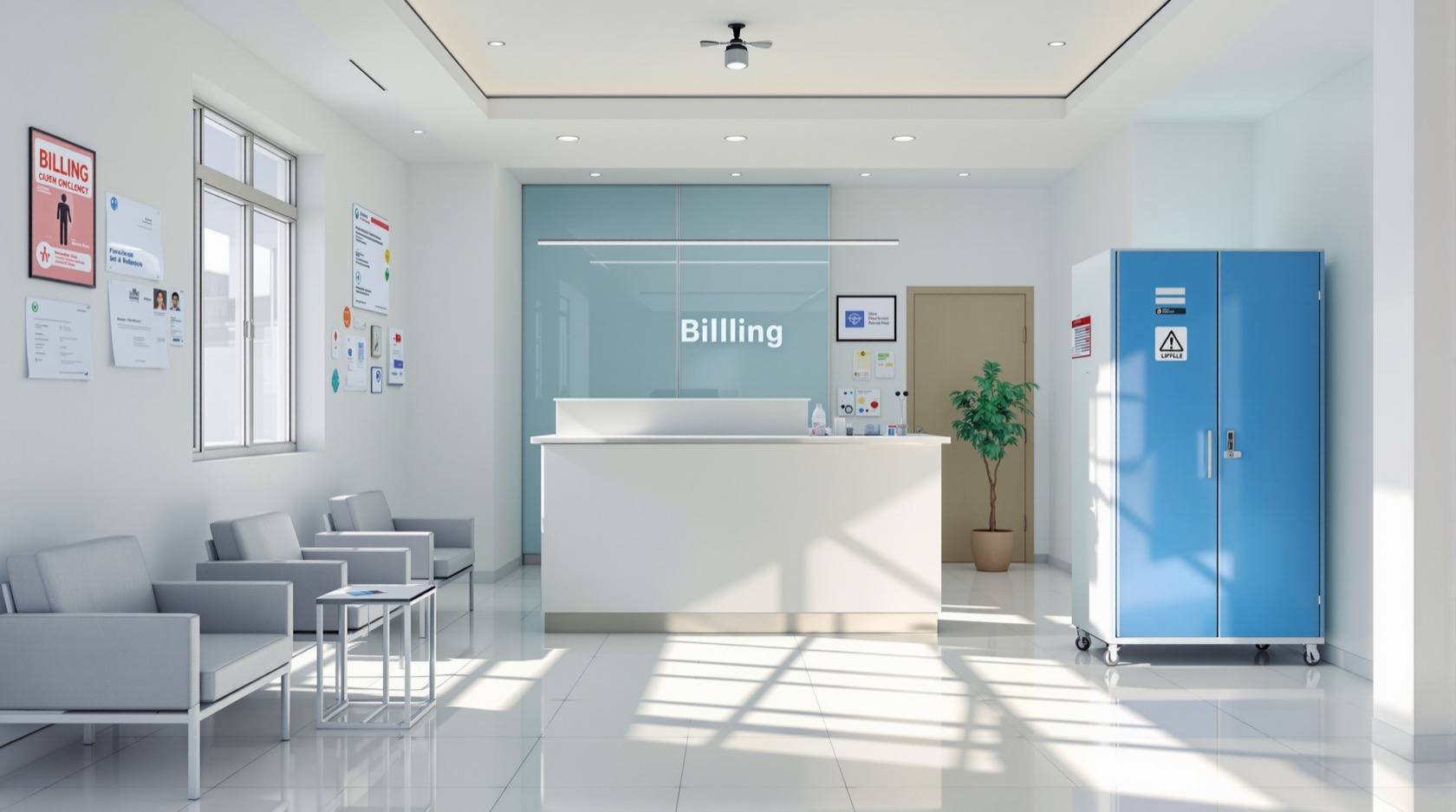
Clinic Security in India (2026): A Right-Sized Guide for Small Medical Practices
How a small clinic, nursing home, diagnostic centre, dental surgery or polyclinic protects its drugs, cash, costly equipment and highly sensitive patient data, keeps staff safe from aggression, and never traps a patient in an emergency — without buying a hospital-scale system.
A small clinic occupies an awkward middle ground. It is not a home, and it is not a hospital. A single-doctor practice, a three-bed nursing home, a diagnostic or imaging centre, a dental surgery or a neighbourhood polyclinic usually sits inside a residential or commercial building, runs with a handful of staff, and closes at night. Yet in that modest footprint it holds a concentration of valuables that few homes ever do: scheduled and controlled drugs, a day's cash and card takings, expensive diagnostic and dental equipment, and — most sensitive of all — the personal health records of every patient who has ever walked through the door.
That combination is exactly why a clinic cannot simply copy either playbook. Bolt on a hospital-scale system — a manned lobby, dense camera coverage, a security control room — and you have bought something the practice can neither afford nor maintain. Treat it like a shop or a flat and you leave drugs unlocked, records exposed and staff undefended against the one threat clinics face that most buildings do not: aggression from distressed patients and relatives. The craft here is right-sizing — matching a small, disciplined set of measures to a clinic's real threat profile. For the very different scale of a full hospital, see the hospitals and healthcare security guide; this guide is about the small practice.
Scope & safety. This is a planning and coordination guide for clinic owners, practice managers, architects and their consultants — not an installation manual, and strictly defensive. Life-safety comes before every security measure: a clinic holds patients who may be unwell, sedated or immobile, and egress, fire safety and emergency access are governed by the National Building Code (NBC = SP 7:2026) and take absolute priority over any lock, camera or barrier. Patient records, CCTV and billing data are personal data — health data is sensitive — under the Digital Personal Data Protection Act, 2023 (DPDP); any deployed guards must come through a PSARA 2005-registered agency; and drug storage follows the relevant drugs-and-pharmacy licensing. Verify all standards current and engage a licensed installer or security consultant for anything at scale.
The clinic threat profile — four assets and two duties
Before choosing a single device, name what a clinic is actually protecting. Almost everything falls into four assets and two duties, and right-sizing means addressing each deliberately rather than buying a generic "security system."
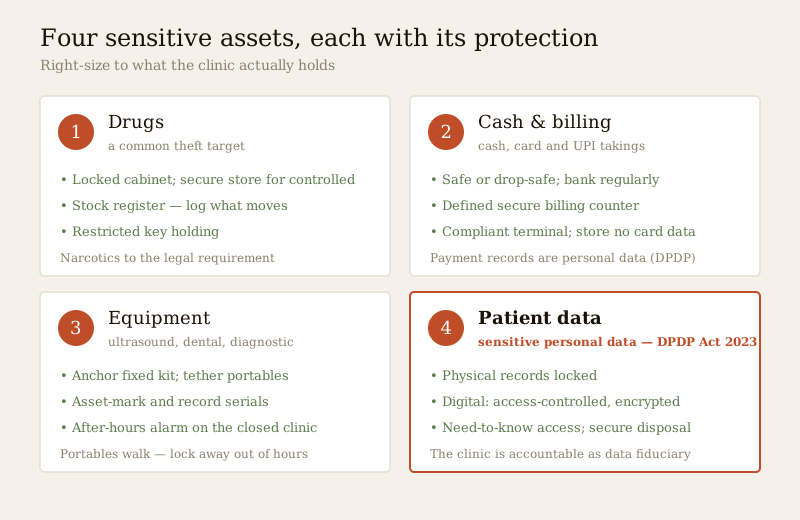
The four assets are drugs, cash, equipment and patient data. The two duties are keeping staff safe and never trapping anyone in an emergency. A clinic that has honestly covered those six things is more secure than one that has spent twice as much on cameras alone.
Drugs and pharmacy — lock them away, log them
The most predictable theft target in any clinic is its medicine. Sample stock, injectables, and above all any scheduled or controlled drugs are valuable, portable and sought after — and a clinic that leaves them in an unlocked cabinet is inviting a loss that is far more serious than the cash value suggests.
The discipline is simple and non-negotiable: secure storage plus a record.
- Lockable, purpose-fit storage. Drugs live in a locked cupboard or cabinet, not an open shelf. Anything scheduled or controlled goes in a more secure, restricted store — for the higher schedules, a substantial lockable cabinet or safe with tightly limited key or code holding, exactly as the drugs-and-pharmacy licensing requires.
- Log what moves. A stock register — what came in, what was dispensed or administered, what remains — is both a legal requirement for controlled substances and the single best deterrent against quiet internal pilferage. What is counted is what is kept.
- Restrict who holds the key. The fewer people who can open the controlled store, the shorter the list when a discrepancy appears. This is access control at its most basic and most effective.
Handle any narcotic or higher-schedule drug strictly to the legal requirement — the storage, the register and the authorised custody are not optional, and this guide does not substitute for that licensing.
Cash and billing — a safe, a drop and clean payment data
A clinic takes money across the counter — cash, cards, and increasingly UPI — which makes the billing point both a physical-security and a data-security concern.
- A safe or drop for cash. Takings should not sit in an open till overnight or accumulate in a drawer through the day. A small safe, or a drop-safe that lets staff deposit cash they cannot then retrieve, limits both opportunist theft and the loss in a break-in. Bank regularly rather than letting cash build up.
- A defined, secure billing counter. A billing position that is not a thoroughfare — where the cash drawer, card terminal and screens are not reachable or readable by whoever is standing at the counter — protects both the money and the data on screen.
- Card and payment-data hygiene. Card and UPI data is regulated financial data. Use a compliant payment terminal and gateway, never store full card numbers in the practice's own files, and keep the billing computer patched and access-controlled. This is where physical and cyber security meet; the security-system cybersecurity pillar covers hardening the machines and network that billing and records run on.
Payment records also contain patient-identifiable information, which means they fall under the same DPDP duty as the clinical records discussed below — treat the billing system as sensitive, not just as a cash point.
Expensive equipment — anchor it, mark it, protect it after hours
Diagnostic and treatment equipment is often a clinic's largest single investment: an ultrasound or imaging unit, a dental chair and its instruments, lab analysers, monitors and portable devices. Portable and high-value items are the ones that walk.
- Anchor and secure the fixed and portable kit. Heavy equipment can be anchored or fixed; portable devices — probes, handpieces, laptops, monitors — should be secured, tethered or locked away out of hours rather than left on open counters.
- Mark and record it. Asset-mark and photograph valuable equipment and keep serial numbers on file. Marked, recorded equipment is harder to fence and far easier to recover, and it supports any insurance claim.
- Protect it when the clinic is closed. Equipment losses most often happen out of hours; the after-hours alarm and monitoring discussed below is as much about protecting the machines as the medicines.
Patient data is sensitive personal data — protect it accordingly
A clinic's patient records are sensitive personal data under the DPDP Act 2023, and protecting them is a legal duty, not a courtesy. Health information is among the most sensitive data any small business holds, and a clinic is fully accountable for it whether the records are paper or digital.
- Physical records locked. Paper files, registers and prints live in a locked records room or cabinet in the restricted back-of-house, not on an open reception shelf where any waiting patient can read a neighbour's name and diagnosis.
- Digital records secured. The practice-management or EMR system, and the machines it runs on, must be access-controlled with individual logins, encrypted where feasible, patched and backed up. Do not let clinical data sit in shared, unprotected folders or unsecured personal devices. Again, the security-system cybersecurity pillar is the reference for doing this properly.
- Access controlled to a need-to-know basis. Only staff who need a record should be able to reach it, on paper or on screen. Log meaningful access to clinical systems so a breach can be traced.
- Retention and disposal. Keep records only as long as required, and destroy them securely — shredding paper, wiping drives — rather than dumping identifiable data in the bin.
Under DPDP the clinic is the data fiduciary: it must protect this data, be able to say who can see it and why, and handle it lawfully. Building that discipline in is far cheaper than a breach.
CCTV — cover the right places, and never the private ones
Cameras have a real place in a clinic, but a clinic is where the privacy line is sharpest, because the people on camera are patients in a vulnerable setting.
Cover, sensibly:
- The entrance and exit, so arrivals and departures are recorded.
- The waiting area and public corridors, where crowding and disputes happen.
- The billing counter, protecting both cash and the transaction record.
- The drug store door and the records-room door, so any access to the two most sensitive stores is captured.
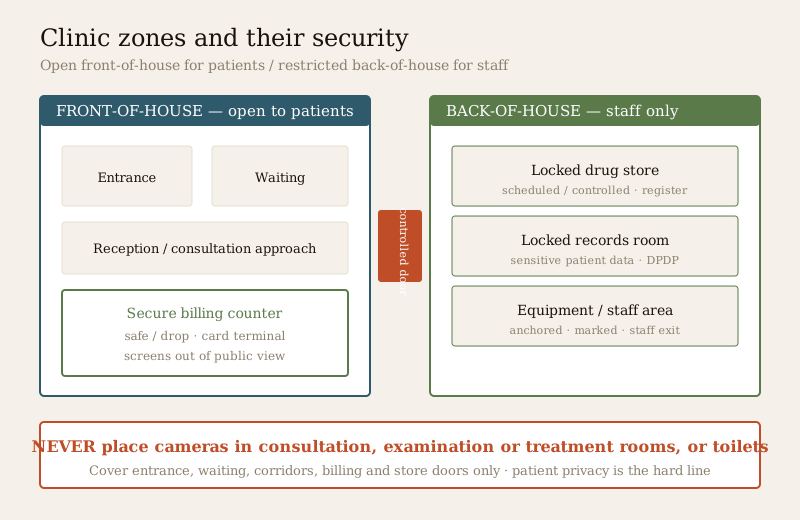
Never place cameras in consultation, examination or treatment rooms, or in toilets and changing areas. Recording a patient in those spaces violates their dignity and their privacy and is incompatible with the DPDP duty a clinic owes them — there is no security justification that outweighs it. This is the one hard line of clinic CCTV. Cover the shared and sensitive-store spaces; leave the clinical and private spaces uncovered.
Beyond placement, the CCTV itself is personal data under DPDP: display a notice that recording is in use, restrict who can view footage, keep it only as long as needed, and secure the recorder against tampering and remote compromise. The CCTV hub covers placement, coverage and retention in depth.
Staff safety — the aggression a clinic really faces
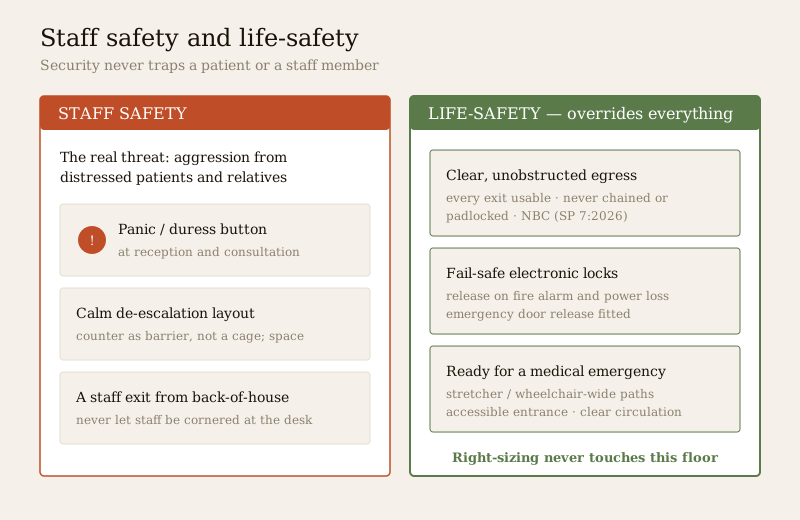
The threat a clinic underestimates most is not a burglar but a distressed or angry patient or relative. Aggression and violence against doctors, nurses and front-desk staff — over waiting, bills, bad news or a death — is a real and recurring problem in Indian healthcare, and the small clinic, with its thin staffing and close public contact, is exposed to it. Protecting staff is a core part of clinic security, not an afterthought.
- A panic or duress button at exposed positions. Reception and consultation should have a discreet way to summon help fast — a fixed or wearable panic button that alerts colleagues (and, where arranged, a monitoring service or nearby help) without escalating the situation in front of the aggressor.
- A calm, de-escalation-friendly layout. Design reduces conflict. Reasonable, communicated waiting; a counter that is a barrier without feeling like a cage; enough space that a frustrated relative is not pressed against the desk. Environment shapes behaviour, and a calm layout prevents incidents a camera can only record.
- An exit for staff. Front-desk and consultation staff should never be cornered. A second way out of the back-of-house — so a threatened staff member can withdraw rather than being trapped behind the desk — is a simple, high-value safety measure that also serves as an emergency egress.
Staff safety and life-safety reinforce each other here: the staff exit is also an escape route, and the calm layout that prevents a confrontation is the same clear circulation that speeds an evacuation.
Access control — open front, restricted back
A clinic runs on a clean front-of-house / back-of-house split, and getting that boundary right is most of its access control.
- Front-of-house is open to patients — the entrance, reception, waiting area and consultation approach are meant to be reached freely. Over-securing them frustrates patients and serves no purpose.
- Back-of-house is restricted to staff — the drug store, the records room, equipment stores and staff areas sit behind a controlled door that patients do not pass. This is where the practice's most sensitive assets live, and it is the boundary that matters most.
The controlled door between the two need not be elaborate; a good lock with disciplined key holding, or a simple keypad or card reader, is often enough for a small clinic. The point is that there is a defined line, and that reaching drugs or records means crossing it. The access-control pillar covers choosing the right mechanism for the scale — and the visitor-access management guide helps if the clinic wants to log who comes into the restricted areas.
After-hours security — protecting a closed clinic
Most of a clinic's day is spent open and staffed, but its highest-risk hours are when it is empty. A closed clinic — drugs, cash, equipment and records all inside, nobody present — is exactly the target an alarm exists for.
- An intrusion alarm on the closed premises, covering the entry points and the sensitive stores, armed when the clinic shuts.
- Monitoring, understood honestly. A local siren deters; a monitored alarm means someone is alerted when it triggers. Understand realistically what alarm monitoring does and does not guarantee in India — automatic police dispatch is not a given — before relying on it, and pair monitoring with a clear call list.
- Good lighting and a recording camera on the closed entrance, so an out-of-hours approach is both deterred and captured.
For a clinic in a shared commercial or residential building, coordinate the after-hours arrangement with the building's own security rather than duplicating it.
Life-safety comes first — a clinic must never trap anyone
A clinic holds people who may be unwell, sedated, elderly, immobile or frightened, and its security must never make it harder to get them out. This is the line that overrides everything above.
- Clear, unobstructed egress at all times. Every exit and escape route stays usable and must never be chained, padlocked or blocked in the name of security. A back door locked against theft that also traps a patient in a fire is a fatal error, not a saving. NBC (SP 7:2026) governs occupancy, exit width, travel distance and egress for a clinic's occupancy type.
- Fail-safe on any electronic lock. If the controlled back-of-house door or any exit is electronically locked, it must fail open on fire alarm and power loss and offer an emergency door release, so an evacuation is never held up by a security device. Security locking and fire egress must be designed to be compatible — see fire-egress compatibility.
- Ready for a medical emergency as well as a fire. A clinic must be able to bring help in and move a patient out fast — clear circulation wide enough for a stretcher or wheelchair, an accessible entrance, and a layout that lets an ambulance crew reach a collapsed patient without obstruction. The fire-safety hub covers the alarm, extinguishers and egress minimums that apply.
Right-sizing never touches this. A clinic may reasonably decide it needs only a modest camera set and a single alarm — but it may never decide to lock an escape route or block a stretcher path. Life-safety is the floor beneath the whole plan.
The clinic security composition
Pulling it together, a right-sized clinic composes the shared building blocks like this — modest, disciplined and matched to the four assets and two duties.
| Layer | What it protects | Right-sized measure for a clinic | Key rule |
|---|---|---|---|
| Drug storage | Scheduled / controlled drugs, stock | Locked cabinet; secure store + register for controlled; restricted key holding | Lock it and log it; narcotics to the legal requirement |
| Cash & billing | Takings, card / UPI data | Safe or drop-safe; defined secure billing counter; compliant payment terminal | Bank regularly; never store card data; DPDP applies to payment records |
| Equipment | Ultrasound, dental, diagnostic, portables | Anchor / secure; asset-mark and record serials; after-hours alarm | Portables walk — tether or lock away out of hours |
| Patient data | Sensitive health records | Locked records room; access-controlled, encrypted, backed-up EMR; need-to-know | Sensitive data under DPDP 2023 — the clinic is accountable |
| CCTV | Entrance, waiting, corridors, billing, store doors | Few well-placed cameras; DPDP notice and retention | Never in consult / exam / treatment rooms or toilets |
| Staff safety | Reception and clinical staff | Panic / duress button; calm de-escalation layout; staff exit | Aggression from relatives is the real, recurring threat |
| Access control | The sensitive back-of-house | Open front-of-house; controlled door to restricted back-of-house | Reaching drugs or records means crossing a defined line |
| After-hours | The empty, closed clinic | Intrusion alarm on stores and entries; monitoring; lit recording entrance | A dead alarm is worse than none — maintain it |
| Life-safety | Every patient and staff member | Clear egress; fail-safe locks; stretcher-wide paths | Overrides everything; never chained, per NBC (SP 7:2026) |
Two Studio Matrx tools help a practice do this concretely: the home security risk scorecard surfaces the gaps that matter most so a small budget goes to the right place first, and the site perimeter security assessment checks the entrance-and-boundary fundamentals a clinic in a standalone building relies on.
Key takeaways
- A small clinic is not a hospital and not a shop — right-size security to its real threat profile of concentrated drugs, cash, equipment and sensitive data, plus staff aggression, without buying a hospital-scale system.
- Lock the drugs and log them — secure, licensed storage for scheduled and controlled drugs with a register and restricted key holding is the single most predictable theft to prevent.
- Protect cash and payment data — a safe or drop, a secure billing counter, compliant card handling and no stored card numbers; billing records are personal data too.
- Anchor, mark and after-hours-protect the equipment — portable diagnostic and dental kit walks; tether it, record serials and alarm the closed clinic.
- Patient records are sensitive personal data under the DPDP Act 2023 — physical records locked, digital records access-controlled and encrypted, on a need-to-know basis; the clinic is accountable.
- CCTV covers entrance, waiting, corridors, billing and store doors — never consultation, examination or treatment rooms or toilets. Patient privacy is the hard line, and DPDP governs the footage.
- Staff safety is core — a panic/duress button, a calm de-escalation layout and a staff exit address the real problem of aggression from distressed relatives.
- Life-safety overrides everything — clear egress, fail-safe locks and stretcher-wide paths per NBC (SP 7:2026); a clinic must never trap a patient or a staff member.
Where to go next
- Hospitals and healthcare security — the larger-scale sibling for a full hospital.
- Panic buttons and the access-control pillar — staff duress and the front/back boundary.
- CCTV hub and the security-system cybersecurity pillar — camera placement, and securing records and billing.
- Alarm monitoring and visitor-access management — after-hours protection and restricted-area logging.
- Fire-safety hub, emergency door release and fire-egress compatibility — the life-safety layer that overrides all.
- The building-type security pillar and the building-types sub-hub, plus the main security hub.
References
- National Building Code of India (SP 7), Bureau of Indian Standards — occupancy classification, means of egress, exit width, travel distance and fire-safety provisions governing a clinic's occupancy type. Verify the current edition (SP 7:2026) via the BIS catalogue: https://www.services.bis.gov.in/
- Digital Personal Data Protection Act, 2023 — patient health records, CCTV footage and billing data are personal data, health information being sensitive; the clinic is the data fiduciary and must protect it, control access and handle it lawfully.
- Private Security Agencies (Regulation) Act, 2005 (PSARA) — any guard deployed at a clinic must be supplied through a PSARA-registered agency; verify licensing before contracting.
- Drugs and pharmacy licensing (Drugs and Cosmetics framework and the rules on scheduled and controlled substances) — the storage, custody and record-keeping requirements for scheduled, controlled and narcotic drugs are legal obligations; confirm the current requirements for your practice.
- Crime Prevention Through Environmental Design (CPTED) — the named design approach behind natural surveillance, a calm de-escalation-friendly layout and controlled zoning; apply its principles rather than any single product.
This is an educational, right-sizing overview for clinic owners, practice managers and their consultants — not legal advice, an installation manual, or a substitute for drug-licensing, medical or data-protection compliance. Life-safety, egress and fire provisions take priority over any security measure; engage a licensed installer or security consultant for anything at scale, deploy guards only through PSARA-registered agencies, handle controlled drugs strictly to the legal requirement, and verify any standard's current status via the BIS catalogue before relying on it.
Export this guide
Related Guides — Deep-dive reading
Complete Guide to Building Type Security in India (2026): Right-Sizing Protection to Homes, Schools, Hospitals, Warehouses and Temples
The same security building blocks — perimeter, gate and access, CCTV, alarms, lighting, fire, guards and cyber — are composed very differently for a villa, a school, a hospital, a warehouse or a temple. This pillar maps the whole library of building-type guides and gives you the framework to tailor security to each kind of building.
SecurityComplete Guide to Security System Cybersecurity in India (2026): Protecting the Systems That Protect You
The cameras, locks, alarms and door phones you install to feel safer are internet-connected computers that can themselves be attacked, and an insecure one is worse than none. This pillar maps the whole attack surface — devices, network, accounts and data, operations — and points to every guide that hardens it.
SecurityAccess Control Maintenance in India (2026): Readers, Locks and Fail-Safe Egress
How to keep a card, keypad, fingerprint or face access-control system reading reliably and locking securely — and, above everything, how to test that its doors still release on a fire alarm and on power loss, so an access-controlled door never becomes a life-safety trap.
SecurityRelated Tools — Try Free
Acoustic Privacy (STC) Visualizer
Indian healthcare acoustic visualizer — compare wall assemblies and noise sources, see received SPL after STC attenuation, and check FGI 2018 / IS 1950 / NABH speech-privacy compliance with live dual-canvas waveform.
Acoustic ToolCCTV Placement Compliance Checker
A quick DPDP-grounded privacy and safety self-check for where a camera is pointed — flags the items to fix.
ComplianceHome Security Risk Scorecard
Score your home across six security layers — perimeter, entry points, lighting, detection, alarm and habits — and get a prioritised action plan.
Security Scorecard