
Acrylic vs Cast Iron Bathtub: Which Is Better? (India, 2026)
A fair, India-first head-to-head between an acrylic bathtub and an enamelled cast-iron one — weighed on the factors that actually decide it here: slab load and handling, heat retention, durability, warmth to touch, repairability, price and installation — with a clear verdict by home type and budget.
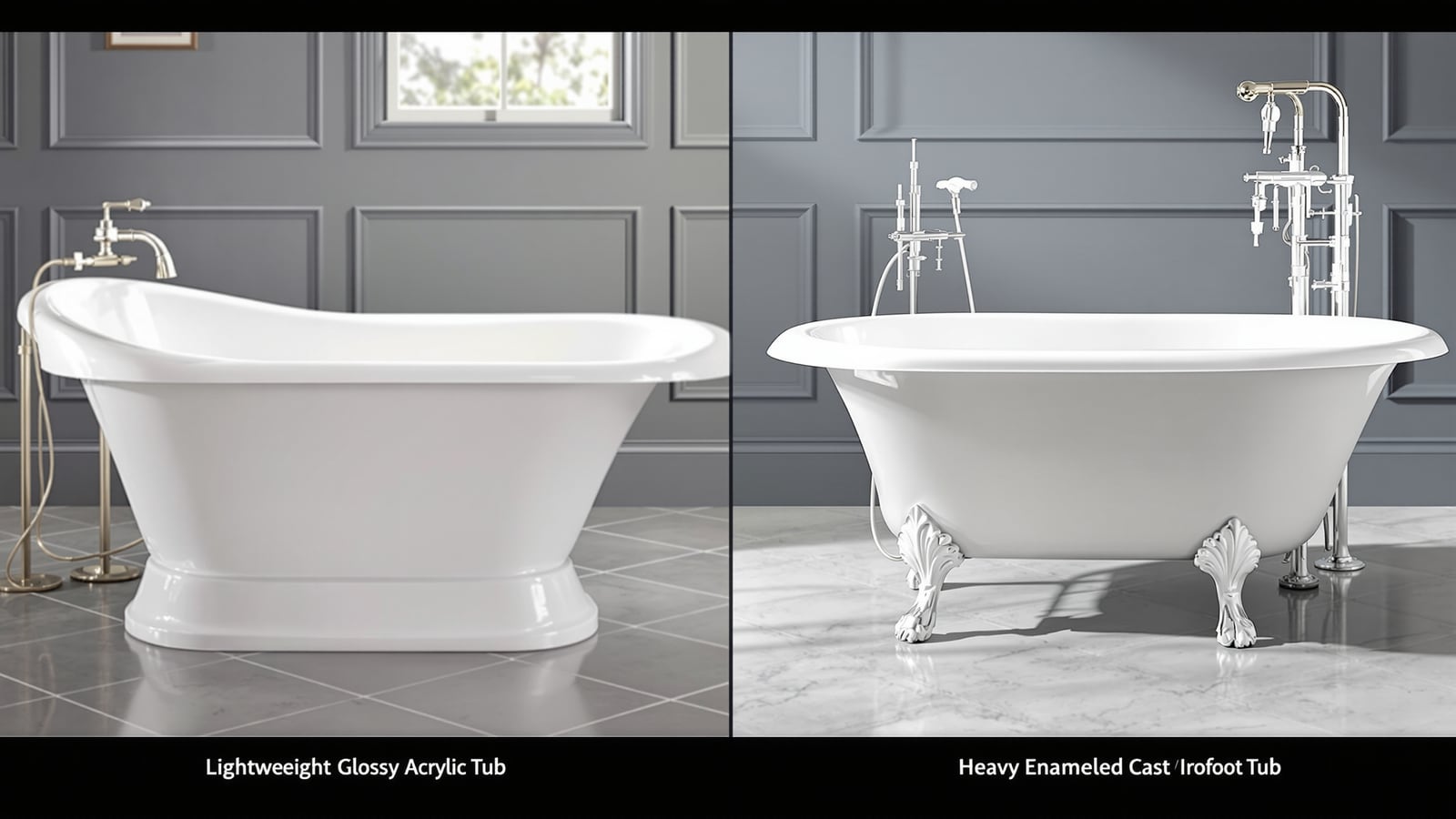
Once you have decided you want a bathtub, the real fork in the road is the material — and for most Indian homeowners it comes down to two candidates: a lightweight acrylic tub or a heavy enamelled cast-iron one. They are the two ends of the spectrum. Acrylic is light, warm to sit in, cheap to buy and easy to repair yourself; cast iron holds heat like nothing else, resists scratches for decades and is a genuine heirloom, but it is three to four times the weight and several times the price. Neither is simply "better" — the right pick depends on your floor, your budget and how long you plan to keep the bathroom.
This is a fair, India-first head-to-head. It weighs the two on the factors that actually decide the choice here — starting, unusually, with weight and structural load, because in Indian apartments and upper floors that is often the deciding factor before comfort or cost. For the deep dives on each option see the acrylic bathtub guide and the cast iron bathtub guide; this article sits under the broader bathtub guide for India.
There is no universal winner. Acrylic wins on weight, price, warmth and DIY repair; cast iron wins on heat retention, durability and lifespan. Match the tub to your slab and budget, not to a showroom's sales pitch.
Weight and structural load — the India deciding factor
This is where the two materials separate most sharply, and in India it is frequently the first question, not the last. An empty acrylic tub weighs roughly 25–40 kg — two people can carry it up a stairwell without fuss. An empty cast-iron tub weighs 100–150 kg, and once you add the bath water and a bather, the loaded weight on the slab can approach 250–350 kg concentrated over a small footprint.
On a ground floor or a well-designed RCC slab, that load is usually fine. But on an upper floor, a renovated old building, or a cantilevered/balcony bathroom, cast iron may demand a structural check from an engineer, and the National Building Code framework treats concentrated fixture loads as a real design input. Then there is simply getting it there: a cast-iron tub needs two to three people and often a hoist to move up a narrow Indian stairwell or into a lift, whereas acrylic is a one-trip, two-person job.
- Choose acrylic if the bathroom is on an upper floor, the slab is unverified, access is tight, or you simply do not want the structural conversation.
- Choose cast iron only where the slab is confirmed strong (ground floor or an engineer-approved slab) and the crew and access exist to install it.
For most apartment buyers, weight alone tilts the decision to acrylic before any other factor is considered.
Heat retention, warmth and the bathing feel
If a long, hot soak is the point of your tub, cast iron wins clearly. Its mass of iron absorbs heat and radiates it slowly back, so the water stays warm noticeably longer — the difference between a leisurely soak and a bath that cools before you have settled. That mass also makes it rigid and whisper-quiet: no flex underfoot, no drumming as the water fills.
But there is a twist that matters on a cold morning. Cast iron is cold to the first touch — the enamel over metal pulls heat from your skin until the water warms it, and it takes energy from the first fill to bring the iron itself up to temperature. Acrylic is the opposite: it conducts heat poorly, so it feels warm the moment you touch it and does not steal heat from the first bath. Its heat retention, while not cast iron's equal, is still good — better than steel — because that same low conductivity slows the water cooling.
So the honest read is: cast iron holds a long soak's heat best, but acrylic feels friendlier from the first second and warms up faster. For a quick daily bath, most people never notice cast iron's edge; for a 45-minute weekend soak, they do.
Durability, scratch resistance and repairability
These three are tied together, and here the two swap wins.
Durability and scratch resistance go to cast iron. Its vitreous-enamel surface is glass fused to metal — it resists scratches, stains and heat that would mark acrylic, and a well-kept cast-iron tub looks the same after thirty years. Acrylic is a soft plastic: it scratches more easily, a dropped bottle or an abrasive scrubber can dull it, and lower grades can yellow under years of sun and heat.
Repairability, however, goes to acrylic — and this reverses the usual assumption. Because acrylic's coloured layer is millimetres deep, a scratch can be wet-sanded and polished out at home with a kit and an afternoon, and gouges filled with an acrylic repair kit. Cast iron's strength is also its trap: if the enamel chips (a heavy dropped object on the rim), it exposes bare iron that can rust, and the fix is professional re-enamelling or a specialist patch, not a DIY job. So cast iron rarely needs repair, but when it does it is expensive; acrylic needs it more often but you can do it yourself for the price of a kit.
In hard-water India both survive limescale if cleaned gently — but neither likes harsh abrasives, and acrylic is the more sensitive of the two.
Price and installation
Acrylic is the value pick by a wide margin, which is why it dominates Indian showrooms. Cast iron carries a premium for the material, the finish and the labour to move it.
| Attribute | Acrylic | Cast iron (enamelled) | Winner |
|---|---|---|---|
| Weight (empty) | 25-40 kg | 100-150 kg | Acrylic |
| Slab / structural load | Rarely an issue | Often needs a check | Acrylic |
| Heat retention | Good | Excellent | Cast iron |
| Warmth to first touch | Warm | Cold until filled | Acrylic |
| Scratch & stain resistance | Moderate, can dull/yellow | Excellent enamel | Cast iron |
| Repairability | DIY sand & polish | Pro re-enamel only | Acrylic |
| Rigidity / quietness | Can flex if under-built | Rock solid, silent | Cast iron |
| Lifespan | 10-15 years | 30+ years | Cast iron |
| Price (tub only) | Rs 15,000 - 1,50,000 | Rs 60,000 - 3,00,000+ | Acrylic |
| Installation ease | Two people, one trip | 2-3 people + hoist | Acrylic |
On installation, acrylic is a straightforward drop-in, built-in or freestanding fit that a normal plumbing crew handles. Cast iron needs a strong slab, a bigger crew and careful handling up stairs and through doorways — factor that labour into the budget, not just the tub price.
Which should you choose?
Tally the rows and a pattern emerges: acrylic wins the practical, India-specific rows (weight, load, warmth, repair, price, installation) while cast iron wins the longevity-and-luxury rows (heat retention, scratch resistance, rigidity, lifespan). Your choice is really about which set matters more for your home.
| Pick acrylic if... | Pick cast iron if... |
|---|---|
| The bathroom is on an upper floor | You are on a ground floor / verified slab |
| The slab is unverified or old | You want a genuine 30-year heirloom tub |
| Budget is a real constraint | The long weekend soak is the whole point |
| You want a warm-to-touch daily tub | You want a surface that never scratches |
| You value DIY scratch repair | Access and a 2-3 person crew exist |
| It is a freestanding or built-in apartment fit | The premium and weight are acceptable |
The honest verdict for the common Indian case — an apartment or upper-floor home on a sensible budget — is acrylic. It sidesteps the structural conversation, costs a fraction, feels warm from the first second, and you can polish out life's scratches yourself. Choose cast iron when you have the slab, the budget and the appetite for a tub that outlives the bathroom and holds a long soak's heat like nothing else. For the sculptural, ground-floor master bathroom it is worth every kilogram; for the third-floor family bath it is usually the wrong tool.
Still weighing it up, or wondering whether a tub is right at all versus a shower? Work through how to choose a bathtub for India, which frames size, layout, water use and material together before you commit.
References
- IS 2556 (Bureau of Indian Standards) — Vitreous sanitary appliances: the reference benchmark for sanitaryware quality, water absorption and finish.
- NBC 2016 (National Building Code of India), Part 6 Structural Design and Part 9 Plumbing Services — concentrated fixture loads on slabs, and bathing-fixture water supply, waste and drainage provisions relevant to installing a heavy tub.
- IS 456 — Code of practice for plain and reinforced concrete, referenced when checking an RCC slab for a heavy cast-iron tub load.
- BIS product certification (ISI mark) — the scheme under which sanitaryware and fittings are certified to Indian standards; a marked product signals third-party testing.
Export this guide
Related Guides — Deep-dive reading
Cast Iron Bathtub India: The Heirloom Tub, Weight & Slab Load, Enamel Care & Cost (2026)
Why an enamelled cast-iron bathtub is the heirloom tub — unbeatable heat retention, a quiet soak and a vitreous-enamel surface that shrugs off scratches and stains for decades — set against the one thing India buyers must plan for: the sheer weight on the slab, the crew it takes to carry it up, chip repair, the cost premium, and an honest verdict versus acrylic.
BathroomsHow to Choose a Bathtub in India: Size, Material, Fit & Budget (2026 Buyer's Guide)
A buyer's decision guide to picking a bathtub for an Indian home — the first checks on bathroom size, floor load and geyser capacity, freestanding vs built-in vs corner by space, acrylic vs cast iron vs FRP, whether a whirlpool is worth it, good/better/best rupee tiers, delivery and install, warranty, and how to spot thin flexing acrylic.
BathroomsAcrylic Bathtub India: Grades, Thickness, Care, Lifespan & Cost (2026)
The India-first guide to acrylic bathtubs — why they are the most popular tub material in Indian homes, how sanitary-grade acrylic and fibreglass reinforcement work, what thickness and grade to insist on, how to clean and repair scratches yourself, honest lifespan and rupee costs, and how acrylic stacks up against cast iron and FRP.
BathroomsRelated Tools — Try Free
Material Decision Framework (M-Score)
Score 30+ Indian construction materials across cost, durability, climate fit, maintenance, and sustainability.
MaterialsBefore vs After — Cost Reality Check
Compare what you expected to pay vs what you actually paid, category by category.
Reality CheckApartment Video Door System Planner
Enter flats, entrances, floors and guard desk for a first-pass building intercom plan — door stations, indoor monitors, guard station, the right architecture and an indicative cost band.
Building Planner