
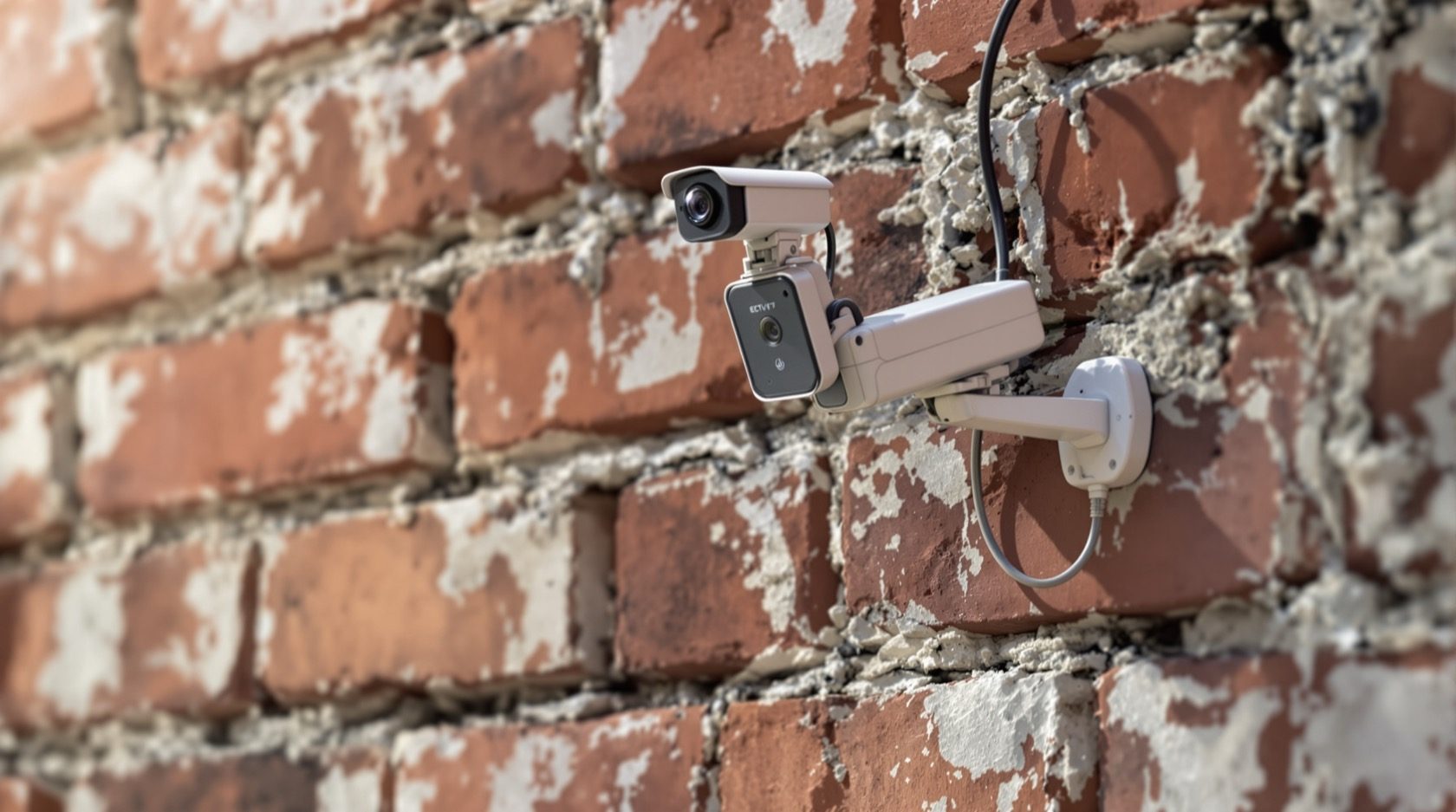
Battery-Powered CCTV Cameras in India: Wire-Free Security Buying Guide
How rechargeable, wire-free cameras work, why they are perfect for rented flats and cabling-free spots, how long a charge really lasts, and where they beat — and lose to — solar and PoE cameras.
Battery-powered CCTV cameras solve one very specific, very common problem: you want a camera here, but there is no power point here, and you cannot — or do not want to — chase a cable through a wall to reach it. A wire-free battery camera runs entirely off a rechargeable pack, talks to your router over Wi-Fi, and goes up in minutes with a screwdriver and nothing else. For a rented flat, a spot the electrician never reached, or a corner you only just realised is a blind spot, that convenience is the whole point.
This guide is the focused explainer on the battery form factor in Studio Matrx's CCTV hub. It sits alongside its power-and-connectivity siblings — solar-powered, PoE, Wi-Fi and 4G/5G cellular — and its job is to tell you honestly where a battery camera shines and, just as importantly, where it will let you down.
Scope & safety. This guide helps you choose and plan. A battery camera is one of the few you can genuinely mount yourself at a reachable height — but anything at height, any cabling, and any mains-electrical work still belong to licensed professionals. A camera must never block a window, door or fire-escape route. Cameras belong only on your own property and shared areas — never bathrooms, bedrooms or changing areas — and should be positioned to respect neighbours and the spirit of the DPDP Act, 2023.
What a battery camera actually is
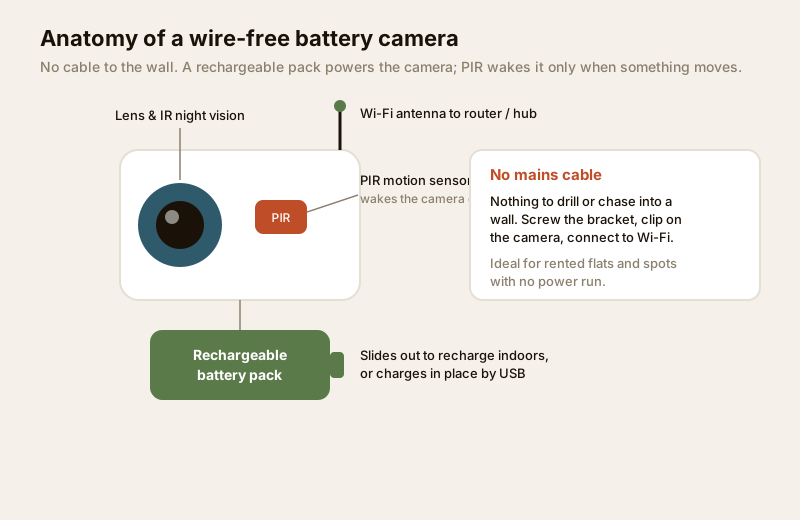
A battery-powered camera is a normal Wi-Fi camera whose power comes from an internal or clip-in rechargeable battery instead of a mains cable. There is no wire to the wall at all — the only thing you attach is the mounting bracket. Everything the camera needs to run, it carries: a large lithium cell, a lens, IR LEDs for night vision, a Wi-Fi radio, and — this is the crucial part — a PIR (passive infrared) sensor that lets it sleep and wake.
Two design choices define the form:
- The battery. Some cameras have a removable pack you slide out and recharge indoors by USB while a spare keeps the camera running; others have a sealed internal cell you charge in place with a cable every so often. Removable is far more convenient for anything mounted out of reach.
- PIR wake-and-record. A battery camera cannot afford to run its sensor and radio non-stop, so it sleeps. The low-power PIR sensor watches for the heat-and-movement signature of a person or vehicle, and only then wakes the camera to record and alert. This is what makes months of runtime possible — and, as we will see, it is also the source of every limitation.
The strengths — why people reach for battery
- Install anywhere in minutes. This is the headline. No conduit, no chasing walls, no electrician, no drilling for a power cable. You fix a bracket, clip on the camera, join it to Wi-Fi in the app — done. For a spot with genuinely no power run, it is often the only practical option short of going solar.
- Perfect for rented flats. If you cannot make holes for cabling — or want to take the camera with you when you move — a battery camera is ideal. Nothing permanent, nothing to make good when you leave.
- Reaches the awkward corners. The blind spot at the far end of the balcony, the side gate the wiring never reached, the store-room door — a battery camera fills gaps a wired system left behind, without re-opening the walls.
- Truly tidy. No visible cable means nothing to snip, and nothing ugly running down the wall. On rentals and heritage walls that matters.
- Keeps working through power cuts. With India's frequent outages, a camera that carries its own power keeps watching your door when the mains — and often the router, unless that is on a UPS — is down. (Remember the recorder and Wi-Fi still need backup for the footage to reach you; see the electrical backup assessment.)
The limitations — read these before you commit
Everything good about a battery camera flows from the fact that it sleeps. So does everything difficult.
- It does not record continuously. A battery camera captures events, not a continuous timeline. It wakes on PIR, records the clip, and sleeps again. If something happens outside the PIR's reach, or the wake-up misses the first second or two, it is not on tape. For a scene where you need every second — a busy shop till, a 24x7 gate — this is the wrong tool. Use a wired PoE camera there instead.
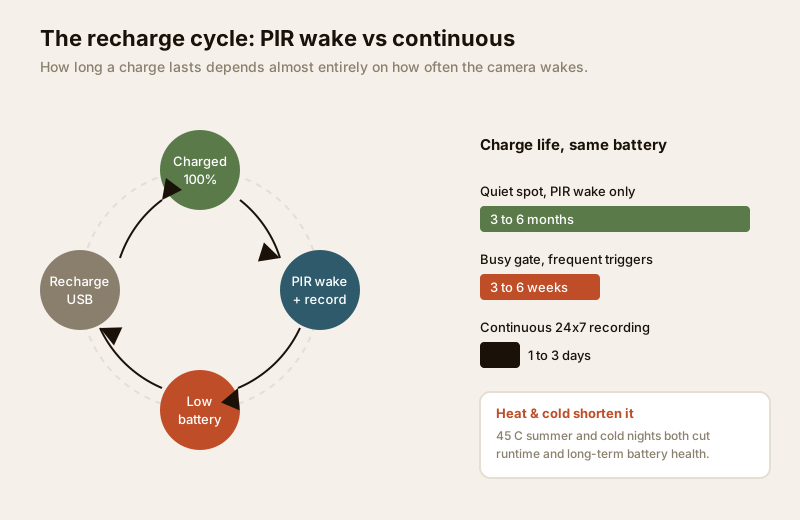
- The recharge chore is real. How often you climb up to recharge depends entirely on how much the camera wakes. A quiet spot may last months; a busy driveway that triggers all day may need charging every few weeks. A camera on a dead battery is no camera at all, so this is a genuine ongoing task — not a fit-and-forget device.
- Heat and cold hurt it. Lithium batteries lose runtime in the cold and age faster in sustained heat. A camera baking on a west wall through a 45°C Indian summer, or a north-Indian winter night, will get noticeably fewer days per charge and a shorter overall battery life than the box promised.
- It leans entirely on Wi-Fi. No cable means the data path is wireless too. Weak Wi-Fi at the far corner means dropped clips and failed alerts — the exact spots a battery camera is meant for are often the spots with the worst signal. Read the honest limits in the Wi-Fi CCTV guide before you rely on it.
- Wake-up lag and misses. PIR needs heat contrast and takes a moment to trigger and wake the camera; a fast-moving subject, or one seen through glass, can be half out of frame — or missed — by the time recording starts.
Battery life: what actually drains it
The single number on the box — "6-month battery life" — is a best case for a quiet camera. Your real runtime is set by how often it wakes and how hard it works each time. Treat this table as the intuition, not a guarantee.
| What you do / where it sits | Effect on runtime | Why |
|---|---|---|
| Quiet spot, few triggers a day | 3 to 6 months | Camera sleeps almost all day |
| Busy gate or street, many triggers | 3 to 6 weeks | Each wake, record and upload costs power |
| Continuous / 24x7 recording forced on | 1 to 3 days | Defeats the whole design — battery is not built for it |
| Long clips + high resolution (4K) | Shorter | More sensor, encoder and Wi-Fi time per event |
| Frequent live-view on your phone | Shorter | Streaming keeps the radio awake |
| Sustained 45°C heat / cold nights | Shorter, ages battery faster | Lithium chemistry derates in temperature extremes |
| Removable spare battery kept charged | No downtime | Hot-swap instead of waiting for a recharge |
The practical takeaways: point the PIR only at what matters (a narrow, relevant zone, not the whole street), keep clip lengths sensible, and if the camera is out of easy reach, buy the version with a removable battery and a spare so a swap takes seconds.
Where a battery camera fits best
Play to the design. A battery camera is at its best where you need event capture in a spot with no power run, and where the scene is not so busy that it drains the pack in days.
- Rented flats and apartments. No cabling, no damage, take it with you. The classic fit.
- A single door, gate or blind corner. One relevant view — the flat door, the side gate, the balcony end — that a wired system missed.
- Temporary or changing needs. Watching a delivery spot for a few weeks, a renovation, a short let — anywhere permanence is wrong.
- Indoor sit-in points. A hallway or entry inside the home where a PIR-triggered clip is plenty and there is no socket nearby.
And where it does not belong: a busy 24x7 scene (shop till, main commercial gate, industrial yard) needs continuous recording — that is PoE territory. A remote outdoor spot with no power and no Wi-Fi — a farm gate, a plot boundary, a society perimeter with no run — is better served by a self-recharging solar camera, or a 4G/5G cellular unit where there is no broadband at all.
Battery vs solar vs PoE — the honest comparison
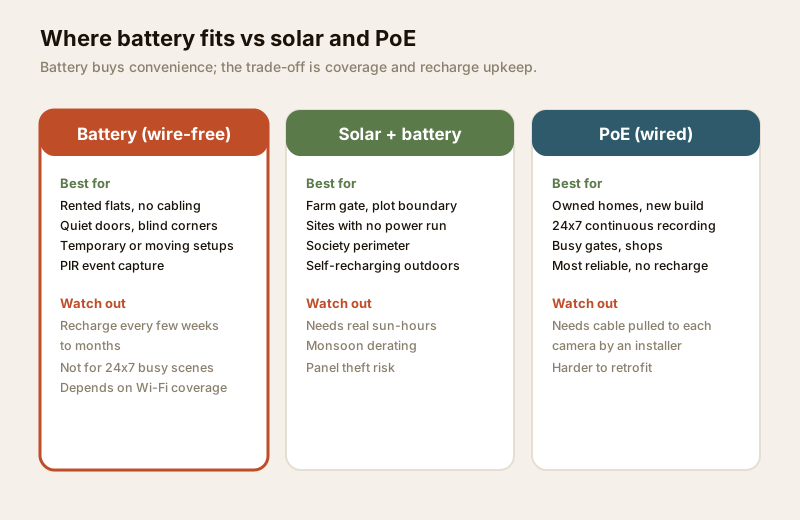
These three answer the "how is it powered" question differently. Pick by the spot, not the brand.
| Factor | Battery (wire-free) | Solar + battery | PoE (wired) |
|---|---|---|---|
| Install effort | Lowest — minutes, DIY | Moderate — mount panel + camera | Highest — pull cable to each camera |
| Cabling needed | None | None (panel wire only) | Ethernet run per camera (~90–100 m) |
| Recording | Event / PIR only | Event / PIR only | Continuous 24x7 |
| Ongoing upkeep | Recharge every few weeks–months | Wipe panel; little else | None (mains-fed switch) |
| Best for | Rented flats, blind corners | Remote off-grid spots | Owned homes, busy 24x7 scenes |
| Depends on | Wi-Fi coverage | Sun-hours + Wi-Fi/4G | Nothing wireless — most reliable |
| Power cut behaviour | Keeps running (needs router up) | Keeps running | Needs recorder + switch on UPS |
| Weak spot | Recharge chore; not 24x7 | Monsoon derating; panel theft | Retrofit means opening walls |
If you are weighing the shapes and the power method for each spot on your plot, the CCTV camera type selector walks you through it view by view, and the complete guide to CCTV systems covers how the whole scheme — cameras, recorder, network and backup — fits together. For the recording and storage side of an event-based camera, see how CCTV systems work.
India price bands (indicative)
Prices move with brand, resolution, battery size and season — treat these as ballparks to sanity-check a quote, not fixed rates.
| Item | Typical range (₹) | Notes |
|---|---|---|
| 2MP indoor battery camera | ₹2,500 – ₹5,000 | Entry level; short-range PIR |
| 3MP/4MP outdoor wire-free camera | ₹4,000 – ₹9,000 | The home workhorse; insist on IP65+ outdoors |
| Removable-battery model + spare pack | ₹1,000 – ₹3,000 (spare) | Buy the spare if it is out of reach |
| Wi-Fi range extender / mesh node | ₹1,500 – ₹4,000 | Often needed for a far-corner camera |
| Local hub / base station (some brands) | ₹3,000 – ₹8,000 | Stores clips locally; check subscription terms |
| Cloud clip subscription | ₹0 – ₹300 / month | Free tier is usually short; read the fine print |
For India specifically, weight three things. Weatherproofing: choose at least IP65 for anything outdoors so dust and monsoon rain stay out. Placement in heat: avoid a west or south wall that bakes all afternoon — it shortens both the charge and the battery's life. Wi-Fi honesty: test the signal at the exact mounting spot before you buy; a far-corner camera on weak Wi-Fi is the commonest disappointment. Size and cost the wider system with the security system cost estimator and the camera coverage calculator.
Getting a battery install right
- Aim the PIR, not just the lens. Point the motion zone at the path a person actually takes — the gate approach, the doorway — not at the whole street, or it will wake all day and drain in weeks (and spam you with alerts).
- Mount within safe reach if you can. The one camera you can fit yourself is one you must also recharge — so a reachable height (from a stable step, not a ladder leaned on a wall) makes the recharge chore bearable. Anything genuinely at height is still a professional's job.
- Buy removable-battery + a spare for anything you would rather not take down often — swap in seconds, charge the other indoors.
- Test Wi-Fi at the spot first. If the signal is weak, plan a mesh node or extender before committing, or the clips will not reach you.
- Keep the router (and recorder/hub) on backup. The camera surviving a power cut is only useful if the network carrying its footage survives too — plan a UPS as part of the wider resilience picture in the building security systems guide.
When to bring in a professional. You can genuinely mount a low, reachable battery camera yourself. But hand over anything at height, any cabling or mains work, weak-Wi-Fi network design across a large home, and whole-system commissioning to a qualified installer — mains work belongs to a licensed electrician (see the electrical hub). A camera placed where its PIR sees what matters and its Wi-Fi actually reaches is worth far more than a cheaper one clipped up in the wrong corner.
Key takeaways
- A battery-powered camera is a wire-free Wi-Fi camera on a rechargeable pack — no cabling, up in minutes, and perfect for rented flats and blind corners with no power run.
- It records events, not a continuous timeline: a low-power PIR wakes it, so it captures clips and sleeps. That is what gives months of runtime — and why it is wrong for 24x7 busy scenes.
- Battery life is set by how often it wakes — months in a quiet spot, weeks at a busy gate, days if forced to record continuously — and heat and cold shorten all of it.
- It leans entirely on Wi-Fi — test the signal at the exact spot first, and buy a removable battery + spare if it is out of easy reach.
- Choose by the spot: battery for convenience and rentals, solar for remote off-grid points, PoE for reliable 24x7 recording. Check each view with the camera type selector and route height, cabling and mains work to a licensed professional.
References
- Digital Personal Data Protection Act, 2023 — position cameras to cover only your own property and shared areas with a legitimate purpose; avoid capturing neighbours' private spaces.
- Ingress Protection (IP) ratings — verify a camera's weatherproofing (IP65 or higher for outdoors) on the manufacturer's specification sheet before ordering.
- National Building Code of India (SP 7), Bureau of Indian Standards, and local municipal bye-laws for any structural, electrical or life-safety aspect of an install; verify the current edition via the BIS catalogue: https://www.services.bis.gov.in/
This is an educational overview. Work at height, cabling and any electrical work are qualified professional tasks — engage licensed installers and verify any standard's current status via the BIS catalogue before relying on it.
Export this guide
Related Guides — Deep-dive reading
PoE vs Wi-Fi CCTV: Which Home Security Cameras Are Better?
One camera type runs power and video down a single Cat6 cable to an NVR and almost never drops out; the other clips to a wall in minutes and streams over your home Wi-Fi. This guide settles PoE vs Wi-Fi CCTV for Indian homes — reliability, video quality and bandwidth, cabling and power, retrofit versus new-build effort, NVR versus SD and cloud storage, hacking risk, real rupee costs, scalability and outdoor use — and gives a clear verdict for each kind of home.
Smart HomeHow to Choose a CCTV Camera (2026): The Homeowner's Decision Guide for India
Cut through the spec-sheet noise and choose the right CCTV camera for each spot around an Indian home. What actually matters — sensor and low-light performance, lens and field of view, form factor, IP and IK ratings, honest smart features — and the marketing claims to ignore.
SecurityLocal Storage vs Cloud CCTV in India (2026): Where Your Footage Should Live
A homeowner's honest head-to-head on where CCTV footage is kept — on a hard disk in the recorder at home, or uploaded to a per-camera cloud plan — across cost, theft resilience, internet dependence, retention, remote access and DPDP privacy, ending in a clear which-suits-whom, with hybrid usually the smartest answer.
SecurityRelated Tools — Try Free
CCTV Cloud vs Local Cost Calculator
Compare cloud CCTV subscription against a local NVR + HDD — upfront, 5-year total, monthly fee and break-even.
Cloud vs LocalSecurity Backup Power Calculator
Size a UPS/inverter and battery to keep CCTV, NVR, router and alarm running through a power cut — load, Ah, VA and cost.
Backup PowerCCTV Camera Coverage & Count Calculator
Estimate how many CCTV cameras you need, the NVR channels, storage in TB for your retention period, and an indicative all-in cost with GST.
CCTV Calculator