
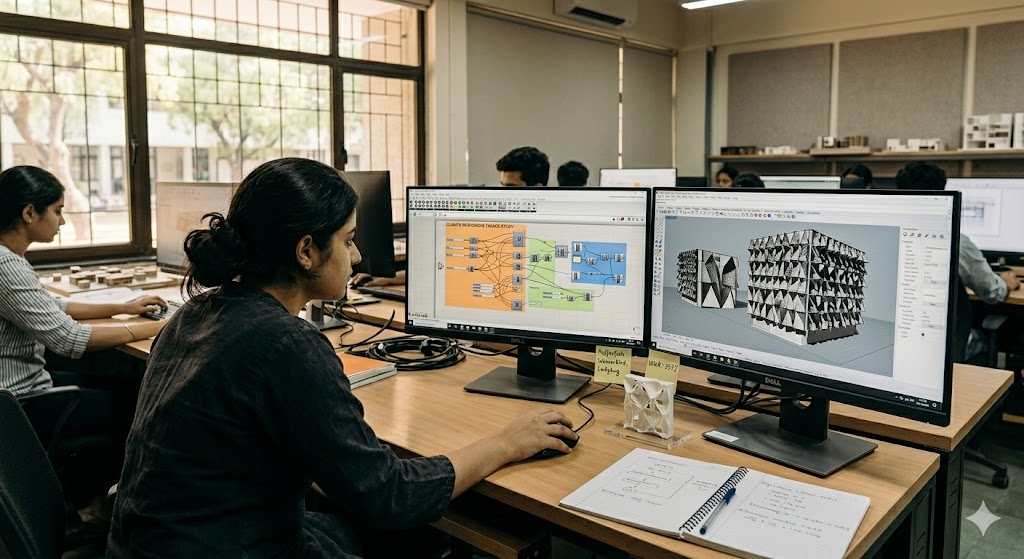
Parametric Architecture in India — A Student's Working Reference
Rhino + Grasshopper, the Plugin Ecosystem, Indian Practitioners, a 12-Month Learning Path & Six Thesis Workflows
Parametric architecture is not "complex curvy buildings." It is rule-based, algorithmic design generation — where the architect codifies design intent as a set of relationships and parameters, and the geometry is generated, evaluated, and iterated against those rules. The result might be simple or complex; what's parametric is the METHOD, not the outcome.
This guide is the working reference for Indian B.Arch and M.Arch students taking up parametric design as a specialisation, thesis methodology, or career direction. It covers the Rhino 8 + Grasshopper toolchain, the 2026 plugin ecosystem, Indian practices working in parametric, six thesis workflows, a 12-month learning path, and six career pathways.
Parametric is a TOOL, not a style. The best parametric work in India today (Sanjay Puri, Studio Symbiosis, Morphogenesis, ZED) uses parametric to solve specific climate, structural, or fabrication problems — not to make buildings look "computational." Position yourself as a designer-who-uses-parametric, not a parametric-designer.
This is a 6-month-refresh guide. Plugin ecosystems, AI integrations, and pricing evolve fast. Last verified: May 2026 · Next verify: November 2026.
New to the software itself? Start with the hands-on Rhino + Grasshopper Beginner's Tutorial — the interface, your first definition, data trees and a 12-week path — then return here for the design theory and Indian practice. For the broader student foundation, see Architecture Software Learning Path, Architectural Drawing Representation Fundamentals, and Architecture Thesis Topics for thesis applications. For complementary toolchain depth, see BIM Architecture in India and Architectural Visualization in India.
What Parametric Architecture Actually Is
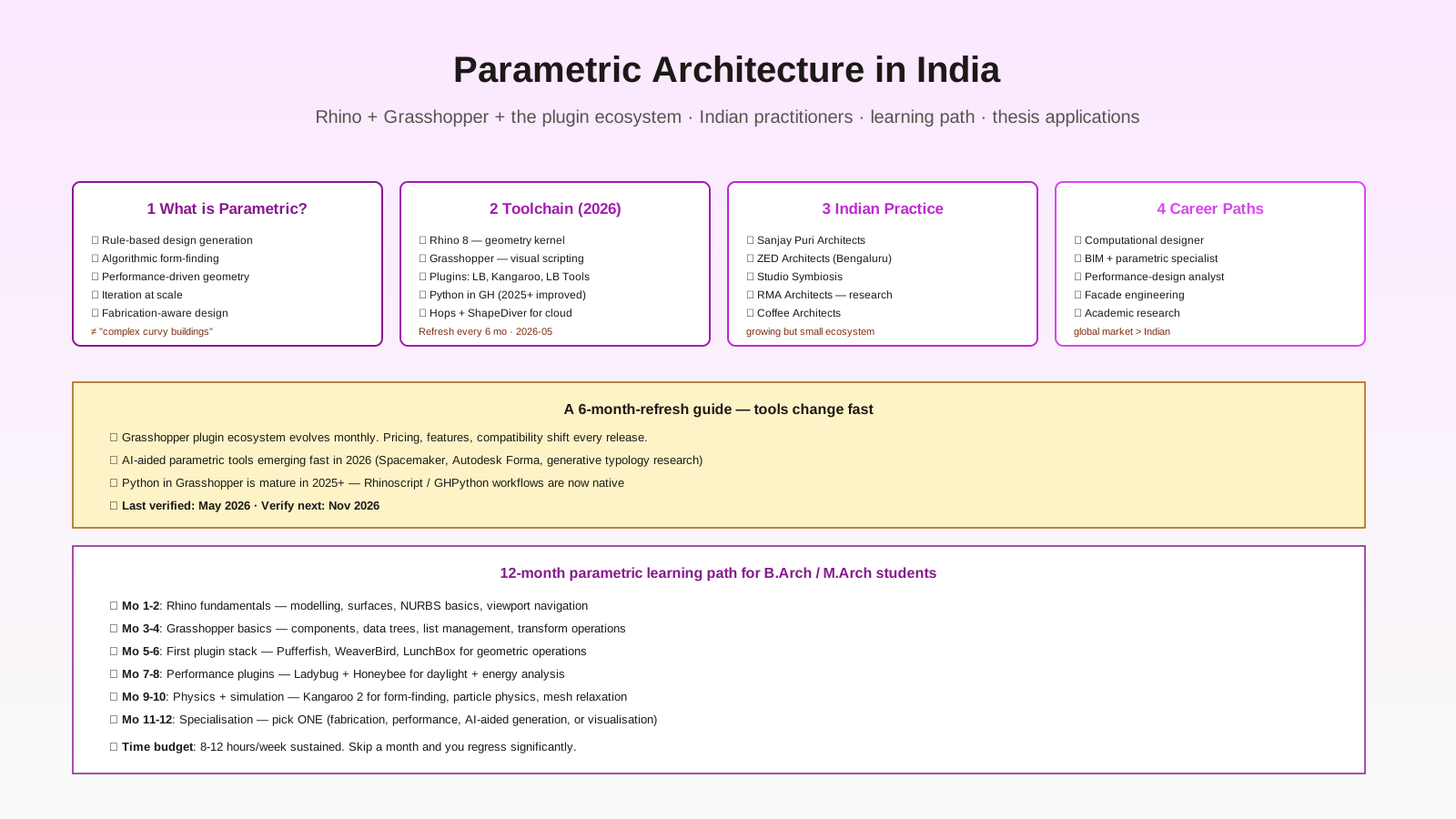
The four-card overview above captures the essential framing. Parametric is:
1. Rule-based design generation — design intent codified as relationships, not drawn line-by-line
2. Algorithmic form-finding — geometry emerges from rules (physics, math, performance) rather than being prescribed
3. Performance-driven geometry — design iterates against measurable performance (daylight, energy, structure, cost)
4. Iteration at scale — algorithms enable testing hundreds of design variants where manual drafting tests three
5. Fabrication-aware design — geometry stays in dialogue with how it will actually be built
It is NOT: curvy or complex forms by default · just "Rhino" or just "Grasshopper" · a style or aesthetic · a substitute for design judgment · only for landmark buildings
The misframing that hurts students most: treating parametric as a visual signature ("look at my curvy facade") rather than as a method that solves specific problems. Faculty and viva panels increasingly distinguish between the two.
The Toolchain — Rhino 8 + Grasshopper 2026
Rhino 8 (released late 2023, mature in 2026)
The geometry kernel. Rhino is the modeller; Grasshopper is the algorithmic interface that drives it. Rhino 8 introduced:
- Native Python in Grasshopper (this matters — previously required separate IronPython workflows)
- SubD modelling improved (better organic geometry workflows)
- Sublayer + display improvements (better for large parametric models)
- Hops + ShapeDiver tighter integration (cloud-executed GH definitions)
For students: install Rhino 8 (educational license ~₹ 1,500-3,000 for one-year student license; verify current price at rhino3d.com). McNeel offers genuine educational discounts.
Grasshopper (built into Rhino)
Visual programming environment. Drag components onto a canvas, wire them together, geometry is generated. Built into Rhino — no separate purchase.
The Grasshopper learning curve is steep at the start (3-4 weeks to feel oriented) and then plateaus. Pushing past plateau into algorithmic thinking (lists, trees, conditional logic) is what separates competent users from genuinely fluent ones.
The Plugin Ecosystem 2026
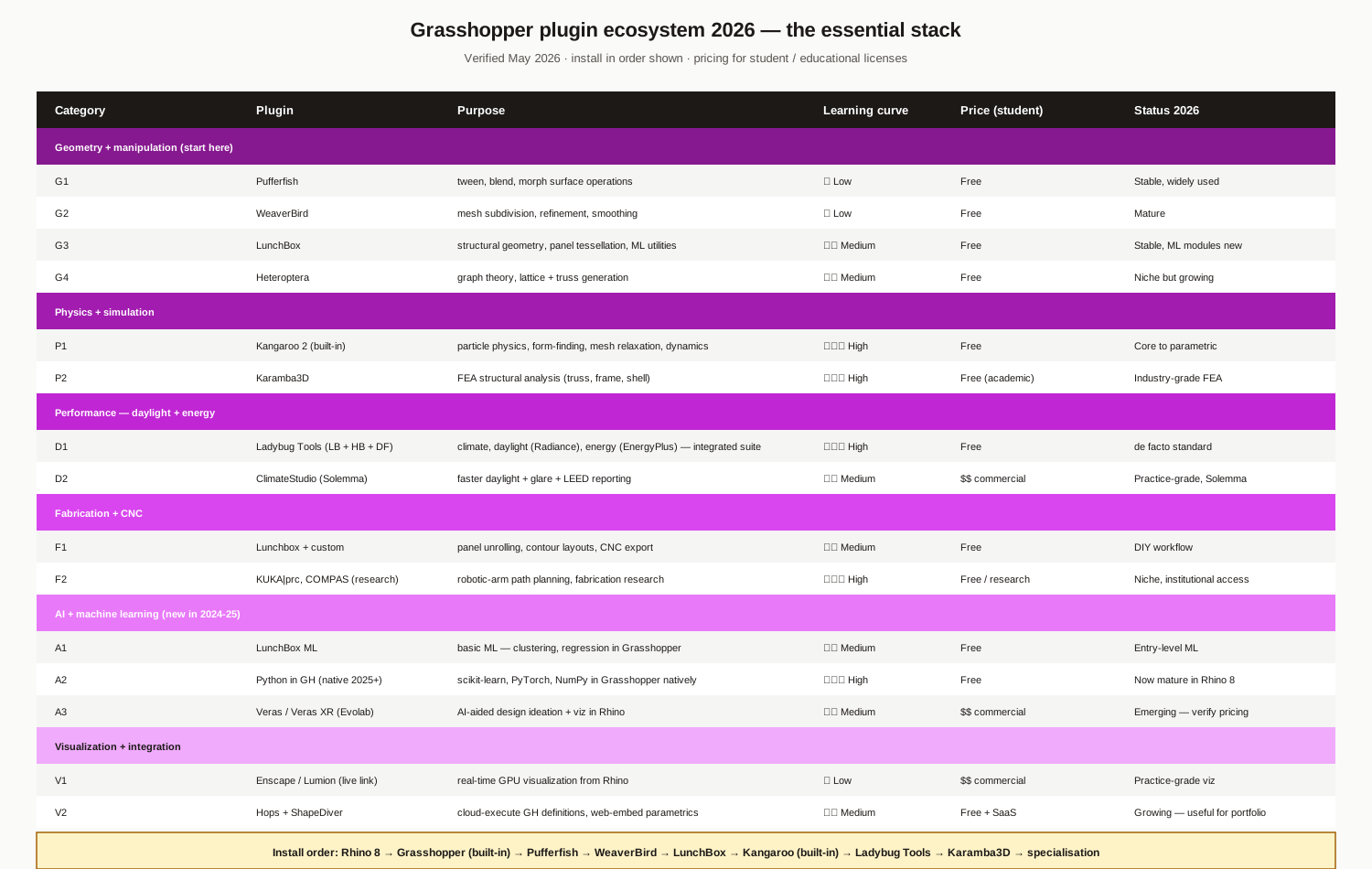
The figure above is the working install order for 2026. Install ONE category at a time and use it for 2-4 weeks before adding the next.
Geometry + manipulation (start here)
- Pufferfish — tween, blend, morph surface operations. Free. Low learning curve. Install first.
- WeaverBird — mesh subdivision, refinement, smoothing. Free. Use with Pufferfish.
- LunchBox — structural geometry, panel tessellation, ML utilities. Free. Most-installed plugin in Indian schools.
- Heteroptera — graph theory, lattice + truss generation. Free. Niche but growing.
Physics + simulation
- Kangaroo 2 (built-in with Rhino 8) — particle physics, form-finding, mesh relaxation, dynamics. Free. Core to advanced parametric.
- Karamba3D — Finite Element Analysis for structures. Free with academic license; commercial license needed for paid work. Industry-grade FEA.
Performance — daylight + energy
- Ladybug Tools (Ladybug + Honeybee + Dragonfly) — the integrated climate + daylight (Radiance backend) + energy (EnergyPlus backend) suite. Free. The de facto standard for environmental-design parametric work.
- ClimateStudio (Solemma) — faster daylight + glare + LEED reporting. Commercial. Used in professional practice.
Fabrication + CNC
- LunchBox + custom — panel unrolling, contour layouts, CNC export. Free. Most-used DIY fabrication workflow.
- KUKA|prc, COMPAS (research) — robotic-arm path planning. Free / research. Niche — requires institutional fab-lab access.
AI + machine learning (new in 2024-25)
- LunchBox ML — basic ML (clustering, regression) in Grasshopper. Free. Entry-level.
- Python in GH (native, Rhino 8) — scikit-learn, PyTorch, NumPy in Grasshopper natively. Free. Now mature.
- Veras / Veras XR (Evolab) — AI-aided design ideation + viz in Rhino. Commercial. Emerging; verify pricing.
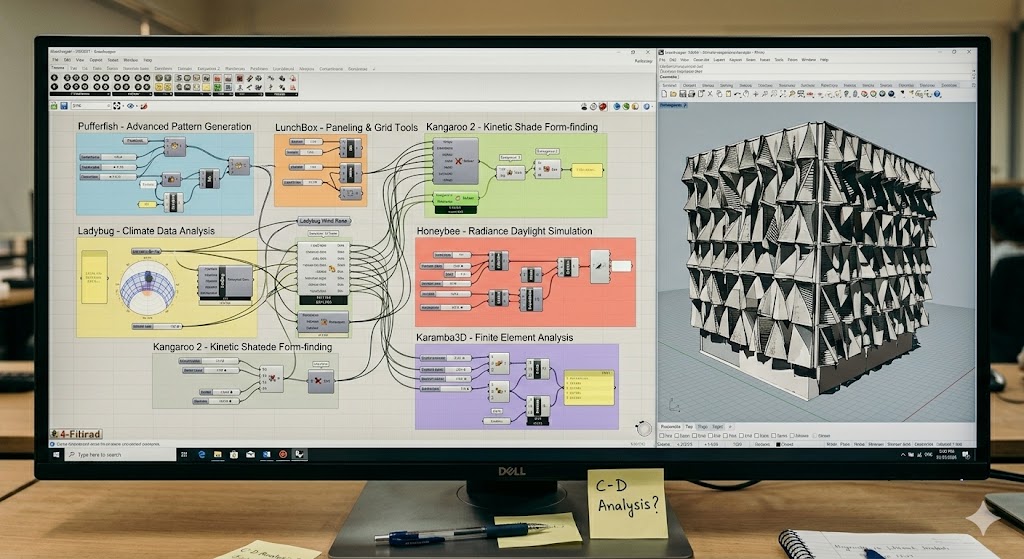
Visualization + integration
- Enscape / Lumion (live link) — real-time GPU visualization from Rhino. Commercial. Practice-grade. See Architectural Visualization in India.
- Hops + ShapeDiver — cloud-execute GH definitions, web-embed parametrics. Free + SaaS. Useful for portfolio and collaborative work.
Indian Practice Ecosystem
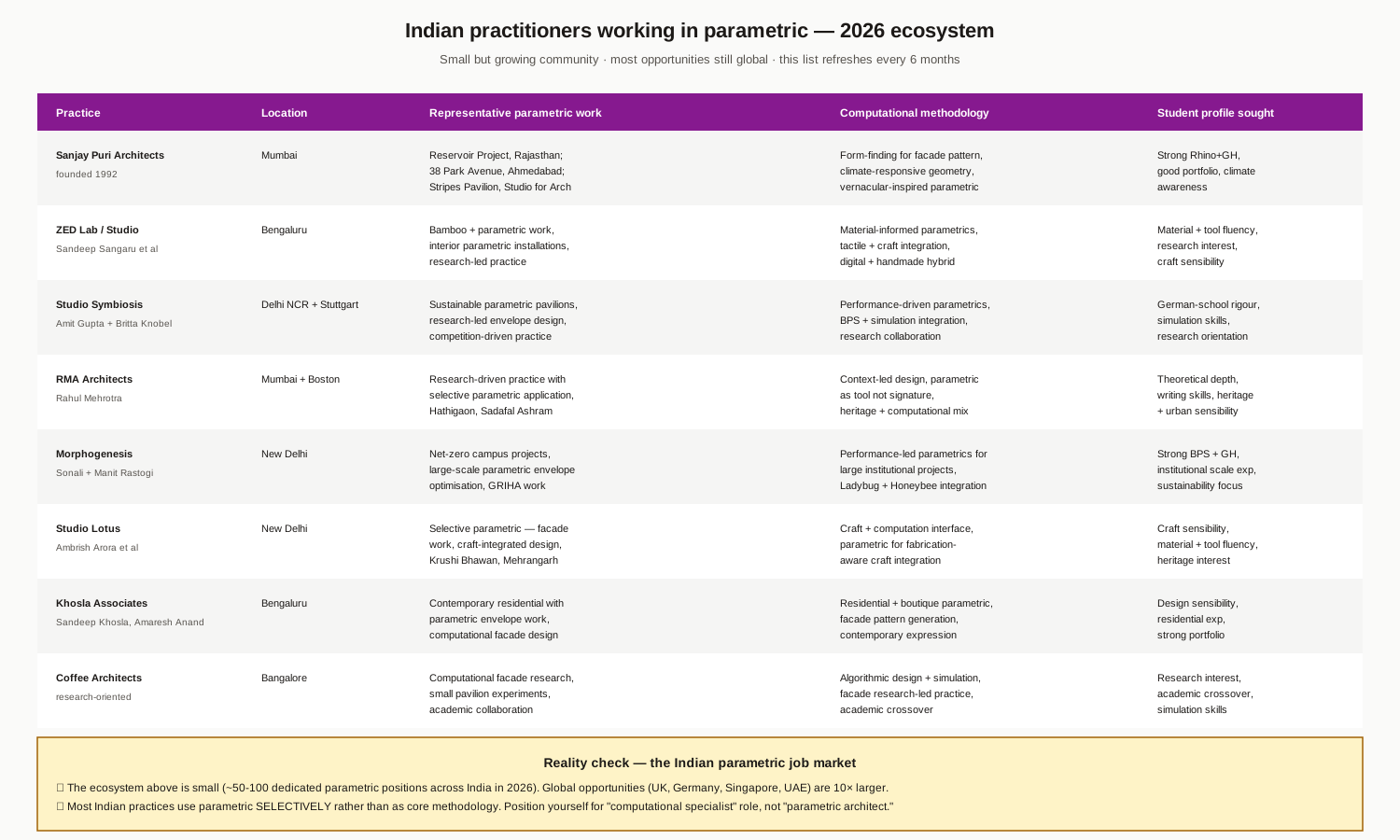
The Indian parametric ecosystem is small but growing. About 50-100 dedicated parametric positions exist across India in 2026. Most opportunities for parametric-specialised graduates run via international firms (London, Singapore, Dubai, Sydney).
Eight practices to know
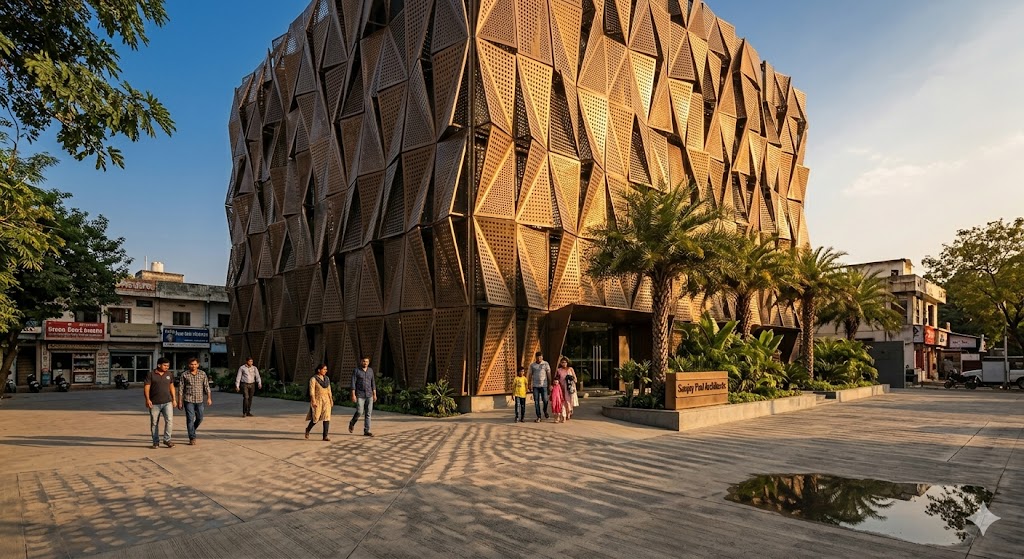
1. Sanjay Puri Architects (Mumbai) — climate-responsive facades, vernacular-inspired parametrics. Reservoir Project (Rajasthan), 38 Park Avenue.
2. ZED Lab / Studio (Bengaluru) — material-informed parametrics, craft + computation hybrid. Bamboo + parametric installations.
3. Studio Symbiosis (Delhi NCR + Stuttgart) — performance-driven parametrics, German-school rigour. Competition-driven, simulation-heavy.
4. RMA Architects (Mumbai + Boston) — Rahul Mehrotra. Research-led; parametric as tool not signature. Theoretical depth.
5. Morphogenesis (New Delhi) — performance-led parametrics at institutional scale; net-zero campuses; GRIHA work.
6. Studio Lotus (New Delhi) — selective parametric in facade work, craft-integrated. Krushi Bhawan, Mehrangarh interventions.
7. Khosla Associates (Bengaluru) — contemporary residential with parametric envelope work; boutique scale.
8. Coffee Architects (Bangalore) — research-oriented; small pavilion experiments; academic collaboration.
Reality check on the Indian market
Most Indian practices use parametric selectively rather than as core methodology. Position yourself as a "computational specialist" who can deliver parametric facade, performance optimisation, or BIM-parametric integration — not as a "parametric architect." The role-fit is far stronger.
Six Thesis Application Workflows
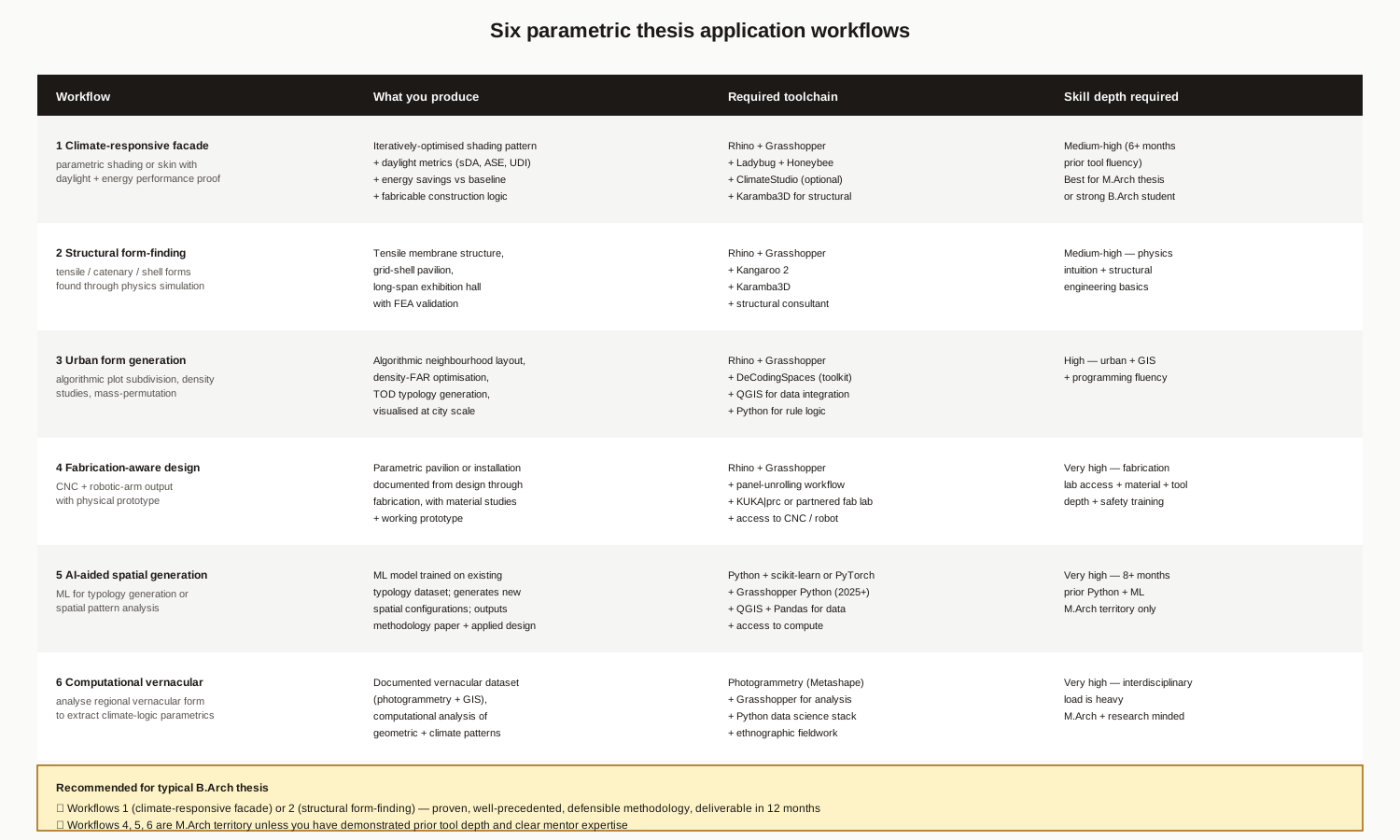
Workflow 1 — Climate-responsive facade (recommended for B.Arch)
Iteratively-optimised shading pattern with daylight metrics (sDA, ASE, UDI), energy savings vs baseline, and fabricable construction logic.
Toolchain: Rhino + Grasshopper + Ladybug + Honeybee + ClimateStudio (optional) + Karamba3D for structural. Skill depth: 6+ months prior tool fluency. Best for: M.Arch thesis or strong B.Arch student.
Workflow 2 — Structural form-finding (recommended for B.Arch)
Tensile membrane, grid-shell pavilion, or long-span exhibition hall with FEA validation.
Toolchain: Rhino + Grasshopper + Kangaroo 2 + Karamba3D + structural consultant. Skill depth: physics intuition + structural engineering basics.
Workflow 3 — Urban form generation
Algorithmic neighbourhood layout, density-FAR optimisation, TOD typology generation at city scale.
Toolchain: Rhino + Grasshopper + DeCodingSpaces toolkit + QGIS + Python. Skill depth: urban + GIS + programming fluency.
Workflow 4 — Fabrication-aware design
Parametric pavilion or installation documented design through fabrication, with material studies and working prototype.
Toolchain: Rhino + Grasshopper + panel-unrolling workflow + KUKA|prc or partnered fab lab + access to CNC / robot. Skill depth: very high. Fabrication lab access + material + tool depth + safety training.
Workflow 5 — AI-aided spatial generation (M.Arch territory)
ML model trained on existing typology dataset; generates new spatial configurations; methodology paper + applied design.
Toolchain: Python + scikit-learn or PyTorch + Grasshopper Python (2025+) + QGIS + Pandas + compute access. Skill depth: 8+ months prior Python + ML. M.Arch only.
Workflow 6 — Computational analysis of vernacular (M.Arch territory)
Documented vernacular dataset (photogrammetry + GIS), computational analysis of geometric + climate patterns.
Toolchain: Photogrammetry (Metashape) + Grasshopper + Python data science + ethnographic fieldwork. Skill depth: very high; interdisciplinary load is heavy. M.Arch + research-minded.
Recommended for typical B.Arch thesis
Workflows 1 or 2 — proven, well-precedented, defensible methodology, deliverable in 12 months. Workflows 4, 5, 6 are M.Arch territory unless you have demonstrated prior tool depth and clear mentor expertise.
The 12-Month Learning Path
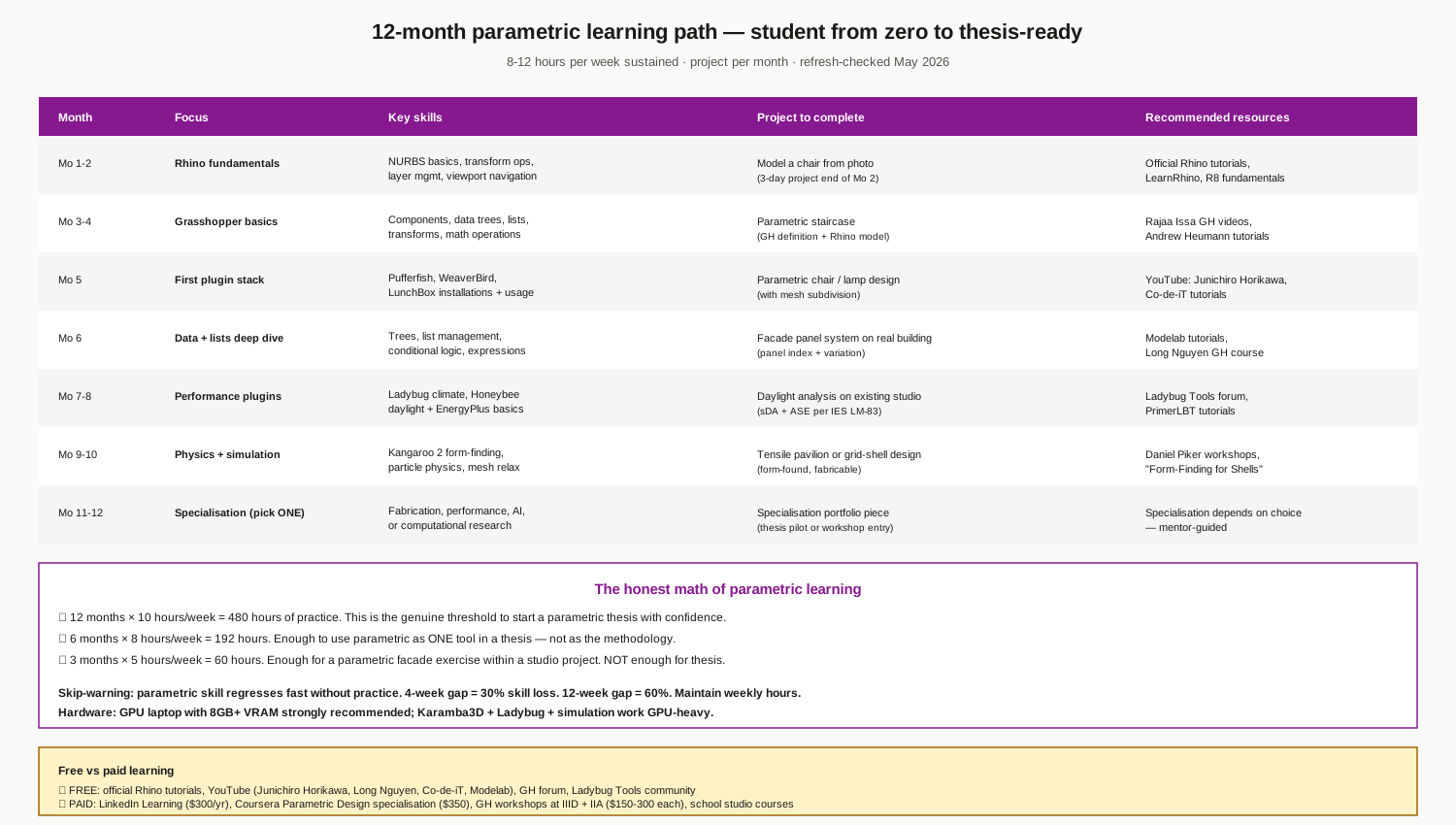
Twelve months. Eight to twelve hours per week sustained. Project per month. The figure above is the working schedule.
The honest math of parametric learning
- 12 months × 10 hours/week = 480 hours. The genuine threshold to start a parametric thesis with confidence.
- 6 months × 8 hours/week = 192 hours. Enough to use parametric as ONE tool in a thesis — not as the methodology.
- 3 months × 5 hours/week = 60 hours. Enough for a parametric facade exercise within a studio project. NOT enough for thesis.
Skip-warning
Parametric skill regresses fast without practice. 4-week gap = 30% skill loss. 12-week gap = 60%. Maintain weekly hours through the year.
Free vs paid learning
Free: official Rhino tutorials, YouTube (Junichiro Horikawa, Long Nguyen, Co-de-iT, Modelab), GH forum, Ladybug Tools community.
Paid: LinkedIn Learning ($300/yr), Coursera Parametric Design specialisation ($350), GH workshops at IIID + IIA ($150-300 each), school studio courses.
Hardware
GPU laptop with 8GB+ VRAM strongly recommended. Karamba3D + Ladybug + simulation work is GPU-heavy. An older laptop without dedicated GPU will frustrate you by Month 7.
Six Career Pathways
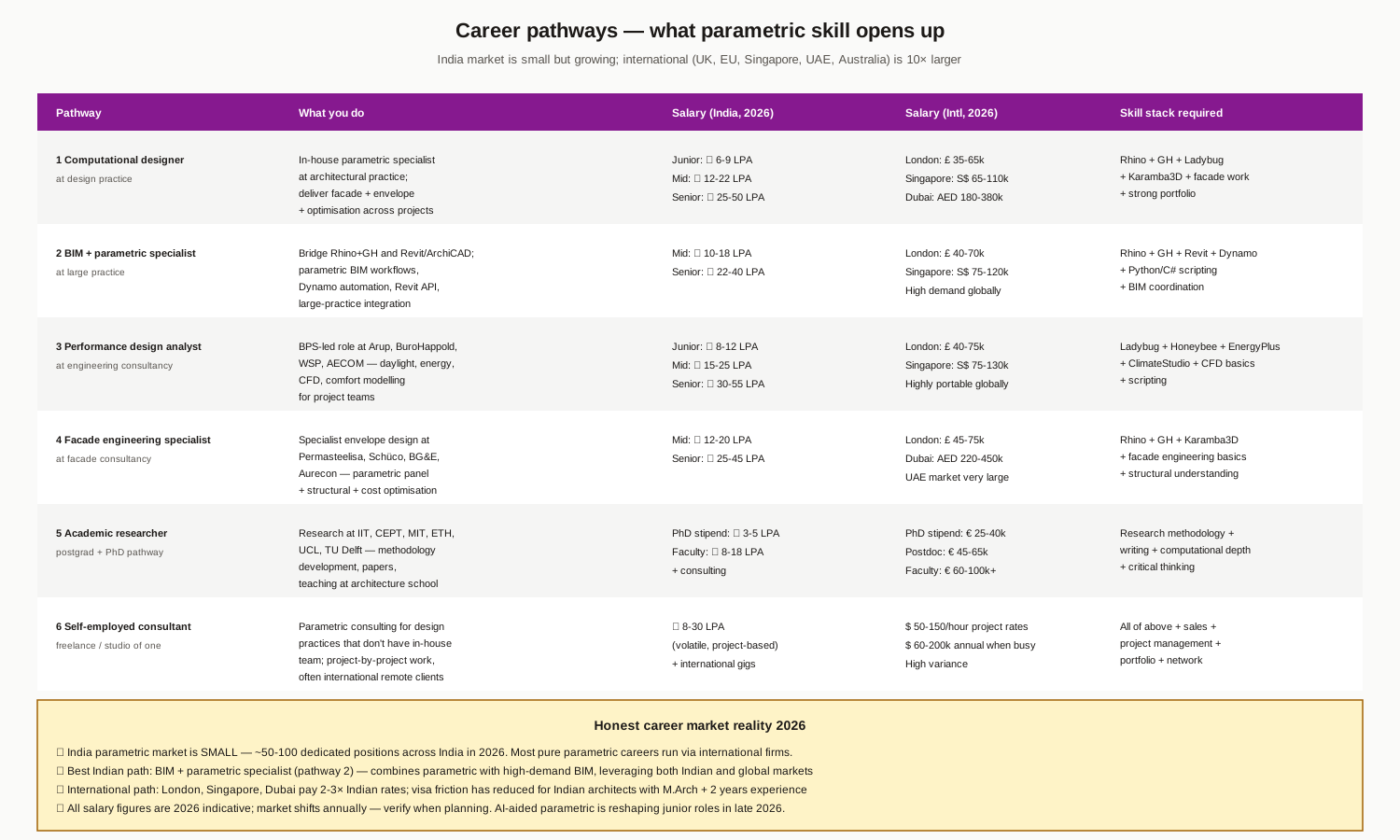
| # | Pathway | India salary (2026) | Best international |
|---|---|---|---|
| 1 | Computational designer at design practice | ₹ 6-50 LPA | London £35-65k, Singapore S$65-110k |
| 2 | BIM + parametric specialist at large practice | ₹ 10-40 LPA | London £40-70k, Singapore S$75-120k |
| 3 | Performance design analyst at engineering consultancy | ₹ 8-55 LPA | London £40-75k, Singapore S$75-130k |
| 4 | Facade engineering specialist | ₹ 12-45 LPA | London £45-75k, Dubai AED 220-450k |
| 5 | Academic researcher (PhD + faculty) | ₹ 3-18 LPA + consult | EU € 25-100k |
| 6 | Self-employed consultant | ₹ 8-30 LPA + intl. gigs | $50-150/hour project rates |
The realistic best-fit Indian path
Pathway 2 — BIM + parametric specialist is the most viable Indian career. It combines parametric with high-demand BIM, leveraging both Indian and global markets, and Indian practices have growing demand for the integration role.
International routes
London, Singapore, Dubai pay 2-3× Indian rates. Visa friction has reduced for Indian architects with M.Arch + 2 years experience. Apply via firm transfers, direct international application, or specialist agencies.
Six Common Mistakes Students Make with Parametric
1. Treating parametric as a style. "I want my building to look parametric" produces shallow, signature-chasing work. Use it for a specific problem.
2. Starting with the wrong project. Trying to model a complex Frank Gehry-like form before learning Rhino fundamentals. Start with a chair, then a staircase, then a facade. Build base muscles first.
3. Skipping data trees. Lists and trees are the hardest part of Grasshopper. Most students avoid them and stay stuck in basic workflows. Spend Mo 6 on this. It unlocks everything else.
4. Plugin overload early. Installing 15 plugins before learning core Grasshopper produces canvas chaos. Add plugins one at a time as needed.
5. No working prototypes. Parametric on screen without anything physical = thesis vulnerability. Build at least one model or prototype to test fabrication logic.
6. Career-planning around "parametric architect." This role is rare. Plan around "computational specialist," "BIM + parametric," "facade engineer," or "performance analyst" — these are real roles.
Pre-Thesis Parametric Checklist
1. Tool fluency — 400+ hours of cumulative Grasshopper practice, confirmed by 3-4 distinct portfolio pieces
2. Plugin specialisation — one performance, simulation, or fabrication plugin used in depth (not surface-level)
3. Faculty mentor with parametric expertise OR access to external mentor (industry, online community)
4. Thesis workflow chosen from the six in the figure above — committed in writing with scope boundaries
5. Hardware capable — GPU laptop verified to run your chosen toolchain at scale
6. Mentor agreement — thesis guide has confirmed parametric methodology fits their guidance ability
7. Backup plan — what's the non-parametric version of this thesis if the methodology fails by Mo 6?
Where to Go Next
- For BIM-parametric integration: BIM Architecture in India
- For visualization workflows that complement parametric: Architectural Visualization in India
- For thesis methodology framework: Architecture Thesis Methodology in India
- For thesis topics: Architecture Thesis Topics in India — workflows 1-2 in family 7 are direct parametric applications
- For broader software learning path: Architecture Software Learning Path
- For competition + portfolio building around parametric: Architecture Competitions for India + Global Students, Architecture Portfolio Building
- For career planning: Career Pathways After B.Arch
References
1. McNeel & Associates. Rhino 8 Release Notes and Documentation (2023-2026 updates).
2. Issa, R. (2018). Essential Mathematics for Computational Design. McNeel.
3. Tedeschi, A. (2014). AAD Algorithms-Aided Design. Le Penseur Publisher.
4. Roudsari, M. & Pak, M. (2018-). Ladybug Tools Documentation. ladybug.tools.
5. Preisinger, C. (2013). Linking Structure and Parametric Geometry. Karamba3D documentation.
6. Hudson, R. (2010). Strategies for Parametric Design in Architecture. University of Bath PhD.
7. Burry, J. & Burry, M. (2010). The New Mathematics of Architecture. Thames & Hudson.
8. Schumacher, P. (2009). Parametricism — A New Global Style for Architecture and Urban Design. AD Magazine.
9. NIASA / COA / AICTE curriculum updates on computational design (2024-25).
10. Indian Institute of Architects (IIA) workshops on parametric and computational design (2024-25 series).
Author's note: Parametric architecture rewards depth over breadth. Pick a narrow specialisation — performance, fabrication, or computation — and go deep over 12 months rather than trying every plugin. Build three thesis-quality portfolio pieces in your specialisation. Network into the small Indian community (Sanjay Puri, Studio Symbiosis, Morphogenesis are hiring routes). And stay current — this ecosystem changes every 6 months. The student who treats parametric as a serious 5-year practice commitment will outpace the one who treats it as a thesis novelty by Year 3 of practice.
Disclaimer: This guide reflects the parametric architecture ecosystem in India as of 2026-05-21 and is refreshed every 6 months because plugin availability, pricing, AI-aided tools, and practice ecosystems evolve rapidly. Tool versions, plugin compatibility, and pricing should be verified directly with publishers (McNeel, Solemma, Ladybug Tools, Evolab, etc.) before commitment. Practice rosters reflect publicly known parametric work; the Indian computational design ecosystem is wider than the eight practices listed. Salary benchmarks are 2026 indicative and shift with market conditions; AI-aided design tooling is reshaping junior compensation in late 2026. Career pathway feasibility for international roles depends on visa policy, individual portfolio, and market timing. Studio Matrx, its authors and contributors are not responsible for career, learning, or thesis decisions made on the basis of this guide; consult faculty mentors, practising parametric architects, and dedicated parametric communities for individual guidance.
Interactive · Parametric facade morpher
Amplitude 14 · Frequency 2.0 · Twist 0.0
Current preset
Sine wave
Echoes the Aldar HQ Abu Dhabi or Aranya Bhawan Bhopal — single-sine facade modulation.
Real-world process
- 1.Designer scripts the rule in Grasshopper / Dynamo / Houdini
- 2.Parameters tied to inputs: sun angle, view cones, structural loads
- 3.Each panel becomes a fabrication file (CNC, sheet-bend, 3D-print mould)
- 4.BIM model receives geometry for documentation
India watch-out
Glamorous on render — costly on site. Each unique panel adds fabrication and tolerance overhead. Group panels in a few repeating families before construction-issue.
Export this guide
Related Guides — Deep-dive reading
Rhino + Grasshopper for Architecture Students — A Beginner's Tutorial (India)
The interface, NURBS vs mesh, your first Grasshopper definition step by step, data trees, the plugin stack, Indian student licences, hardware budgets & a 12-week path to fluency
Student FoundationsB.Des Interior Design — The Student Track
The 2026 Reference for the Indian B.Des Interior Aspirant — How It Differs from B.Arch, the Top Schools (NID · Pearl · Symbiosis · NIFT · Sushant), the Four-Year Curriculum, the Software Stack, FF&E and Materials Vocabulary, Studio Discipline, Portfolio Building, Internship Pathways, Career Trajectories, and the Long-Horizon Practice Map
Student FoundationsThe Software Stack — A Working Learning Path
Module 2 of the Student Foundations Track — AutoCAD to Revit to Rhino to V-Ray, the Five-Tier Learning Path, Indian Licensing Discipline, Hardware Requirements, File-Format Ecosystem, Generative-AI Architecture Tools in 2026, and the Pitfalls Every B.Arch and B.Des Student Must Avoid
Student FoundationsRelated Tools — Try Free
Cross-Ventilation Analyzer
Estimate airflow and air changes per hour (ACH) from room size, window areas, layout, and local wind — with NBC 2016 Part 8 compliance check.
Ventilation CalculatorBrise-Soleil Visualizer
Interactive horizontal-louvre cut-off angle calculator — sun altitude, louvre depth, and spacing inputs with a live shadow preview. Computes θ = arctan(spacing/depth) for façade shading, ECBC envelope compliance, hospital daylight design, and tropical sun-control detailing.
Sun Shading ToolJaali Generator
Design a parametric jaali / perforated screen, see its open-area (daylight vs privacy), and download a print-ready SVG for CNC/laser fabrication.
Parametric Tool