
Architecture for Extreme EnvironmentsVolume 1 · Issue 4 · September 2026
Architecture for Extreme Environments
Designing where the ordinary assumptions of building break down — the edge of the possible (when the ground gives way; what extreme-environment architecture is; the spectrum from flood to Mars; the promise separated from the hype), water is rising (why water is the frontier, sea-level rise and cities, the limits of keeping water out, living with water), floating architecture (how buildings float, floating homes and neighbourhoods, mooring and services, floating in practice), amphibious and flood-resilient design (amphibious buildings, raised and stilted building, wet- and dry-proofing, resilient communities and managed retreat), floating cities and the ocean (the dream, seasteading and its problems, ocean-engineering realities, hype versus the near-term), the frozen world (extreme cold, polar research stations, high altitude and the Himalaya, the body in the cold), the burning world (extreme heat, desert shelter and tradition, water and energy in the desert, arid settlement today), below the surface (subterranean architecture, underwater habitats, pressure and light and life support, when to build below), leaving Earth (why space is the ultimate extreme, life support and the closed loop, the space station as architecture, the human in the capsule; then building on the Moon, building on Mars, in-situ resource use, the honest timeline of settlement), and the lessons the edge teaches all design (what extremes teach, the closed-loop mindset, extreme environments in India, the architect at the frontier). Rigorous and honest — the field is full of hype and never-built renders, so the genuinely useful and near-term (flood-resilient floating and amphibious housing for real communities now, proven polar stations, desert and delta vernacular) is separated firmly from the speculative and distant (seasteading, ocean cities, permanent Mars settlement) — for architects, interior designers and students. In a hostile environment the envelope is life support and a failure kills, so this is design education, not engineering: it defers all structural, marine, aerospace, pressure, life-support, radiation, fire and safety engineering, and every certification, approval and life-safety determination, to qualified engineers and specialists, tested systems and the governing codes and standards (NBC India, IS codes, and marine, aviation and space-agency standards), treating projects and systems as illustrative. India-aware, on the front line of the water and flood emergency and rich in traditional extreme-environment wisdom (Assam and Bengal flood-adapted houses, Kerala and Kashmir houseboats, Ladakh cold-desert and Thar hot-arid vernacular) and home to a respected space programme. The final course of the Studio Matrx Academy emerging-tech flagship program.
Course byAmogh N P· Architect & interior designer11 modules · 44 lessons · ~15 hrs · 44 of 44 lessons live

 Module 0 · The Edge of the Possible
0.1 · When the Ground Gives Way
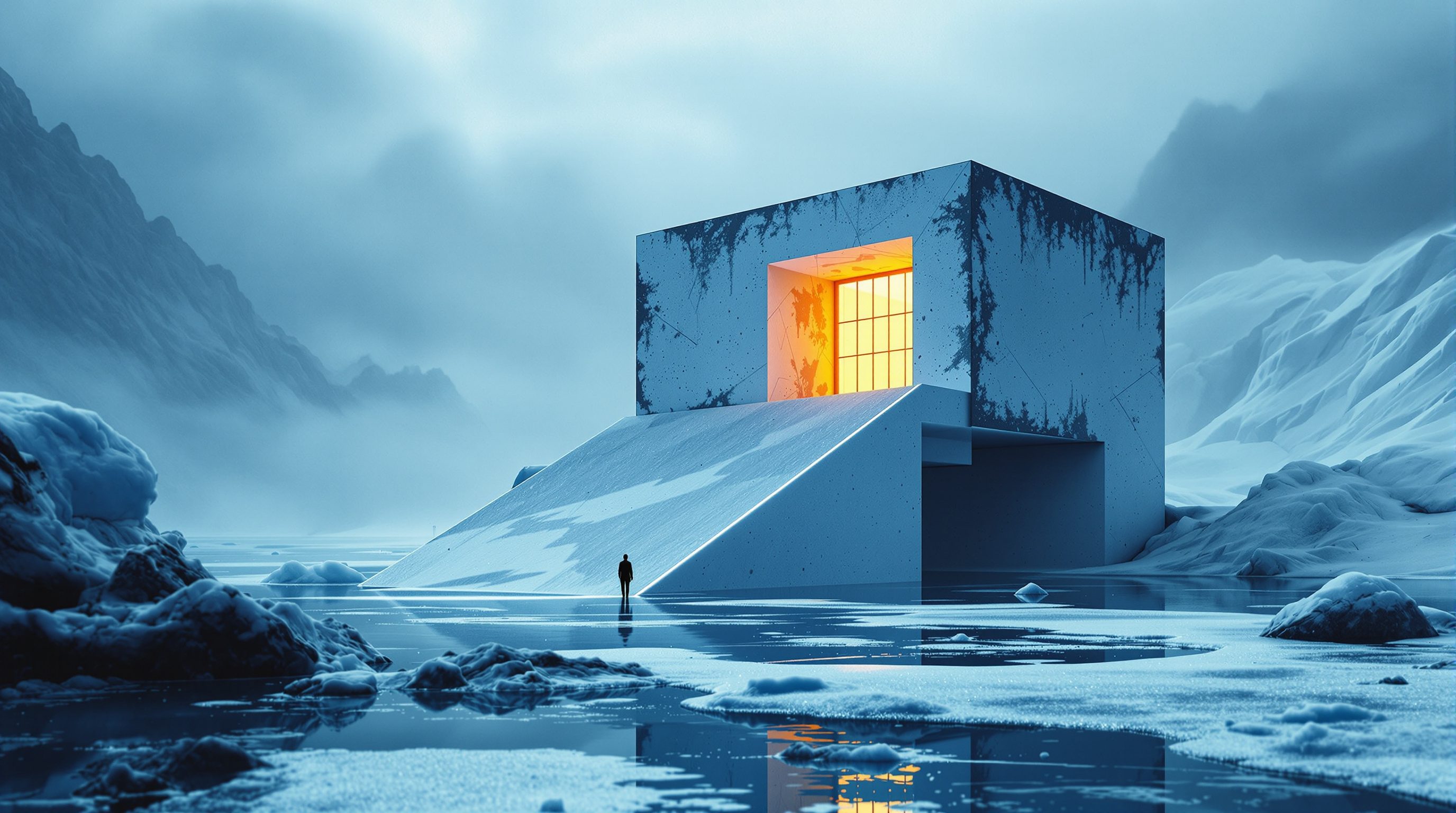
Ordinary architecture rests on assumptions we never design for: air, tolerable temperature, solid dry ground, gravity, water and materials to hand. Extreme-environment architecture is what you do when those fail - from water rising into cities now to the airless Moon later.
Read itStart with Module 0 — The Edge of the Possible
Free · open0.1 · When the Ground Gives Way
Open0.2 · What Extreme-Environment Architecture Is
Open0.3 · The Spectrum of Extremes
Open0.4 · The Promise & the Hype
Open0.✓ · Mastery check: The Edge of the Possible
OpenWhat this course covers
The through-line- 1Water Is Rising. The most pressing extreme, and the most real: why water is the frontier, sea-level rise and cities, the limits of keeping water out, and living with water rather than against it.
- 2Floating Architecture. Building on the water: how buildings float, floating homes and neighbourhoods, mooring, services and the hard problems, and floating architecture in real-world practice.
- 3Amphibious & Flood-Resilient Design. Living with rising water: amphibious buildings that float only when they must, raised and stilted buildings, wet- and dry-proofing, and resilient communities and managed retreat.
- 4Floating Cities & the Ocean. Ambition weighed against reality: the floating-city dream, seasteading and its problems, ocean-engineering realities, and the hype set honestly against the near-term.
The full course ahead
11 modules · 44 lessons11 modules and 44 lessons, from the foundations through to practice — each lesson with a three-tier read, a hands-on workshop, hand-drawn figures and a scored mastery check.
0Module 0 · The Edge of the Possible
LiveBefore any technique: when the ground gives way, what extreme-environment architecture is, the spectrum from flood to Mars, and the promise separated honestly from the hype.
Module 0 · The Edge of the Possible
LiveBefore any technique: when the ground gives way, what extreme-environment architecture is, the spectrum from flood to Mars, and the promise separated honestly from the hype.
1Module 1 · Water Is Rising
LiveThe most pressing extreme, and the most real: why water is the frontier, sea-level rise and cities, the limits of keeping water out, and living with water rather than against it.
Module 1 · Water Is Rising
LiveThe most pressing extreme, and the most real: why water is the frontier, sea-level rise and cities, the limits of keeping water out, and living with water rather than against it.
2Module 2 · Floating Architecture
LiveBuilding on the water: how buildings float, floating homes and neighbourhoods, mooring, services and the hard problems, and floating architecture in real-world practice.
Module 2 · Floating Architecture
LiveBuilding on the water: how buildings float, floating homes and neighbourhoods, mooring, services and the hard problems, and floating architecture in real-world practice.
3Module 3 · Amphibious & Flood-Resilient Design
LiveLiving with rising water: amphibious buildings that float only when they must, raised and stilted buildings, wet- and dry-proofing, and resilient communities and managed retreat.
Module 3 · Amphibious & Flood-Resilient Design
LiveLiving with rising water: amphibious buildings that float only when they must, raised and stilted buildings, wet- and dry-proofing, and resilient communities and managed retreat.
4Module 4 · Floating Cities & the Ocean
LiveAmbition weighed against reality: the floating-city dream, seasteading and its problems, ocean-engineering realities, and the hype set honestly against the near-term.
Module 4 · Floating Cities & the Ocean
LiveAmbition weighed against reality: the floating-city dream, seasteading and its problems, ocean-engineering realities, and the hype set honestly against the near-term.
5Module 5 · The Frozen World
LiveCold and altitude: designing for extreme cold, polar research stations, high altitude and the Himalaya, and cold comfort and the human body.
Module 5 · The Frozen World
LiveCold and altitude: designing for extreme cold, polar research stations, high altitude and the Himalaya, and cold comfort and the human body.
6Module 6 · The Burning World
LiveHeat and drought: designing for extreme heat, desert shelter and tradition, water and energy in the desert, and arid settlement today.
Module 6 · The Burning World
LiveHeat and drought: designing for extreme heat, desert shelter and tradition, water and energy in the desert, and arid settlement today.
7Module 7 · Below the Surface
LiveUnderground and underwater: subterranean architecture, underwater habitats, pressure, light and life support, and when it is worth building below.
Module 7 · Below the Surface
LiveUnderground and underwater: subterranean architecture, underwater habitats, pressure, light and life support, and when it is worth building below.
8Module 8 · Leaving Earth I — Orbit & the Journey
LiveThe ultimate extreme begins: why space is the hardest environment, life support and the closed loop, the space station as architecture, and the human in the capsule.
Module 8 · Leaving Earth I — Orbit & the Journey
LiveThe ultimate extreme begins: why space is the hardest environment, life support and the closed loop, the space station as architecture, and the human in the capsule.
9Module 9 · Leaving Earth II — Moon & Mars
LiveBuilding on other worlds, honestly: building on the Moon, building on Mars, using local materials (ISRU), and the honest timeline of off-world settlement.
Module 9 · Leaving Earth II — Moon & Mars
LiveBuilding on other worlds, honestly: building on the Moon, building on Mars, using local materials (ISRU), and the honest timeline of off-world settlement.
10Module 10 · Lessons From the Edge
LiveWhat the frontier teaches the everyday: what extremes teach all design, the closed-loop mindset, extreme environments in India, and the architect at the frontier.
Module 10 · Lessons From the Edge
LiveWhat the frontier teaches the everyday: what extremes teach all design, the closed-loop mindset, extreme environments in India, and the architect at the frontier.
The author
Amogh N P
Architect, interior designer, and creative polymath. Studio Matrx began in his notebooks — his vision of design made honest, useful, and open to everyone. Its Academy is written and taught in his memory, and free, forever.
More about Amogh →