
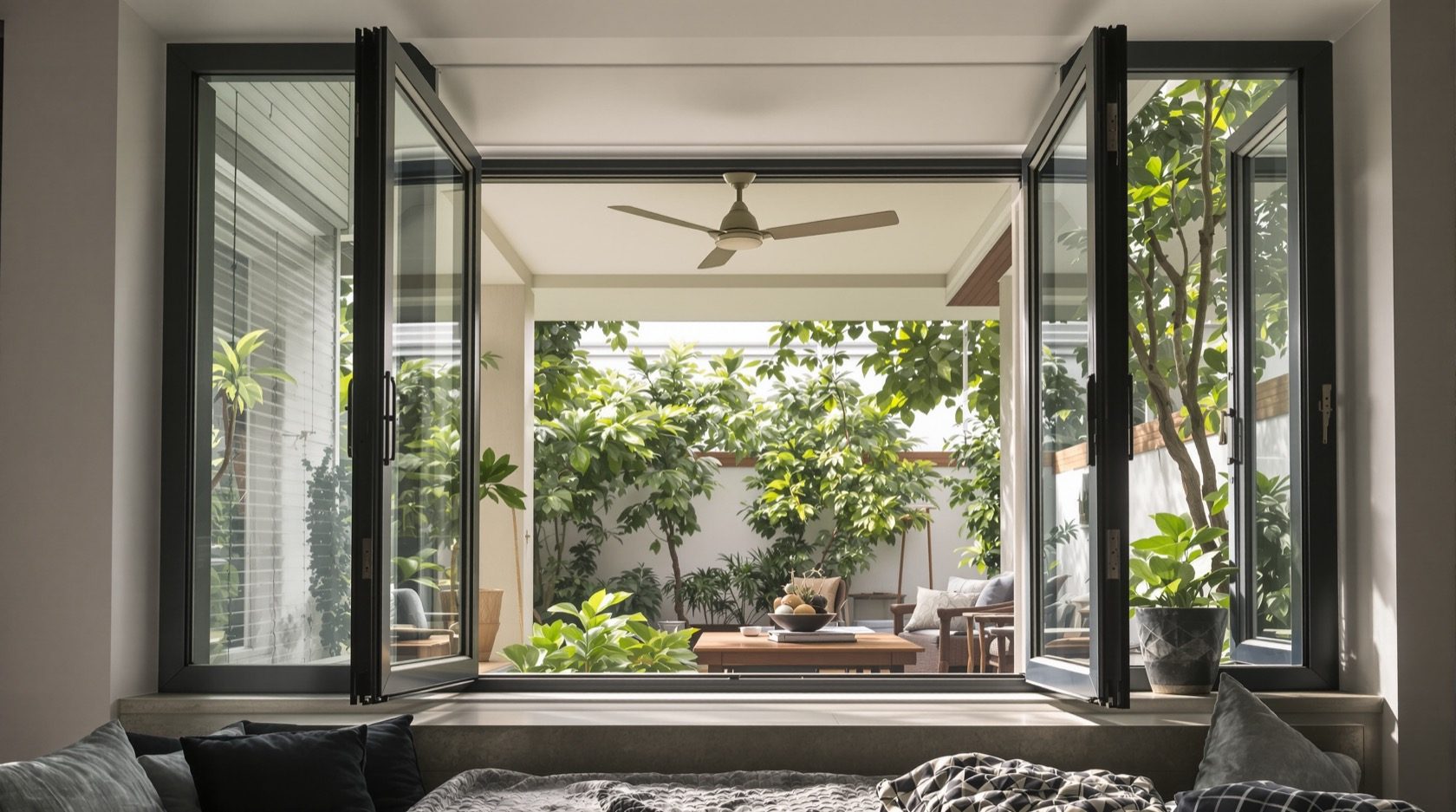
HVAC for Temperate Climates: When You Barely Need It
Bengaluru, Pune and the southern plateau enjoy India's mildest weather — so the smartest HVAC move is often to do less. How fans, ventilation and a good envelope carry most of the year, with modest cooling for a few peak weeks.
Bengaluru, Pune, and much of the southern Deccan plateau enjoy something the rest of India envies: genuinely pleasant weather for most of the year. Moderate temperatures, cool evenings, and a comfortable range mean the temperate zone has the easiest HVAC brief in the country — and the smartest response is often to resist over-engineering. A ceiling fan, good ventilation and a sensible house carry most of the year here; heavy cooling is a few-weeks-a-year top-up, not a way of life. This guide explains how to stay comfortable in a temperate Indian climate without over-spending on machinery.
It builds on the Climate Zone HVAC Guide, part of the HVAC Knowledge Hub. This is practical homeowner guidance for a mild-climate home.
Scope. Practical guidance for genuinely moderate climates; note that mild zones are warming and urban heat islands (in big cities) raise the peak — plan for a modestly hotter future.
Why "do less" is the right answer
The temperate zone's mildness reshapes the whole approach:
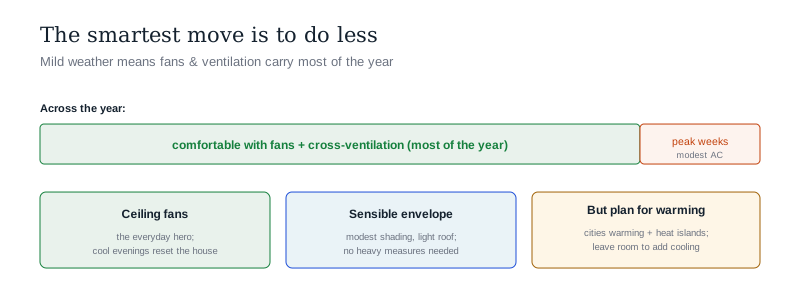
- Most of the year is already comfortable — indoor temperatures sit near the comfort zone, so a little air movement is often all you need to feel cool.
- Cool evenings and nights — even warm days give way to pleasant nights, so night ventilation resets the house daily.
- The peak is short — only a few weeks (typically the pre-monsoon warm spell) genuinely warrant air conditioning; buying and running heavy AC year-round wastes money and energy the climate doesn't demand.
The temperate homeowner's advantage is not needing much — and spending accordingly.
The temperate toolkit
- Ceiling fans — the hero of the temperate home: cheap, low-energy, and enough to feel comfortable a few degrees warmer for most of the year (see passive cooling).
- Cross-ventilation — good openable windows on opposite sides let the pleasant breeze and cool evening air flow through; the mild climate rewards a naturally ventilated house.
- A sensible envelope — modest shading and a light-coloured, insulated roof keep the few hot afternoons in check (see heat transfer); you don't need the heavy measures a hot zone demands.
- Modest cooling for the peak — a right-sized AC in the bedroom for the hottest weeks, used sparingly, is plenty — a 5-star inverter pays for itself slowly here precisely because it runs little.
- A little warmth in the coolest months — the temperate winter is mild, but a light layer or a small heater on the coolest mornings suffices; no heating system needed.
Don't over-engineer — but plan for warming
- Resist the default AC-everywhere reflex — in this climate it's often unnecessary spending; fans and ventilation are the sensible baseline.
- But acknowledge change — mild cities are warming, and big-city heat islands (Bengaluru, Pune) push up peak temperatures, so design so cooling can be added modestly, and prioritise the envelope that helps in a hotter future.
- Efficiency still matters — even light AC use benefits from a good star rating and sensible setpoints.
The one-line answer
The temperate zone (Bengaluru, Pune, the southern plateau) has India's mildest weather and easiest HVAC brief, so the smartest move is usually to do less: for most of the year indoor temperatures sit near the comfort zone, so ceiling fans and cross-ventilation — helped by cool evenings and night ventilation — keep a home comfortable, and only a few peak weeks genuinely warrant air conditioning. The toolkit is light: fans as the everyday hero, a naturally ventilated layout, a sensible envelope (modest shading, a light insulated roof) for the hot afternoons, and a right-sized inverter AC in the bedroom used sparingly for the peak (no heating system needed for the mild winter). The key discipline is to resist the AC-everywhere reflex that wastes money the climate doesn't demand — while acknowledging that mild cities are warming and urban heat islands raise the peak, so build a good envelope and leave room to add modest cooling for a hotter future.
Where to go next
- The zone map: Climate Zone HVAC Guide.
- The everyday tools: Passive Cooling Guide · Home Ventilation Guide.
- If you do buy AC: Choosing an Air Conditioner · BEE Star Rating Guide.
- The demanding cousin: Composite Climate HVAC.
References
- National Building Code of India, SP 7 : 2026 (temperate/moderate climate design); Bureau of Energy Efficiency (BEE) — Eco Niwas Samhita: https://beeindia.gov.in/
- ISHRAE — climate-responsive design & natural ventilation; India Meteorological Department (IMD) climatic data.
- Urban heat-island and climate-warming references for Indian cities.
Practical guidance for moderate climates; plan for a modestly warmer future. System selection is qualified MEP/HVAC work tuned to local conditions.
Export this guide
Related Guides — Deep-dive reading
Designing a Naturally Energy-Efficient Indian Home
Comfort first, gadgets last — passive design, orientation, insulation, ventilation and the climate wisdom that cuts Indian energy bills
SustainabilityPassive Cooling Through Windows (India): Cool a Home Without the AC
How a window's operable area, cross and stack ventilation, night purge, external shading and low-SHGC glass keep an Indian room comfortable without air conditioning.
Windows & GlazingPassive Cooling: Keeping a Home Cool Without (Much) Air Conditioning
India cooled itself for millennia before the AC — the passive strategies that keep a building comfortable using design, not machines: shading and orientation, natural and night ventilation, thermal mass, evaporative cooling and cool roofs, and how they slash the cooling load.
HVAC & CoolingRelated Tools — Try Free
Cross-Ventilation Analyzer
Estimate airflow and air changes per hour (ACH) from room size, window areas, layout, and local wind — with NBC 2016 Part 8 compliance check.
Ventilation CalculatorWindow Energy Savings Calculator
Compare standard glazing vs Low-E and DGU windows — annual cooling savings, 10-year savings and payback.
Window CalculatorFuture Home Comfort Score
Score your home 0 to 100 on daylight, ventilation, thermal and acoustic comfort and find the weak link.
Window Tool