
Passive Cooling Through Windows (India): Cool a Home Without the AC
How a window's operable area, cross and stack ventilation, night purge, external shading and low-SHGC glass keep an Indian room comfortable without air conditioning.
A window is the single biggest lever a homeowner has over how hot a room feels. The wall stops most heat, the roof can be insulated once, but the window does three jobs at once: it lets light in, it lets heat in, and it lets air move. Get those three balanced and a room in Chennai or Nagpur can stay comfortable for most of the year on breeze alone. Get them wrong and you buy an air conditioner to fix a window.
This guide is specifically about the window's contribution to passive cooling. The whole-building strategy (orientation, mass, insulation, roof, landscape) lives in our companion pieces Passive Cooling Strategies for Indian Homes and Passive Design by India Climate Zone. Read those for the house. Read this for the openings in its walls. For where the windows actually go, start from the planning pillar Window Placement Guide (India).
A window cools a room four ways: it moves air through (cross), it lets hot air escape upward (stack), it flushes stored heat at night (purge), and it refuses unwanted sun (shading and low-SHGC glass). The art is combining them for your climate.
The five levers a window gives you
| Lever | What the window does | Key window move |
|---|---|---|
| Cross ventilation | Daytime breeze sweeps heat and moisture out | Inlet and outlet on opposite walls; operable not fixed |
| Stack ventilation | Hot air rises and leaves high; cool air drawn in low | High clerestory or vent out, low window in |
| Night purge | Open at night to dump heat stored in walls and floor | Secure operable openings left open overnight |
| External shading | Keep the sun off the glass before it becomes heat | Chajja, louvre or fin sized to sun angle |
| Low-SHGC glass | Cut the heat that does reach the glass | Spectrally selective or Low-E DGU |
The first four cost almost nothing and depend entirely on how the window opens and where it sits. The fifth costs money. Spend on the first four first.
Lever 1 and 2: cross plus stack ventilation
Cross ventilation needs an inlet and an outlet on different walls so wind pressure on the windward side and suction on the leeward side drive air through. Stack ventilation works without wind at all: hot air is lighter, so it rises and escapes a high opening while cooler air is pulled in through a low one. The two combine beautifully.
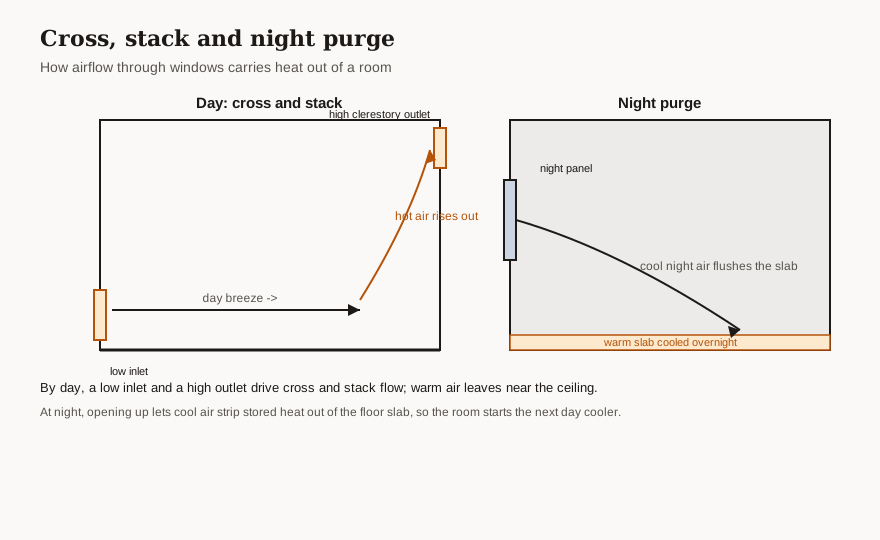
To make the window do this:
- Put the inlet low and the outlet high. A clerestory or a high vent above the door lets the hottest air leave. NBC 2016 asks for openable area of at least 10 per cent of the room carpet area; for cooling you want as much of that as possible split between a low inlet and a high outlet.
- Make the outlet equal to or larger than the inlet. A smaller inlet feeding a larger outlet speeds the breeze (a venturi effect) and you feel more air movement.
- Choose openings that open fully. Casement, awning and louvre windows open close to 100 per cent of their area; a sliding window opens only about 50 per cent. For cooling, the operable type matters more than the glass.
- Keep the path clear. A tall wardrobe or a closed internal door kills the flow. Transom vents over doors keep stack ventilation alive even when doors are shut.
This is the cooling angle. The airflow physics and the inlet-outlet sizing maths are in our sibling guide Window Design for Cross Ventilation (India); use the Cross Ventilation Analyzer to test a layout.
Lever 3: night purge
By 4 pm in summer your walls and floor slab have soaked up the day's heat and are radiating it back into the room. Night purge uses the cool night air to flush that heat out, so the mass starts the next day cool rather than hot.
| Time | Window state | Why |
|---|---|---|
| 10 am to 5 pm (peak heat) | Closed, shaded, low-SHGC | Keep hot air and sun out |
| After sunset | Open inlet and outlet | Let night air sweep through |
| Overnight | Secure operable openings left open | Cool the slab and walls |
| Early morning | Close before the heat builds | Trap the coolness |
Night purge only works in climates with a big day-to-night temperature swing (hot-dry and composite zones such as Jaipur, Nagpur, Delhi). In warm-humid coastal air (Mumbai, Chennai, Kochi) the night is barely cooler and very humid, so you keep windows open for breeze, not purge. The window detail that makes night purge practical is security with airflow: louvres behind grilles, awning windows that shed light rain, or restrictor-fitted casements you can leave ajar safely.
Lever 4: external shading sized to the sun angle
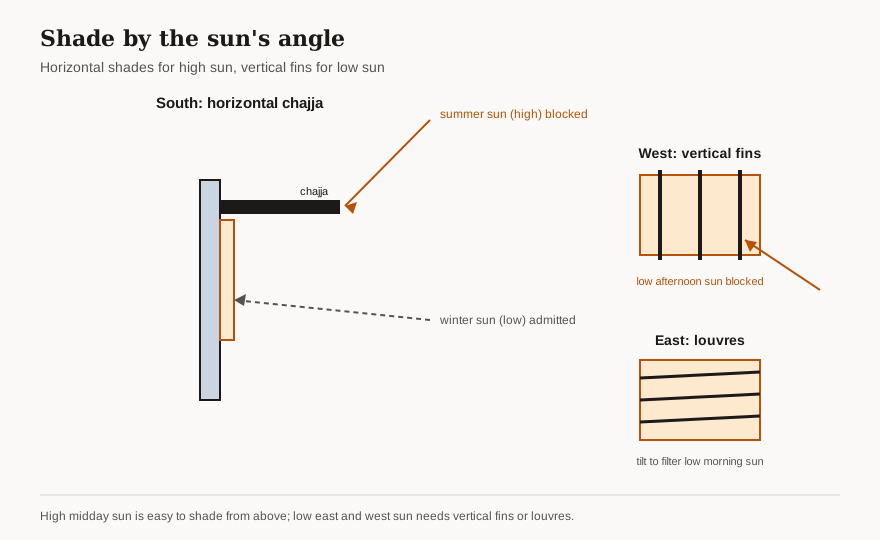
The cheapest air conditioning is shade. Stopping sun before it strikes the glass is far more effective than tinting the glass after, because once solar energy is inside it becomes heat that stays. The shape of the shade follows the sun angle, which depends on which wall the window is on.
| Wall | Sun character | Right shading device |
|---|---|---|
| South | High midday sun in summer, low in winter | Horizontal overhang or chajja, sized to latitude (blocks summer, admits winter) |
| West | Low harsh afternoon sun, most heat and glare | Vertical fins, louvres, deep reveals, external blinds, deciduous trees |
| East | Low gentle morning sun | Vertical fins or operable louvres; overhangs alone do not catch low sun |
| North | Almost no direct sun | Minimal shading needed; safe for larger glass |
A horizontal chajja works on the south because the summer sun is high; the same chajja is nearly useless on the west, where the afternoon sun comes in flat under it. West and east windows need vertical shading or operable louvres. This is why the worst overheating in Indian homes is almost always a large unshaded west window. For the orientation logic in full, see the planning pillar Window Placement Guide (India).
Lever 5: operable area and low-SHGC glass
You cannot cool with a sealed picture window. Fixed glass gives light and view but zero ventilation, so every room you mean to cool passively needs a real operable opening. Use fixed glazing for the view and pair it with a casement, awning or louvre for the air.
When sun cannot be fully shaded (west walls, large openings), cut the heat at the glass with low-SHGC glazing. SHGC, the solar heat gain coefficient, measures how much solar heat the glass lets through; lower is cooler. A Low-E double glazed unit can hold a low SHGC while keeping useful daylight. The Eco-Niwas Samhita ties this to your window-to-wall ratio: the more glass you add, the lower the VLT and SHGC the code demands (and it caps the wall envelope at RETV of 15 W/m2). Pick glass with our companion Best Glass for Hot Climates in India.
Combining the levers by climate
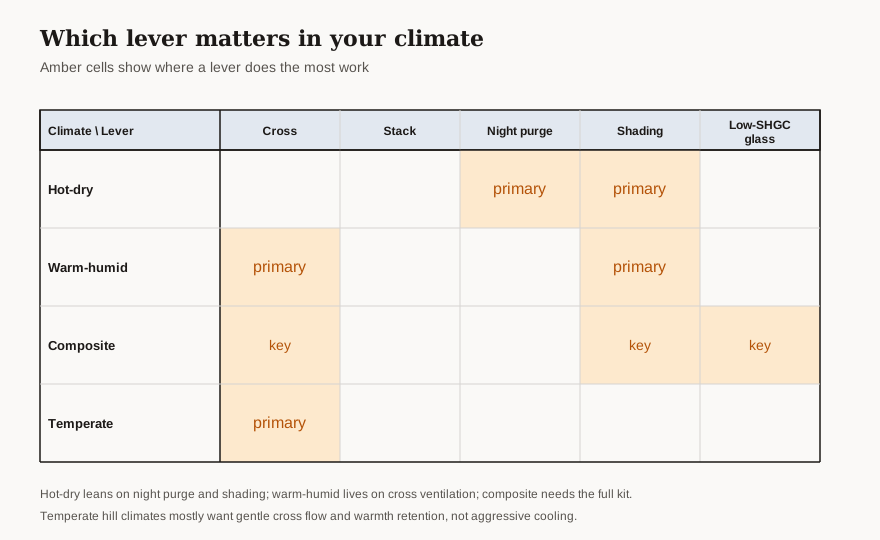
| Climate (example) | Lead levers | Window strategy |
|---|---|---|
| Hot-dry (Jaipur, Nagpur) | Shading plus night purge plus mass | Smaller openings, deep shade, low-SHGC, open at night |
| Warm-humid (Chennai, Kochi) | Maximum cross plus stack ventilation | Large operable area, louvres, shaded, breeze day and night |
| Composite (Delhi, Lucknow) | Seasonal switch | Shade and purge in summer, open and admit sun in winter |
| Temperate (Bengaluru, Pune) | Cross ventilation plus light | Generous shaded operable windows, gentle year round |
A worked example: a hot west bedroom in Nagpur
A 12 ft by 12 ft bedroom (carpet area about 13.4 m2) with one large 6 ft by 4 ft sliding window on the west wall. It bakes from 3 pm.
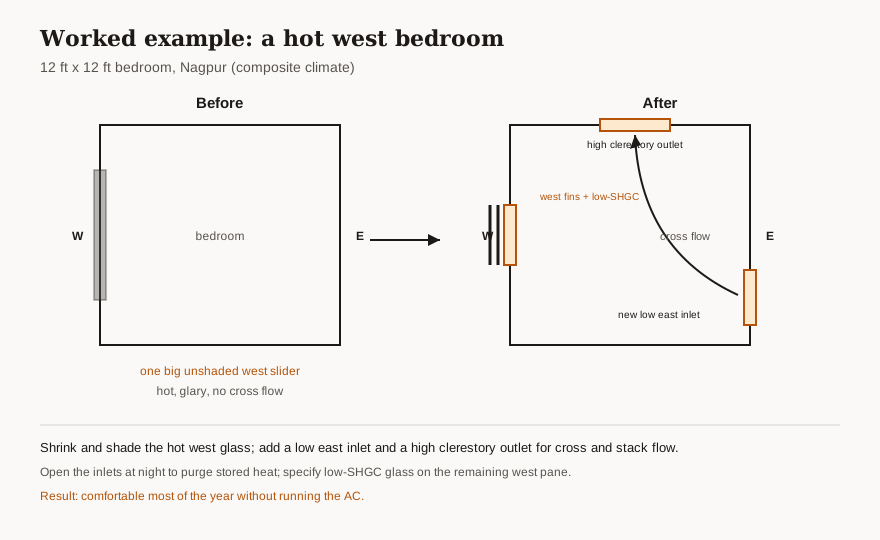
- Operable area check. NBC asks for openable area of at least 10 per cent of 13.4 m2, about 1.34 m2. A 6 ft by 4 ft slider (about 2.2 m2) that opens only half gives roughly 1.1 m2 effective; the single wall also gives no cross flow. So the room fails on both counts.
- Cut and shade the west glass. Reduce the west opening, fit vertical fins or external louvres (a chajja will not stop the low afternoon sun), and specify low-SHGC Low-E glass on whatever west glass remains.
- Add a cross path. Put a low casement inlet on a cooler wall (north or east) and a high vent or clerestory outlet near the ceiling on the opposite side, so daytime breeze crosses and hot air leaves high.
- Night purge. Leave the inlet and a secure louvre open overnight to flush the slab; close everything by 9 am.
The room now cools itself for most of the year, and the AC, if ever needed, runs briefly against a much smaller heat load. Cost-wise, the fins, the extra casement and the clerestory are a fraction of a lifetime of cooling bills.
Quick do and avoid
| Do | Avoid |
|---|---|
| Inlet low, outlet high, on opposite walls | One window on one wall (no cross flow) |
| Casement, awning or louvre for full opening | Relying on a half-opening slider for cooling |
| Shade sized to the wall's sun angle | A horizontal chajja on a west window |
| Night purge in hot-dry and composite zones | Sealing the house shut at night when air is cool |
| Low-SHGC glass where sun cannot be shaded | Large unshaded west picture window |
References
- BIS Guide for Using NBC 2016: https://www.bis.gov.in/wp-content/uploads/2022/08/Booklet-Guide-for-Using-NBC-2016.pdf
- IS 3362, natural ventilation of residential buildings: https://law.resource.org/pub/in/bis/S03/is.3362.1977.pdf
- Eco-Niwas Samhita 2018 (BEE/ECBC): https://ecbc.in/econiwas.html
- BEE ENS Residential Code, Building Envelope: https://beeindia.gov.in/sites/default/files/Residential%20Code_Building%20Envelope_Draft_rev4.pdf
Export this guide
Related Guides — Deep-dive reading
Designing a Naturally Energy-Efficient Indian Home
Comfort first, gadgets last — passive design, orientation, insulation, ventilation and the climate wisdom that cuts Indian energy bills
SustainabilityWindow Design for Cross Ventilation (India): Inlet, Outlet and the Path of the Breeze
How to size, place and choose windows so a breeze actually crosses the room, windward inlet to leeward outlet, with the right window types and a clear flow path.
Windows & GlazingFloor-to-Ceiling Windows (India): Maximum Light, and the Heat Trade-Off
Full-height glazing for Indian homes — how to win the daylight and view without losing the energy code, comfort or safety.
Windows & GlazingRelated Tools — Try Free
Cross-Ventilation Analyzer
Estimate airflow and air changes per hour (ACH) from room size, window areas, layout, and local wind — with NBC 2016 Part 8 compliance check.
Ventilation CalculatorBrise-Soleil Visualizer
Interactive horizontal-louvre cut-off angle calculator — sun altitude, louvre depth, and spacing inputs with a live shadow preview. Computes θ = arctan(spacing/depth) for façade shading, ECBC envelope compliance, hospital daylight design, and tropical sun-control detailing.
Sun Shading ToolWindow Orientation Planner
Pick the best window type, glass and shading by wall direction — north, east, south and west.
Window Tool