
STP Noise Control: Taming Blower Noise Near Homes | Studio Matrx
Why sewage treatment plants make noise, where it comes from, and how acoustic enclosures, anti-vibration mounts, smart siting and CPCB limits keep an STP quiet enough to sit next to bedrooms.
A sewage treatment plant is the one piece of building services that runs, quite literally, all night. The biology inside it never sleeps — the microbes in the aeration tank need oxygen around the clock — which means the air blowers feeding them run 24 hours a day, seven days a week. And blowers are loud. Put one in an unlined basement below a bedroom, or in an open yard beside a boundary wall, and you have manufactured a complaint that will follow the residents' welfare association for years.
Noise is the STP problem that owners discover after handover, when the plant is already built and the flats are already sold. It is far cheaper to design out than to retrofit. This guide explains where STP noise actually comes from, how it travels, and the four levers — enclosure, isolation, siting and specification — that keep a plant quiet enough to sit next to homes and inside the law.
An STP that meets every effluent norm on paper can still be a failure if it hums, drones and rattles through the walls of the flats above it. Silence is a discharge parameter too.
Where the noise comes from
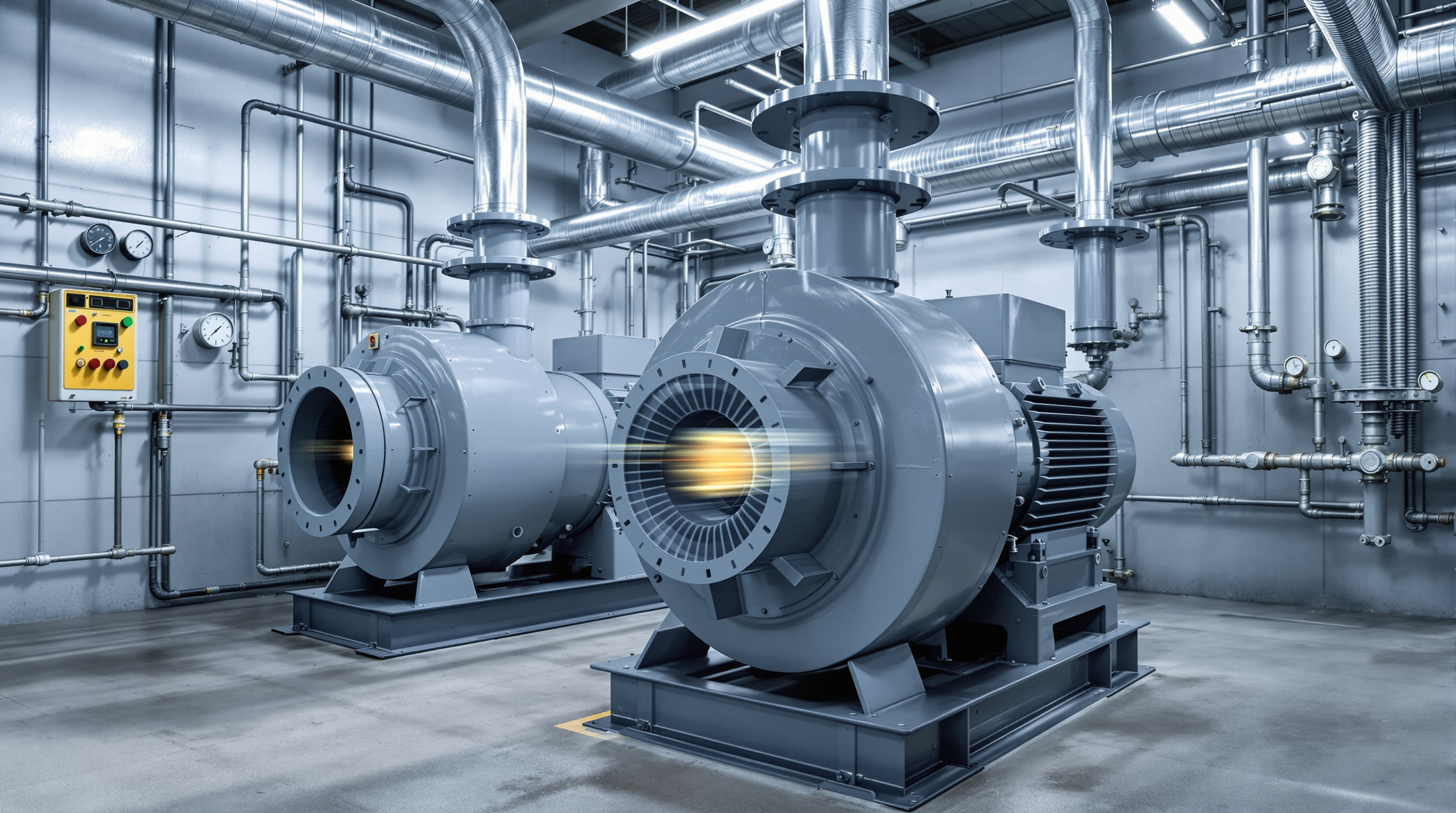
Not everything in an STP is loud. The tanks, the microbes, the filters and the chlorine dosing are all silent. The noise is concentrated in a handful of rotating machines, and knowing which ones lets you target the money.
- Air blowers — the main culprit. Roots-type (positive-displacement) blowers, the workhorses of most Indian STPs, are the single loudest item, typically producing 85–95 dB(A) at one metre. They generate both a low-frequency pulsing drone and a high-frequency whine, and they run continuously.
- Pumps. Raw sewage, transfer, filter-feed and treated-water pumps add motor hum and, when poorly mounted, structure-borne vibration.
- Air diffuser rush. The hiss of air breaking the surface of the aeration tank — usually minor, but audible in an open plant.
- Cavitation and water hammer. Badly sized pipework and sudden valve closure produce bangs that travel through the building frame.
The blowers dominate. If you control blower noise and mount the pumps properly, you have solved perhaps 90% of the problem. To understand how central blowers are to the whole process, the STP pumps and instrumentation guide is worth reading alongside this one.
Airborne versus structure-borne — two different problems
Noise from an STP reaches a bedroom by two entirely different routes, and confusing them is why many "soundproofing" attempts fail.
- Airborne noise travels as sound waves through the air — the drone you hear standing next to a blower. It is stopped by mass and by sealed barriers: heavy walls, acoustic doors, an enclosure.
- Structure-borne noise travels as vibration through the concrete slab, columns and pipework — you feel it as a hum in the floor of the flat above, even when the plant room door is shut. No amount of wall lining stops it, because the sound is flanking around the barrier through the building skeleton.
A blower sitting hard on a basement slab pumps vibration straight into the frame. Building a beautiful acoustic enclosure around it while leaving it bolted to the raw slab treats the airborne half and ignores the structure-borne half — which is often the half the residents actually complain about. You must break both paths.
The four levers of a quiet STP
1. Acoustic enclosures and the plant room
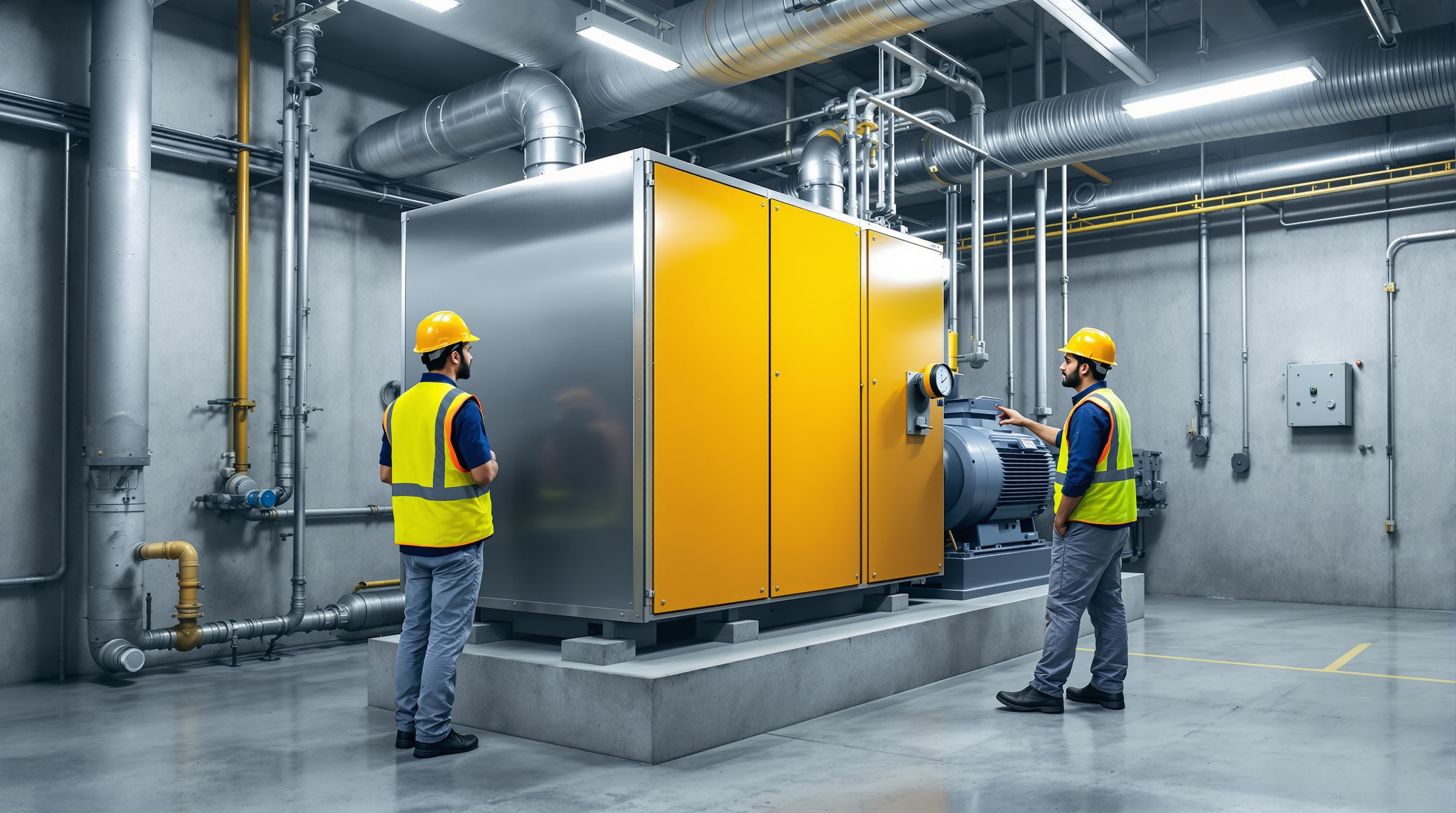
The first line of defence is a proper barrier between the machine and everyone else. On modern packaged plants the blower comes inside its own acoustic canopy — a sheet-metal box lined internally with sound-absorbing mineral wool behind a perforated facing, which can knock 15–25 dB(A) off the radiated noise. Where blowers are open, the plant room itself becomes the enclosure:
- Line walls and ceiling with acoustic mineral wool or foam behind a perforated or fabric facing to absorb reflected sound.
- Fit acoustic louvres on ventilation openings — blowers need generous fresh air for cooling and combustion of nothing, but plain open grilles leak noise straight out. Attenuated louvres let air in and keep sound in.
- Use acoustic doors with proper perimeter seals; an ordinary door with a 10 mm gap under it undoes the whole wall.
- Fit intake and discharge silencers on the blower air path — much of the pulsing drone exits through the air pipe itself, not the casing.
2. Anti-vibration mounts and flexible connections
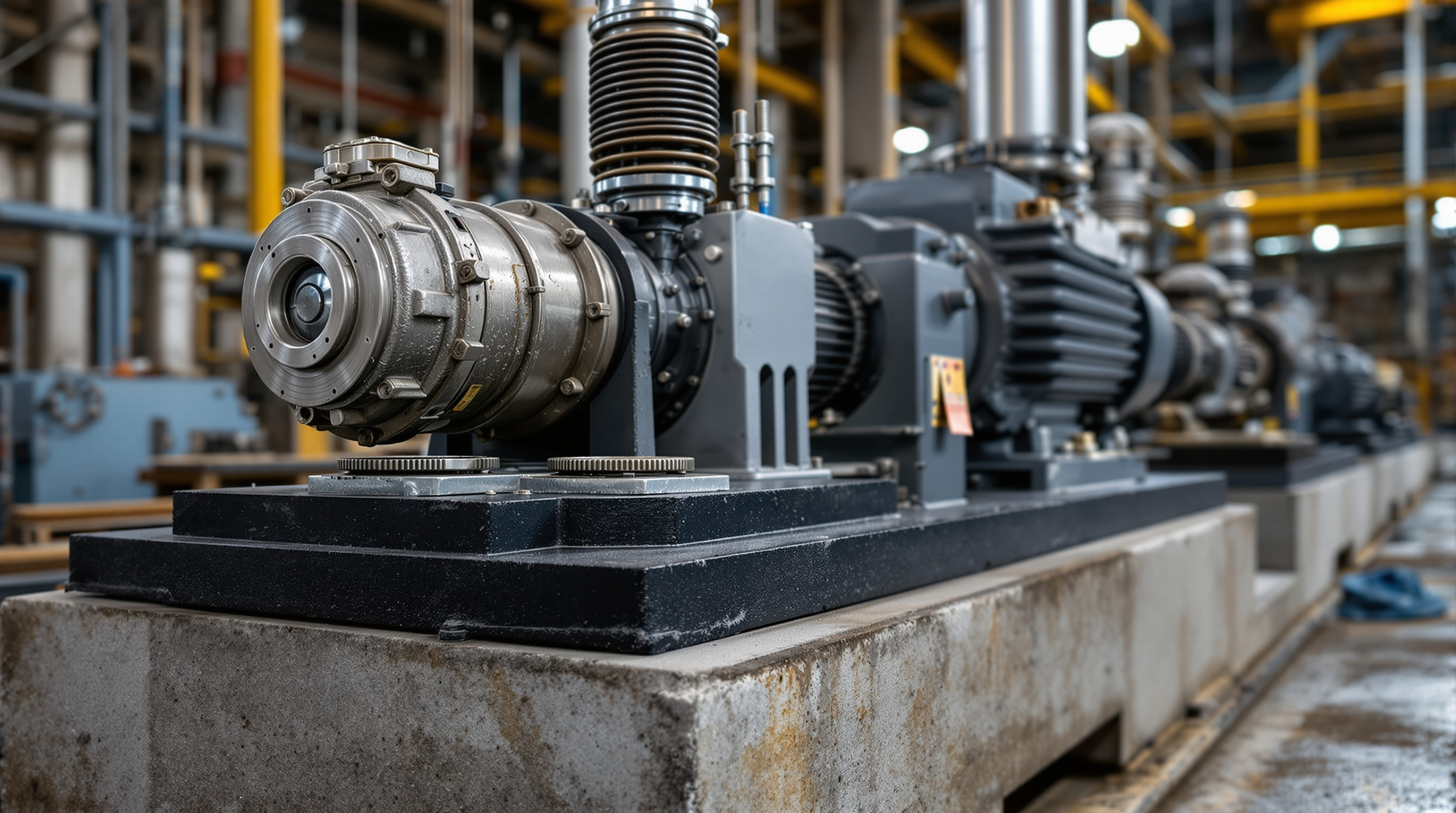
This is the structure-borne half, and it is cheap. The blower and its motor sit on a rigid skid; that skid must not touch the building frame directly.
- Mount the skid on anti-vibration (AVM) pads or spring isolators — rubber-in-shear mounts or steel springs sized to the machine weight and speed — so vibration is absorbed before it reaches the slab.
- Set heavy machines on an inertia block (a concrete mass on isolators) for the low-frequency energy that soft pads alone cannot damp.
- Break every rigid connection with flexible couplings: rubber bellows on the air discharge, flexible hoses on pump suction and delivery, and pipe supports on resilient hangers rather than bolted hard to the slab. A single rigid pipe clamp can carry vibration around all your isolation.
3. Siting and layout
The quietest noise is the one that never reaches the flats. Decisions taken at the layout stage cost nothing and beat any amount of later lining. Distance is the cheapest attenuator you own — sound falls off roughly 6 dB for every doubling of distance from the source.
- Keep the blower room as far from bedrooms and boundary walls as the plot allows, and never directly below a habitable room.
- Prefer an underground or semi-buried plant room where earth mass shields the neighbours — though this trades noise for tougher ventilation and access.
- Use buffer functions — parking, services, driveways, landscape berms — as the zone between the STP and the nearest sleeping space.
Siting noise sensibly sits alongside odour, access and hydraulics in the overall plan; see the STP site selection and STP layout planning guides, and the underground vs above-ground comparison for the trade-offs.
4. Specification — buy quiet
Some technologies are inherently quieter. Where noise is critical, it can drive the equipment choice itself.
| Blower / approach | Relative noise | Notes |
|---|---|---|
| Roots (PD) blower, no enclosure | Loudest | Cheapest to buy; the default, and the usual complaint source |
| Roots blower + acoustic canopy | Moderate | The standard fix; 15–25 dB(A) reduction |
| Twin-lobe with silencers + enclosure | Moderate–low | Good balance for most apartment STPs |
| Screw / turbo blower | Lower | Higher capital cost, lower noise and often better efficiency |
| Fine-bubble diffusers (vs coarse) | Lower air demand | Smaller blower for the same oxygen = less noise at source |
Choosing a fundamentally lower-air-demand process helps too — an MBBR or well-tuned extended aeration plant that transfers oxygen efficiently needs less blower power, and a smaller blower is a quieter blower. This is one more reason to weigh technology carefully in the STP Technology Selector.
What the byelaws actually require
STP noise is not a matter of goodwill — it is regulated. The CPCB Noise Pollution (Regulation and Control) Rules set ambient limits by area category that the plant, as a source, must not push the surroundings beyond:
- Residential zone: 55 dB(A) by day, 45 dB(A) at night (10 p.m.–6 a.m.).
- Commercial zone: 65 dB(A) day, 55 dB(A) night.
- Silence zone (near hospitals, schools): 50 dB(A) day, 40 dB(A) night.
The night limit is the binding one for an STP, because that is exactly when the blowers keep running and the background hum of the city drops away, making the plant stand out. A blower producing 90 dB(A) at source must be attenuated by 45 dB or more, through distance plus enclosure plus isolation, to respect a 45 dB(A) residential night limit at the boundary. Local development-control and building byelaws often add their own setback and noise conditions on top, and the occupancy certificate can hinge on meeting them. Design to the night number, verify it with a sound-level meter at the boundary after commissioning, and keep the reading on file.
The bottom line
STP noise is predictable, it is concentrated in the blowers, and it is entirely solvable — but only if it is addressed while the plant room is still lines on a drawing. Break the airborne path with an enclosure, acoustic louvres, sealed doors and silencers; break the structure-borne path with anti-vibration mounts, inertia blocks and flexible connections; put distance between the machines and the bedrooms; and specify a blower and process that are quiet to begin with. Do those four things and you comfortably clear the 45 dB(A) residential night limit — and the association never has to think about the plant humming under their floor.
Noise sits next to its quieter cousin, odour, as the two nuisances that decide whether residents accept an on-site plant; read the STP odour control guide next, browse the full Sewage Treatment Plants library, or size the blower duty behind all of this with the STP Capacity Calculator.
Export this guide
Related Guides — Deep-dive reading
Aeration Design Principles for STPs: Oxygen Demand, Diffusers & Blower Sizing
How engineers actually size the aeration system at the heart of a sewage treatment plant — from oxygen demand and alpha/beta factors to SOTE, fine versus coarse bubble diffusers, blower selection and the energy bill that follows for decades.
Sewage Treatment PlantsMechanical Installation of STP Equipment: Blowers, Pumps, Diffusers & Pipework Done Right
How the blowers, pumps, diffuser grids, media, screens, tube settlers and pipework of a sewage treatment plant are actually set, aligned, anchored and supported on site — and the pre-commissioning mechanical checks that decide whether the plant runs quietly for years or rattles itself apart in months.
Sewage Treatment PlantsAir Blowers & Diffusers in an STP: How Aeration Actually Works
The blowers that push air and the diffusers that turn it into bubbles are the lungs of your sewage treatment plant. Here is how they work, how they are sized, and why they decide most of your electricity bill.
Sewage Treatment PlantsRelated Tools — Try Free
Acoustic Privacy (STC) Visualizer
Indian healthcare acoustic visualizer — compare wall assemblies and noise sources, see received SPL after STC attenuation, and check FGI 2018 / IS 1950 / NABH speech-privacy compliance with live dual-canvas waveform.
Acoustic ToolSTP Technology Selector
Weight your priorities — footprint, effluent quality, cost, power and simplicity — and get a scored recommendation between Extended Aeration, MBBR, SBR and MBR.
SelectorApartment STP Planner
Plan an apartment complex sewage treatment plant from flats and occupancy — get population load, sewage flow, recommended STP capacity in KLD, treatment technology and approximate space.
Planner