
Split AC Guide: The Indian Home's Default Air Conditioner
Everything on the split AC — how the indoor and outdoor units work together, why it's quieter and more efficient than a window unit, how to choose tonnage, stars and features, where to place both units, and what installation and upkeep it needs.
The split AC is the default air conditioner in Indian homes — and for good reason: it splits the noisy, hot compressor into an outdoor unit and keeps only a quiet, slim indoor unit on your wall. That separation is why a split is quieter, more efficient and better-looking than a window unit, and why it dominates bedrooms and living rooms across the country. This guide covers how a split AC works, how to choose one, and how to place, install and maintain it well.
It applies the Air Conditioning Basics to the split unit, and is part of the HVAC Knowledge Hub.
The safety line & scope. This guide helps you choose and place a split AC. Installation (the two units, refrigerant piping and charging) and servicing are a qualified HVAC technician's work. Filter cleaning and thermostat use are yours.
How a split AC works
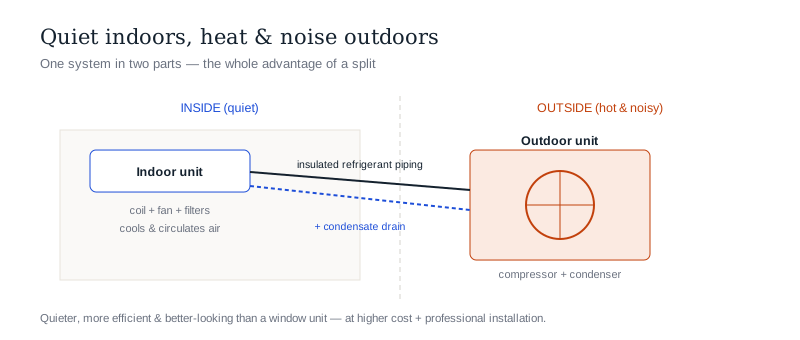
A split AC is one system in two parts, connected by refrigerant pipes and a cable:
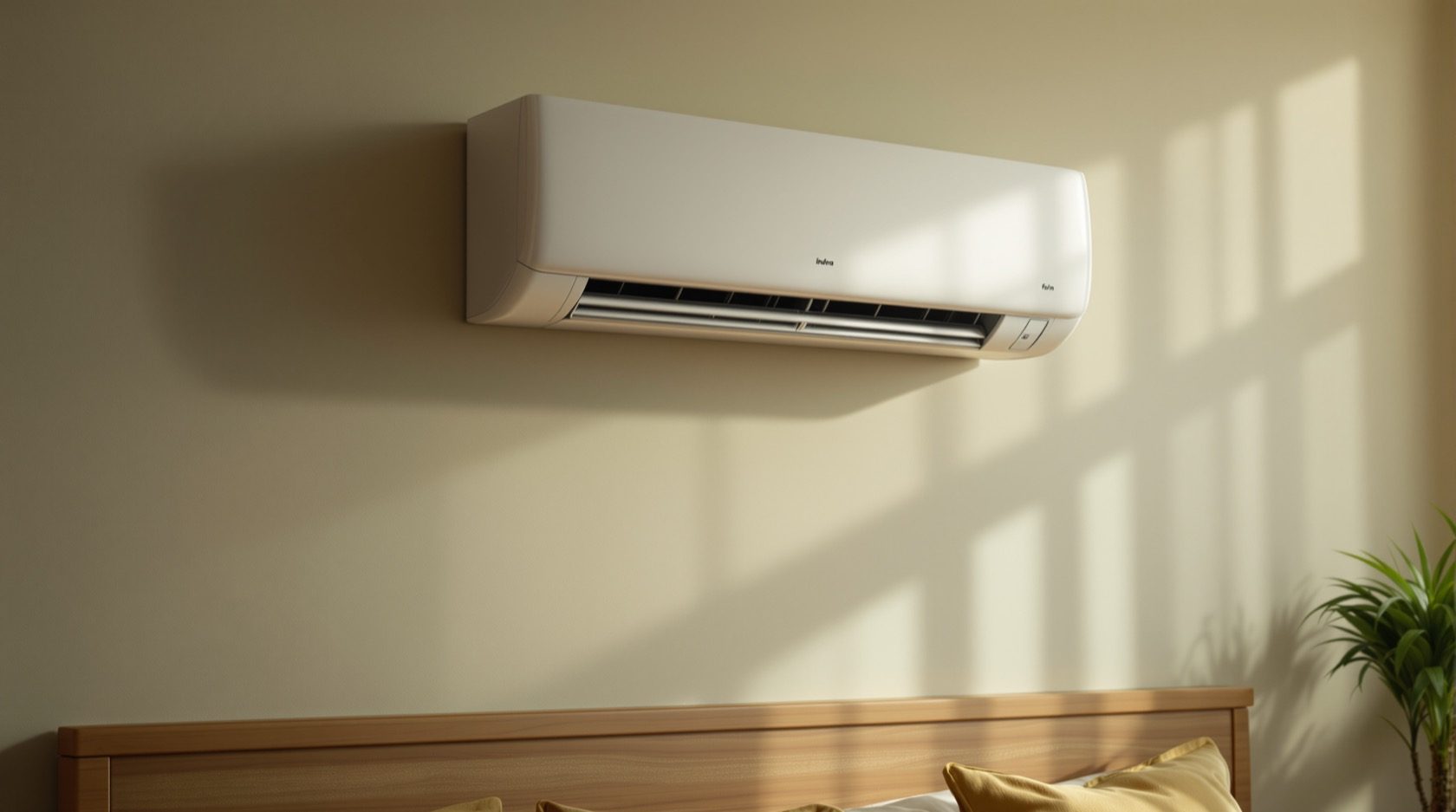
- The indoor unit — the slim wall-mounted (or floor/ceiling) unit with the cooling coil, fan and filters that cools and circulates your room's air.
- The outdoor unit — the compressor and condenser that reject the heat outside; the "hot, noisy" half, kept out of the room.
- The connection — insulated refrigerant piping, a drain pipe for condensate, and power/control wiring run between them.
Splitting the two is the whole advantage: quiet indoors, heat and noise outdoors, a discreet indoor unit, and (in inverter models) efficient, steady cooling. See air conditioning basics for the underlying cycle.
Why choose a split (vs a window unit)
Compared with a window AC:
- Quieter indoors — the compressor noise is outside.
- More efficient — splits (especially inverter) generally achieve higher star ratings/ISEER.
- Better looking & flexible — a slim indoor unit, placed where it cools best, without occupying a window.
- Cools better — better air throw and distribution for most rooms.
- The trade-offs — higher cost, professional installation, and you need a spot for the outdoor unit. For most rooms, the split wins; the window unit stays a budget/single-window option.
Choosing a split AC
The decisions that matter, in order:
- Tonnage — right-sized to the room (see the AC Capacity Calculator); don't oversize.
- Inverter — yes, for any regularly-used room: efficient, quiet, steady, better at low voltage.
- Star rating / ISEER — buy the highest you can afford on a unit you'll run for years; it pays back (see energy management).
- Refrigerant — R32 or R290 (newer, lower-GWP).
- Features worth having — good filtration, a decent air throw for the room shape, quiet operation, and smart/Wi-Fi control if you'll use it. Skip gimmicks.
- Brand, warranty & ISI/BIS — a reputable brand, a solid compressor warranty, conformity to IS 1391.
Placing both units well
Placement decides how well a split performs — plan it before installation:
- Indoor unit — high on a wall, with clear air throw across the room (not blocked by a wardrobe or beam, not blasting directly onto the bed), and reachable for filter cleaning. Away from direct heat sources.
- Outdoor unit — a ventilated, shaded, accessible spot in open air, on a firm bracket/platform, not choked in a tight duct or blasting hot air at a neighbour's window. Shade improves efficiency; good airflow is essential.
- Pipe run — keep the distance between units within the recommended limit; long or badly-routed piping hurts performance.
- Condensate drain — with proper fall to a safe drain point, or you get leaks and stains.
- Coordinate all this at construction/renovation where possible.
Installation and maintenance
- Installation is professional — mounting both units, running and evacuating the refrigerant piping, charging the gas, and testing. Poor installation (leaks, wrong charge, bad drainage) is the leading cause of underperformance.
- Homeowner upkeep — clean the indoor filters every few weeks in the cooling season (the biggest lever on efficiency and air quality), keep the outdoor unit clear, and book a professional service before summer (coil cleaning, gas check, drainage).
- Watch for — weak cooling, water leaks, ice on the coil, strange noises or rising bills, and call a technician.
The one-line answer
The split AC is the Indian home default because it splits the noisy, hot compressor outdoors and keeps only a quiet, slim indoor unit on the wall — making it quieter, more efficient and better-looking than a window unit, at the cost of higher price and professional installation. Choose one by right-sizing the tonnage (don't oversize), going inverter with the highest BEE star/ISEER you can afford (it pays back), and a low-GWP R32/R290 refrigerant from a reputable brand to IS 1391. Place the indoor unit for clear air throw and easy filter access and the outdoor unit in a ventilated, shaded, accessible spot with a proper condensate drain — and have a qualified technician install it, while you handle the filters and book pre-summer servicing.
Where to go next
- The fundamentals: Air Conditioning Basics Guide.
- The budget alternative: Window AC Guide.
- Size it right: AC Capacity Calculator.
- Whole-home options: VRF & VRV Systems Guide · Ducted & Cassette AC Guide.
References
- IS 1391 : Part 2 : 2023, Room Air Conditioners — Split Air Conditioners, Bureau of Indian Standards.
- Bureau of Energy Efficiency (BEE) — Star Labelling & ISEER for room air conditioners: https://beeindia.gov.in/
- Refrigerant transition (R32/R290) under the Kigali Amendment to the Montreal Protocol.
Split AC installation, refrigerant piping and charging are professional work; poor installation is the main cause of underperformance. Verify the current BEE label and any standard's status via the BIS catalogue.
Export this guide
Related Guides — Deep-dive reading
How to Choose an Air Conditioner: The Buyer's Decision Guide
Cut through the showroom confusion — the decisions that actually matter when buying an AC in India, in order: the right type, the right tonnage, inverter, the star rating that pays back, the refrigerant, the few features worth having, and the gimmicks to ignore.
HVAC & CoolingGate Automation Maintenance in India (2026): Keep a Sliding or Swing Gate Working and Safe
A homeowner's upkeep guide for an automatic sliding or swing gate — clearing the track, lubricating rollers and hinges, testing the safety photocells and manual release, caring for the controller and its backup battery, and knowing exactly where the DIY line stops and a qualified technician begins.
SecurityHow to Choose a Toilet in India: A Buyer's Guide to WCs, Traps, Flush & Budget (2026)
The make-or-break trap and rough-in check, floor-mounted vs wall-hung, one-piece vs two-piece, flush type and water use, seat and rimless upgrades, good/better/best rupee tiers, what's actually in the box, and how to spot a fake before you pay.
BathroomsRelated Tools — Try Free
Window Cleaning Cost Calculator
Estimate professional window cleaning cost per visit and per year by access and frequency.
Window CalculatorCross-Ventilation Analyzer
Estimate airflow and air changes per hour (ACH) from room size, window areas, layout, and local wind — with NBC 2016 Part 8 compliance check.
Ventilation CalculatorWindow Maintenance Cost Calculator
Estimate annual window upkeep by frame material — yearly, per-window and 5-year cost.
Window Calculator