
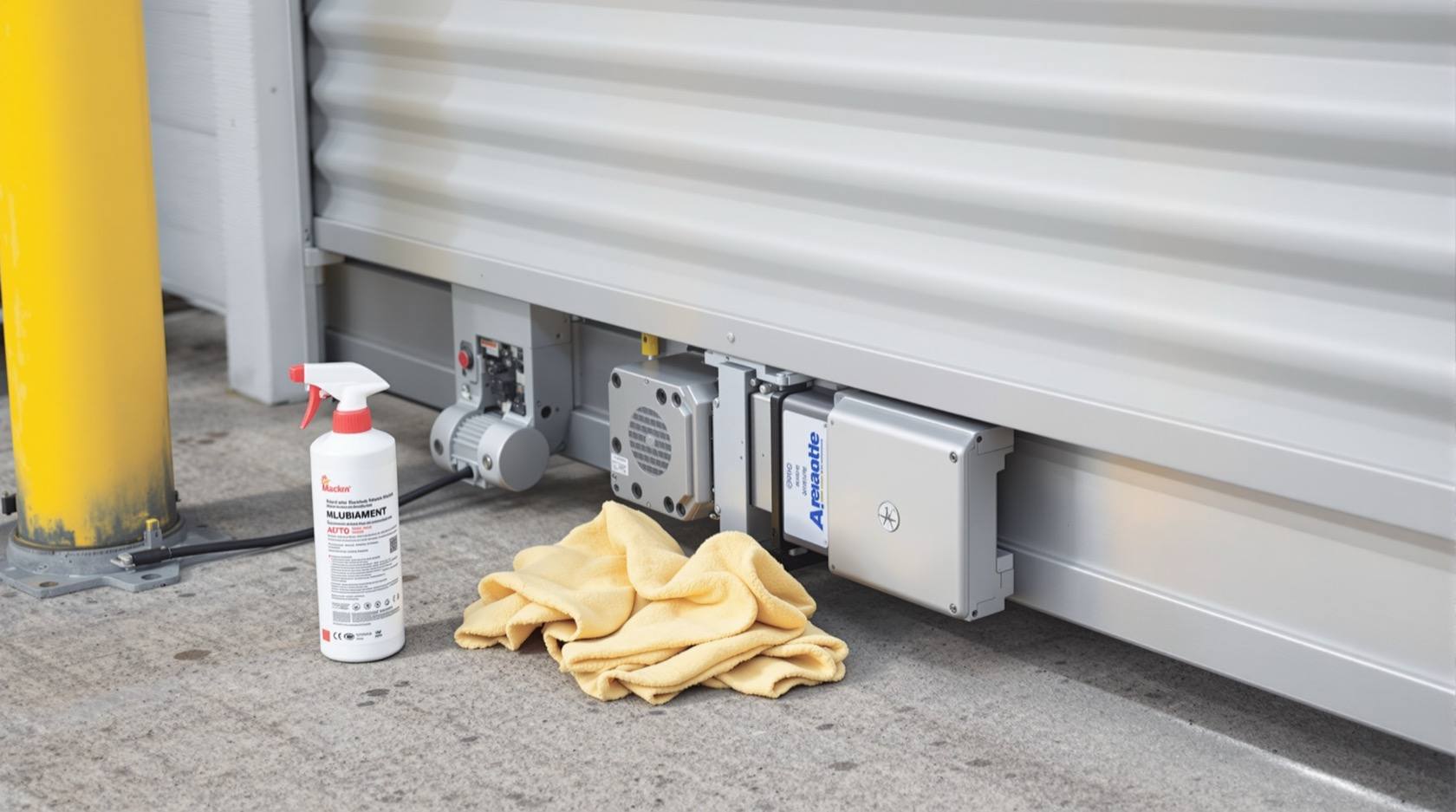
Gate Automation Maintenance in India (2026): Keep a Sliding or Swing Gate Working and Safe
A homeowner's upkeep guide for an automatic sliding or swing gate — clearing the track, lubricating rollers and hinges, testing the safety photocells and manual release, caring for the controller and its backup battery, and knowing exactly where the DIY line stops and a qualified technician begins.
An automatic gate is one of the hardest-working machines in an Indian home. It carries a heavy leaf of steel — often a hundred kilos or much more — many times a day, and it does all of it outdoors: baked by summer heat, drowned in the monsoon, and ground down by the dust, grit and small stones that blow across every driveway. A gate motor asked to do that on a dirty track, with a dry roller or a rusted hinge, is a motor being slowly destroyed. And when it finally jams shut on the one evening you are late and it is raining, the failure is never convenient.
The good news is that most gate failures are not sudden and not mysterious. They are the predictable end of neglect: a track packed with grit, a hinge that was never oiled, a photocell blinded by cobwebs, a backup battery that quietly died two summers ago. A gate that is cleared, lubricated and tested on a simple schedule will outlast a neglected one many times over, and — far more important — it will keep the safety devices that protect your children and your car actually working. This guide is about that routine: what to check, how often, what you can safely do yourself, and where you must stop and call a technician.
Scope & safety. This is an upkeep guide for a homeowner with an automatic sliding or swing gate, not an installation or repair manual. An automatic gate is heavy and mains-powered, and it moves under its own force — so before anything else, learn where your MANUAL RELEASE is and how to use it, and keep the motor internals, capacitor, force and limit settings, and all mains electrical work strictly to a qualified technician or your AMC provider. The DIY-safe tasks here are cleaning, lubricating, testing the safety-stop and swapping a remote battery — nothing more. This is not a price guide or a buying guide; if your gate has already stopped working, jump to the troubleshooting cross-links below.
Why gate upkeep is really about safety, not just convenience
It is tempting to treat gate maintenance as a comfort issue — you oil it so it stops squeaking. But an automatic gate is a powered machine that moves a heavy mass through a space where people and vehicles pass. That makes two of its systems genuinely safety-critical, and both depend entirely on maintenance to keep working.
The first is the manual release. Every automatic gate has a way to disengage the motor by hand — usually a key-operated lever or knob on the motor housing — so that in a power cut, a controller fault or a jam you can push the gate open and get in or out. A manual release you have never tested, cannot find in the dark, or that has seized from rust is the difference between a minor annoyance and being locked out (or locked in) during an emergency.
The second is the safety devices — the photocells (the infra-red beam across the opening) and, on many gates, a safety edge (a pressure-sensitive strip along the closing edge). Their entire job is to detect a person, a child or a vehicle in the gate's path and make the gate STOP and reverse instead of crushing whatever is there. These are not optional extras and they are not "set and forget". A photocell caked in dust or knocked out of alignment, or a safety edge that has failed, is a heavy gate that will keep closing on an obstruction. In a home where children play near the gate or cars nose in and out, testing the safety-stop is the single most important thing on this whole list.
The maintenance schedule — what to check and how often
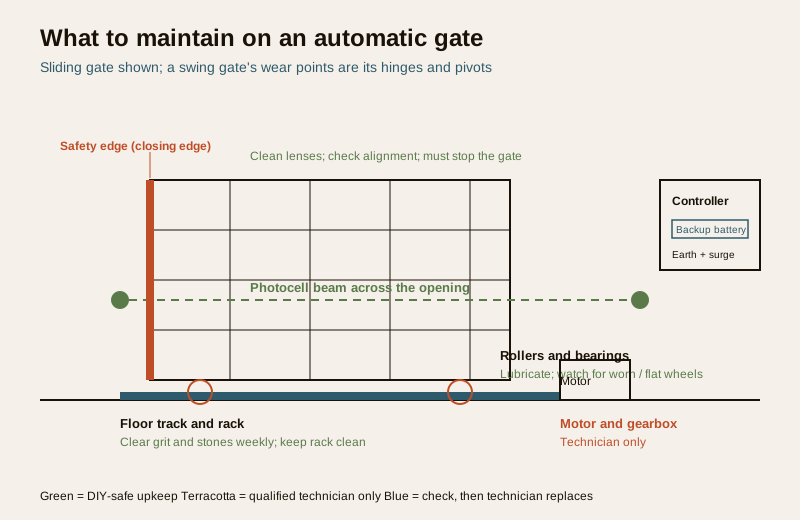
Gate upkeep divides neatly by how fast each part degrades. The track and the safety devices need frequent attention because dust and monsoon act on them constantly; the drive and controller need a periodic look; the deeper mechanical and electrical work belongs to an annual professional service. Use this as your routine.
| Task | Frequency | Who |
|---|---|---|
| Clear the floor track / rack of dust, grit and stones; sweep the run | Weekly (daily in dusty or windy spots) | Homeowner |
| Wipe the photocell lenses clean; a quick eyeball for alignment | Monthly | Homeowner |
| Test the safety-stop — gate must reverse/stop on an obstruction | Monthly | Homeowner |
| Test the manual release — disengage, move by hand, re-engage | Monthly | Homeowner |
| Lubricate rollers, hinges, pivots and moving joints | Monthly to quarterly | Homeowner |
| Check remotes and swap weak remote batteries | As needed | Homeowner |
| Check for rust, wobble, loose fixings, worn rollers; before and after monsoon | Quarterly / seasonally | Homeowner |
| Test the controller's backup battery holds a charge in a power cut | Quarterly | Homeowner (check) / Technician (replace) |
| Motor, gearbox, chain or belt tension, capacitor service | Annually | Technician |
| Limit and force (obstruction-sensitivity) settings verification | Annually | Technician |
| Mains wiring, earthing and surge-protection inspection | Annually | Technician |
| Spring balance (swing gates), re-railing a derailed heavy gate | As needed | Technician |
The two rhythms that matter most in India are weekly track-clearing and before-and-after-monsoon rust checks. A sliding gate's floor track is a channel that collects everything the wind delivers; leave it a month and the rollers are grinding through a bed of grit. And the monsoon is when hinges seize, rust blooms on the rack and the drive, and water finds its way into a controller box with a tired seal.
The track, rollers and hinges
For a sliding gate, the floor track and the toothed rack are the parts most punished by the environment. Keep the track physically clear — sweep out dust, grit and small stones so the rollers are not climbing over debris, and keep the rack clean so the pinion meshes smoothly. Lubricate the roller wheels and their bearings. Watch for rust on the rack and track, especially after rain, and watch for a worn or flat-spotted roller that makes the gate wobble or judder.
For a swing gate, the equivalent wear points are the hinges and pivots. They carry the whole weight of the leaf and they seize and rust if never oiled. Lubricate them, check they are not sagging (a dropping leaf drags and strains the motor), and keep the arc the gate swings through clear of pots, stones and parked scooters.
A light machine oil or a suitable grease is right for hinges, pivots and roller bearings; keep heavy sticky grease off the floor track itself, where it just glues dust into a paste — a clean, lightly lubricated track beats a greasy, gritty one.
The safety devices — a non-negotiable monthly test
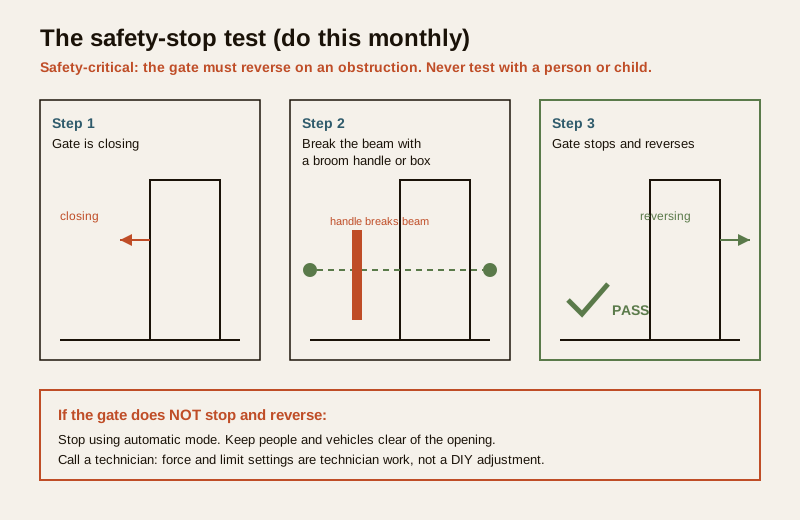
This is the part of the routine you must never skip. Clean the photocell lenses (dust, cobwebs and monsoon grime blind them), and check the two units still face each other squarely — a knock from a reversing car or a shifted bracket breaks the beam alignment. Then test the safety-stop: with the gate closing, break the photocell beam with a safe object (not a person, and never a child) — a broom handle or a box — and confirm the gate STOPS and reverses instead of continuing. If your gate has a safety edge on the closing edge, test that it reverses the gate on contact too.
If the gate does not stop and reverse, stop using automatic mode, keep people and vehicles clear, and call a technician. A gate that ignores its safety devices is dangerous, and correcting the sensitivity (force) and limit settings is technician work, not a DIY adjustment.
The manual release
Test the manual release monthly, in good light, so it is second nature when you need it in the dark and the rain. Follow your gate's method — typically insert the release key and turn a lever to disengage the motor, then move the gate by hand, then re-engage. Confirm it disengages cleanly, the gate moves freely by hand, and it re-engages so automatic operation resumes. If the release is stiff, seized or you cannot find how it works, get your installer to show you and to free it up — this is your emergency exit and it must work.
The drive, the controller and the backup battery
The drive — the chain or belt, the gearbox, the pinion — is where you listen more than you touch. Learn the sound of your gate running normally; new grinding, clunking, straining or a slower travel are early warnings. Chain or belt tension, gearbox condition and capacitor health are for the annual technician service, not for you to adjust.
The controller (the control board in its box) and its backup battery deserve special attention in India, where power cuts are routine. The backup battery is what lets the gate open during a cut; like any battery it ages and dies quietly, and you only discover it is flat during the very power cut you needed it for. Quarterly, simulate a cut (switch off the mains supply to the gate) and confirm the gate still operates on battery; if it does not, the battery almost certainly needs replacing — fitting the correct replacement is best done by your technician. While you are at the controller box, check its seal and lid are keeping water out, and confirm the gate is properly earthed and, ideally, protected by a surge arrester — monsoon lightning surges are a common killer of control boards. The earthing and surge protection themselves are technician checks.
Remotes, fixings and limits
Weak remote batteries are the commonest trivial "the gate is dead" call — swap them yourself before assuming the worst. Check the mounting bolts and brackets of the motor, photocells and gate are tight (vibration loosens them over time), and note if the gate is over-travelling or not closing fully, which points to limit settings that a technician should reset.
Signs your gate needs attention
Learn to read the early symptoms and you will fix a small problem before it becomes a dead motor or a dangerous gate.
- Straining, slow or hesitant travel — a labouring motor usually means a dirty track, a dry roller or hinge, a sagging leaf, or wear that is adding load. Clean and lubricate first; if it persists, call for service before the motor burns out.
- New noise — grinding, squealing, clunking or knocking where the gate used to run quietly. Grinding often means grit in the track or a dry bearing; deeper mechanical noise from the motor or gearbox is a technician job.
- The safety sensor does not stop the gate — the most urgent fault of all. Stop automatic use and call a technician immediately.
- Rust on the track, rack, hinges, fixings or drive — especially post-monsoon. Clean it back and lubricate; heavy rust or a corroded fixing needs attention before it fails.
- Wobble, judder or a dropping leaf — a worn roller, a loose fixing or a sagging hinge. Left alone, a sliding gate can eventually jump its track.
- Fails to open in a power cut — a flat backup battery, discovered at the worst moment. Replace it.
The DIY-safe versus technician split
The clearest way to stay safe is to know exactly which side of the line each task sits on and never cross it. When a task involves mains electricity, the motor's internals, the capacitor, the force or limit settings, spring balancing, or a heavy gate that has come off its track, it is technician work — full stop.
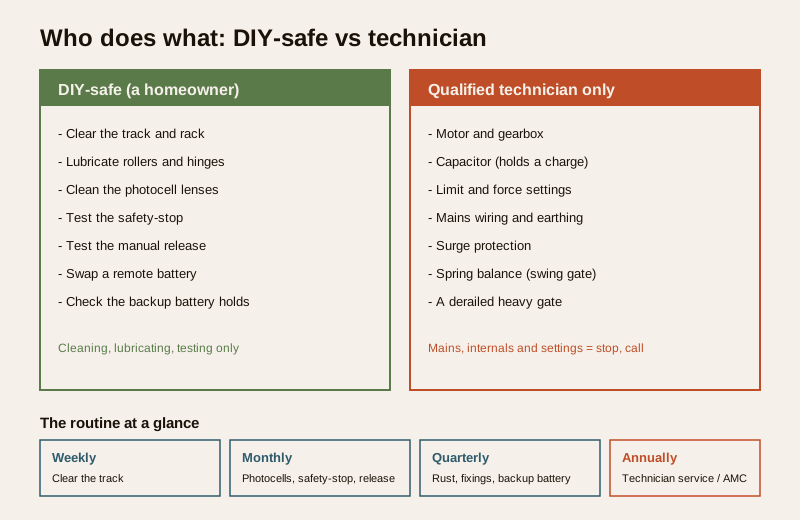
DIY-safe (a homeowner can do these):
- Keep the floor track and rack clear of dust, grit and stones.
- Lubricate rollers, hinges, pivots and moving joints.
- Clean the photocell lenses and check their alignment by eye.
- Test the safety-stop — confirm the gate reverses on an obstruction.
- Test the manual release and confirm it re-engages.
- Swap a weak remote battery; tighten an obviously loose visible fixing.
- Check the backup battery still runs the gate in a simulated power cut.
Strictly for a qualified technician / your AMC provider:
- The gate motor and gearbox — anything inside the housing.
- The capacitor (it can hold a dangerous charge) and any mains wiring.
- Limit settings and force / obstruction-sensitivity settings.
- Earthing and surge-protection inspection and correction.
- Spring balance on a swing gate.
- Re-railing a derailed heavy gate or replacing worn rollers, rack or chain.
- Replacing the controller's backup battery with the correct type.
A yearly service by a competent technician — ideally on an annual maintenance contract (AMC) — should cover the motor, drive, capacitor, settings and electrical safety, so that your regular homeowner routine sits on top of a properly serviced machine. Budget for that AMC; it is far cheaper than a replacement motor.
A quick homeowner checklist
- Weekly: clear the track and rack of dust, grit and stones.
- Monthly: clean the photocells, test the safety-stop, test the manual release.
- Monthly to quarterly: lubricate rollers, hinges and pivots.
- Quarterly / seasonally: check for rust, wobble and loose fixings; test the backup battery in a simulated power cut; inspect before and after the monsoon.
- As needed: swap remote batteries; note any straining, new noise or over-travel.
- Annually: book a technician service for the motor, drive, capacitor, settings and electrical safety.
- Anytime the gate ignores its safety devices, or a heavy gate derails: stop automatic use and call a technician.
Where to go next
- The security system maintenance guide is the pillar for keeping every part of your home security working, and the security maintenance calendar turns these tasks into a year-round schedule alongside your other systems.
- If your gate has already stopped working, the gate motor failure guide walks through diagnosing why it will not open or close, and the boom barrier maintenance guide covers the closely related powered barrier at a shared or society entrance.
- To understand how the whole automated gate is put together before you maintain it, see automatic gate systems.
- For the wider context, browse the security maintenance and perimeter security sub-hubs, and the main security hub.
Key takeaways
- A gate motor lives outdoors and moves a heavy load — dust, monsoon and heat make routine upkeep the difference between a gate that lasts and one that jams when you need it.
- Two systems are safety-critical: the manual release and the safety devices. Know where the manual release is and test it; test the photocell safety-stop every month so the gate reliably reverses on an obstruction — this is not optional where children or vehicles pass.
- Clear the track weekly, lubricate monthly, and inspect for rust around the monsoon — these three habits prevent most gate failures.
- Keep the controller's backup battery alive so the gate still opens during a power cut, and protect the board with earthing and a surge arrester.
- Stay on the safe side of the line: cleaning, lubricating, testing and remote batteries are yours; the motor, capacitor, force and limit settings, mains work and a derailed gate are strictly for a qualified technician.
References
- National Building Code of India (SP 7), Bureau of Indian Standards — provisions for building entrances, vehicular access and life-safety that a powered gate must not compromise; verify the current edition (SP 7:2026) via the BIS catalogue: https://www.services.bis.gov.in/
- Manufacturer's installation and maintenance manual for your specific gate motor and controller — always the authority on your model's manual-release method, backup-battery type, lubrication points and service intervals; follow it over any general guidance.
- Digital Personal Data Protection Act, 2023 — where a gate integrates a camera or intercom, any footage captured during maintenance is still personal data; handle and store it accordingly.
This is an educational upkeep overview for homeowners, not an installation or repair manual or electrical advice. An automatic gate is heavy and mains-powered; keep motor internals, the capacitor, force and limit settings and all electrical work to a qualified technician or your AMC provider, follow your gate's own manual, and never disable or ignore a safety device.
Export this guide
Related Guides — Deep-dive reading
Boom Barrier Maintenance in India (2026): Keeping a High-Cycle Entrance Barrier Working
A facility and security team's upkeep routine for the boom barrier at an apartment, office or parking entrance — the arm, spring balance, drive, safety photocell and loop, controller and backup battery, and triggers — with the DIY-safe versus technician split and the manual release that must never trap a vehicle or block a fire lane.
SecurityBoom Barrier Not Operating (2026): Diagnose a Stuck or Dead Parking Gate Arm
A calm, ordered diagnostic path for a facility or security team when an apartment, office or parking boom barrier will not raise or lower, is stuck up or down, or will not respond — starting with the manual release so a jammed arm never traps a vehicle or blocks a fire lane, then power, trigger, safety loop and mechanical causes, and a clear line between safe checks and technician-only work.
SecurityGate Motor Failure (2026): Why Your Automatic Gate Won't Move and How to Fix It
Your automatic sliding or swing gate stopped, hums but won't move, or opens but won't close. A calm, ordered diagnostic path for Indian homes — the safe checks you can do yourself, the manual release that keeps you from ever being stuck, and exactly when to call the technician.
SecurityRelated Tools — Try Free
Electrical Safety & Load Audit
Home electrical audit — 10 categories, 65+ checkpoints across earthing, RCCB, MCB, wiring, switchboards, appliance circuits, DG/inverter backup.
Safety AuditMonsoon-Readiness Checklist
Pre-rain home audit across 9 categories — terrace, drains, waterproofing, electrical, HVAC, pest, vehicles, documents.
Seasonal AuditAccess-Control Battery-Backup Calculator
Size the standby battery so an access system keeps running through a power cut, with an egress life-safety note.
Battery Backup