
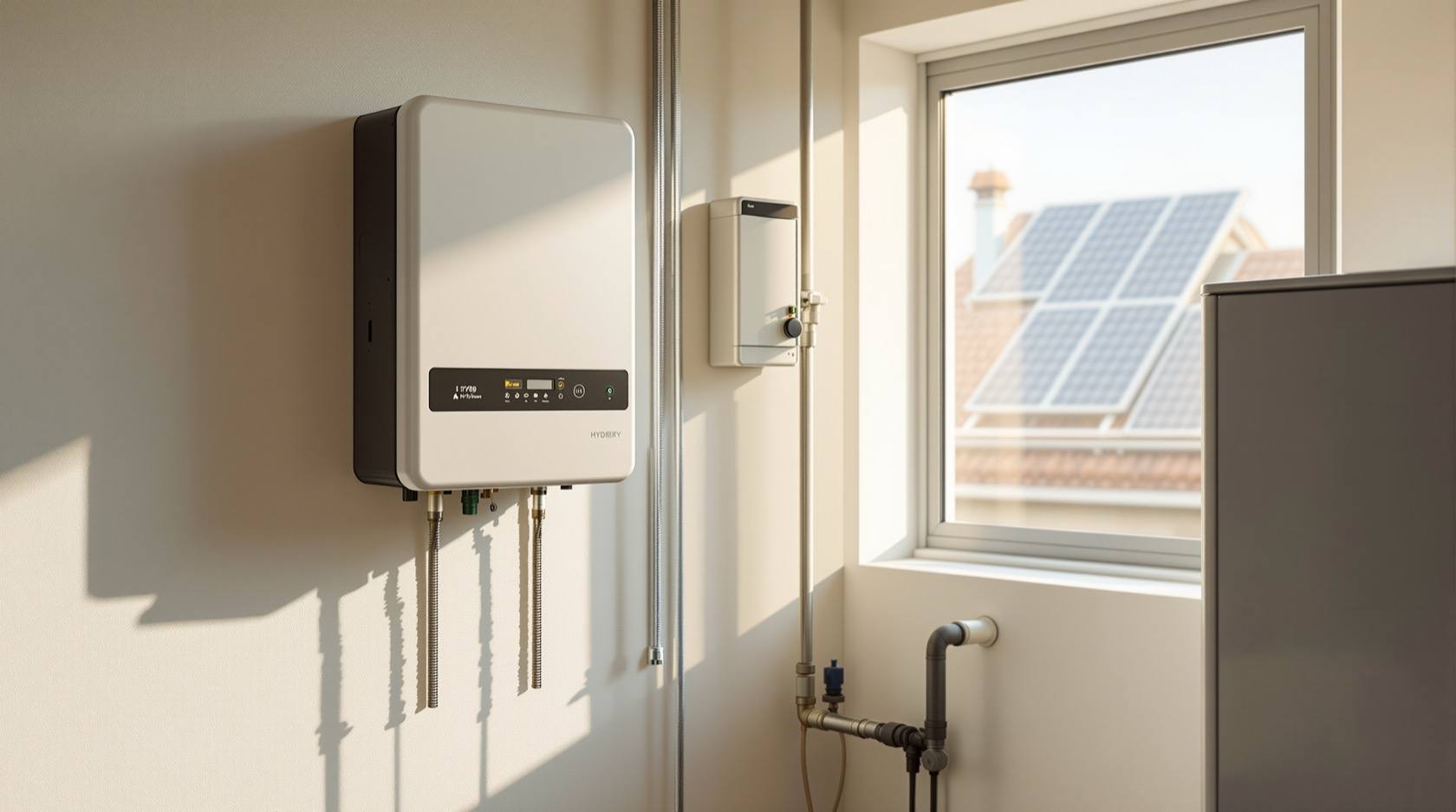
Hybrid Solar System Guide for Indian Homes: Solar Plus Battery Backup (2026)
A design and specification guide to the hybrid solar system -- grid-connected solar with a battery that keeps critical loads running through a cut. How it works, how it differs from pure on-grid and off-grid, the components, sizing the battery, the trade-offs, and when hybrid beats an on-grid system with a separate inverter.
A pure on-grid solar system is the cheapest way to cut your electricity bill -- but the moment the grid fails, it switches off, and you sit in the dark next to a roof full of panels. That is the paradox most Indian homeowners discover only after they have signed for a system: solar and power backup are not the same thing. A hybrid solar system closes that gap. It is grid-connected solar with a battery bolted into the same inverter, so you self-consume your solar, store the surplus, export what is left for credit, and -- crucially -- keep your fans, lights and router running when the DISCOM supply drops.
This guide sits inside the Studio Matrx Solar and Energy hub. The grid-tied versus off-grid comparison covers hybrid only briefly as the "middle" option; here we open it up properly. It is design-led: it helps you understand the architecture, size the battery, weigh the trade-offs and decide whether hybrid is right for your home. The rooftop wiring, the panel mounting, the grid interconnection and the net-metering application belong to a licensed installer and your DISCOM.
Scope and safety. This is a planning and specification guide -- it helps you size and specify a system and brief a professional, not wire one. Rooftop solar work means working at height on live DC and AC circuits: a fall, shock and fire hazard that is never a DIY job. Hand the mounting, wiring, grid interconnection and the net-metering application to a licensed solar installer or electrician and the DISCOM. Every cost, subsidy slab, net-metering rule and payback figure below is indicative and changes and varies by state and DISCOM. A battery can affect subsidy and net-metering eligibility -- verify current rules on the official national portal (PM Surya Ghar Muft Bijli Yojana) and with your DISCOM before you commit.
What a hybrid solar system actually is
A hybrid system has four building blocks working as one: solar panels, a hybrid inverter, a battery bank and a grid connection, all serving your home loads. What makes it "hybrid" is the inverter -- a single, intelligent, bidirectional unit that manages power from both the panels and the grid, and can charge or discharge the battery, all at once.
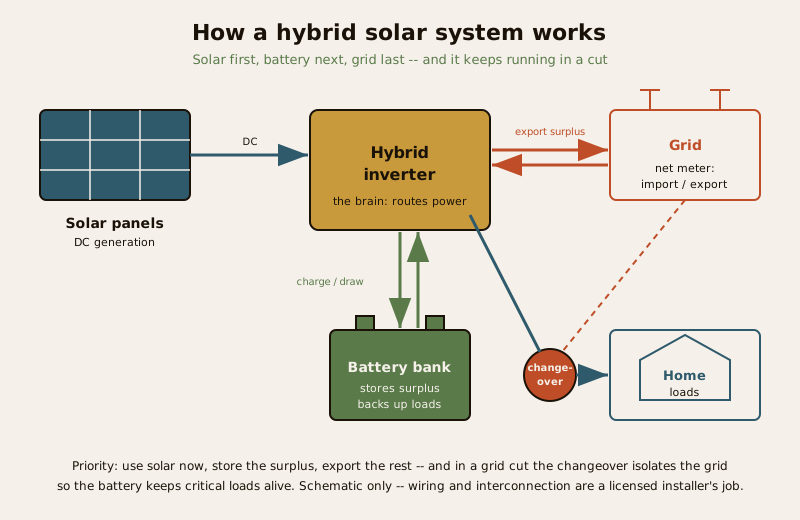
The logic runs on a priority order. During the day, solar power feeds your loads first. Any surplus charges the battery next. Once the battery is full, the remaining surplus is exported to the grid for a net-metering credit. After sunset, or under heavy cloud, the home draws from the battery, and only when the battery is low does it fall back on grid power. When the grid itself fails, a fast internal changeover isolates the grid (so you never back-feed a dead line and endanger a lineworker) and the battery carries your critical loads seamlessly. That single behaviour -- riding through a cut without a gap -- is the whole reason hybrid exists.
How hybrid differs from pure on-grid and pure off-grid
The three configurations are separated by two simple questions: is there a battery, and is there a grid connection.
A pure on-grid (grid-tied) system has solar and a grid connection but no battery. It is the cheapest and has the best payback because you are not paying for storage, and it exports surplus for credit. Its one hard limitation is that it provides no backup -- for safety, grid-tied inverters shut down the instant the grid fails (anti-islanding). If your area has a steady supply, this is the smart, low-cost choice.
A pure off-grid system has solar and a battery but no grid connection at all. It is fully independent, with no bill and no DISCOM, but you must oversize both the array and the battery to survive cloudy spells, which makes it the costliest and the most maintenance-heavy. It only makes sense where there is genuinely no grid -- a remote farmhouse or a hill property.
A hybrid system is the marriage of the two: solar, grid and battery. You get the export credit and low running cost of on-grid, plus the outage backup of off-grid, in one integrated box. The price of that is real -- a battery to buy and eventually replace, and a system that is more complex than either pure type.
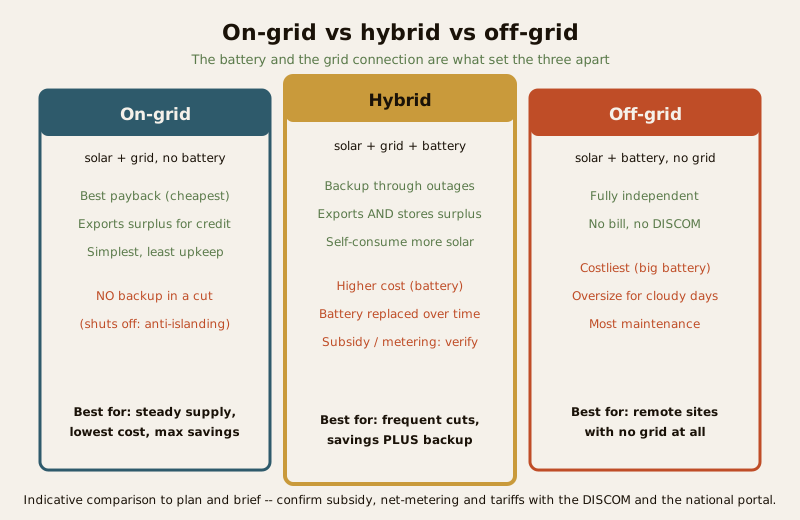
| Feature | On-grid | Hybrid | Off-grid |
|---|---|---|---|
| Solar panels | Yes | Yes | Yes |
| Battery | No | Yes | Yes (oversized) |
| Grid connection | Yes | Yes | No |
| Backup during a cut | None | Yes, seamless | Always on battery |
| Exports surplus for credit | Yes | Yes | Not applicable |
| Relative upfront cost | Lowest | Higher | Highest |
| Payback / savings | Best | Good | Weakest (off-bill) |
| Maintenance burden | Least | Moderate (battery) | Most |
| Best suited to | Steady grid supply | Frequent cuts, want savings and backup | No grid available |
The components you are specifying
The hybrid (bidirectional) inverter is the heart of the system and the component that defines it. It converts DC to AC and back, manages the charge and discharge of the battery, decides moment to moment whether to use solar, battery or grid, and performs the changeover in a cut. Getting the right one matters far more than in an on-grid build -- it must match both your panel capacity and your battery voltage and chemistry. Our solar inverter buying guide covers ratings, efficiency and features in depth.
The battery bank is your stored energy and the second-biggest cost. The two mainstream options are lithium (typically LFP, lithium iron phosphate) and lead-acid. Lithium costs more upfront but lasts far longer, tolerates deeper discharge and needs no watering; lead-acid is cheaper to buy but heavier, shorter-lived and needs ventilation. Our lithium versus lead-acid comparison walks through the trade-off, and the solar battery storage guide covers capacity, depth of discharge and warranties.
The changeover -- built into a true hybrid inverter, or a separate automatic transfer switch in some setups -- is what isolates the grid and switches your protected loads onto battery in milliseconds so the transition is unnoticed. On some designs this is a manual changeover; a proper hybrid inverter automates it. Metering and protections -- the net meter, isolators, earthing and surge protection -- are specified and installed by your licensed installer to the DISCOM's standards.
Sizing the battery: backup you need versus cost you accept
The single biggest decision in a hybrid build is how big to make the battery -- and the honest answer is that you do not back up the whole house. You back up critical loads: lights, fans, the router, a television, phone chargers, perhaps the refrigerator. High-draw appliances -- the air conditioner, geyser, motor and induction hob -- are usually left off the backup circuit, because covering them multiplies both the battery and the inverter cost.
The sizing logic is straightforward: add up the wattage of your critical loads, multiply by the number of hours you want them to run through a cut, and that watt-hour figure -- adjusted upward for battery depth of discharge and inverter losses -- is your usable battery capacity. Our inverter and battery calculator does this arithmetic for you, and the inverter and battery guide explains the load-audit method in full.
| Backup ambition | Typical critical loads | Rough battery direction | Cost stance |
|---|---|---|---|
| Essentials only | Lights, fans, router, TV, chargers | Small battery, a few hours | Cheapest hybrid; best value |
| Comfort backup | Above plus the refrigerator | Medium battery | Balanced -- most homes land here |
| Whole-home ambition | Above plus one AC or the pump | Large battery and bigger inverter | Costly; question whether you need it |
Bigger is not better. Every extra kilowatt-hour of battery is money spent and a component that will eventually be replaced. Size the battery to the outage you actually experience -- a two-hour evening cut is a very different brief from a rural feeder that is down half the day.
Why hybrid suits many Indian homes
The case for hybrid in India is simply the reality of the supply. In much of the country, power cuts are frequent, sometimes daily, and often longest in the evening peak when a family most wants lights and fans. A pure on-grid system gives none of that resilience. The traditional answer -- an ordinary inverter and battery sitting beside a solar system -- works, but it is two separate systems that do not talk to each other, and the inverter battery charges from the grid, not from your own solar. A hybrid folds backup and solar into one system that charges the battery from the sun and then, only if needed, tops it up from the grid. For a home that both wants to cut its bill and refuses to sit through evening cuts, that combination is the point.
Hybrid versus on-grid plus a separate inverter
Not everyone needs a hybrid. If your budget is tight, a perfectly good alternative is a pure on-grid solar system for savings, plus a standard inverter and battery for backup -- two independent systems. It is often cheaper upfront and lets you buy backup separately, but you run two sets of equipment, the backup inverter cannot store your surplus solar, and you manage two warranties.
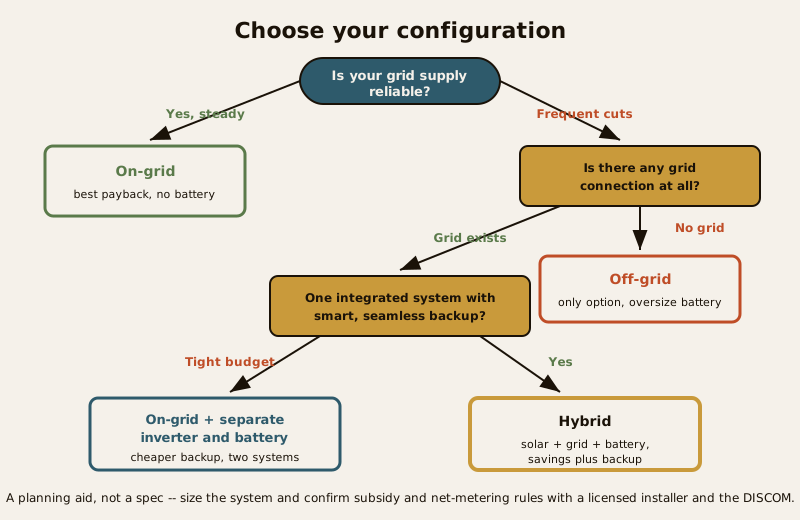
| Your situation | Recommended configuration |
|---|---|
| Grid supply is steady and reliable | On-grid -- best payback, no battery |
| Frequent cuts, want one integrated smart system with seamless backup | Hybrid |
| Frequent cuts but budget is tight | On-grid plus a separate inverter and battery |
| No grid connection available at all | Off-grid |
| Mostly savings-driven, occasional short cuts you can tolerate | On-grid |
The trade-offs, honestly
Hybrid is not a free upgrade. The upfront cost is higher because of the battery, the hybrid inverter and the extra wiring. The battery is a wear item -- it will need replacement long before the panels do, so budget for that second purchase. And the subsidy and net-metering picture needs care: national rooftop subsidies and net-metering are generally structured around grid-tied solar capacity, and adding a battery can change eligibility, the metering arrangement or the sanctioned load treatment in some states. Do not assume your hybrid battery is subsidised or that net metering applies unchanged. This is exactly the kind of rule that varies by DISCOM and moves year to year -- read the current terms on the net-metering explainer, and verify on the official national portal and with your DISCOM before you buy.
Key takeaways
- A hybrid solar system is grid-connected solar plus a battery, run by one bidirectional inverter, so you self-consume solar, store the surplus, export the rest, and keep critical loads running in a cut.
- It differs from on-grid (no battery, no backup, best payback) and off-grid (no grid, biggest battery, costliest) by combining the strengths of both.
- The hybrid inverter and the battery are the defining -- and priciest -- components; match the inverter to your panels and battery.
- Size the battery to critical loads, not the whole house: lights, fans, router and fridge, for the hours your cuts actually last.
- Hybrid suits Indian homes with frequent cuts that want savings and backup in one system; a tight budget may prefer on-grid plus a separate inverter.
- Weigh the trade-offs: higher cost, an eventual battery replacement, and subsidy or net-metering rules that a battery can change -- verify officially.
- Design and specify here; hand the wiring, mounting, interconnection and net-metering application to a licensed installer and the DISCOM.
References
- Studio Matrx -- Grid-tied vs off-grid solar in India
- Studio Matrx -- Solar battery storage guide
- Studio Matrx -- Solar inverter buying guide
- Studio Matrx -- Net metering explained
- Studio Matrx -- Inverter and battery guide
- Studio Matrx -- Lithium vs lead-acid batteries
- Studio Matrx -- Inverter and battery calculator
- PM Surya Ghar Muft Bijli Yojana -- the official national rooftop portal (verify current subsidy and eligibility rules)
- Ministry of New and Renewable Energy (MNRE) and your DISCOM -- for net-metering and interconnection rules, which vary by state and change
Costs, subsidy slabs, net-metering rules and payback figures here are indicative and change. Confirm current terms on the official national portal and with your DISCOM, and have a licensed solar installer design and wire the system.
Export this guide
Related Guides — Deep-dive reading
Rooftop Solar Approvals & Net Metering in India: The Permissions You Actually Need
The approvals side of putting solar on an Indian roof — not how solar works, but the permissions: the DISCOM net-metering application and feasibility, an empanelled installer, the structural load check, the electrical safety inspection, the PM Surya Ghar subsidy, and metering and commissioning. These are DISCOM, state and MNRE rules — not one national IS code — so amounts and caps change; always confirm the current rule locally.
RoofingResidential Electrical Systems: The Complete Guide for Indian Homes
How the electricity in an Indian home actually works — from the utility supply and meter through the distribution board, circuits, wiring, earthing and protection, to lighting, safety, energy efficiency, smart controls, solar and backup — written so a homeowner can understand, plan and judge it, and know exactly where a licensed electrician must take over.
Electrical & WiringVideo Door Phone Power Backup in India (2026): Keeping the Door Alive Through Power Cuts
How to keep the indoor monitor, door station and — for app kits — the router and ONT running through India's power cuts, using a small UPS, the home inverter circuit, or a built-in battery, so you can still see and answer the door.
SecurityRelated Tools — Try Free
Before vs After — Cost Reality Check
Compare what you expected to pay vs what you actually paid, category by category.
Reality CheckSecurity Backup Power Calculator
Size a UPS/inverter and battery to keep CCTV, NVR, router and alarm running through a power cut — load, Ah, VA and cost.
Backup PowerSolar CCTV Sizing Calculator
Enter cameras, sun-hours and backup days to get the solar panel wattage, battery Ah and an indicative kit cost for an off-grid camera.
Solar Sizing