
Neo-Traditional Indian Architecture
Where traditional aesthetics meet modern planning and contemporary construction
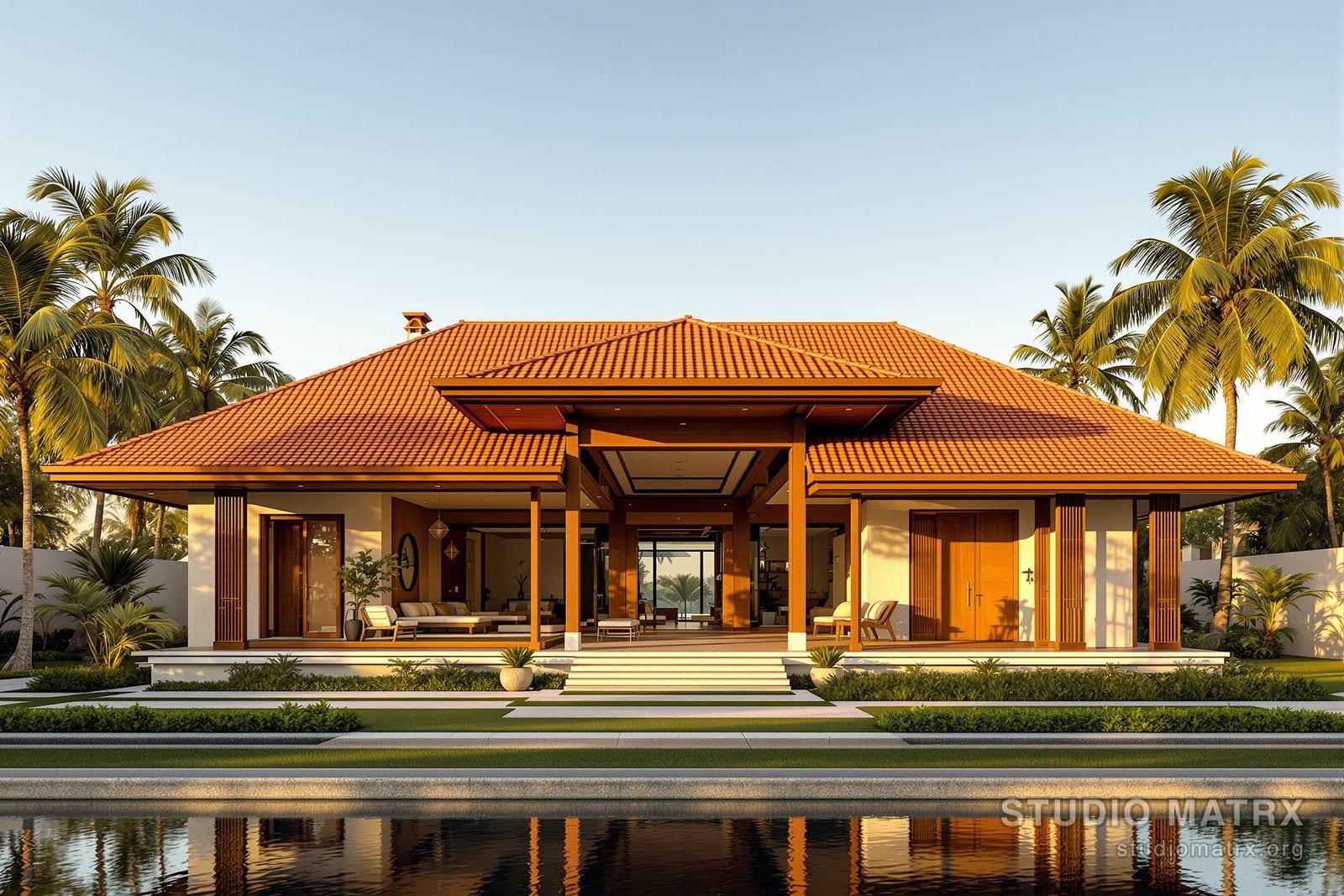
For a generation, the aspiring Indian home chased a borrowed modern look - the flat-roofed white box with frameless glass, handsome in a render and a little indifferent to the place it stood in. Neo-traditional Indian architecture is the considered reply to that drift. It keeps the openness, comfort and clean planning of a modern home, but speaks them in a clearly Indian accent: a sloping tiled roof instead of a bare slab, a courtyard at the centre instead of a sealed core, columns and carved wood instead of unrelieved minimalism.
The label describes a synthesis, not a revival. Nobody is rebuilding a literal nalukettu or haveli; this is a contemporary house that wears traditional form. Three things are held together at once - and that balance is the whole idea.
What defines it
Strip the style to its logic and three layers do the work.
| Layer | What it means | Why it matters |
|---|---|---|
| Traditional aesthetics | Sloping roofs, columns, courtyards, wood and regional motifs | Roots the house in its place - it reads as Indian, not generic |
| Modern planning | Open-plan living, en-suite bedrooms, fitted kitchens, zoned service areas | Matches how families actually live and move today |
| Contemporary construction | RCC frame, modern waterproofing, steel, large glazing, concealed services | Delivers spans, performance and durability the old craft alone could not |
The discipline is in holding all three. Drop the planning and you get a heritage replica that is hard to live in; drop the aesthetics and you are back to the generic box; drop the construction and the tiled roof leaks by the second monsoon. Neo-traditional done well is traditional to look at, modern to live in, and contemporary in the way it is actually built.
The design elements
The vocabulary is small and consistent - which is exactly what gives these homes their coherence.
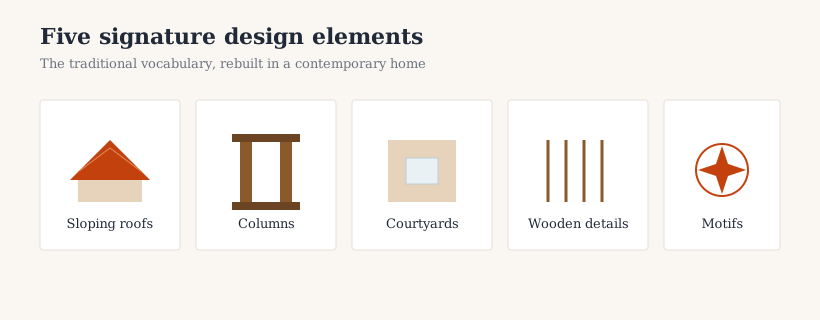
| Element | In the tradition | In the neo-traditional home |
|---|---|---|
| Sloping roofs | Steep tiled roofs that shed the monsoon | Clay or terracotta tiles, often over an RCC slab, with deep eaves for shade and rain control |
| Columns | Timber or stone posts of the verandah | Slender columns framing verandahs and double-height porches |
| Courtyards | The open-to-sky heart - nadumuttam, totti, chowk | A central court or light-well that lights, cools and drains the deep plan |
| Wooden details | Carved doors, screens, brackets and ceilings | Teak doors, jaali screens and exposed rafters - warmth against the concrete |
| Traditional motifs | Region-specific carving and ornament | Restrained motifs on doors, screens, thresholds and compound walls |
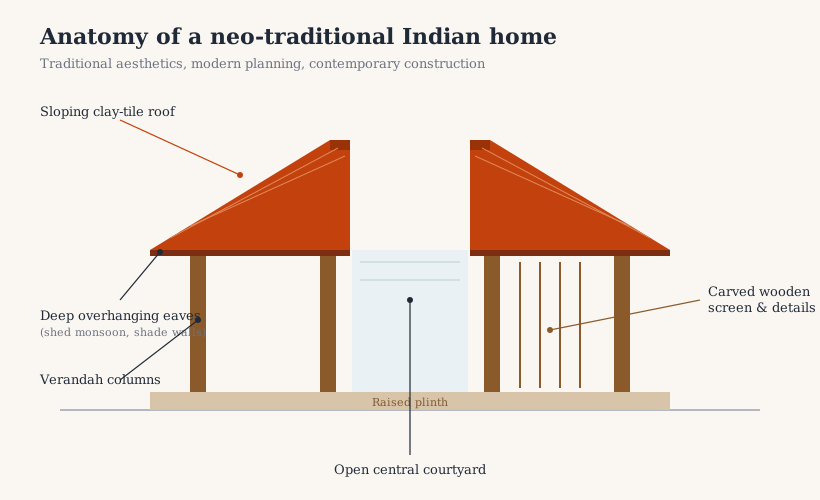
Two elements do most of the climatic work. The sloping roof with deep eaves throws heavy rain clear of the walls and shades them from the high sun, while the central courtyard pulls daylight and a slow current of air through the depth of the house. The wood and the motifs do the emotional work - the warmth and identity that a bare modern shell lacks.
Where it flourishes
Neo-traditional is a national idea spoken in regional dialects. Four states in particular carry a living tradition rich enough to draw on.
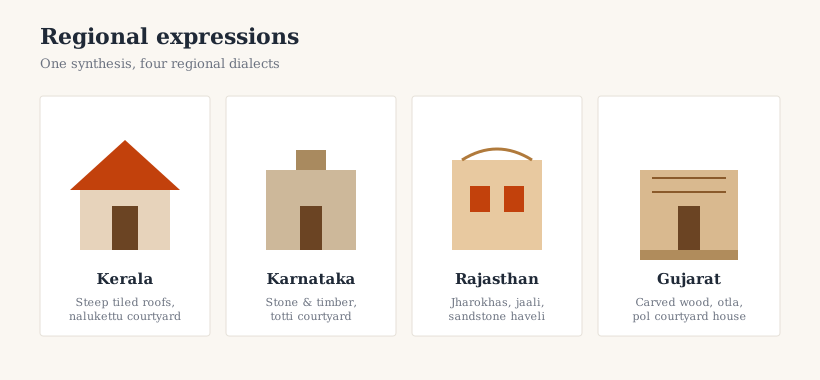
| Region | The tradition it draws on | Signature in the neo-traditional home |
|---|---|---|
| Kerala | The nalukettu courtyard house | Steep tiled roofs, deep verandahs, a nadumuttam court, teak and laterite |
| Karnataka | The totti mane courtyard house | Stone and timber, a central totti court, low tiled roofs |
| Rajasthan | The haveli and its jharokhas | Sandstone, carved jharokha balconies, jaali screens, a central chowk |
| Gujarat | The pol house and carved timber | Intricately carved wooden facades, an otla threshold seat, an internal court |
The point of the regional reading is restraint: a neo-traditional home in Thiruvananthapuram should not borrow a Rajasthani jharokha, and a Jaipur farmhouse has no reason for a Kerala gable. The synthesis is national; the expression stays local.
Best for
Neo-traditional rewards the homeowner who wants warmth and rootedness without giving up modern comfort. It sits most naturally on:
- Urban villas and bungalows that want presence and identity on a city plot, rather than another anonymous elevation.
- Premium apartments and penthouses, where the language shows up in materials, screens and a court-like light-well even without a full courtyard.
- Farmhouses and weekend homes, where a sloping roof, a deep verandah and a courtyard belong naturally to the land around them.
It is a weaker fit for very tight urban plots that leave no room for eaves or a court, and for budgets that cannot carry both a real tiled roof and genuine wood - the situations where the look survives but the substance quietly thins to a veneer. If you are still weighing approaches, our guide to choosing the right style for your home and the modern versus traditional comparison are good next reads.
Notable practitioners
The sensibility runs through much of the best Indian residential work. Balkrishna Doshi, the 2018 Pritzker laureate, spent a career marrying modern planning to Indian climate, courtyard and community. Among contemporary practices, Sanjay Puri and Sameep Padora reinterpret courtyard, screen and sloping roof for modern programmes, while studios such as Studio Mumbai (Bijoy Jain) and Morphogenesis pursue the same instinct - tradition understood and rebuilt, never simply copied.
For the wider map of where this style sits, read our deeper study of Contemporary Indian Architecture and why vernacular design is returning to Indian homes.
Neo-traditional is, in the end, less a look than a discipline: keep what the climate and the culture got right, build it with the tools we now have, and plan it for the life actually lived inside. Done with restraint, it produces homes that feel both unmistakably modern and unmistakably Indian.
This profile refreshes every 12 months. Last verified: June 2026 · Next verify: June 2027.
Export this guide
Related Guides — Deep-dive reading
The Kerala Traditional Roof: Steep Timber-and-Tile Roofs for the Monsoon Coast
Kerala and the Malabar coast answered one of India's heaviest monsoons with a steep, sloping, deeply-overhanging roof: an elaborate timber frame carrying clay tiles, wide eaves that shade the wall and throw rain clear, and the pitched roofs of the nalukettu sloping in around a central open courtyard. This guide tells the story, the craft and how to live with or restore one today.
RoofingModern Farmhouse Architecture in India
The clean gable, the deep verandah and the weekend home reimagined
Design StylesIndian Vernacular Architecture: A Field Guide to the Architecture Without Architects
How to read India's anonymous, climate-tested, culture-shaped building — five climate zones, the local-materials palette, the great pan-Indian courtyard, and a region-by-region map of the tradition.
Vernacular ArchitectureRelated Tools — Try Free
Apartment vs Villa Interior Planning Guide
Compare ceiling height, structural flexibility, lighting, storage, and services between apartments and villas.
Planning GuideDoor Material Comparison Tool
Compare 2–4 door materials on cost, durability, maintenance, security and moisture resistance.
Comparison ToolCross-Ventilation Analyzer
Estimate airflow and air changes per hour (ACH) from room size, window areas, layout, and local wind — with NBC 2016 Part 8 compliance check.
Ventilation Calculator