
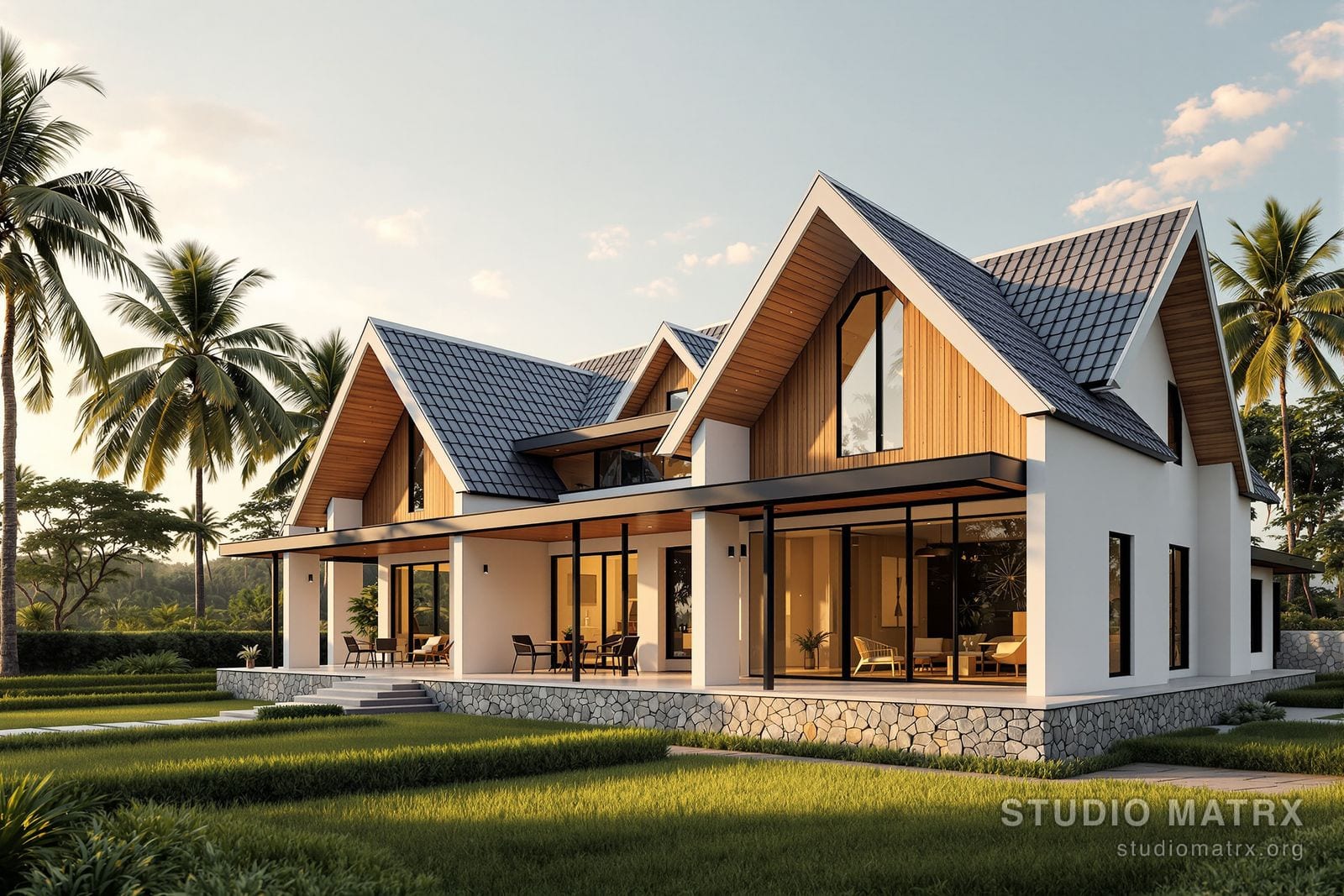
Modern Farmhouse Architecture in India
The clean gable, the deep verandah and the weekend home reimagined
Of all the styles in this series, the modern farmhouse is the one being built right now. Drive out past the edge of any big Indian city - Chhatarpur outside Delhi, the green belts around Bengaluru and Pune, the back roads of Goa - and you will find it everywhere: the clean white gable, the warm wood cladding, the big black-framed windows and the deep verandah opening onto a lawn. It is the default look for the new generation of Indian weekend homes and farmhouses, and for good reason.
The style takes the honest, rural form of a farmhouse - the simple pitched roof, the porch, the natural materials - and strips it of fuss, crossing it with the open plans and clean lines of modern design. The result is relaxed but not rustic, contemporary but not cold: a house that feels like a holiday. It is, in many ways, the contemporary heir to both the colonial bungalow and the neo-traditional home - the same instinct for shade, slope and indoor-outdoor living, in a lighter, more modern key.
What defines it
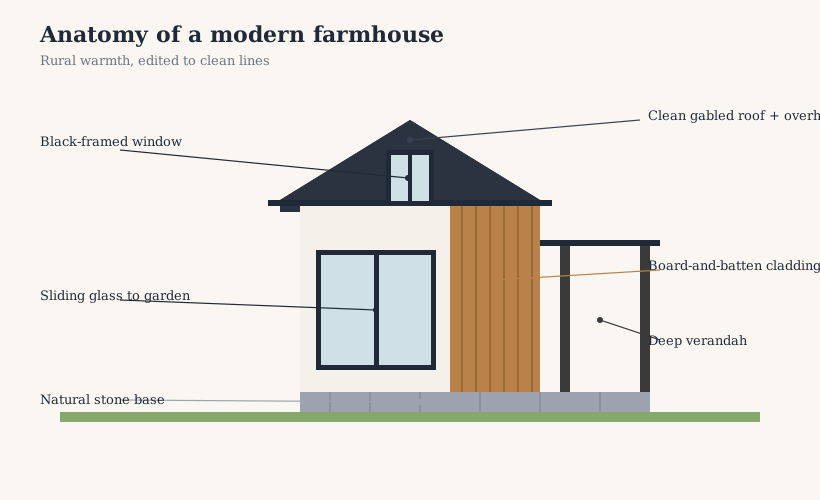
The modern farmhouse is rural warmth, edited down to clean lines.
| Trait | What it looks like | The idea behind it |
|---|---|---|
| Simple gabled forms | Clean pitched roofs, often more than one | The honest rural silhouette, kept crisp |
| White and warm wood | White render against natural timber cladding | Light, calm and grounded all at once |
| Big black-framed glazing | Large windows and sliding doors with slim black frames | Light, views and a connection to the land |
| Deep verandahs and overhangs | Covered porches and generous eaves | Shade, rain cover and an outdoor living room |
The whole point is the relationship to the outside. A modern farmhouse is designed around its plot - the lawn, the trees, the view - so the verandah, the big glazing and the indoor-outdoor flow matter as much as the rooms themselves.
The design elements
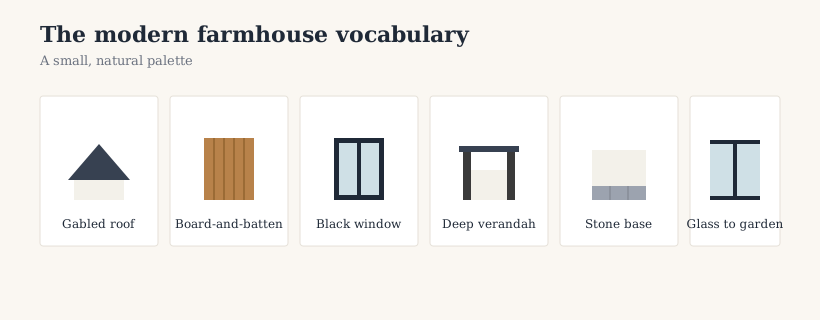
A small, natural palette gives the style its relaxed coherence.
| Element | What it is | Why it works in India |
|---|---|---|
| Gabled roof | A clean pitched roof, sometimes in metal or tile | Sheds the monsoon; the deep overhang shades the walls |
| Board-and-batten cladding | Vertical timber boards over white render | Warmth and texture against the white |
| Black-framed windows | Slim steel or aluminium glazing | Light and view - but size and orient them for the sun |
| Deep verandah | A wide covered porch | The outdoor room that defines farmhouse life |
| Natural stone base | Local stone at the plinth | Grounds the house and shrugs off splash and damp |
| Sliding glass to garden | Full-height openings to the lawn | The indoor-outdoor flow at the heart of the style |
Where it suits
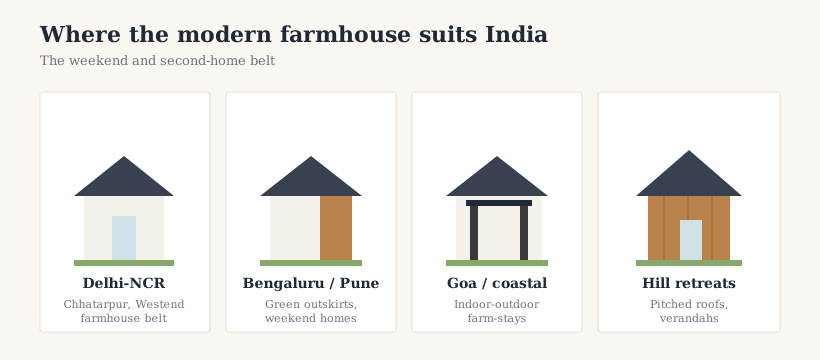
The modern farmhouse belongs to the edge of the city - the weekend and second-home belt around the metros.
| Setting | Why it fits |
|---|---|
| Delhi-NCR farmhouses | Large plots in the Chhatarpur and Westend belts |
| Bengaluru and Pune weekend homes | Green outskirts within an easy drive of the city |
| Goa and coastal farm-stays | Relaxed, indoor-outdoor living by the fields or sea |
| Hill and plantation retreats | Pitched roofs and verandahs that suit the landscape |
For the landscape that makes or breaks one of these homes, see our villa landscape and courtyard homes guides; the terrace planning guide helps with the outdoor rooms.
Best for
The modern farmhouse is made for space and for slowing down. It is ideal for:
- Farmhouses and weekend homes on generous plots, where the verandah and garden can breathe.
- Large suburban and peri-urban houses that want a relaxed, family-friendly character.
- Boutique farm-stays and small resorts, where the look reads instantly as warm and welcoming.
It is a poor fit for tight urban plots - the style needs land, eaves and a garden to make sense - and for very low budgets, since real wood cladding, stone and large steel glazing add up. The most common mistake is treating it as a surface style: stick-on shutters and a token gable on a generic box. Done properly, with genuine materials and a real connection to its plot, it is one of the most liveable and welcoming ways to build in India today.
Where it comes from
The modern farmhouse has no single author - it is a contemporary, globally shared idea, popularised through design media and adapted enthusiastically to the Indian weekend-home market. Its roots, though, are old and local: the pitched roof, the deep verandah and the natural materials are exactly what the Indian vernacular farmhouse always used, now rendered in a cleaner, more open form. For where it sits among the alternatives, compare it with modern house design and start, if you are choosing, with the right style for your home.
The modern farmhouse endures - and is everywhere - because it answers what people actually want from a second home: light, warmth, space, and an easy life lived half outdoors. Keep its materials honest and its connection to the land real, and it delivers exactly that, with a calm that never goes out of style.
This profile refreshes every 12 months. Last verified: June 2026 · Next verify: June 2027.
Export this guide
Related Guides — Deep-dive reading
Japandi Architecture in India
Where Japanese and Scandinavian minimalism meet - warm, natural and calm
Design StylesColonial Architecture in India
The bungalow, the verandah and the Goan villa - Europe taught by the tropics
Design StylesNeo-Traditional Indian Architecture
Where traditional aesthetics meet modern planning and contemporary construction
Design StylesRelated Tools — Try Free
Window Material Comparison Tool
Compare uPVC, aluminium, wood, steel and composite windows on cost, life, upkeep and insulation.
CompareAluminium Door Cost Calculator
Estimate an aluminium door cost by opening size, profile grade, finish, glazing and type, with fitting and GST.
Door CalculatorCross-Ventilation Analyzer
Estimate airflow and air changes per hour (ACH) from room size, window areas, layout, and local wind — with NBC 2016 Part 8 compliance check.
Ventilation Calculator