
Lift Emergency Procedures (India): What to Do in Any Lift Emergency
A calm household playbook for every home lift emergency, with clear step-by-step actions and the few things to prepare in advance.
A home lift almost never goes wrong. But the few minutes when something does feel different are exactly the minutes that decide whether the household stays calm or panics. The good news is simple: a stuck lift is one of the safest places you can be. The car cannot fall, it is ventilated, and help is one button away. What turns a non-event into a frightening one is not the lift, it is people forcing doors, climbing out, or not knowing who to call.
This guide is the household playbook: clear, calm steps for each kind of lift emergency, and the few things to set up in advance so that everyone, including children and seniors, knows what to do. It sits alongside our emergency rescue systems guide, which explains the rescue DEVICES themselves (the Automatic Rescue Device, manual lowering, who is allowed to open a stuck car). Here we focus on what the people in the house actually DO.
The single most important rule: if you are trapped, do not try to escape on your own. Press the alarm, call for help on the intercom, and wait. The car is safe. Forcing your way out is the only way a stuck lift becomes dangerous.
First, why entrapment is rare and survivable
Modern home lifts are built so that a fault stops the car safely rather than letting anything bad happen. Several independent systems all have to agree before the car moves at all:
- Door interlocks keep the doors locked and the car still unless the car is exactly at a landing with every door closed and locked. You cannot step into an open shaft, and the car will not move with a door open.
- The overspeed governor and safety gear grip the guide rails if the car ever exceeds about 115 percent of its rated speed. With multiple ropes (or a ram, or a screw) plus this backstop, a car cannot free-fall.
- A power cut does not drop the car. The brakes hold it in place. If an Automatic Rescue Device (ARD) is fitted, the battery quietly walks the car to the nearest floor and opens the doors within seconds.
So when we say "stay calm and wait," it is not a platitude. The car is doing exactly what it was designed to do: hold you safely until help arrives. For the full catalogue of these protective systems, see elevator safety components and our home lift safety guide.
Emergency by scenario, at a glance
Different situations call for slightly different responses. The table below is the whole playbook in one view; the sections that follow give the detail.
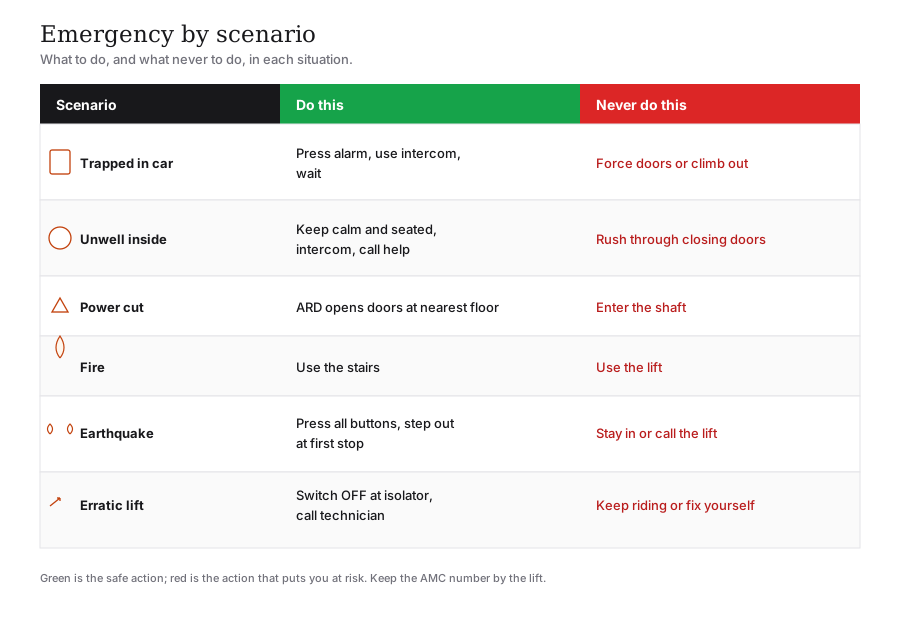
| Scenario | What is happening | Do this | Never do this |
|---|---|---|---|
| Someone trapped in the car | Lift stopped between or at floors, doors shut | Stay calm, press alarm, use intercom to call help, wait | Force the doors, climb out, or panic |
| Someone unwell inside the car | A person feels faint, breathless or distressed | Keep them calm and seated, use intercom, call household and a doctor or 108 ambulance | Make them stand or rush them through closing doors |
| Power cut | Mains supply fails | With ARD, doors open at nearest floor in seconds; without ARD, car stops safely, use alarm or intercom | Enter the shaft or try to pull the car |
| Fire in the building | Smoke or fire alarm | Use the stairs, leave the lift, let it recall and park | Use the lift to escape a fire |
| Earthquake | Ground shaking | Do not use the lift; if inside, press every floor button and step out at the first stop | Stay in or call the lift during shaking |
| Lift behaving erratically | Odd noises, jerky travel, doors misbehaving | Get everyone out at a landing, switch the lift OFF at the main isolator, call the technician | Keep riding it or try to fix it yourself |
If you are trapped in the car
This is the situation people fear most and the one where calm matters most. The car is safe and ventilated. There is no urgency to "get out." Help is the goal, not escape.
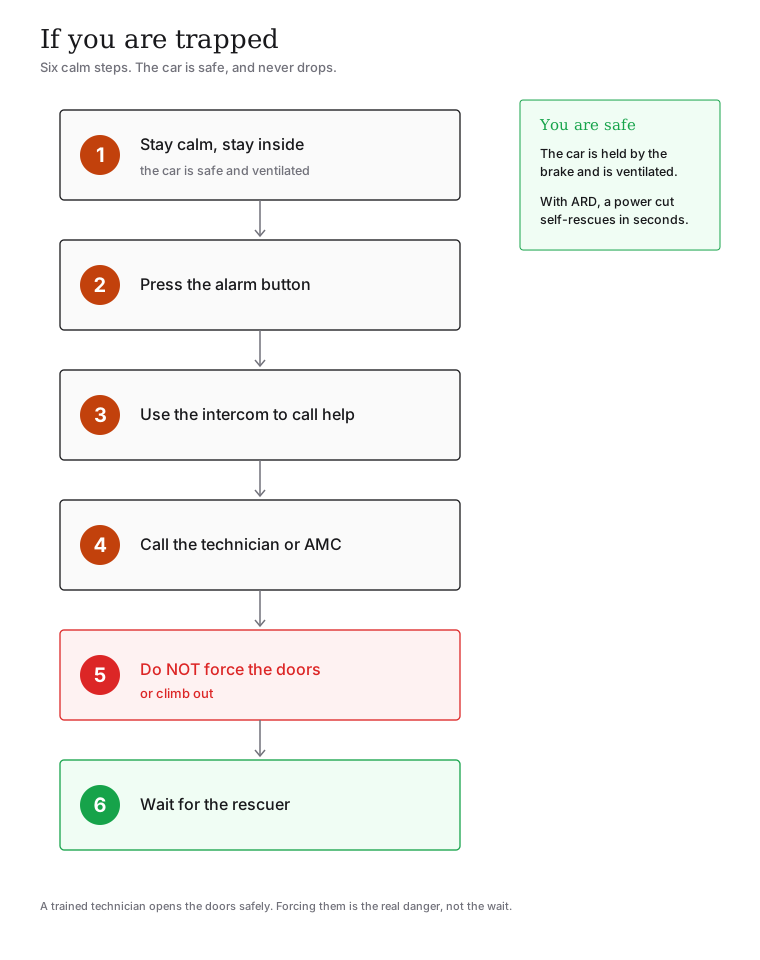
1. Stay calm and stay inside. The car cannot fall and it is ventilated. Sit or lean if you feel unsteady. There is air, and there is time.
2. Press the alarm button. Hold it so it sounds clearly. This alerts the household and anyone nearby.
3. Use the intercom or emergency phone to call for help. Most home lifts have a two-way intercom or an auto-dial phone in the car. Say which lift, which household, and that someone is trapped.
4. Call the technician or AMC emergency number if you have a phone with signal. The car is usually within mobile range in a home.
5. Do NOT try to force the doors open. Do not pry, kick, or push them. Do not try to climb out of the car through the doors or the roof. The shaft outside the car is the only dangerous place, and the doors are what keep you out of it.
6. Wait for the technician or rescuer. Opening a stuck car safely is a trained job done with the lift powered down, as explained in the rescue systems guide. It takes minutes, not hours.
If your lift has an ARD, most "entrapments" from a power cut end before they begin: the battery brings the car to the nearest floor and opens the doors in seconds. If the doors do not open, follow the steps above and wait.
If someone is unwell inside
A person may feel faint, anxious, breathless, or unwell while in the car, with or without the lift being stuck.
- Keep them calm and seated. If the car has a fold-down seat, use it; otherwise have them sit on the floor.
- Use the intercom to alert the household immediately, and have someone meet the lift at the landing.
- Get them to a landing if the lift is working rather than keeping them in the car. If the lift is stuck, do not rush. Keep them comfortable and call for help.
- Call for medical help (a family doctor, or 108 for an ambulance in most Indian states) if symptoms are serious. Senior household members are the most likely to need this, which is why the senior-citizen safety features (a fold-down seat, an easy-to-reach alarm, an auto-dial pendant) matter so much.
- Do not make them stand and walk through closing doors. Doors have sensors that reopen, but an unwell person should never be hurried.
If there is a power cut
Power cuts are routine in India, so this is the scenario most homes will actually meet.
- The car does not drop. The brakes hold it. A power cut is not a fall.
- With an ARD, the car moves to the nearest floor and opens the doors within seconds. Step out normally. This is exactly why we treat an ARD as non-negotiable in India.
- Without an ARD, the car simply stops and waits. Press the alarm, use the intercom, and wait for power or a technician. Do not try to climb out.
- Never enter the shaft during an outage to "help" someone, and never try to wind the car by hand yourself. Manual lowering is a technician procedure (see the rescue systems guide).
- Protect the controller with a stabiliser or surge protection device, and make sure any home inverter or generator changeover is coordinated so the lift restarts cleanly. The deeper detail lives in our power failure safety and battery backup guides.
If there is a fire
A normal home or passenger lift is NOT a fire escape.
- Use the stairs. Always. Do not call or board the lift during a fire or fire alarm.
- Let the lift recall. On a fire alarm a properly set-up lift should return to a designated floor and park with its doors open, out of service. Leave it there.
- Plan as if the lift is unavailable. Your household fire plan should never depend on the lift. Never put a wheelchair user in a lift to escape a fire unless you are following an evacuation plan approved by the fire service.
- The full household fire plan, smoke detectors, fire-rated landing doors and recall behaviour are covered in our fire safety for home lifts guide and the design-side lift fire safety planning guide.
If there is an earthquake
The rule is the same as fire: do not use the lift.
- If you are about to travel, take the stairs. Do not call the lift during shaking.
- If you are inside when shaking starts, press EVERY floor button and step out at the first floor the car stops at.
- A seismic switch (fitted on lifts in seismic areas and required on larger installations) detects shaking, sends the car to the nearest floor, opens the doors and takes the lift out of service until it is checked. India is zoned II to V for seismicity under IS 1893 and NBC 2016.
- After any significant quake, have the lift inspected before anyone uses it again. The full sequence is in our earthquake safety for residential lifts guide.
If the lift behaves erratically
If the lift makes unusual noises, travels jerkily, stops short of landings, or the doors misbehave:
1. Get everyone out at a proper landing and stop using the lift.
2. Switch it OFF at the main isolator so no one can ride it. Knowing where the isolator is, and using it ONLY to power the lift down, is a core part of being prepared. It is NOT for attempting a rescue yourself.
3. Call the technician or AMC and keep the lift out of use until they clear it.
The main isolator is your "stop everything" switch, not a rescue tool. Use it to take a misbehaving lift out of service. Never use it as part of trying to free a trapped person, that is the technician's job.
Prepare before anything happens
Almost everything that makes an emergency easy is set up in advance, on a calm afternoon, not in the moment. Keep a small emergency-prep card by the lift and brief the whole household.
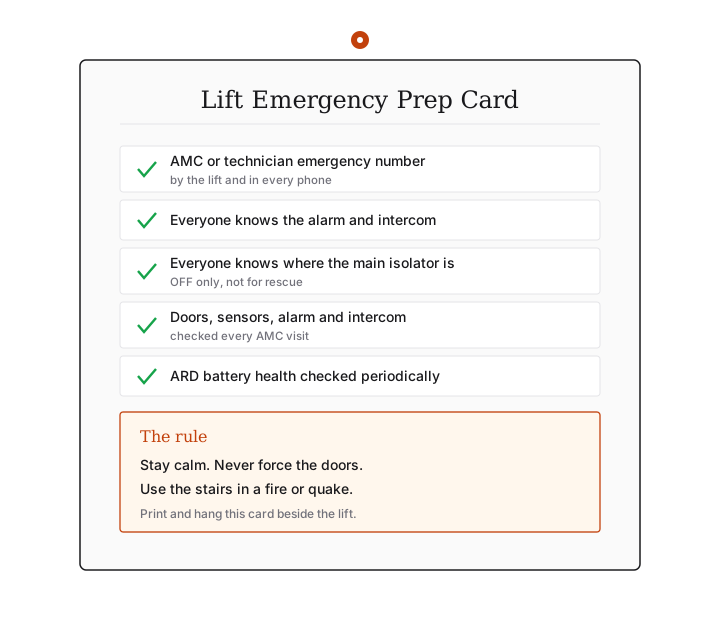
| Prepare this | Why it matters |
|---|---|
| AMC or technician emergency number stuck by the lift AND saved in every phone | The one thing you need in a real entrapment, instantly findable |
| Everyone knows how the alarm and intercom work | Children and seniors must be able to call for help themselves |
| Everyone knows where the main isolator is, and that it is only to switch the lift OFF | Lets you take an erratic lift out of service safely |
| Doors, sensors, alarm and intercom checked at every AMC visit | Confirms the safety systems work before you need them |
| ARD battery health checked periodically | Ensures the self-rescue actually works on a power cut |
| The household knows: stay calm, do not force doors, use the stairs in fire or quake | The rules that prevent a non-event becoming dangerous |
Teach the household the alarm and intercom
Two minutes of teaching prevents most panic. Show everyone, including children old enough to ride alone and senior members, exactly where the alarm button and intercom are and how they work.
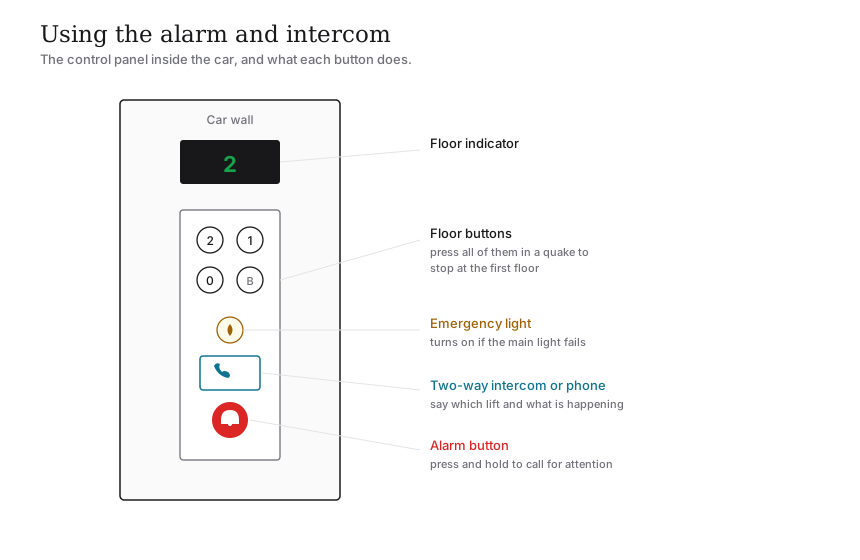
- The alarm button sounds a bell to alert the household and neighbours. Press and hold so it is heard. It does not open the doors; it calls for attention.
- The intercom or emergency phone is a two-way line to call for help. Speak clearly: which lift, who is inside, what is happening.
- The emergency light in the cabin comes on if the main light fails, so no one is in the dark.
- Remind children: the alarm and intercom are for real emergencies, not toys. For the wider rules of keeping children safe around a lift, see our child safety guide.
What never to do
| Do | Do not |
|---|---|
| Stay calm; the car is safe and ventilated | Panic or assume the car will fall |
| Press the alarm and use the intercom | Try to force or pry the doors open |
| Wait for the technician or rescuer | Climb out of the car or through the roof |
| Use the stairs in a fire or earthquake | Use the lift to escape a fire or quake |
| Switch the lift OFF at the isolator if it misbehaves | Attempt a rescue yourself or enter the shaft |
| Keep an unwell person calm and seated | Rush an unwell person through closing doors |
A home lift is a piece of well-engineered safety equipment. Treated with a little knowledge and a calm head, even its worst day is a short, undramatic wait. The work is in the preparation: the number on the wall, the household that knows the alarm, and the shared rule that nobody ever forces a door.
For the bigger picture, start with our home lift safety guide and the residential elevator buyer's guide.
References
- IS 14665 (Part 1): Electric Traction Lifts — Outline Dimensions (BIS): https://law.resource.org/pub/in/bis/S05/is.14665.1.2000.pdf
- IS 14665 (Part 2): Code of Practice for Installation, Operation and Maintenance (BIS): https://law.resource.org/pub/in/bis/S05/is.14665.2.1-2.2000.pdf
- National Building Code of India 2016, Part 8 Section 5 (Installation of Lifts) — BIS: https://www.bis.gov.in/standards/technical-department/national-building-code/
- BIS Guide for Using NBC 2016: https://www.bis.gov.in/wp-content/uploads/2022/08/Booklet-Guide-for-Using-NBC-2016.pdf
- IS 1893 (seismic zoning, referenced via NBC 2016) — BIS National Building Code: https://www.bis.gov.in/standards/technical-department/national-building-code/
- Nibav — Home elevator safety features: https://www.nibavlifts.us/blog/home-elevator-safety-features/
- Inclinator — How safe are home elevators (safety features): https://inclinator.com/blog/how-safe-home-elevators/
- California Mobility — Home elevator earthquake safety: https://californiamobility.com/home-elevator-earthquake-safety-california/
- 99acres — Know all about lift regulations in India: https://www.99acres.com/articles/know-all-about-the-lift-regulations-in-india.html
Figures are indicative and illustrative. Confirm your specific lift's alarm, intercom, ARD and isolator arrangements with your vendor or licensed lift technician.
Export this guide
Related Guides — Deep-dive reading
Power Failure Safety in Elevators (India): What Happens and What to Do
A power cut does not drop the car. Here is exactly what happens, why an ARD is non-negotiable in India, and how to protect the controller so your lift restarts safely.
Home Lifts & AccessibilityHome Lift Safety Guide (India): How Safe Home Lifts Are and How to Use One Safely
Why modern home lifts cannot free-fall or open onto an empty shaft, the safety features explained, and how to use one safely every day — for children, seniors and emergencies.
Home Lifts & AccessibilitySecurity for People Living Alone in India (2026): Calm, Practical Habits When There Is No Second Person to Notice
Living alone is an ordinary and growing part of Indian life - the student in a new city, the working single, the elder whose children are abroad, the person after a separation. It does not call for fear. It calls for a few deliberate habits, because there is no second person in the home to notice trouble, raise the alarm, or catch an accident. This is calm self-reliance, layer by layer.
SecurityRelated Tools — Try Free
Accessibility Compliance Calculator
Check a planned lift against the CPWD and RPwD accessible-lift benchmarks for a score.
Lift CheckerHome Accessibility Planner
Integrate lift, ramp, stairlift and wheelchair circulation into one accessibility plan.
PlannerLift Annual Maintenance Cost Calculator
AMC cost for a home lift — comprehensive vs non-comprehensive, with a 5-year projection.
Lift Calculator