
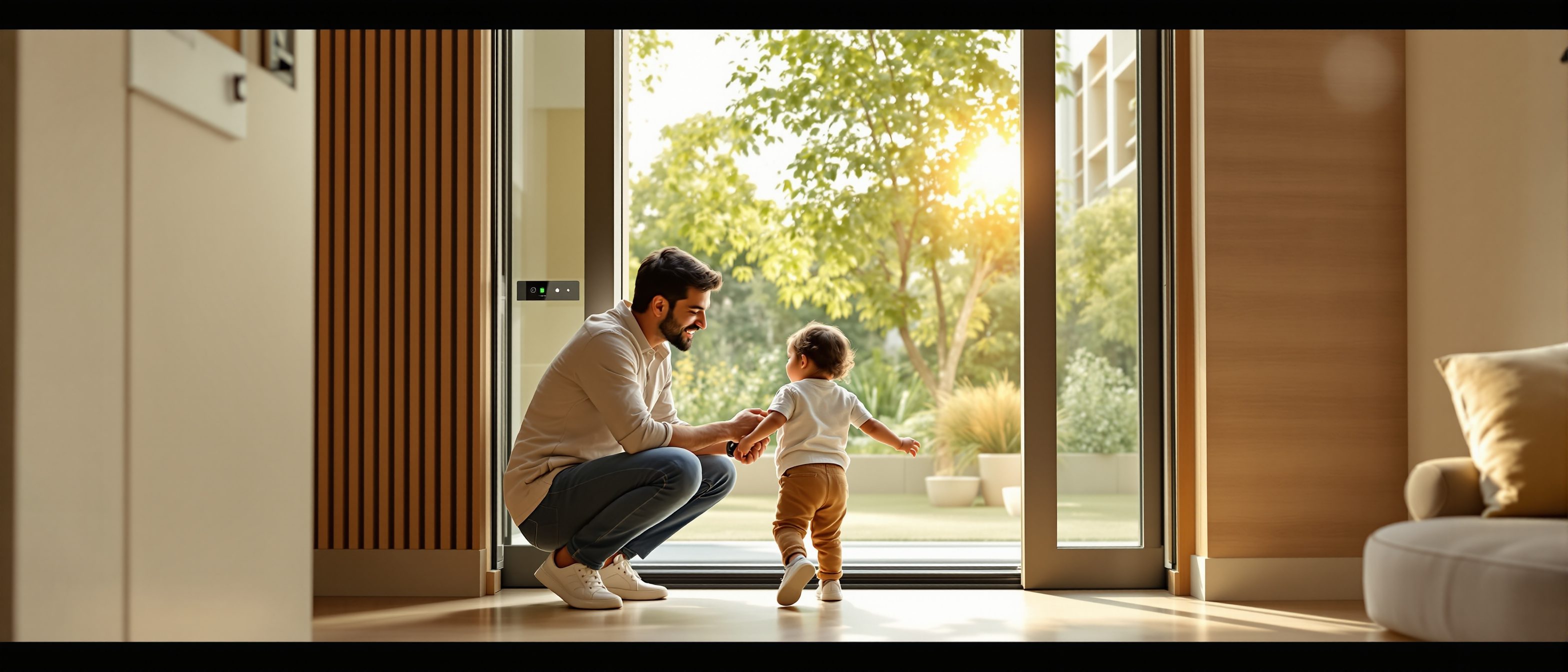
Child Safety Around Home Elevators (India): Keeping Little Ones Safe
A calm, practical guide to keeping toddlers and children safe around a home lift — the child-safety key lock, the house rules to teach, and how door sensors and the interlock protect them while supervision stays the real safeguard.
A home lift makes daily life easier for the whole family, and modern residential elevators are genuinely very safe. But to a small child a lift can look like the most exciting toy in the house: glowing buttons, doors that slide, a little room that moves. The good news is that the machine itself is built to protect people. The job for a household with young children is simple and reassuring — set a few clear rules, supervise toddlers near the lift, and, where the lift offers it, use the child-safety key lock so a child cannot call or run the lift on their own.
This is the child-focused companion to our Home Lift Safety Guide for India, the cluster pillar that covers safe use for everyone. Here we look only at keeping little ones safe.
The single most important point: a home lift is not a toy. Treat it like the kitchen hob or the main gate — a normal part of the house that children learn to respect, not to play with.
Why a lift is not a toy (and why that is OK)
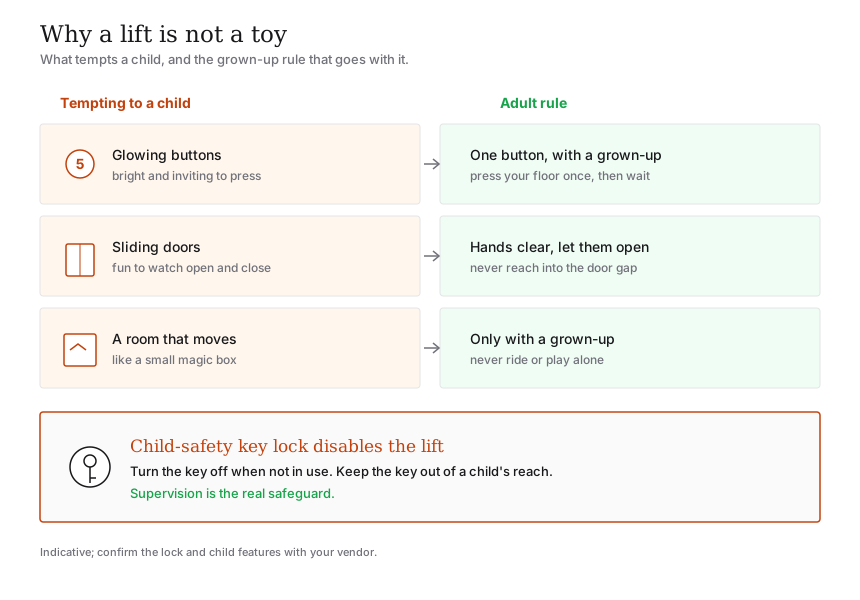
Children are drawn to a lift because it does three exciting things — it lights up, it opens and closes, and it moves. None of those are dangerous in normal use. The hazards only appear when a child treats the lift as a playground: riding up and down unsupervised, blocking the doors to see what happens, leaning or pushing on a door, or sticking small hands and toys into the door gap.
The lift is engineered for exactly these situations. As we explain in Elevator Safety Components (India), several independent systems are always working:
- The door interlock keeps the doors locked and stops the car from moving unless it is level at a landing with all doors closed and locked. A child cannot step into an empty shaft, and the car will not move with a door open.
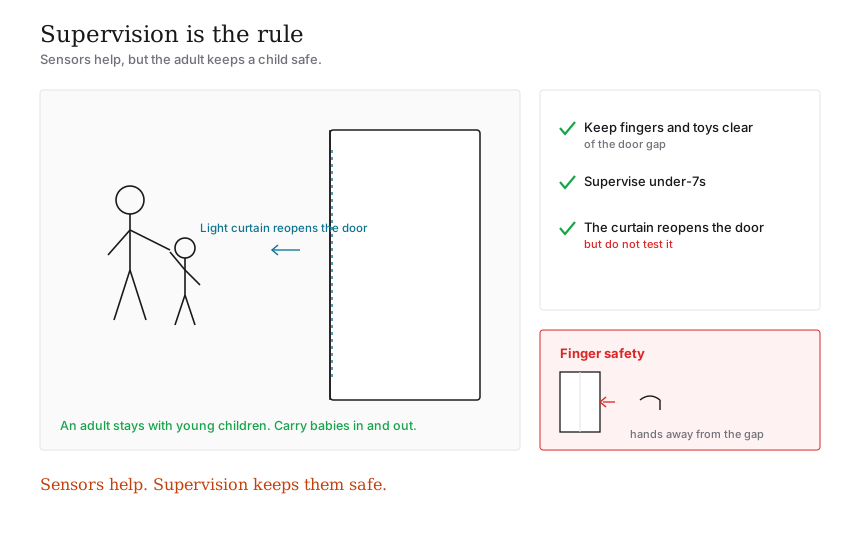
- The door sensors / infrared light curtain detect a person or object in the doorway and instantly stop and re-open the doors, so a closing door will not trap a child.
- The overspeed governor and safety gear mean the car cannot free-fall — at roughly 115 percent of rated speed the safety gear grips the guide rails and holds the car.
So the engineering is on your side. What it cannot do is replace an adult's eyes. Supervision is the real safeguard, and a few household rules turn an exciting machine into a boring, ordinary part of the house — which is exactly what you want.
The child-safety / key lock: switch the temptation off
The most effective single measure in a home with toddlers is a child-safety lock (also sold as a key switch, key-operated call lock, or service key). It is a small key switch — usually at the main landing and often at the car operating panel — that disables the lift so it cannot be called or driven without the key. With the lock turned off, a child can press the call button all they like and nothing happens.
Used well, the key lock means the lift simply does not work unless an adult enables it. Many Indian households keep the lift locked off by default and only key it on when an adult is travelling, then lock it again — much like you would not leave the gate latch within a toddler's reach.
- Ask your vendor whether a key-operated call/service lock is fitted or can be added. Most home lifts support one; it is inexpensive compared with the lift.
- Keep the key out of children's reach — not left in the switch. A key left in the lock defeats the purpose.
- If your lift has a car-top or panel key switch, the same rule applies: it is an adult control, not a feature for kids to flick.
- The lock is a convenience and a deterrent. It does not replace supervision, and you should never ask a vendor to disable a genuine safety device (interlock, sensors, governor) — see our Lift Emergency Procedures for India for who does what.
In a home with crawling babies or toddlers, treat the lift as locked-off by default. The key lock is the toddler-proofing of the lift world.
House rules to teach children
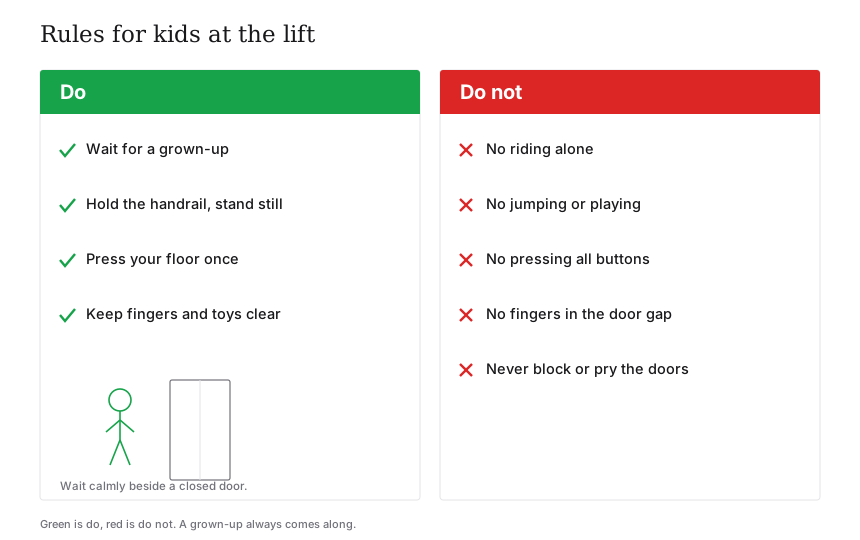
Children respond well to a small set of clear, repeatable rules. Keep them short, say them the same way every time, and model them yourself — kids copy adults far more than they follow instructions. The aim is calm habit, not fear.
Child-safety do-and-dont table
| Do | Don't |
|---|---|
| Wait for a grown-up before going near the lift | Don't ride the lift alone or call it without an adult |
| Stand still inside, hold the handrail | Don't jump, run or play inside the moving car |
| Press your floor button once, then wait | Don't press all the buttons or hit the panel |
| Keep hands, fingers and toys away from the doors | Don't put fingers, sticks or toys in the door gap |
| Let the doors open and close on their own | Don't block, hold or push the doors, and never pry them |
| Step in and out quickly when the door is fully open | Don't lean on a door or dash through a closing door |
| Tell a grown-up if the lift feels odd or you are stuck | Don't try to climb out or force the doors if stopped |
| Keep the lift tidy — no toys or bags left inside | Don't sit, lie or play on the floor of the car |
A few of these deserve a word of explanation for parents:
- No blocking or prying doors. The light curtain will reopen a door if a child stands in it, but teaching kids to "test" it is the wrong habit — and forcing or prying a door can damage the interlock that keeps everyone safe.
- No pressing all the buttons. Beyond being a nuisance, repeatedly stopping the car at every floor is how a child learns to ride it unsupervised. One button, then wait.
- Keep fingers clear of doors. Automatic doors are gentle and reverse on contact, but small fingers and a closing door are still best kept apart. This matters most with younger children.
- No playing in or on the car. The car floor is not a play area, and children should never try to climb on top of the car or into the pit — those are technician-only spaces.
What to teach, by age
Match the message to the child. You are not delivering a safety lecture — you are building a habit that grows with them.
- Babies and crawlers (0–2): They cannot follow rules yet, so the rule is for the adults. Keep the key lock off by default, never leave a baby unattended near an open landing, and carry them in and out — do not let them crawl in or out on their own.
- Toddlers (2–4): Teach "the lift is not for playing" and "only with a grown-up." Hold their hand at the lift. Keep the key lock as your backstop because a toddler will not reliably remember.
- Young children (4–7): They can learn the do-and-dont rules: wait for an adult, one button, hands off the doors, no playing inside. Let them press their own floor button once, under supervision, so the lift feels normal rather than forbidden.
- Older children (8+): Many can ride safely with permission. Teach them the calm response if the lift stops — do not climb out, do not force the doors, press the alarm and use the intercom, and wait. This is exactly the household playbook in our Lift Emergency Procedures for India.
- Everyone: In a fire or an earthquake, use the stairs, never the lift. Make this an absolute family rule.
How the door sensors and interlock protect a child
It helps to know, in plain terms, why the machine is forgiving even when a child does the wrong thing. Two systems do most of the protective work, and a third stops the worst case.
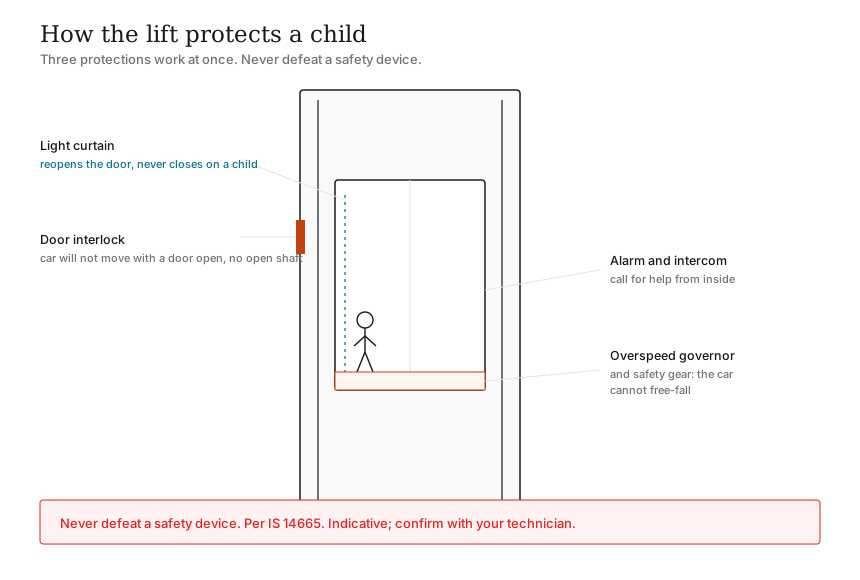
| Protection | What it does | What it means for a child |
|---|---|---|
| Door sensors / light curtain | Detect anything in the doorway and instantly stop and reopen the doors | A child standing in the door will make it reopen, not close on them |
| Door interlock | Doors stay locked and the car cannot move unless it is level at a landing with all doors closed | A child cannot open a door to an empty shaft, and the car will not move with a door open |
| Overspeed governor + safety gear | Grip the guide rails and hold the car if it ever moves too fast | The car cannot free-fall; it is held safely |
| Emergency alarm + intercom | Call for help from inside the car | A child who is stuck can press the alarm and talk to an adult |
These are real, certified protections under IS 14665 (the Indian standard for lift safety, installation and components) and they are why home lifts are very safe. But notice what they assume: that the lift is maintained and that no one defeats a safety device. Keep your Annual Maintenance Contract current, never let anyone bypass a door sensor or interlock to "make it faster," and the protections stay intact. Anything inside the shaft, controller or brake is a licensed technician's job — the household's job is safe use and routine checks.
A note on seniors and shared homes
Many Indian homes that have a lift are exactly the homes where small children and grandparents share the same space — which is part of why the lift was installed. The same calm, rule-based approach protects both. Seniors benefit from automatic doors, a handrail, a fold-down seat, large reachable buttons and an easy alarm; you can read the full feature list in our Senior Citizen Safety Around Home Elevators (India). When you teach children the house rules, teach them to let an elder use the lift first and not crowd or rush them — it keeps everyone safe and is good manners besides.
Quick checklist for parents
- Ask your vendor about a child-safety key lock; keep the lift locked off by default in a toddler home, key out of reach.
- Set and repeat the do-and-dont rules; model them yourself.
- Supervise children under about seven near the lift; carry babies in and out.
- Teach the calm stop response (alarm, intercom, wait — never climb out) to older kids.
- Make "stairs, not the lift, in a fire or quake" an absolute family rule.
- Keep the AMC current, never defeat a safety device, and leave the shaft to the technician.
Modern home lifts are designed to keep your family safe. Add a key lock, a handful of clear rules and an adult's attention, and the lift becomes what it should be — an ordinary, helpful part of the house that even your youngest learns to respect.
References
- IS 14665 Part 1 — Outline dimensions (BIS): https://law.resource.org/pub/in/bis/S05/is.14665.1.2000.pdf
- IS 14665 Part 2 — Code of practice for installation, operation and maintenance (BIS): https://law.resource.org/pub/in/bis/S05/is.14665.2.1-2.2000.pdf
- National Building Code of India 2016, Part 8 Section 5 — Installation of Lifts (BIS): https://www.bis.gov.in/standards/technical-department/national-building-code/
- BIS Guide for Using NBC 2016: https://www.bis.gov.in/wp-content/uploads/2022/08/Booklet-Guide-for-Using-NBC-2016.pdf
- Nibav — home elevator safety features: https://www.nibavlifts.us/blog/home-elevator-safety-features/
- Inclinator — how safe are home elevators (safety features): https://inclinator.com/blog/how-safe-home-elevators/
- Lift regulations in India (overview, 99acres): https://www.99acres.com/articles/know-all-about-the-lift-regulations-in-india.html
Figures are indicative — confirm exact features, the availability of a key lock, and safe-use practice with your lift vendor or licensed technician. Standards and any state lift-licence obligations vary by state; check your local municipal bye-laws.
Export this guide
Related Guides — Deep-dive reading
Home Lift Safety Guide (India): How Safe Home Lifts Are and How to Use One Safely
Why modern home lifts cannot free-fall or open onto an empty shaft, the safety features explained, and how to use one safely every day — for children, seniors and emergencies.
Home Lifts & AccessibilitySecurity for People Living Alone in India (2026): Calm, Practical Habits When There Is No Second Person to Notice
Living alone is an ordinary and growing part of Indian life - the student in a new city, the working single, the elder whose children are abroad, the person after a separation. It does not call for fear. It calls for a few deliberate habits, because there is no second person in the home to notice trouble, raise the alarm, or catch an accident. This is calm self-reliance, layer by layer.
SecurityElevator Safety Components Guide (India): Governor, Safety Gear, Buffers and Interlocks
A plain-language catalogue of the layered safety devices that keep a home lift safe — the overspeed governor and safety gear, buffers, door interlocks, limit switches and more — referenced to IS 14665 Part 4 and IS 17900 / EN 81-20/50.
Home Lifts & AccessibilityRelated Tools — Try Free
Lift Annual Maintenance Cost Calculator
AMC cost for a home lift — comprehensive vs non-comprehensive, with a 5-year projection.
Lift CalculatorLift Safety Audit Checklist
Interactive checklist that scores your home lift on safety devices, compliance and upkeep.
ChecklistChild & Elder Home-Safety Audit
Room-by-room safety audit for households with children or seniors — 10 categories, 70+ checkpoints tagged by audience.
Safety Audit