
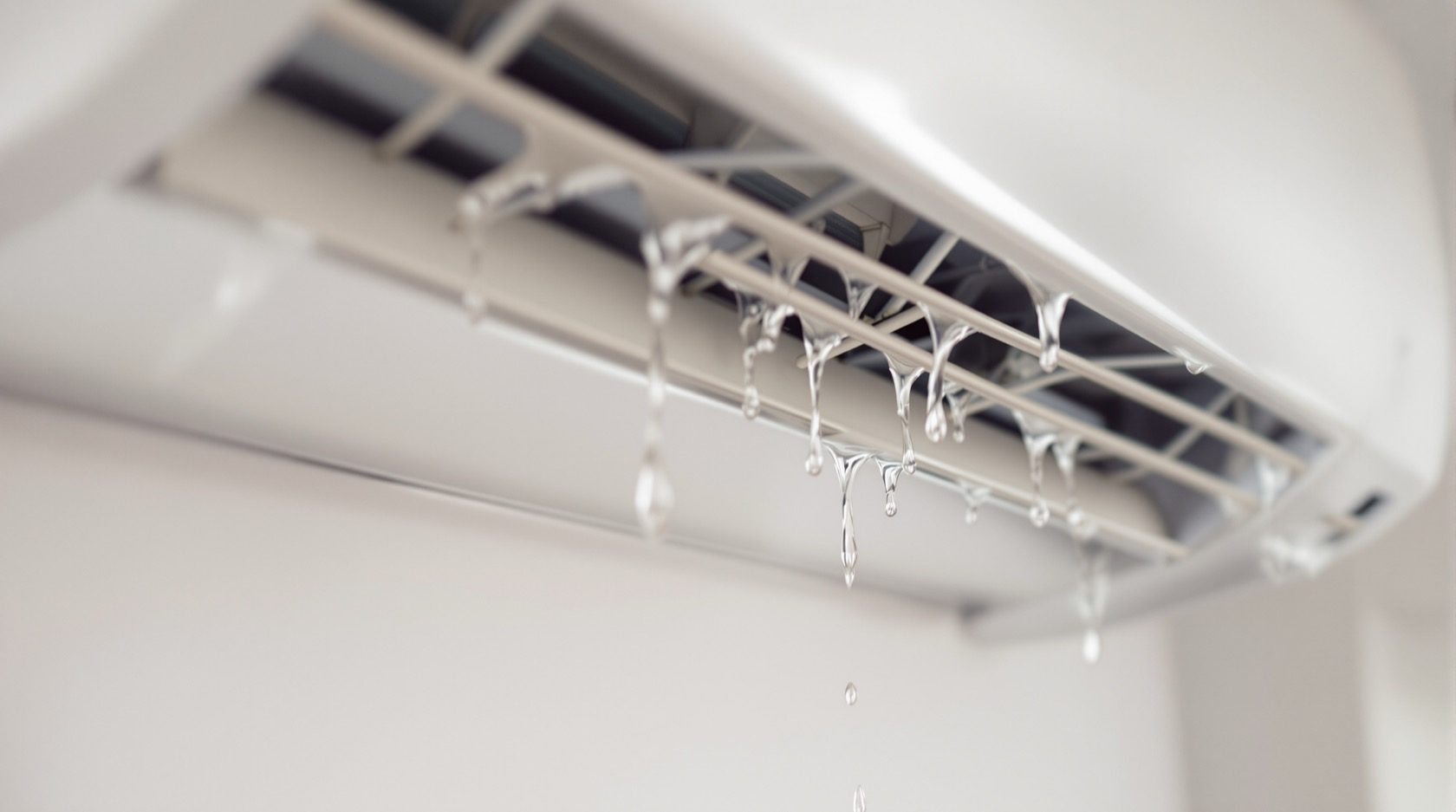
AC Water Leaks, Noises, Ice & Smells: What They Mean
The other common AC complaints, decoded — why an AC drips water indoors, what different noises signal, why the coil ices up and what causes bad smells, the one or two safe things to check, and when each means call a technician.
Not every AC problem is about cooling. Just as common — and just as worrying — are the AC that drips water onto your wall, the one that rattles, hisses or grinds, the coil that freezes into ice, and the unit that smells musty. Each of these is the AC telling you something specific, and knowing what saves you worry (and money). This guide decodes water leaks, noises, ice and smells — the safe checks, and when each means call a technician.
It builds on the Maintenance and AC Not Cooling guides, part of the HVAC Knowledge Hub.
The safety line & scope. Safe homeowner checks are limited to cleaning the filter, checking the drain outlet, and observing. Anything inside the unit, refrigerant, coils or electrical is a qualified HVAC technician's job.
Water leaking from the indoor unit
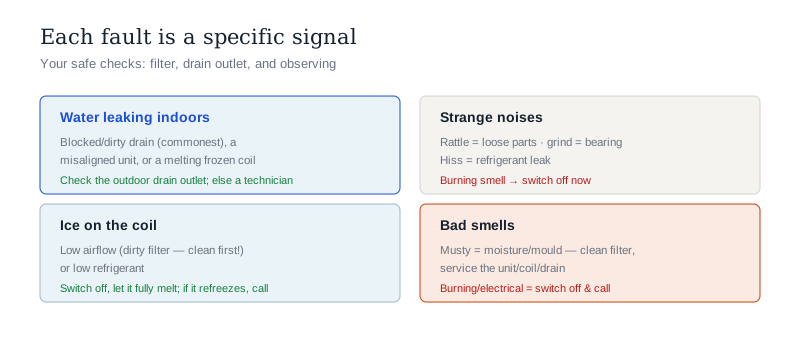
An AC makes water (condensate) as it dehumidifies — the problem is when it drips indoors instead of draining outside:
- A blocked or dirty drain — the commonest cause; the condensate drain clogs with dust/algae and water backs up and overflows. A technician clears it (and it's why drainage is part of servicing).
- A misaligned or wrongly-sloped indoor unit — if the unit isn't level with the right tilt, water flows the wrong way. An installation fix.
- A frozen coil melting — if the coil iced up (see below) and then melts, it dumps water (fix the freezing cause).
- A broken/disconnected drain pipe — outside.
- Safe check — see if the drain outlet outside is blocked; otherwise it's a technician's job. Don't ignore leaks — they damage walls and breed mould.
Strange noises — what they mean
Different sounds signal different things:
- Rattling/vibrating — loose panels, screws, or debris; often minor, but have it checked.
- Grinding/screeching — a fan or motor bearing problem — a mechanical repair.
- Hissing or bubbling — can indicate a refrigerant leak (hissing) — a technician's job, and often behind poor cooling too.
- Clicking — normal on start/stop; persistent clicking with no start can be electrical (relay/capacitor).
- Loud compressor/banging — the compressor (outdoor unit) struggling — needs attention.
- A sudden new or loud noise — worth a technician's look before it worsens.
Ice on the coil or pipes
Counter-intuitive but common — the AC freezes up:
- Low airflow — usually a dirty filter (clean it first!) or blocked coil restricting air, so the coil gets too cold and ice forms.
- Low refrigerant — a leak lowers pressure and freezes the coil (a technician's fix).
- What to do — switch it off and let the ice fully melt, clean the filter, and if it re-freezes, call a technician (it's airflow or gas). Running it iced up can damage the compressor.
Bad smells
- Musty/mouldy smell — moisture and mould in the unit, drain or (for ducted) ducts — clean the filter, and get the unit/coil/drain serviced; persistent mould needs professional cleaning (an air-quality issue).
- Burning/electrical smell — switch off immediately and call a technician (a potential electrical fault — don't run it).
- Other odours — often trapped dirt/damp cleared by servicing.
When to just call a technician
- Water leaking that a clear drain outlet doesn't fix.
- Any grinding, screeching, hissing or a burning smell (switch off for burning smells).
- Repeated coil freezing after cleaning the filter.
- Persistent mould smell despite filter cleaning.
- These are signs to service the unit — see maintenance.
The one-line answer
Beyond cooling, ACs commonly leak water, make noises, ice up or smell — each a specific signal. Water dripping indoors usually means a blocked condensate drain (or a misaligned unit, or a melting frozen coil) — check the outdoor drain outlet, else a technician clears it; don't ignore it (wall damage, mould). Noises vary: rattling is loose parts, grinding is a bearing, hissing can be a refrigerant leak, a burning smell means switch off now. Ice on the coil comes from low airflow (usually a dirty filter — clean it first) or low refrigerant — switch off, let it fully melt, and if it refreezes, call a technician. Musty smells are moisture/mould needing servicing. Your safe checks are the filter, the drain outlet and observing — everything inside the unit, the refrigerant, coils and electricals is a qualified technician's job.
Where to go next
- Prevent these with upkeep: AC & HVAC Maintenance Guide.
- When it also won't cool: AC Not Cooling Guide.
- Musty smell and air quality: Indoor Air Quality Guide · Duct Cleaning Guide.
- An electrical/burning issue: Electrical Troubleshooting Guide.
References
- IS 1391 (Parts 1 & 2 : 2023) Room Air Conditioners, Bureau of Indian Standards.
- ISHRAE — HVAC maintenance & troubleshooting guidance; Central Pollution Control Board (CPCB) — indoor air (mould): https://cpcb.nic.in/
- Refrigerant leaks must be repaired by a qualified technician per safe-handling practice (Kigali Amendment).
Only filter, drain-outlet and observation checks are homeowner tasks; refrigerant, coil, mechanical and electrical work must be done by a qualified HVAC technician. For a burning smell, switch off the power first. Verify any standard's status via the BIS catalogue.
Export this guide
Related Guides — Deep-dive reading
Water Pump Maintenance & Troubleshooting in India: Fix a Pump That Won't Start, Runs Dry or Loses Prime
A homeowner's guide to keeping a domestic water pump alive and diagnosing it when it fails — a routine maintenance schedule (leaks, bearing noise, capacitor, foot valve, priming, dry-run protection, impeller) and a symptom-to-cause-to-fix table for the five faults every Indian pump eventually throws: won't start, runs but no water, low flow, won't stop, and trips or overheats.
PlumbingAC & HVAC Maintenance: The Simple Routine That Keeps Cooling Efficient
Neglect is the quiet killer of cooling — the maintenance that keeps an AC efficient, healthy and long-lived: what you can safely do yourself (filters above all), what a technician must do, how often to service, and the warning signs that mean call for help.
HVAC & CoolingAC Not Cooling? The Common Causes and What to Check First
The most-searched cooling question, answered honestly — why an AC stops cooling well, the two simple things you can safely check yourself (filter and settings), the causes that need a technician (low gas, dirty coil, compressor), and how to tell them apart.
HVAC & CoolingRelated Tools — Try Free
Monsoon-Readiness Checklist
Pre-rain home audit across 9 categories — terrace, drains, waterproofing, electrical, HVAC, pest, vehicles, documents.
Seasonal AuditBefore & After Studio
Generate AI before-and-after renders to preview how your redesign could look.
DesignAIDoor Security Rating Calculator
Score your main door out of 100 across leaf, frame, lock and hardware — and see the top upgrades.
Security Tool