
AC Not Cooling? The Common Causes and What to Check First
The most-searched cooling question, answered honestly — why an AC stops cooling well, the two simple things you can safely check yourself (filter and settings), the causes that need a technician (low gas, dirty coil, compressor), and how to tell them apart.
"My AC is running but not cooling" is one of the most-searched home problems in India — usually striking on the hottest day. The reassuring news is that the commonest cause is the simplest and free to fix (a dirty filter), and you can safely check the obvious things yourself before calling anyone. The rest need a technician — but knowing what's likely means you can describe it, avoid being over-charged, and know whether it's a five-minute fix or a real repair. This guide decodes weak or no cooling.
It builds on the Maintenance Guide, part of the HVAC Knowledge Hub.
The safety line & scope. Safe homeowner checks are limited to: cleaning the filter, checking settings and the power, and clearing the outdoor unit. Anything involving refrigerant, the sealed system, coils or electrical internals is a qualified HVAC technician's job — never open the system or handle gas yourself.
First: the two things to check yourself (free)
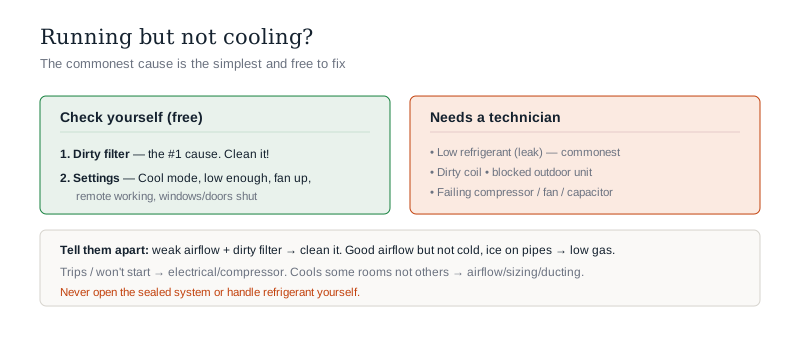
Before calling anyone, safely check the two commonest, free causes:
- A dirty filter — the number-one cause of weak cooling. A clogged filter chokes airflow, so the AC runs but barely cools. Remove and clean it — often that alone fixes it. Check this first, always.
- The settings — is it on Cool mode (not Fan/Dry), set low enough, fan speed up, and actually running? Is the remote working (batteries)? Are windows/doors shut and the room not being flooded with heat?
If a clean filter and correct settings don't restore cooling, the cause is likely one of the technician's below.
The causes that need a technician
Common culprits for an AC that runs but won't cool — all professional fixes:
- Low refrigerant (gas) — often from a leak. The commonest technician-fixed cause: if refrigerant leaks out, the AC can't remove heat, so it blows near-room-temperature air (and may ice up). A technician finds the leak, repairs it and recharges — never a top-up-and-forget, and never DIY.
- A dirty condenser/evaporator coil — a filthy coil can't shed or absorb heat; professional coil cleaning restores cooling (why servicing matters).
- A blocked or unventilated outdoor unit — if the outdoor unit can't reject heat (choked by dust, obstruction, or a hot enclosed spot), cooling fails. Clearing/relocating it helps.
- A failing compressor or fan — the compressor is the heart; if it or a fan motor fails, cooling stops. A significant repair (and on an old unit, often a replace decision).
- Electrical/capacitor faults — a bad capacitor or connection can stop the compressor.
- An oversized or wrongly-installed system — cools unevenly or clammily; a fix at the design/install level.
How to tell them apart
Clues to describe to the technician:
- Airflow weak, filter dirty → clean the filter (you) — likely fixed.
- Good airflow but air isn't cold, maybe ice on pipes → likely low refrigerant (technician).
- Outdoor unit choked/hot spot → clear it; if still weak, coil/gas (technician).
- Runs then trips, or won't start → electrical/compressor (technician + electrical check).
- Cools some rooms not others → airflow, sizing or ducting (technician).
- Bad smell or noise with poor cooling → mould/mechanical (leaks & noises guide).
Avoiding the problem
Most weak-cooling calls are preventable:
- Clean filters every 2–4 weeks in the cooling season (the biggest prevention).
- Service before summer — coil cleaning and a gas check catch problems early (maintenance).
- Keep the outdoor unit clear and in open air.
- Right-size and install well in the first place (choosing).
The one-line answer
When an AC runs but won't cool, check the two free things first: a dirty filter (the number-one cause — clean it, and it's often fixed) and the settings (Cool mode, low enough, fan up, windows shut, remote working). If those don't restore cooling, it's a technician's job — most commonly low refrigerant from a leak (blows near-room-temperature air, may ice up — needs leak repair and recharge, never a DIY top-up), a dirty coil, a blocked/overheating outdoor unit, or a failing compressor, fan or capacitor. Describe the clues (weak airflow vs cold-less air, ice, tripping, uneven cooling) so the technician diagnoses fast. And prevent most of it by cleaning filters every 2–4 weeks, servicing before summer, and keeping the outdoor unit clear — never opening the sealed system or handling refrigerant yourself.
Where to go next
- Keep it from happening: AC & HVAC Maintenance Guide.
- Leaks, noises and other faults: AC Water Leaks, Noises & Faults Guide.
- Electrical tripping: Electrical Troubleshooting Guide.
- When to replace it: HVAC Renovation & Retrofit Guide.
References
- IS 1391 (Parts 1 & 2 : 2023) Room Air Conditioners, Bureau of Indian Standards.
- ISHRAE — HVAC operation, maintenance & troubleshooting guidance; Bureau of Energy Efficiency (BEE): https://beeindia.gov.in/
- Refrigerant leak repair and recharge must be done by a qualified technician per safe-handling practice (Kigali Amendment).
Only filter, settings, power and outdoor-clearance checks are homeowner tasks; refrigerant, coil, compressor and electrical work must be done by a qualified HVAC technician. Verify any standard's status via the BIS catalogue before relying on it.
Export this guide
Related Guides — Deep-dive reading
Water Pump Maintenance & Troubleshooting in India: Fix a Pump That Won't Start, Runs Dry or Loses Prime
A homeowner's guide to keeping a domestic water pump alive and diagnosing it when it fails — a routine maintenance schedule (leaks, bearing noise, capacitor, foot valve, priming, dry-run protection, impeller) and a symptom-to-cause-to-fix table for the five faults every Indian pump eventually throws: won't start, runs but no water, low flow, won't stop, and trips or overheats.
PlumbingBathroom Exhaust Fan Cleaning India: How to Clean, Service & Know When to Replace It
A dust-clogged exhaust fan stops clearing steam, so the mould comes back no matter how hard you scrub. Here is how to safely switch off at the MCB, remove and wash the grille, dust the blades and motor, check the backdraft damper and duct, run a tissue-suction test, and tell when the motor is finished.
BathroomsToilet Maintenance India: Clean the Bowl, Fix a Running or Weak-Flush WC (2026)
The WC is the hardest-working fitting in an Indian bathroom and the quietest money-waster when it fails. This is the practical, do-it-yourself guide to keeping a toilet clean and working: scrubbing the bowl and under the rim, killing the hard-water limescale ring, and fixing the four things that actually go wrong — a running cistern, a weak flush, a leak, and a blockage.
BathroomsRelated Tools — Try Free
Window Cleaning Cost Calculator
Estimate professional window cleaning cost per visit and per year by access and frequency.
Window CalculatorWindow Energy Savings Calculator
Compare standard glazing vs Low-E and DGU windows — annual cooling savings, 10-year savings and payback.
Window CalculatorWindow Size Calculator
Get the right window size, glazing area and openable area for any room using NBC daylight rules.
Window Tool